Sweet autumn clematis
Clematis terniflora. Family Ranunculaceae. Climber.
Also called Sweet autumn virginsbower, Japanese clematis.
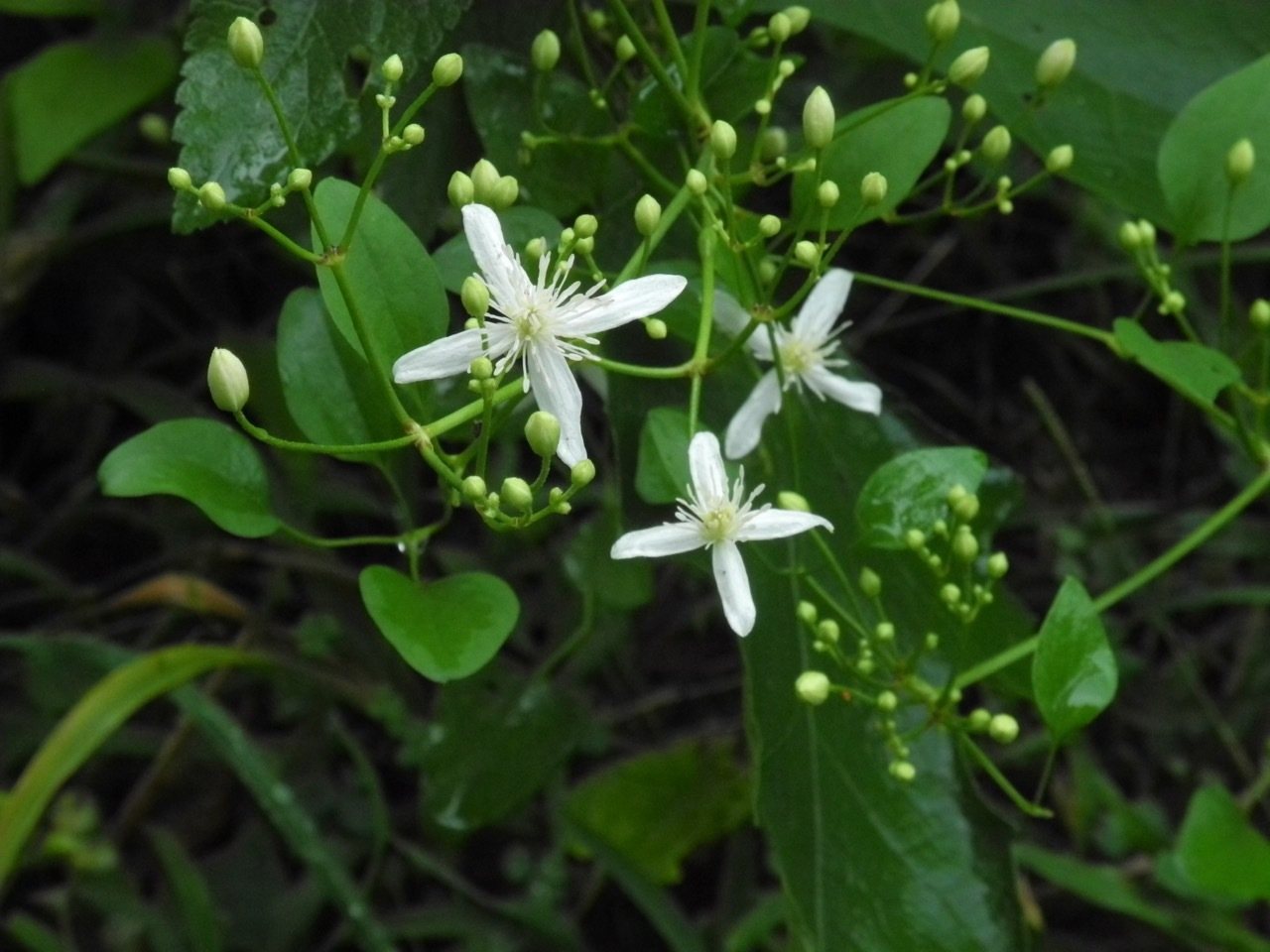
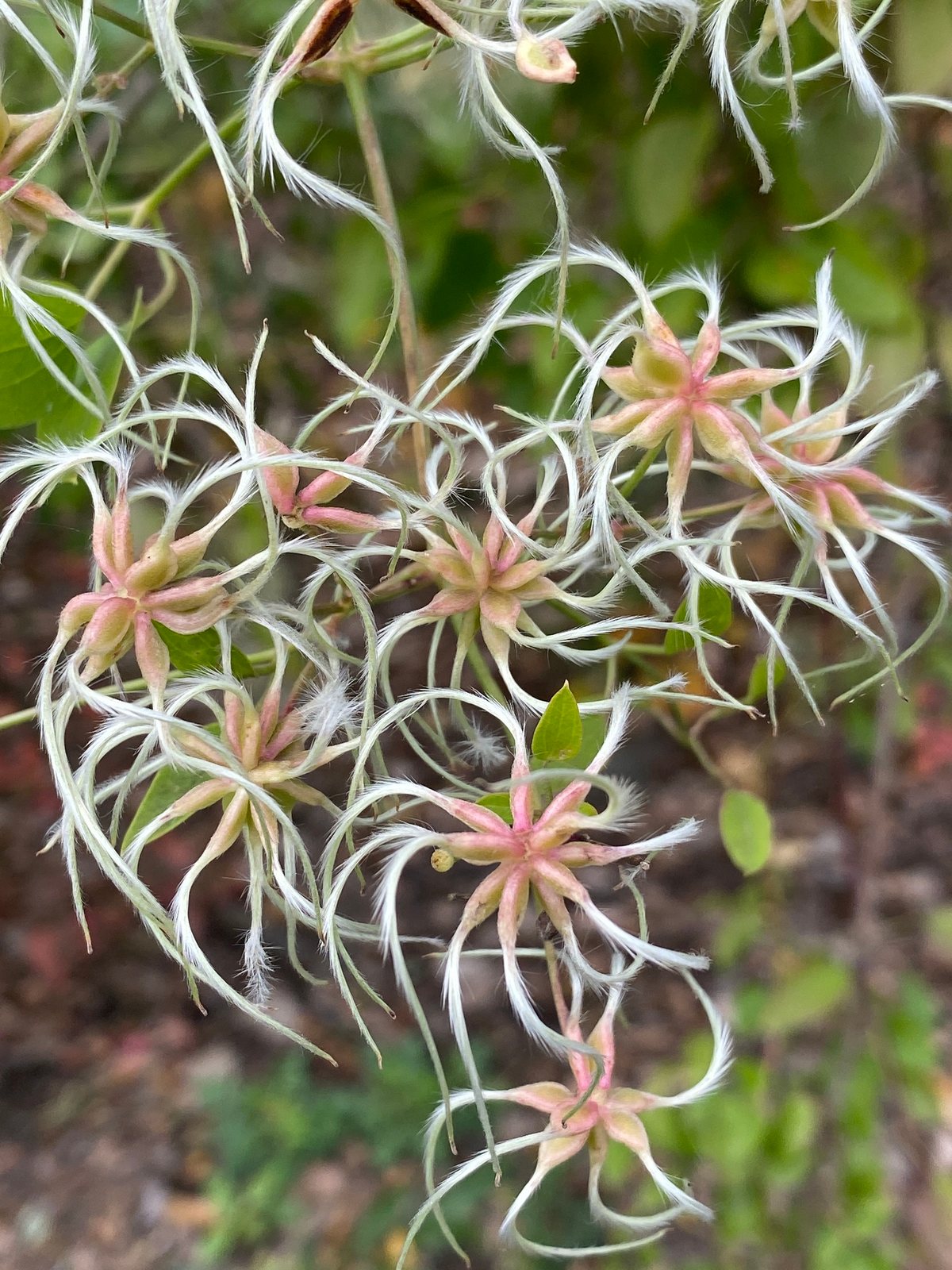
This vigorous woody climber produces masses of fragrant white flowers in late summer and autumn, followed by silvery, feathery seedheads. Gardeners grow it over substantial fences, pergolas and arbors, but it seeds freely and is invasive in much of the eastern United States; choose a locally suitable alternative where it escapes cultivation.
At a glance
- Sun
- Full sun to partial shade; flowering is usually heaviest in full sun.
- Water
- Water regularly during establishment. Once established, water deeply during prolonged dry spells; avoid persistently wet soil.
- Soil
- Moist but well-drained soil enriched with organic matter; tolerates a range of soil textures and pH levels.
- Height
- 15-30 ft (4.6-9.1 m)
- Spread
- 6-15 ft (1.8-4.6 m)
- Flowers
- Late summer to autumn; numerous small, fragrant white flowers with four petal-like sepals.
- Foliage
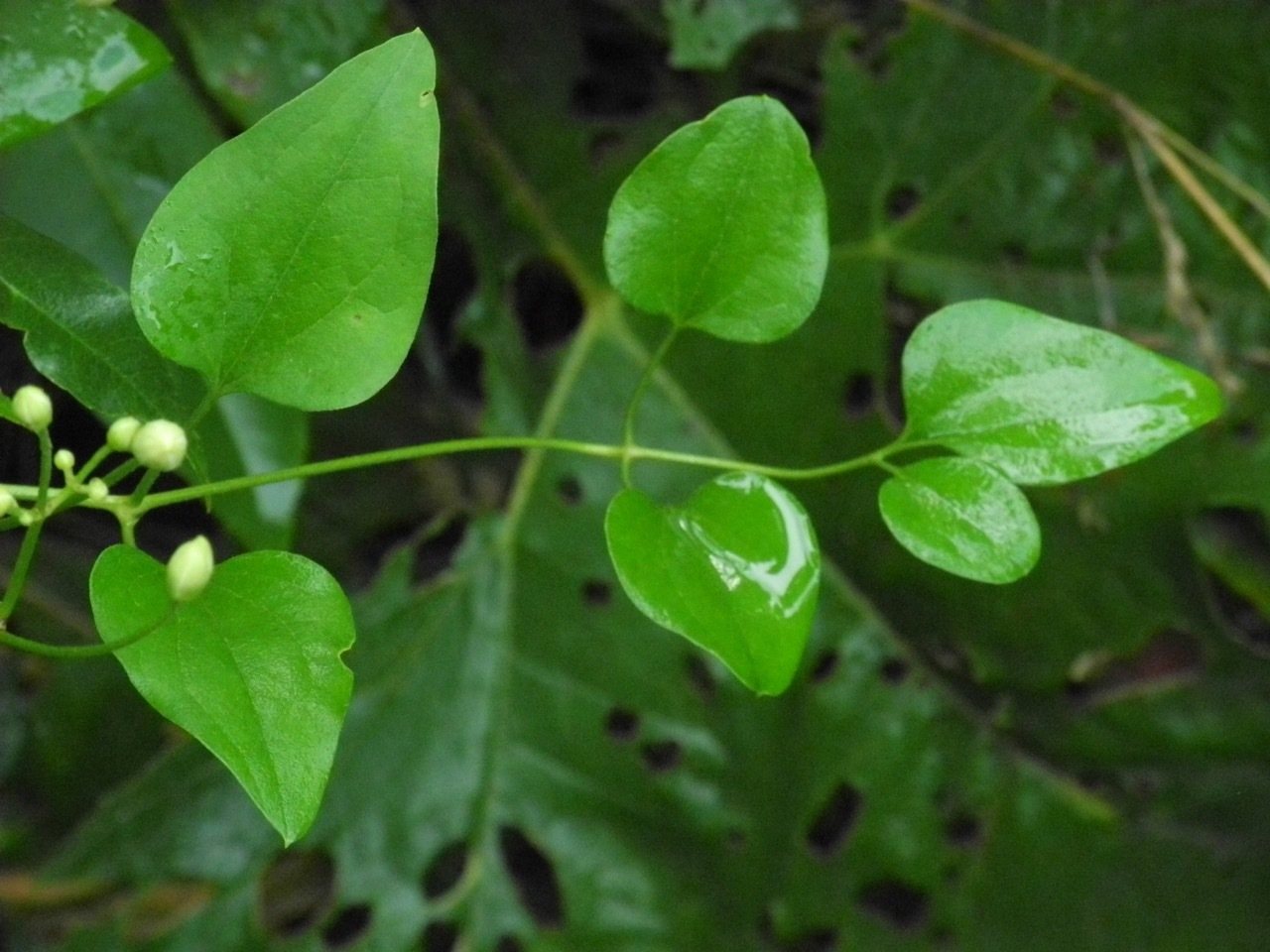
- Opposite leaves divided into usually three to five glossy green leaflets with mostly smooth edges; generally deciduous, but sometimes partly evergreen in mild climates.
- Growth
- Fast; established plants can produce many feet of new growth in a season.
- Care needed
- High
The year at a glance
- Pollinators
- Deer resistant
- Heat tolerant
- Low allergen
- Fragrant
| J | F | M | A | M | J | J | A | S | O | N | D | |
|---|---|---|---|---|---|---|---|---|---|---|---|---|
| Flowers | ||||||||||||
| Fruit | ||||||||||||
| Plant |
Northern hemisphere months. In Australia, shift them by six.
- Difficulty
- Hard
- Toughness
- Very tough
Will it suit your garden?
Pick your zone, country, light and whether you have pets.
Full sun is 6 or more hours of direct sun a day, part shade 3 to 6 hours, shade under 3.
How it grows
Planting day
2 ft (0.6 m)
After 1 year
3 ft (1.1 m)
After 2 years
5 ft (1.5 m)
After 3 years
6 ft (1.8 m)
full size
About 3 years to full size.
From a typical nursery size, at an average rate for this kind of plant. A rule of thumb, not a forecast.
Good to know
- Cats and dogs
- Toxic
- Invasive in
- the US
- In the garden
- Spreads vigorously: plan to contain it.
- Growth rate
- Fast
Care
Jobs through the year
- WaterApr–May, Sep–Oct, every 14 days
- Water established plants only during extended dry spells; water new plants more regularly.
- WaterJun–Aug, every 10 days
- Water deeply during prolonged drought, allowing drainage; young plants need more frequent watering.
- PruneFeb–Mar
- Cut stems to healthy buds 30–45 cm above ground and remove dead, tangled growth.
- MulchMar–Apr
- Top-dress with compost and mulch the root area, keeping material clear of stems.
- PruneMay–Sep, every 14 days
- Guide shoots onto strong supports, trim escaping growth and pull unwanted seedlings.
- DeadheadAug–Oct, every 7 days
- Remove fading clusters before seeds mature; dispose of seed-bearing material securely.
- ProtectNov
- Check support fixings and remove fallen seed-bearing material and unwanted seedlings.
- Check local invasive-plant guidance before planting; avoid it where it threatens nearby natural areas.
- Provide a strong support with wires or narrow trellis sections that the leaf stalks can grasp.
- Water deeply during the first growing season and during extended drought.
- Apply organic mulch over the root area, keeping it clear of the stems.
- Top-dress with compost in spring; avoid excessive nitrogen, which encourages leafy growth.
- Remove spent flowers before seeds develop and pull seedlings promptly.
Pruning. This is a Group 3 clematis: in late winter or early spring, cut stems back to a pair of healthy buds about 12-18 in (30-45 cm) above ground. After flowering, remove developing seedheads before the seeds disperse.
Through the year
- Late winter
- Cut back established stems before strong new growth begins and remove dead, tangled material.
- Spring
- Plant where locally appropriate, water thoroughly, and add compost and mulch.
- Late spring
- Guide new shoots onto their support and remove seedlings around the garden.
- Summer
- Water during prolonged dry weather and redirect shoots that are reaching nearby shrubs or gutters.
- Late summer to autumn
- Remove fading flower clusters before seeds mature; do not leave seed-bearing trimmings where they can spread.
- Late autumn
- Check supports and remove fallen seed-bearing material and unwanted seedlings.
In the garden
- Train over a substantial arbor to place fragrant flowers above a seating area, where planting is locally appropriate.
- Cover a long, sturdy fence for a late-season white backdrop to a broad perennial border.
- Use on a freestanding pergola with enough clearance to keep vigorous stems away from trees, roofs and gutters.
- Add late flowers to a white or moon garden, using a separate support rather than allowing it to smother shrubs.
Garden styles it suits: Cottage garden, Romantic rose garden, Traditional, White garden, Sensory garden and Autumn colour.
Plant it with: Purple coneflower, New England aster, Tall stonecrop, Switchgrass and Black-eyed Susan.
Wildlife: Flowers attract bees and other flower-visiting insects. Dense growth can provide cover for birds, but escaped plants can smother native vegetation and reduce habitat quality.
Problems to watch for
- Unwanted seedlings and escaping growth: remove flowers before seed maturation, pull seedlings while small, and replace the plant if containment is impractical.
- Smothered shrubs or overloaded supports: grow on a dedicated, sturdy structure and prune annually; redirect wandering stems during the growing season.
- Powdery mildew: improve air circulation, avoid overcrowding, and remove badly affected foliage.
- Root rot in waterlogged soil: improve drainage or move the plant to a better-drained site; do not keep the root zone saturated.
Safety
Toxic to cats, dogs, horses and people if eaten. All parts, especially fresh leaves and stems, contain irritating compounds that can cause mouth irritation, drooling, vomiting and diarrhea; substantial ingestion can be serious. Sap may irritate skin. Keep children and animals from chewing it, wear gloves when pruning, and seek medical or veterinary advice after ingestion.
Where it spreads. Spreads aggressively by wind-borne seed and is documented as invasive across much of the eastern, southeastern and parts of the midwestern United States, including Virginia, North Carolina, Tennessee, Kentucky, Alabama and Florida. It can overrun woodland edges, stream corridors and disturbed ground. Check state and local guidance before planting;
Easily confused with
Virgin's bower (Clematis virginiana)
This eastern North American native also has small white flowers in late summer, but its usually three leaflets have conspicuously toothed edges; sweet autumn clematis has mostly smooth-edged leaflets.
Old man's beard (Clematis vitalba)
Usually has five toothed leaflets and creamy-white flowers with conspicuous projecting stamens. Sweet autumn clematis has mostly smooth-edged leaflets and more distinctly star-shaped white flowers.
Evergreen clematis (Clematis armandii)
Has large, leathery, elongated evergreen leaflets and flowers in spring rather than late summer or autumn.
The name
Clematis comes from the Greek for a climbing or vine-like plant, terniflora refers to flowers arranged in threes, and the common name describes its fragrant late-season bloom.
Propagation. Where planting is appropriate, propagate by layering or softwood cuttings in late spring to early summer. It also self-seeds readily, but deliberate seed propagation is best avoided because of its escape potential.
Checked against open data
- Accepted botanical name
- Clematis terniflora
- In the US and Canada
- Introduced in Canada and the lower 48 states.
- Native range
- Amur, China North-Central, China South-Central, China Southeast, Inner Mongolia, Japan, Khabarovsk, Korea, Manchuria, Nansei-shoto, Ogasawara-shoto and Primorye.
- Measured
- Average height 650 cm.
Sources: GBIF (CC BY 4.0), USDA PLANTS and Trefle (CC BY 4.0). The care and design notes are LandscapeGPT's own.
See it in your own yard.
Upload a photo of your yard and see it redesigned with plants that suit your climate, each checked against your zone.