Sweet cicely
Myrrhis odorata. Family Apiaceae. Perennial.
Also called Garden myrrh, Sweet chervil.
Sweet cicely is a hardy, clump-forming culinary herb with fern-like, anise-scented leaves and white flower clusters. Grow it for its edible leaves and green seeds, or to soften a cool, partly shaded border.
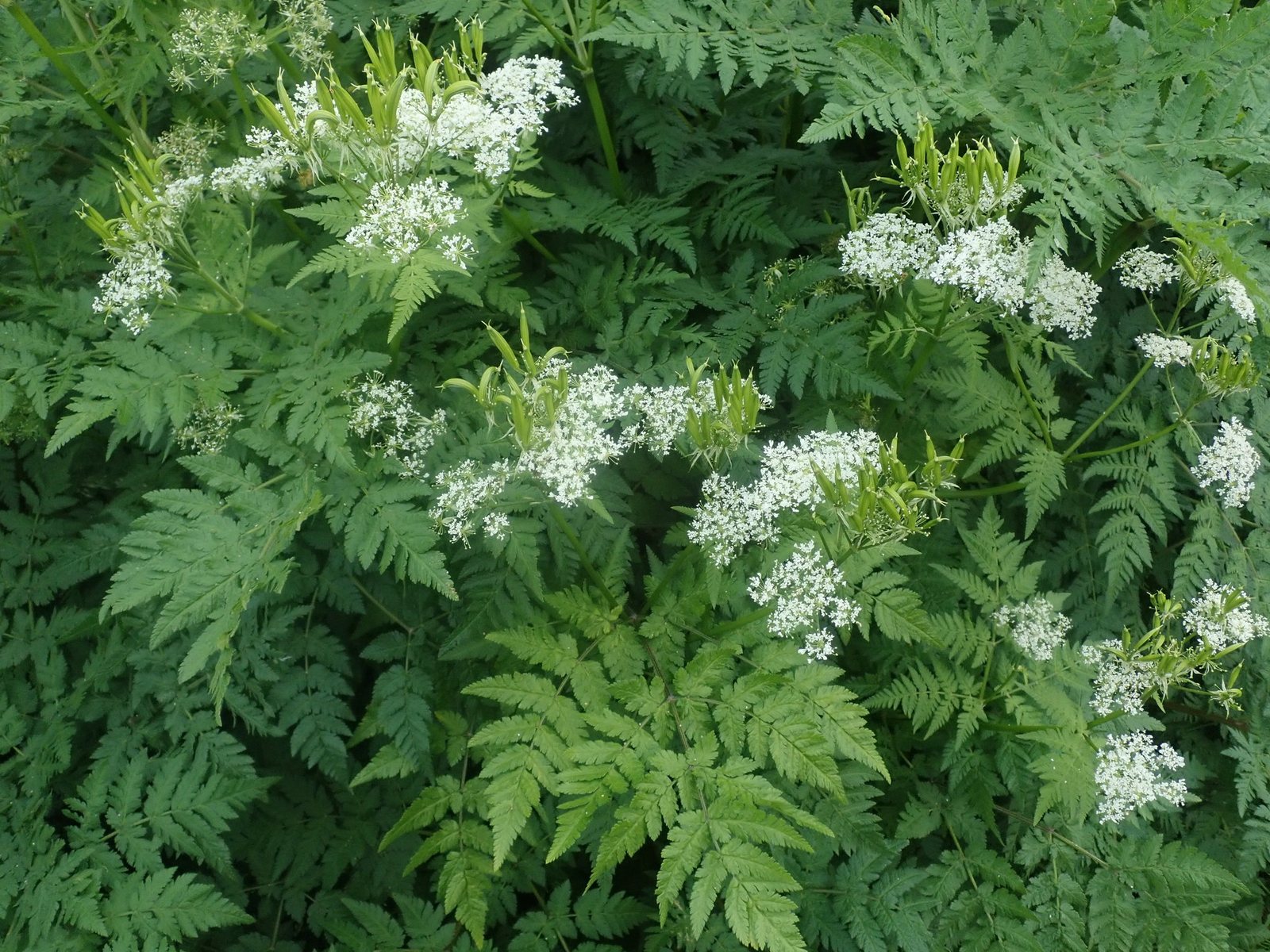
At a glance
- Sun
- Partial shade; full sun where summers are cool and the soil stays moist.
- Water
- Keep evenly moist, especially during establishment and dry weather; avoid waterlogged soil.
- Soil
- Humus-rich, moisture-retentive but well-drained soil; tolerates a broad pH range.
- Height
- 3-5 ft (0.9-1.5 m)
- Spread
- 2-3 ft (0.6-0.9 m)
- Flowers
- Late spring to early summer; small white flowers in broad, flat-topped clusters.
- Foliage
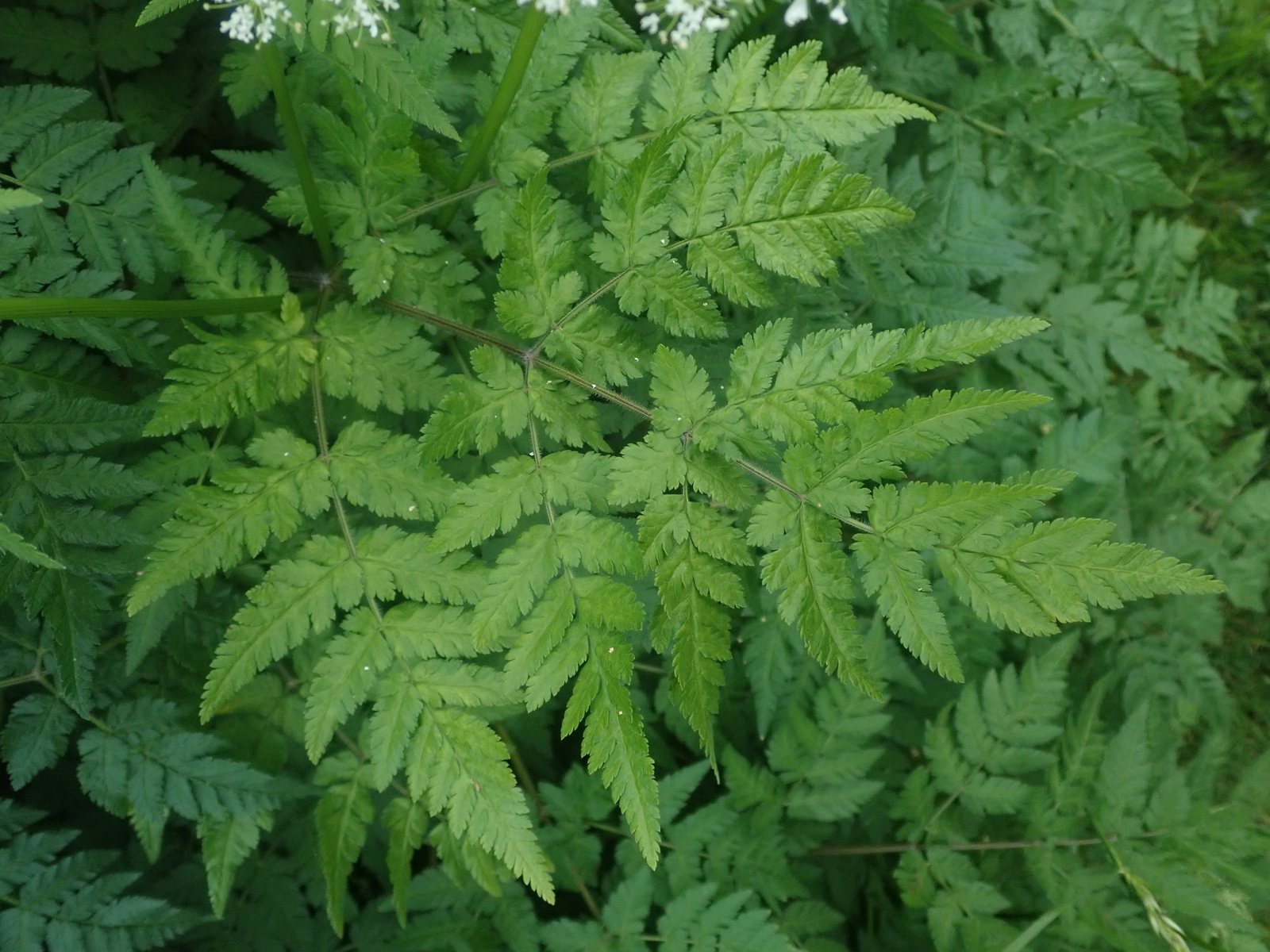
- Soft, finely divided green leaves, often with pale markings near the leaflet bases; strongly anise-scented when crushed.
- Growth
- Moderate; established plants form substantial clumps and may self-seed freely.
- Care needed
- Low
The year at a glance
- Pollinators
- Cold hardy
- Low allergen
- Fragrant
- Edible
| J | F | M | A | M | J | J | A | S | O | N | D | |
|---|---|---|---|---|---|---|---|---|---|---|---|---|
| Flowers | ||||||||||||
| Fruit | ||||||||||||
| Plant |
Northern hemisphere months. In Australia, shift them by six.
- Difficulty
- Easy
- Toughness
- Fairly tough
Will it suit your garden?
Pick your zone, country, light and whether you have pets.
Full sun is 6 or more hours of direct sun a day, part shade 3 to 6 hours, shade under 3.
How it grows
Planting day
1 ft (0.3 m)
After 1 year
2 ft (0.6 m)
After 2 years
3 ft (0.9 m)
After 3 years
4 ft (1.2 m)
full size
About 3 years to full size.
From a typical nursery size, at an average rate for this kind of plant. A rule of thumb, not a forecast.
Good to know
- Cats and dogs
- Safe
- In the garden
- Spreads vigorously: plan to contain it.
- Growth rate
- Moderate
Care
Jobs through the year
- WaterApr–May, Sep, every 10 days
- Water established plants if soil starts drying; young plants need more frequent watering.
- WaterJun–Aug, every 7 days
- Keep roots evenly moist during dry spells, especially in sunny positions.
- MulchMar–Apr
- Spread compost around clumps to conserve moisture, leaving the crown clear.
- HarvestApr–Sep, every 7 days
- Pick a few tender outer leaves; harvest green seeds in June–July before they harden.
- DeadheadJun–Jul
- Cut flowering stems to the base before seed ripens unless collecting seed.
- PruneFeb
- Remove dead stems and foliage before new shoots emerge.
- ProtectJun–Aug
- Provide afternoon shade in hot weather to prevent scorching and poor growth.
- Water young plants regularly through their first growing season.
- Spread compost around the clump in spring; rich soil rarely needs additional feeding.
- Mulch to conserve moisture, keeping mulch clear of the crown.
- Give afternoon shade in warmer gardens; hot, dry sites cause poor growth.
- Remove unwanted seedlings while small, before their taproots become established.
Pruning. Cut flowering stems to the base before seeds ripen if you want to limit self-seeding. Remove dead foliage in late autumn or late winter, before new shoots appear.
Harvest
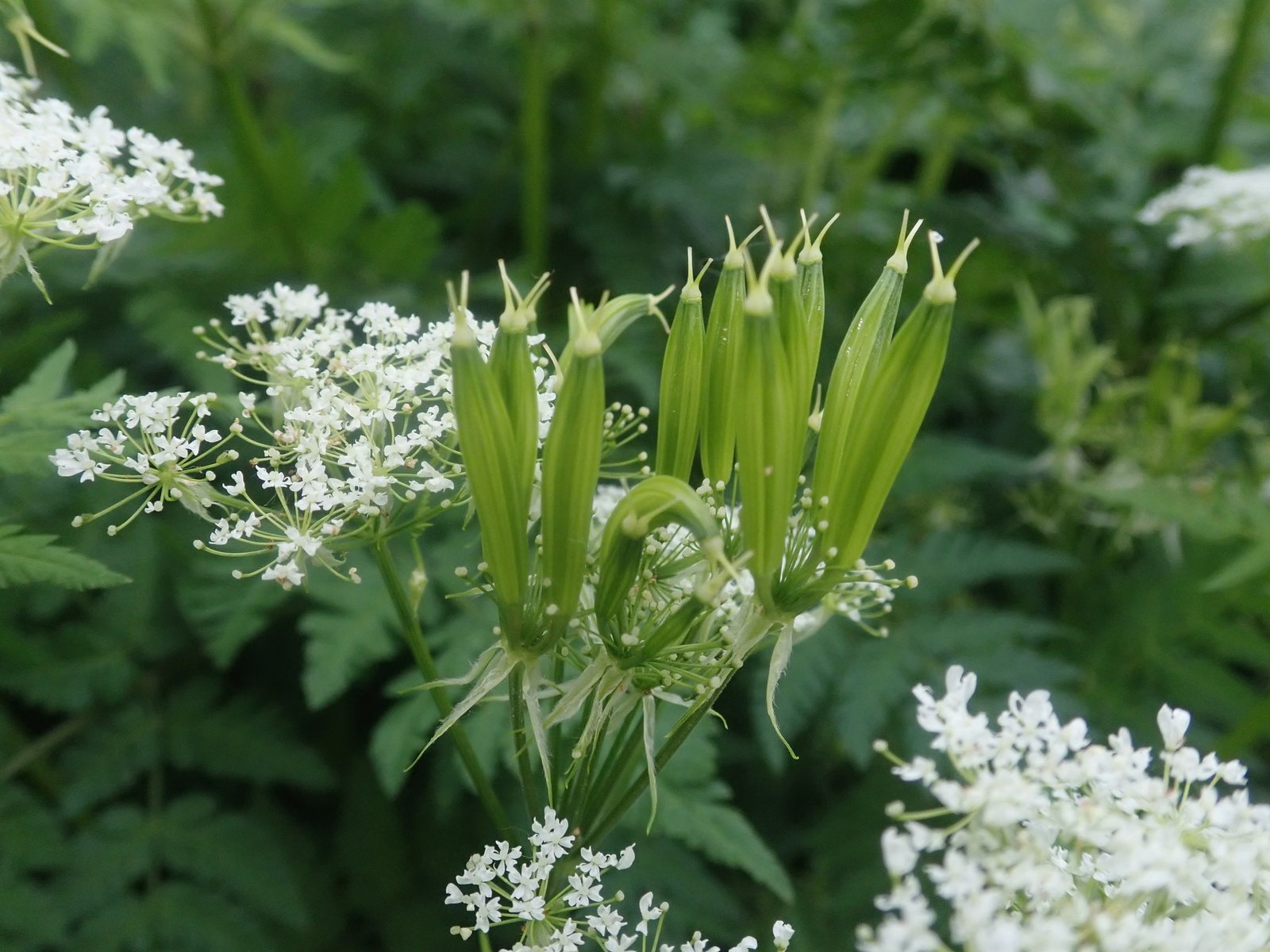
Pick young, tender leaves from spring onward, taking a few outer stalks rather than stripping the plant. Pick the elongated, ridged seeds while they are still green and tender, before they turn brown and hard; use only plants whose identity is certain.
Through the year
- Late winter
- Clear away dead stems before new growth emerges.
- Spring
- Plant nursery-grown plants, water them in and mulch with compost.
- Spring
- Begin picking young leaves and remove unwanted seedlings.
- Early summer
- Harvest tender green seeds, or cut off spent flower heads to prevent seeding.
- Summer
- Water during dry spells, particularly in sunny positions.
- Autumn
- Sow freshly ripened seed outdoors so it receives winter chilling.
In the garden
- Plant at a woodland edge with hostas and ferns for contrasting leaf textures.
- Use in a partly shaded herb garden where its foliage remains easy to harvest.
- Repeat through informal borders to link spring flowers with airy white bloom.
- Place beneath deciduous fruit trees where there is adequate moisture and light.
Garden styles it suits: Cottage garden, Woodland, Potager (kitchen garden), Sensory garden, Edible landscape and Wildlife garden.
Plant it with: Hostas, Hardy geraniums, Brunnera, Solomon's seal, Foxgloves and Ferns.
Wildlife: The open flower clusters provide accessible nectar and pollen for hoverflies, small bees and other insects.
Problems to watch for
- Slugs and snails may damage young shoots: check emerging growth and use barriers or locally approved slug controls if needed.
- Hot, dry conditions cause wilting and scorched foliage: water deeply, mulch and provide afternoon shade.
- Unwanted seedlings can crowd nearby plants: remove flower heads before seeds mature and pull seedlings promptly.
- Seed germination can be slow or uneven: sow fresh seed outdoors in autumn and retain pots through a second winter if necessary.
Safety
Not known to be toxic to people, cats, dogs or horses. Leaves, seeds and roots have culinary uses, but several related plants are dangerously poisonous; never eat an uncertain specimen or rely on scent alone for identification.
Where it spreads. Can self-seed aggressively in cool, moist gardens, including in the UK, and may spread beyond its allotted space. Remove seed heads before ripening where spread is unwanted.
Easily confused with
Poison hemlock (Conium maculatum)
Poison hemlock usually has smooth, hairless stems with purple blotches; sweet cicely has softly hairy stems and leaves and conspicuously long, ridged fruits. Poison hemlock is potentially fatal if eaten;
Cow parsley (Anthriscus sylvestris)
Cow parsley has similar divided leaves and white flower clusters, but lacks sweet cicely's strong anise scent and has much smaller, relatively smooth fruits rather than long, deeply ridged ones.
The name
The name Myrrhis comes from an ancient Greek name for an aromatic plant, while odorata means fragrant.
Propagation. Sow fresh seed outdoors in autumn; it needs a prolonged cold period, and germination may take more than one winter. Established clumps can be divided carefully in early spring or autumn, but their deep roots make division less straightforward than seed propagation.
Checked against open data
- Accepted botanical name
- Myrrhis odorata
- In the US and Canada
- Introduced in Canada and the lower 48 states.
- Native range
- Albania, Austria, France, Germany, Italy, Spain, Switzerland and Yugoslavia.
- Measured
- Soil pH 7 to 7.5. Average height 85 cm.
Sources: GBIF (CC BY 4.0), USDA PLANTS and Trefle (CC BY 4.0). The care and design notes are LandscapeGPT's own.
See it in your own yard.
Upload a photo of your yard and see it redesigned with plants that suit your climate, each checked against your zone.