Sweet olive
Osmanthus fragrans. Family Oleaceae. Shrub.
Also called Fragrant tea olive, Tea olive, Fragrant olive.
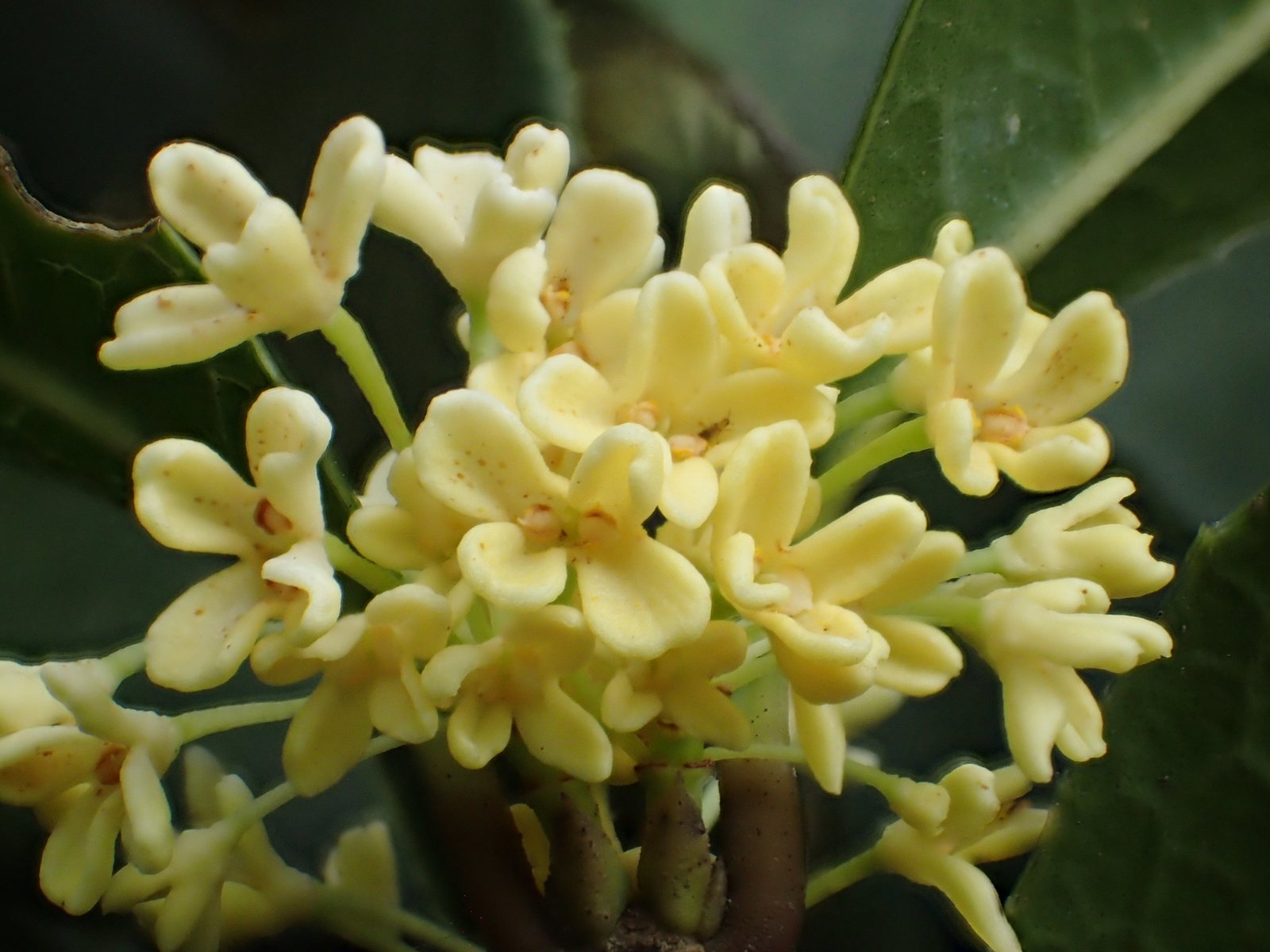
Sweet olive is a large evergreen shrub or small tree grown for tiny flowers with a strong, apricot-like fragrance. Its dense, glossy foliage makes a useful screen, while planting near a path or seating area brings the scent within reach. It needs a warm, sheltered position and is best grown in a movable container where winters are too cold.
At a glance
- Sun
- Full sun to partial shade; afternoon shade helps in hot, dry climates. Shelter from cold, drying winds.
- Water
- Keep evenly moist while establishing. Established plants tolerate brief dry spells, but flower and grow better with deep watering during prolonged drought.
- Soil
- Fertile, well-drained soil, preferably slightly acidic to neutral. Avoid waterlogged ground; strongly alkaline soil can cause yellowing leaves.
- Height
- 10-20 ft (3-6 m), occasionally taller in favourable climates
- Spread
- 6-15 ft (1.8-4.6 m)
- Flowers
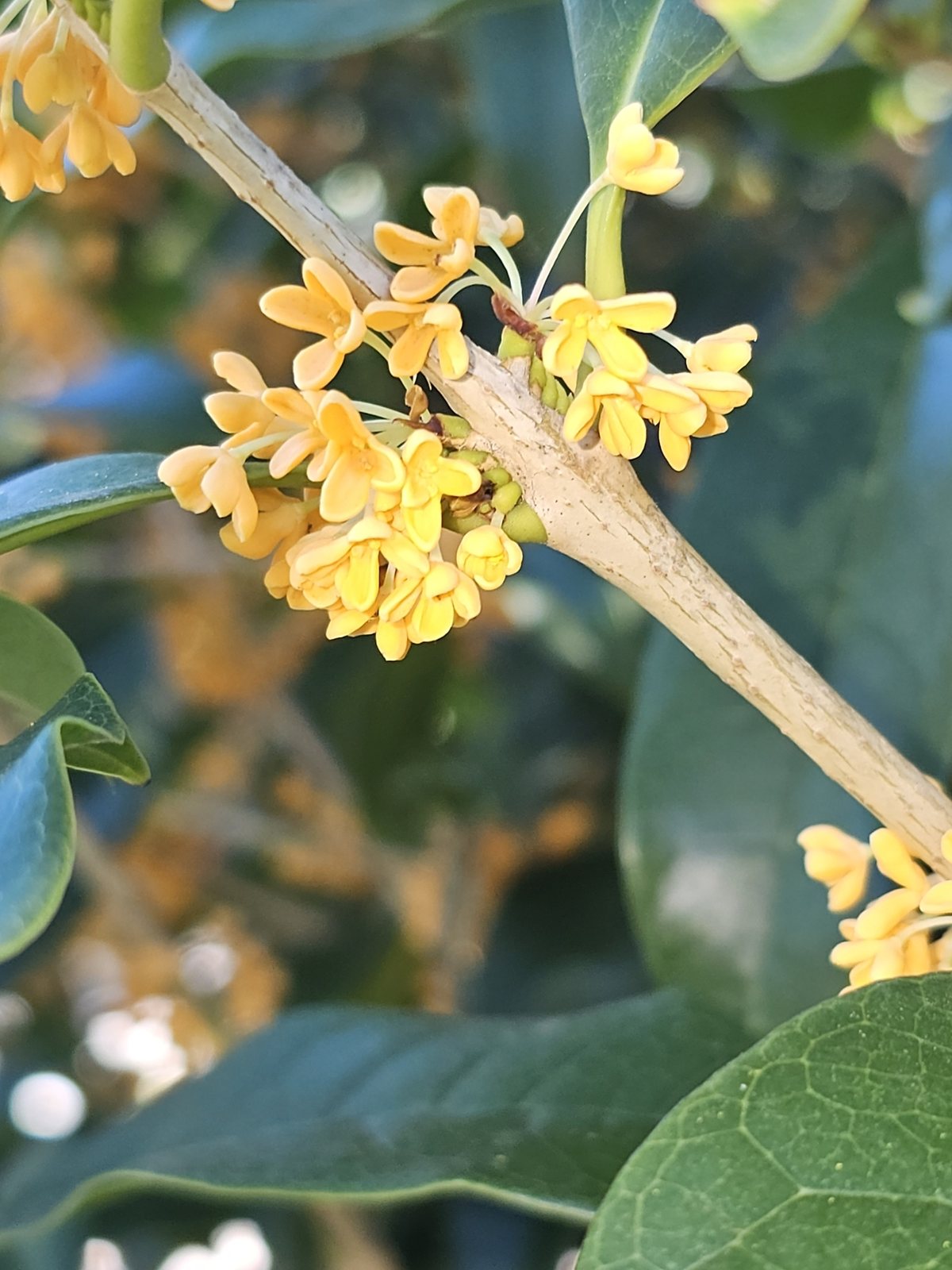
- Tiny white to creamy-yellow flowers, mainly in autumn; repeat flushes may occur in spring or during mild weather. Some forms have orange flowers.
- Foliage
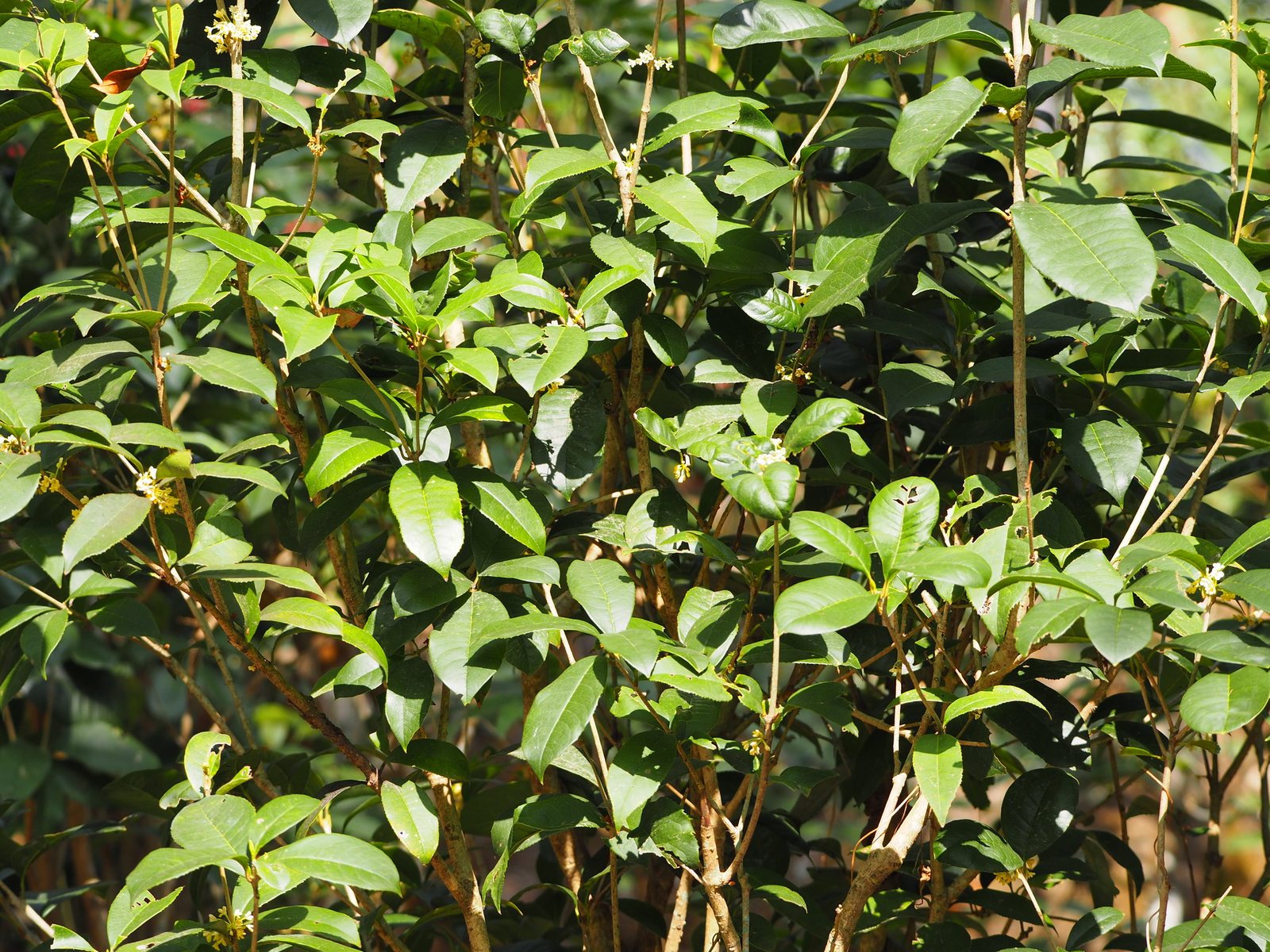
- Evergreen. Leathery, glossy, dark green leaves in opposite pairs, with smooth or finely toothed edges.
- Growth
- Slow to moderate
- Care needed
- Low
The year at a glance
- Pollinators
- Deer resistant
- Heat tolerant
- Wildlife
- Low allergen
- Fragrant
| J | F | M | A | M | J | J | A | S | O | N | D | |
|---|---|---|---|---|---|---|---|---|---|---|---|---|
| Flowers | ||||||||||||
| Plant |
Northern hemisphere months. In Australia, shift them by six.
- Difficulty
- Moderate
- Toughness
- Fairly tough
Will it suit your garden?
Pick your zone, country, light and whether you have pets.
Full sun is 6 or more hours of direct sun a day, part shade 3 to 6 hours, shade under 3.
How it grows
Planting day
1.8 ft (0.54 m)
After 1 year
4 ft (1.1 m)
After 2 years
6 ft (1.8 m)
After 3 years
8 ft (2.4 m)
After 5 years
12 ft (3.6 m)
About 7 years to full size.
From a typical nursery size, at an average rate for this kind of plant. A rule of thumb, not a forecast.
Good to know
- Cats and dogs
- Safe
- Growth rate
- Slow
Care
Jobs through the year
- WaterApr–May, Sep–Oct, every 14 days
- Water established ground-grown plants during dry spells; young plants and pots need more frequent checks.
- WaterJun–Aug, every 7 days
- Water deeply during prolonged dry weather, allowing the surface to begin drying between waterings.
- WaterJan–Mar, Nov–Dec, every 14 days
- Check sheltered pots and water as needed to keep just moist, never waterlogged.
- MulchApr–May
- For ground-grown plants, maintain 5–8 cm of organic mulch clear of the trunk.
- FeedApr–May
- Apply a modest slow-release shrub feed only if growth is weak.
- PruneApr–May
- After hard frost risk passes, remove damaged or crossing branches and shorten only unruly shoots.
- ProtectJan–Apr, Oct–Dec
- In zones 6–7, grow in a container and overwinter in a bright, cool, frost-free place.
- Water deeply during dry weather for the first two growing seasons, allowing the surface soil to begin drying between waterings.
- Spread 2-3 in (5-8 cm) of organic mulch over the root area, keeping it clear of the trunk.
- Apply a modest amount of slow-release shrub fertiliser in spring if growth is weak; avoid heavy feeding.
- Protect young plants from hard frost and cold winds, especially near the colder end of their range.
- Use a container with drainage holes in cold regions and overwinter it in a bright, cool, frost-free place.
Pruning. In spring, after the risk of hard frost has passed, remove dead, damaged or crossing branches and shorten only shoots that need controlling. Avoid frequent shearing, which removes flowering growth and spoils the natural outline.
Through the year
- Spring
- Plant once severe frost has passed, water thoroughly and mulch the root area.
- Spring
- Check for winter damage, prune lightly and feed only if needed.
- Summer
- Water deeply during prolonged dry spells; check container plants more frequently.
- Late summer
- Take semi-ripe cuttings from healthy, non-flowering shoots.
- Autumn
- Enjoy the main flowering flush and avoid clipping off flower-bearing shoots.
- Late autumn
- Move containers under frost-free cover before damaging frosts arrive.
- Winter
- Keep sheltered container plants just moist, without leaving their roots standing in water.
In the garden
- Plant beside a terrace, entrance or frequently used path so the fragrance can be enjoyed at close range.
- Use as an informal evergreen screen behind camellias, azaleas or hydrangeas.
- Train as a small, multi-stemmed tree to give a sheltered courtyard year-round structure.
- Grow in a large container near seating where winter shelter is available.
Garden styles it suits: Sensory garden, Modern courtyard, Traditional, Southern, Chinese scholar garden and Japanese.
Plant it with: Camellias, Azaleas, Gardenias, Hydrangeas, Liriope and Japanese maples.
Wildlife: Flowers provide nectar and pollen for visiting insects. Dense evergreen branches offer shelter for small birds; dark, olive-like fruits may develop where compatible plants and suitable conditions allow.
Problems to watch for
- Scale insects: inspect stems and leaf undersides; remove small infestations by hand or use a labelled horticultural oil, following temperature restrictions.
- Root rot in wet soil: improve drainage and reduce watering; badly affected plants may need replacing in a better-drained position.
- Yellow leaves with green veins: check soil pH and drainage; alkaline soil can limit iron uptake, so use a suitable chelated iron treatment if deficiency is confirmed.
- Frost scorch or dieback: provide shelter and protect young plants during severe cold; wait until spring growth starts before removing damaged wood.
Safety
Not known to be toxic to cats, dogs, horses or people. No parts are recognised as a serious poisoning hazard. The flowers are traditionally used to scent tea and food, but this does not mean all parts should be eaten; avoid flowers treated with garden pesticides.
Easily confused with
Holly olive (Osmanthus heterophyllus)
Usually has conspicuously holly-like, spiny leaves, especially on young growth. Sweet olive generally has longer leaves with smooth or finely toothed edges.
Fortune's osmanthus (Osmanthus × fortunei)
This hybrid usually has broader leaves with coarser, more conspicuous teeth. Leaf features overlap, so identification can be difficult without a reliable label.
Japanese privet (Ligustrum japonicum)
Produces conspicuous upright clusters of white flowers at shoot tips, usually in summer. Sweet olive carries much smaller flower clusters in the leaf axils and has a distinctive fruity scent.
The name
Osmanthus comes from Greek words meaning 'fragrant flower', fragrans means 'fragrant' in Latin, and 'sweet olive' reflects its scent and membership of the olive family.
Propagation. Take semi-ripe cuttings in late summer and root them in a free-draining medium with gentle humidity; rooting can be slow. Layering is another option. Seed is less readily available and does not reliably reproduce named forms.
Checked against open data
- Accepted botanical name
- Osmanthus fragrans
- Native range
- Assam, Cambodia, China North-Central, China South-Central, China Southeast, East Himalaya, Hainan, Japan, Myanmar, Nepal, Taiwan and Thailand.
- Measured
- Average height 570 cm.
Sources: GBIF (CC BY 4.0) and Trefle (CC BY 4.0). The care and design notes are LandscapeGPT's own.
See it in your own yard.
Upload a photo of your yard and see it redesigned with plants that suit your climate, each checked against your zone.