Sweet viburnum
Viburnum odoratissimum. Family Viburnaceae. Shrub.
Also called Fragrant viburnum.
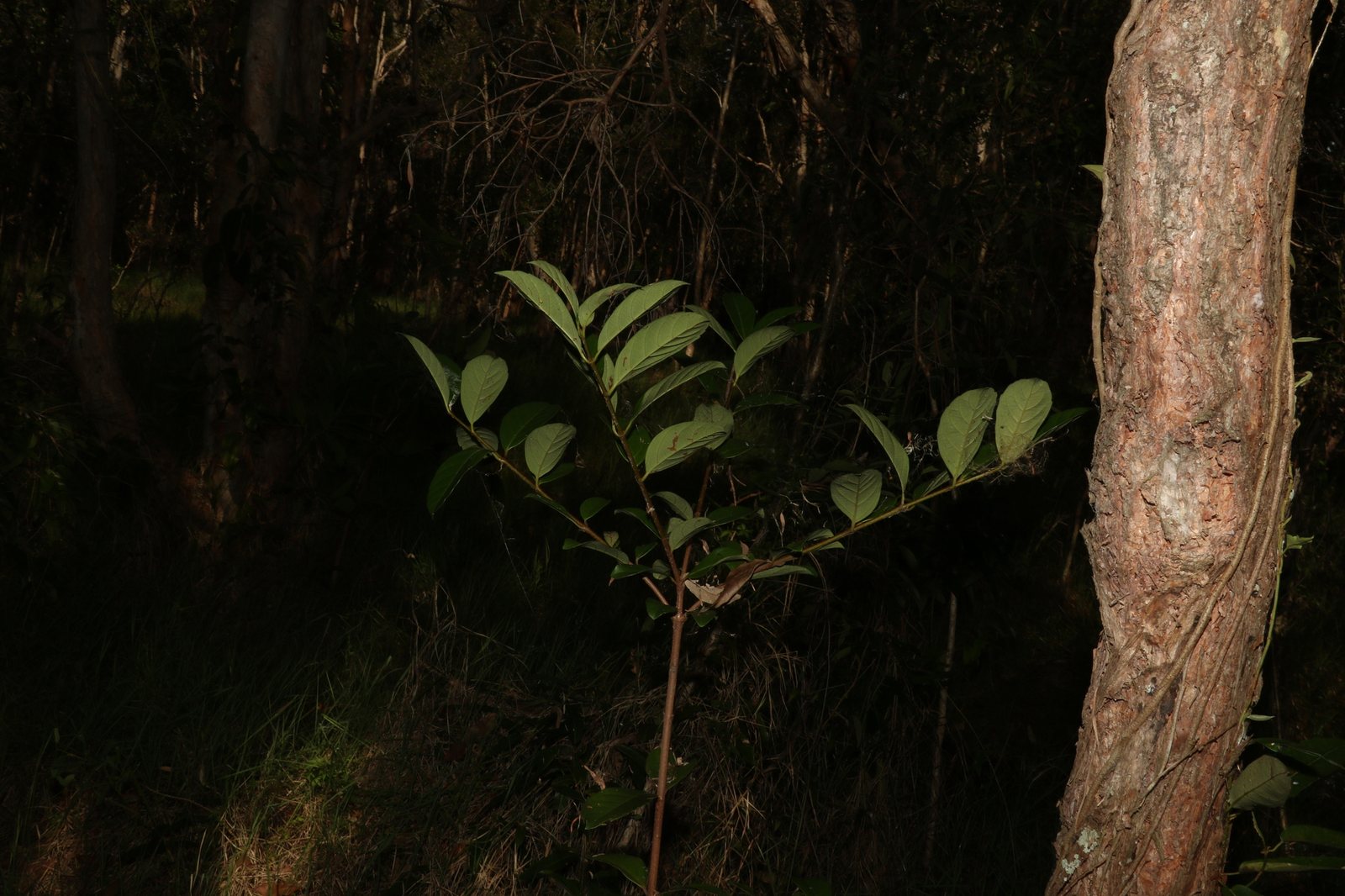
Sweet viburnum is a large evergreen shrub or small tree grown for dense screening, glossy leaves and fragrant white spring flowers. It grows quickly in warm climates but needs room; repeated close clipping reduces flowering. In cooler areas, frost and cold winds can damage its foliage.
At a glance
- Sun
- Full sun to partial shade; flowering and growth are densest with good light.
- Water
- Water regularly while establishing. Established plants tolerate short dry spells but grow best with deep watering during prolonged drought.
- Soil
- Moist, well-drained soil, preferably slightly acidic to neutral. Avoid persistently wet ground.
- Height
- 15-30 ft (4.6-9.1 m) if left unpruned
- Spread
- 10-20 ft (3-6.1 m)
- Flowers
- Spring; small, fragrant white flowers in branching clusters.
- Foliage
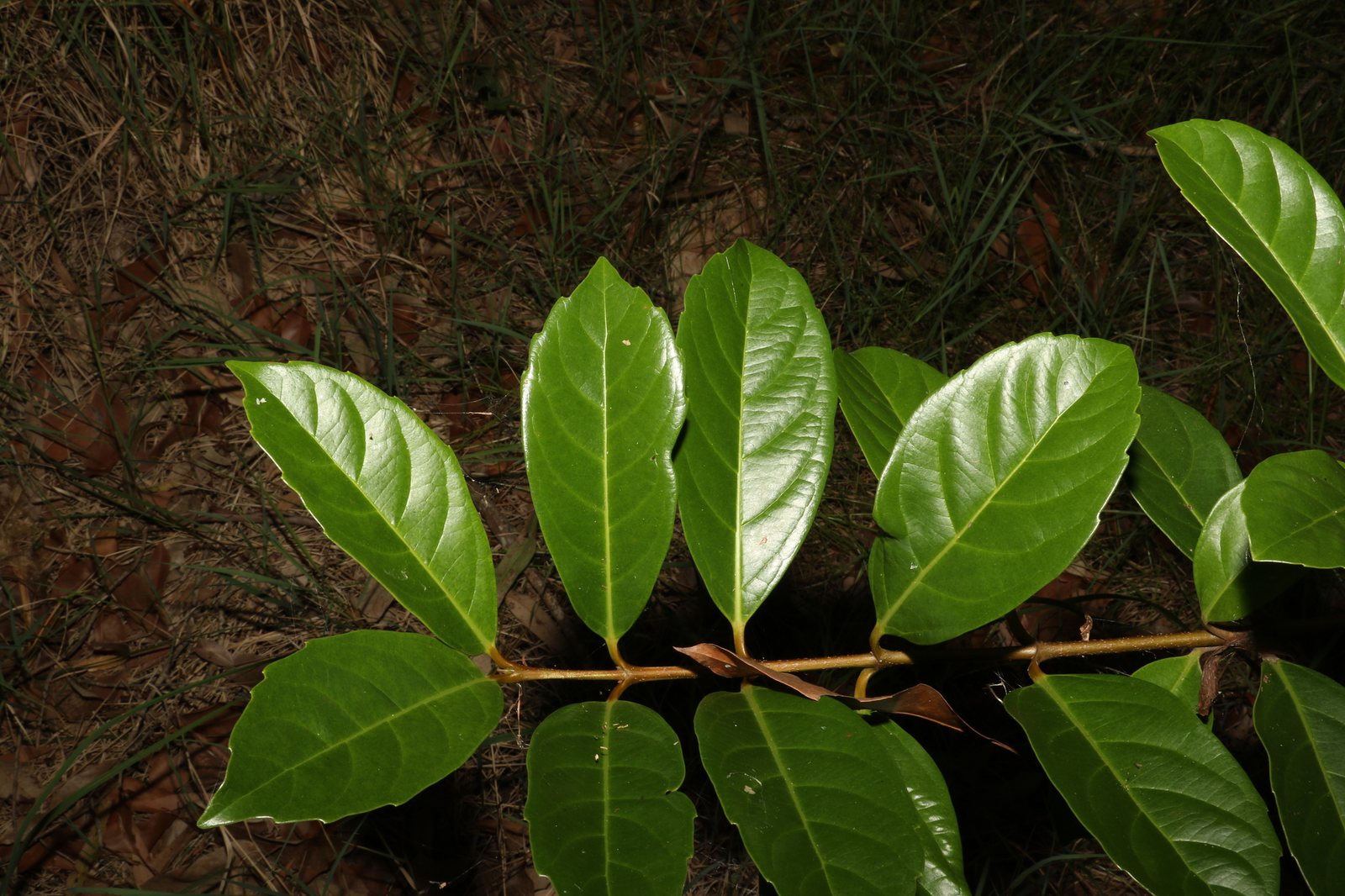
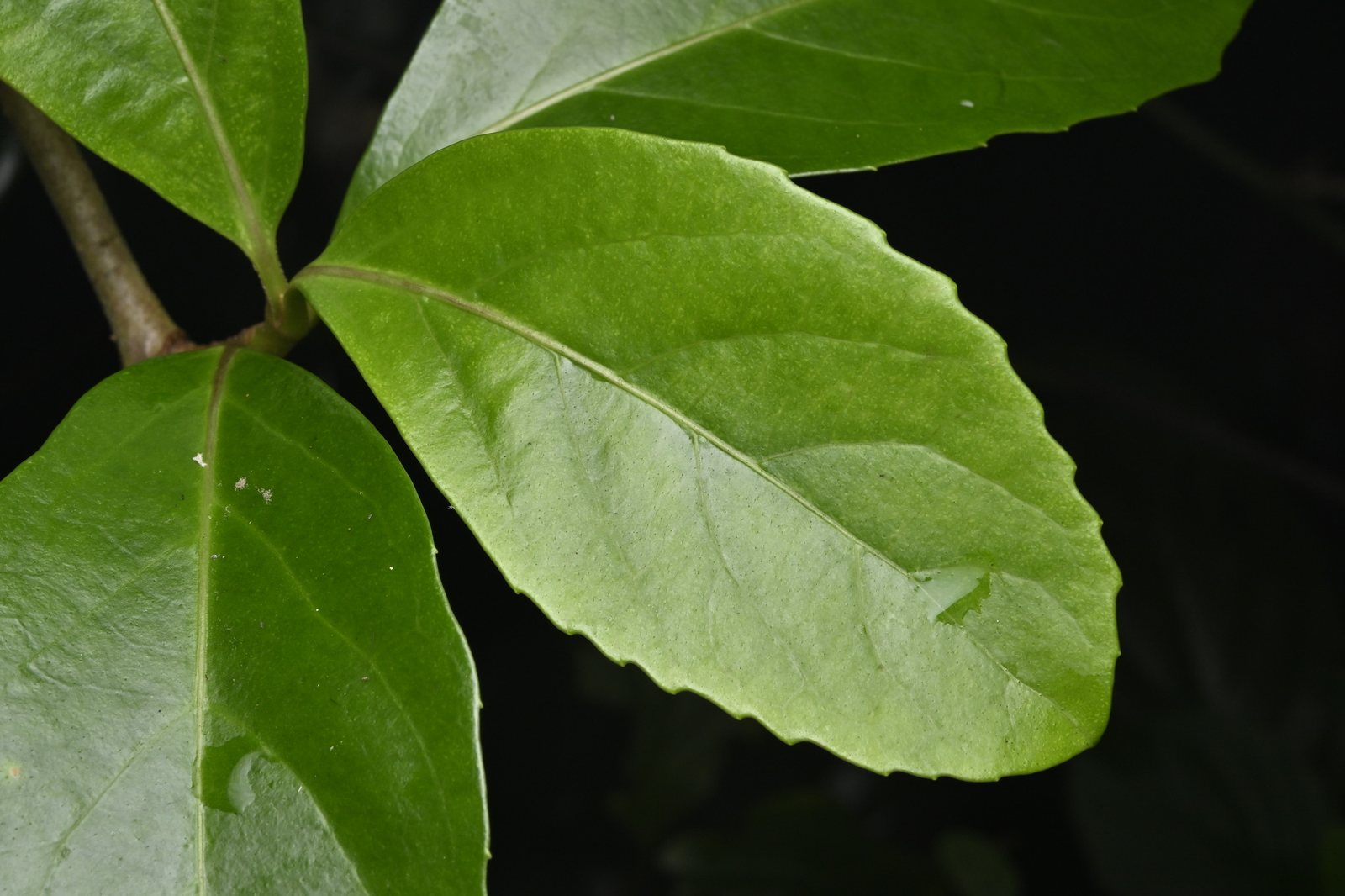
- Evergreen. Large, leathery, glossy green leaves arranged in opposite pairs; new growth may be bronze-tinted.
- Growth
- Fast in warm conditions with adequate moisture.
- Care needed
- Medium
The year at a glance
- Pollinators
- Heat tolerant
- Wildlife
- Low allergen
- Fragrant
| J | F | M | A | M | J | J | A | S | O | N | D | |
|---|---|---|---|---|---|---|---|---|---|---|---|---|
| Flowers | ||||||||||||
| Fruit | ||||||||||||
| Plant |
Northern hemisphere months. In Australia, shift them by six.
- Difficulty
- Hard
- Toughness
- Needs looking after
Will it suit your garden?
Pick your zone, country, light and whether you have pets.
Full sun is 6 or more hours of direct sun a day, part shade 3 to 6 hours, shade under 3.
How it grows
Planting day
2.7 ft (0.82 m)
After 1 year
9 ft (2.7 m)
After 2 years
15 ft (4.5 m)
After 3 years
21 ft (6.4 m)
After 5 years
22 ft (6.9 m)
full size
About 3 years to full size.
From a typical nursery size, at an average rate for this kind of plant. A rule of thumb, not a forecast.
Good to know
- Cats and dogs
- Mildly toxic: may upset a stomach
- Invasive in
- Australia
- Growth rate
- Fast
Care
Jobs through the year
- WaterApr–May, Sep–Oct, every 14 days
- For established plants in mild gardens, water if soil is drying; young plants need more.
- WaterJun–Aug, every 7 days
- Water deeply during dry weather; skip when rainfall keeps the root zone moist.
- MulchApr
- Apply 5–8 cm of organic mulch, leaving a clear gap around stems.
- FeedApr
- Apply a modest slow-release shrub feed only if growth is weak.
- PruneMay–Jun
- Shape immediately after flowering and remove dead or crossing wood.
- ProtectJan–Apr, Oct–Dec
- Not reliably hardy in zones 6–7; overwinter in a bright frost-free space rather than relying on fleece.
- Water deeply through the first growing season, allowing the soil surface to begin drying between waterings.
- Spread 2-3 in (5-8 cm) of organic mulch over the root area, keeping it clear of the stems.
- Apply a modest amount of slow-release shrub fertiliser in spring if growth is weak; avoid heavy feeding.
- Allow for its mature width rather than planting close to walls or narrow paths.
- Choose shelter from cold, drying winds near the colder end of its range.
Pruning. Prune after flowering, shortening long shoots and removing dead, damaged or crossing branches. For a hedge, keep the base wider than the top and avoid hard pruning late in the growing season.
Through the year
- Early spring
- Check for winter damage and remove dead wood once new growth makes it easy to identify.
- Spring
- Refresh mulch and feed lightly if the plant is growing poorly.
- Late spring
- After flowering, shape the shrub or trim the hedge.
- Summer
- Water deeply during extended dry weather and inspect new shoots for aphids or scale.
- Autumn
- In mild climates, plant new shrubs while the soil is warm and rainfall is increasing.
- Winter
- Protect recently planted shrubs from severe cold and avoid pruning ahead of frost.
In the garden
- Use as a tall boundary screen where there is enough width for a substantial evergreen hedge.
- Grow as a loose flowering backdrop behind camellias, azaleas and shade-tolerant perennials.
- Train a specimen into a small multi-stemmed tree to provide light shade in a large courtyard.
- Plant near a seating area to enjoy the spring fragrance, leaving enough space to avoid frequent clipping.
Garden styles it suits: Formal, Southern, Modern tropical, Traditional, Sensory garden and Green on green.
Plant it with: Camellias, Azaleas, Gardenias, Lilyturf, Cast-iron plant and Clivias.
Wildlife: Flowers attract bees and other insects. Birds may eat the red berries, which ripen to black, and use dense plants for shelter; closely clipped hedges produce fewer flowers and fruits.
Problems to watch for
- Root rot in waterlogged soil: improve drainage before planting and reduce watering; badly affected plants may need replacing.
- Scale insects and associated sooty mould: inspect stems and leaf undersides, manage ants, and use horticultural oil according to the label.
- Aphids on soft shoots: wash off small colonies with water and preserve ladybirds and other natural predators.
- Frost-scorched foliage: choose a sheltered site, protect young plants during cold snaps and wait until spring growth before cutting back damaged shoots.
Safety
Not known to be toxic to cats, dogs, horses or people. The berries are not intended as food, and eating substantial amounts of berries or foliage may cause digestive upset.
Where it spreads. Reported as an emerging environmental weed in south-eastern Queensland and north-eastern New South Wales, Australia, where birds can spread its seeds into bushland. Check local weed advice before planting near natural vegetation.
Easily confused with
Awabuki viburnum (Viburnum odoratissimum var. awabuki)
Often sold under the same common name; it typically has thicker, more conspicuously glossy leaves. Botanical treatments differ, and it may also be labelled Viburnum awabuki.
Laurustinus (Viburnum tinus)
Usually smaller, with smaller leaves, pink flower buds and flatter clusters of white flowers in winter or early spring.
Japanese privet (Ligustrum japonicum)
Has generally smaller leaves and cream-white flower panicles appearing later, usually in early summer; fruits are dark rather than passing through a conspicuous red stage.
The name
The Latin epithet odoratissimum means 'very fragrant', referring to the flowers.
Propagation. Take semi-ripe cuttings in summer and root them in a free-draining medium under humid conditions. Seed is slower and does not reliably preserve cultivar characteristics.
Checked against open data
- Accepted botanical name
- Viburnum odoratissimum
- Native range
- Assam, Bangladesh, China North-Central, China South-Central, China Southeast, Hainan, Laos, Myanmar, Philippines, Sulawesi, Taiwan and Thailand.
- Measured
- Average height 1200 cm.
Sources: GBIF (CC BY 4.0) and Trefle (CC BY 4.0). The care and design notes are LandscapeGPT's own.
See it in your own yard.
Upload a photo of your yard and see it redesigned with plants that suit your climate, each checked against your zone.