Sweet William
Dianthus barbatus. Family Caryophyllaceae. Perennial.
Also called Bearded pink.
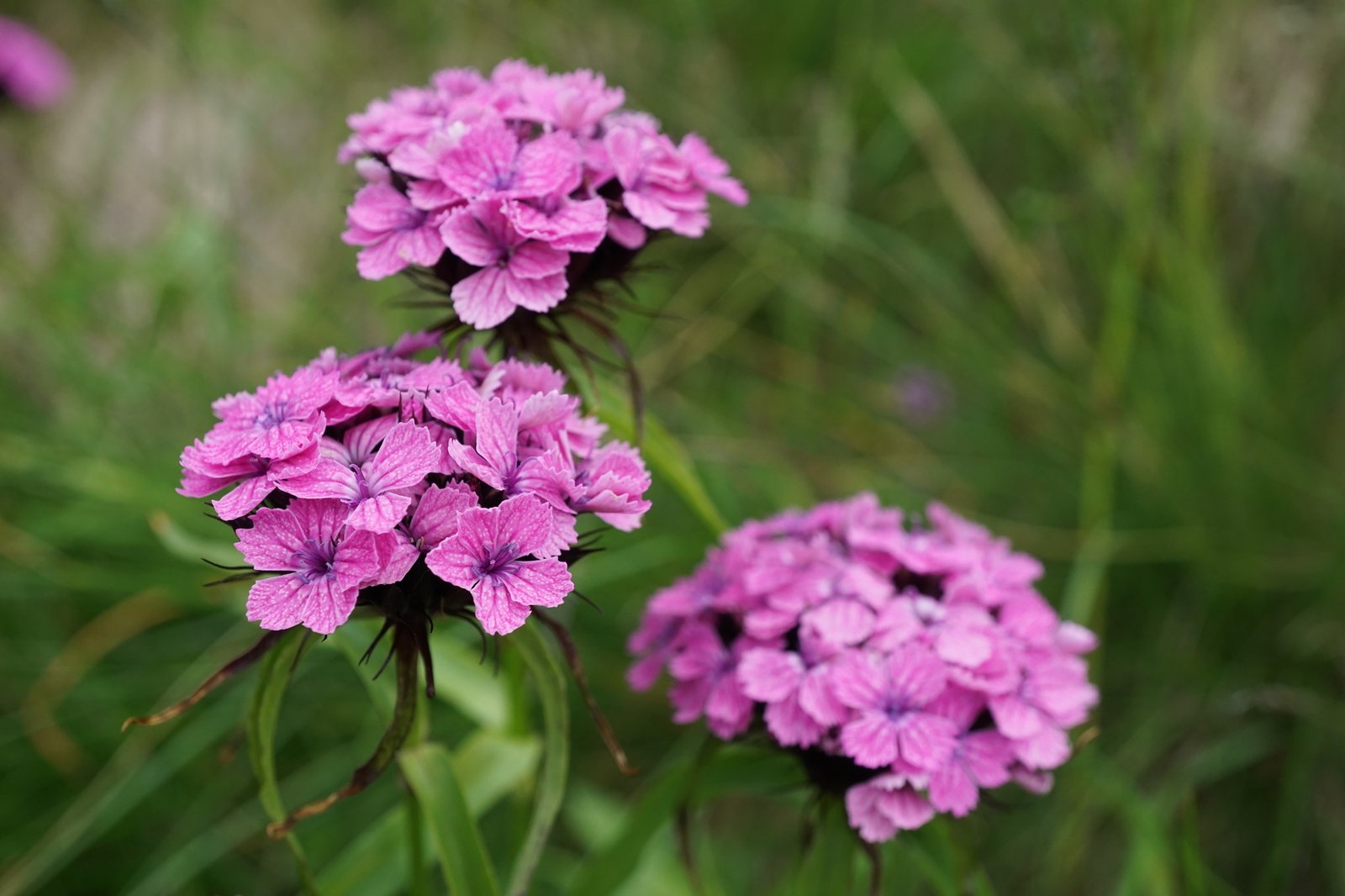
Sweet William is a short-lived perennial usually grown as a biennial, making leafy rosettes in its first year and flowering the next. Gardeners grow it for its dense, often fragrant clusters of colourful flowers in borders, cottage gardens and cutting patches.
At a glance
- Sun
- Full sun; light afternoon shade is helpful in hot climates.
- Water
- Moderate; keep young plants evenly moist, then water established plants during dry spells without leaving the soil waterlogged.
- Soil
- Fertile, well-drained soil, preferably neutral to slightly alkaline. Avoid heavy soil that stays wet in winter.
- Height
- 1-2 ft (0.3-0.6 m)
- Spread
- 0.5-1 ft (0.15-0.3 m)
- Flowers
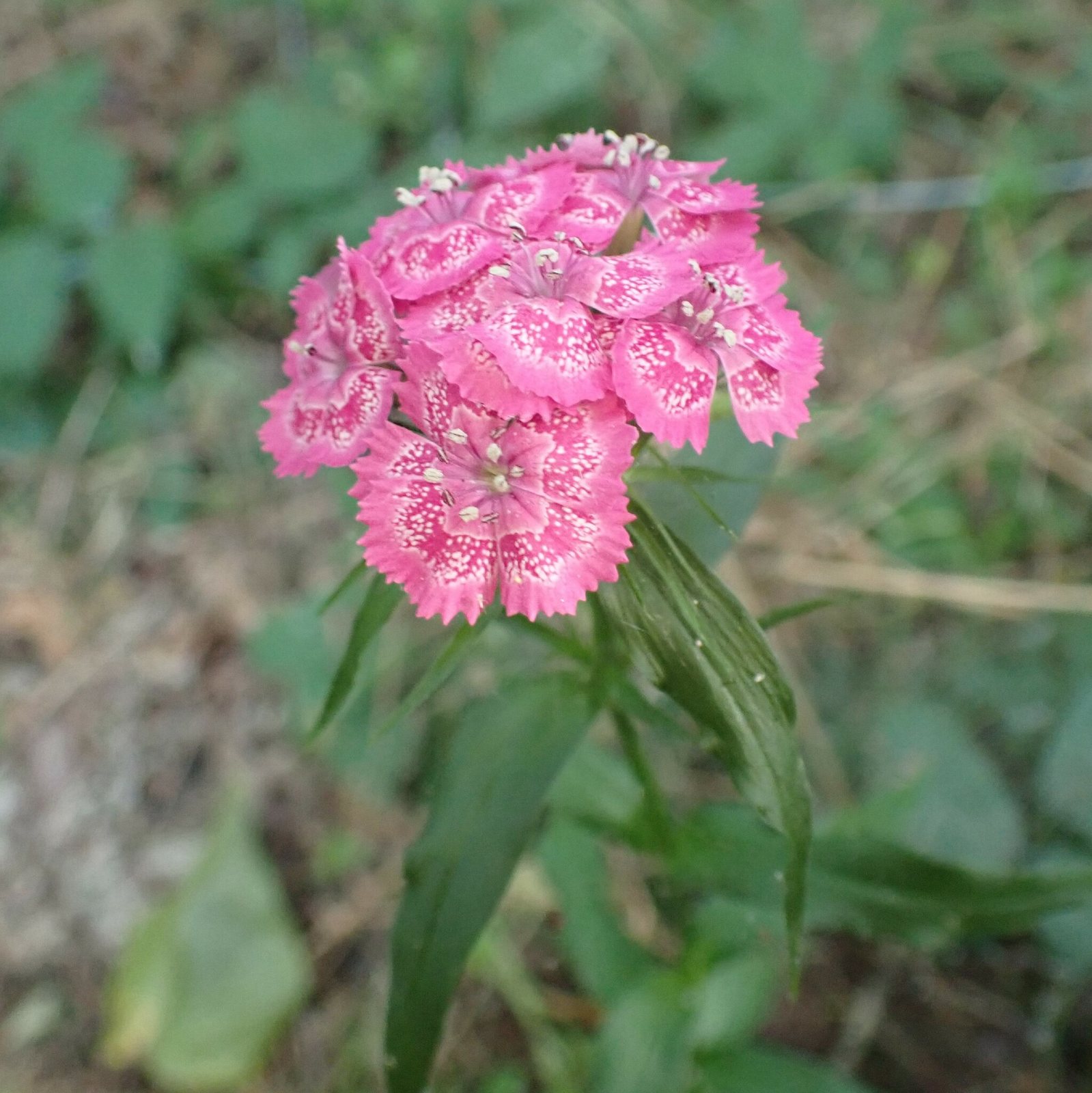
- Late spring to midsummer; white, pink, red, crimson and purple, often with contrasting eyes or bicoloured markings.
- Foliage
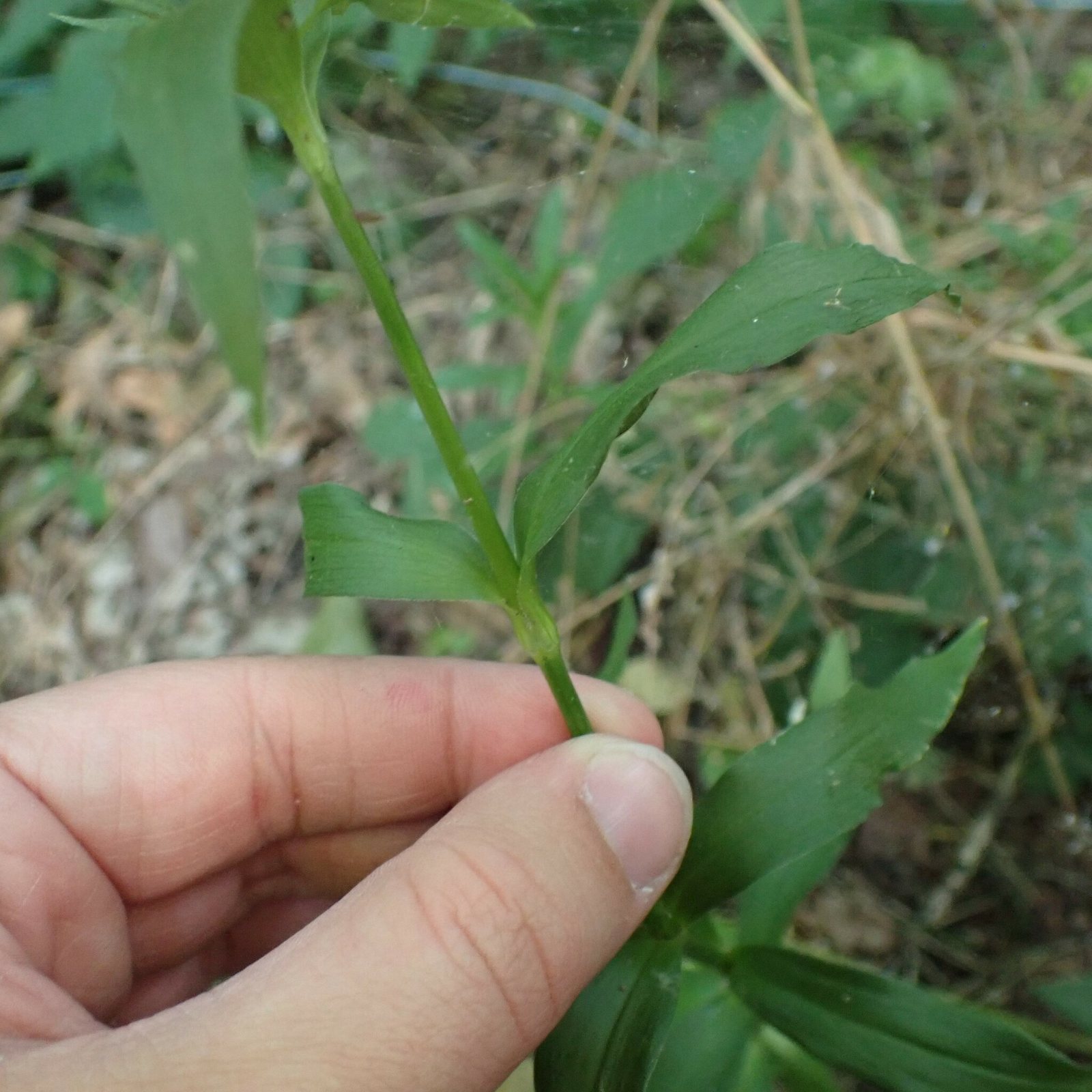
- Narrow, pointed green leaves in low rosettes and opposite pairs along upright flower stems. Often evergreen in mild winters, but may lose foliage in severe cold.
- Growth
- Moderate; usually flowers in its second year, although some strains flower in their first year.
- Care needed
- Low
The year at a glance
- Pollinators
- Cold hardy
- Low allergen
- Fragrant
| J | F | M | A | M | J | J | A | S | O | N | D | |
|---|---|---|---|---|---|---|---|---|---|---|---|---|
| Flowers | ||||||||||||
| Fruit | ||||||||||||
| Plant |
Northern hemisphere months. In Australia, shift them by six.
- Difficulty
- Easy
- Toughness
- Fairly tough
Will it suit your garden?
Pick your zone, country, light and whether you have pets.
Full sun is 6 or more hours of direct sun a day, part shade 3 to 6 hours, shade under 3.
How it grows
Planting day
1 ft (0.3 m)
After 1 year
1.1 ft (0.35 m)
After 2 years
1.3 ft (0.4 m)
After 3 years
1.5 ft (0.45 m)
full size
About 3 years to full size.
From a typical nursery size, at an average rate for this kind of plant. A rule of thumb, not a forecast.
Good to know
- Cats and dogs
- Mildly toxic: may upset a stomach
- Growth rate
- Moderate
Care
Jobs through the year
- WaterMar–May, Sep–Oct, every 14 days
- Water established plants during dry spells; keep new plants and seedlings more evenly moist.
- WaterJun–Aug, every 7 days
- Water at soil level during dry weather, allowing the surface to dry between waterings.
- PruneMar
- Remove winter-damaged or diseased foliage without damaging healthy basal rosettes.
- ProtectApr–May
- Support taller stems with twiggy sticks in exposed positions.
- DeadheadMay–Jul, every 7 days
- Remove spent heads to prolong flowering, leaving a few only if seed is wanted.
- PruneJul–Aug
- Cut finished flowering stems back to healthy basal leaves.
- ProtectOct–Nov
- Clear debris from crowns and prevent winter waterlogging.
- Space plants 0.5-1 ft (0.15-0.3 m) apart so air can move between them.
- Water at soil level when the surface begins to dry; avoid repeatedly wetting the leaves.
- Work a little compost into the soil before planting; avoid heavy nitrogen feeding, which encourages floppy growth.
- Keep mulch clear of the crowns, especially where winters are wet.
- Support taller plants with twiggy sticks in exposed positions.
Pruning. Remove spent flower heads promptly to encourage further flowering, or leave a few to ripen if you want seedlings. After flowering finishes, cut stems back to healthy basal leaves and remove dead or diseased foliage.
Through the year
- Early spring
- Remove damaged foliage and check that overwintered rosettes are not sitting in wet soil.
- Spring
- Plant young plants into prepared, well-drained soil and water them in.
- Late spring
- Add discreet supports before taller flower stems lean or fall.
- Summer
- Deadhead regularly and water during prolonged dry weather.
- Early summer
- Sow seed for flowering plants the following year.
- Early autumn
- Move sturdy young rosettes into their flowering positions while the soil is still warm.
- Late autumn
- Clear fallen debris from around the crowns and improve drainage wherever water collects.
In the garden
- Plant groups near the front or middle of cottage borders for dense patches of early-summer colour.
- Combine with roses and catmint to fill the lower layer beneath taller flowers.
- Use along sunny paths where the flower scent can be enjoyed at close range.
- Grow in cutting beds for clustered flower stems that suit small bouquets.
- Repeat matching colours through formal beds or potager edging for a tidy seasonal pattern.
Garden styles it suits: Cottage garden, English country, Traditional, Romantic rose garden, Potager (kitchen garden) and Sensory garden.
Plant it with: Roses, Catmint, Hardy geraniums, Foxgloves, Lady's mantle and Salvias.
Wildlife: Flowers attract bees and butterflies, especially single-flowered forms with accessible nectar.
Problems to watch for
- Crown and root rot: prevent winter waterlogging, keep mulch away from crowns and remove badly affected plants.
- Rust and leaf spots: remove affected leaves, improve spacing and water at soil level rather than over the foliage.
- Slugs and snails: protect young rosettes with regular evening checks and, where needed, a locally approved slug bait used as labelled.
- Poor flowering: ordinary biennial strains need a season of growth and winter chilling; sow early enough to establish sturdy rosettes before winter.
Safety
Mildly toxic to cats and dogs if chewed or eaten; leaves, stems and flowers may cause vomiting, diarrhoea or skin irritation. It is not known to be toxic to horses. In people, sap can irritate sensitive skin and swallowing plant material may cause mild stomach upset; do not treat it as an edible plant.
Easily confused with
China pink (Dianthus chinensis)
Usually has narrower leaves and flowers borne singly or in small, loose groups rather than Sweet William's dense, flat-topped clusters.
Garden pink (Dianthus plumarius)
Forms low mats of narrow, grey-green leaves and bears more deeply fringed flowers in smaller groups.
Garden phlox (Phlox paniculata)
Usually grows taller and flowers later, with larger, branching flower heads; individual flowers have smooth-edged lobes rather than the toothed petals of Sweet William.
The name
The botanical name Dianthus means 'flower of Zeus', while barbatus means 'bearded', referring to the bristly bracts surrounding the flower clusters.
Propagation. Sow seed in late spring or early summer for flowers the following year, covering it lightly and keeping it moist until germination. It may self-seed where soil is exposed, but seedlings may differ in colour from their parents. Take non-flowering basal cuttings in summer to preserve a particular plant.
Checked against open data
- Accepted botanical name
- Dianthus barbatus
- In the US and Canada
- Introduced in Alaska, Canada and the lower 48 states.
- Native range
- Austria, Bulgaria, Czechoslovakia, France, Hungary, Italy, Korea, Manchuria, Poland, Primorye, Romania and Spain.
- Measured
- Soil pH 4.5 to 5. Average height 48 cm.
Sources: GBIF (CC BY 4.0), USDA PLANTS and Trefle (CC BY 4.0). The care and design notes are LandscapeGPT's own.
See it in your own yard.
Upload a photo of your yard and see it redesigned with plants that suit your climate, each checked against your zone.