Switchgrass 'Northwind'
Panicum virgatum 'Northwind'. Family Poaceae. Ornamental grass.
Also called Northwind switchgrass, Panicum virgatum 'Northwind'.
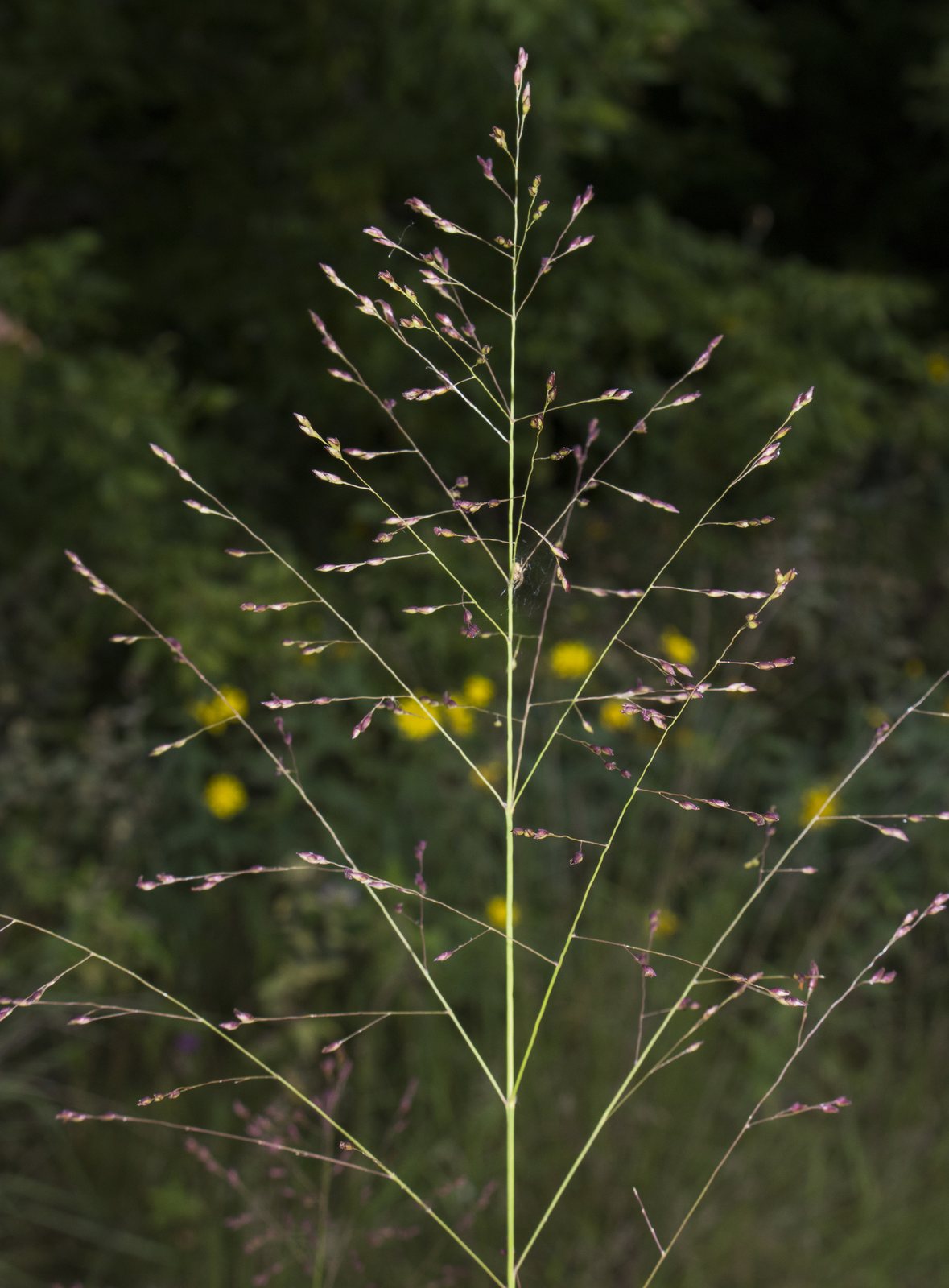
'Northwind' is a deciduous, warm-season grass grown for its narrow, upright clumps of blue-green leaves and airy late-season flowers. It provides strong vertical structure without usually needing stakes, then turns golden yellow and remains useful for winter interest.
At a glance
- Sun
- Full sun is best; light shade is tolerated, but stems may lean and flowering may be reduced.
- Water
- Water regularly during the first growing season. Once established, it tolerates dry spells but grows best with occasional deep watering during prolonged drought.
- Soil
- Adaptable to clay, loam and sandy soils, including moderately moist ground. Avoid permanently waterlogged soil, especially in winter, and very rich soil that encourages weak growth.
- Height
- 4-6 ft (1.2-1.8 m), including flowers
- Spread
- 2-3 ft (0.6-0.9 m)
- Flowers
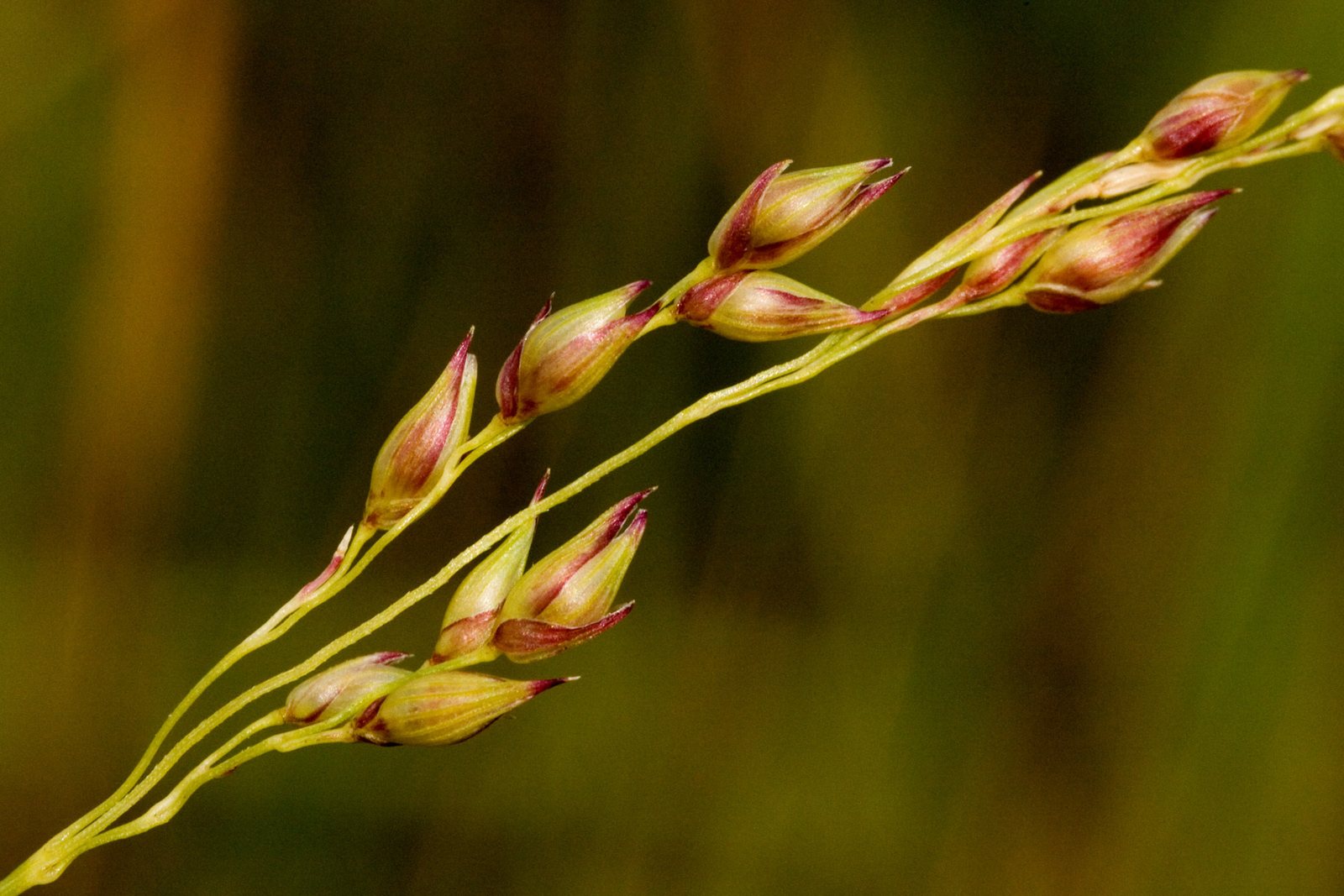
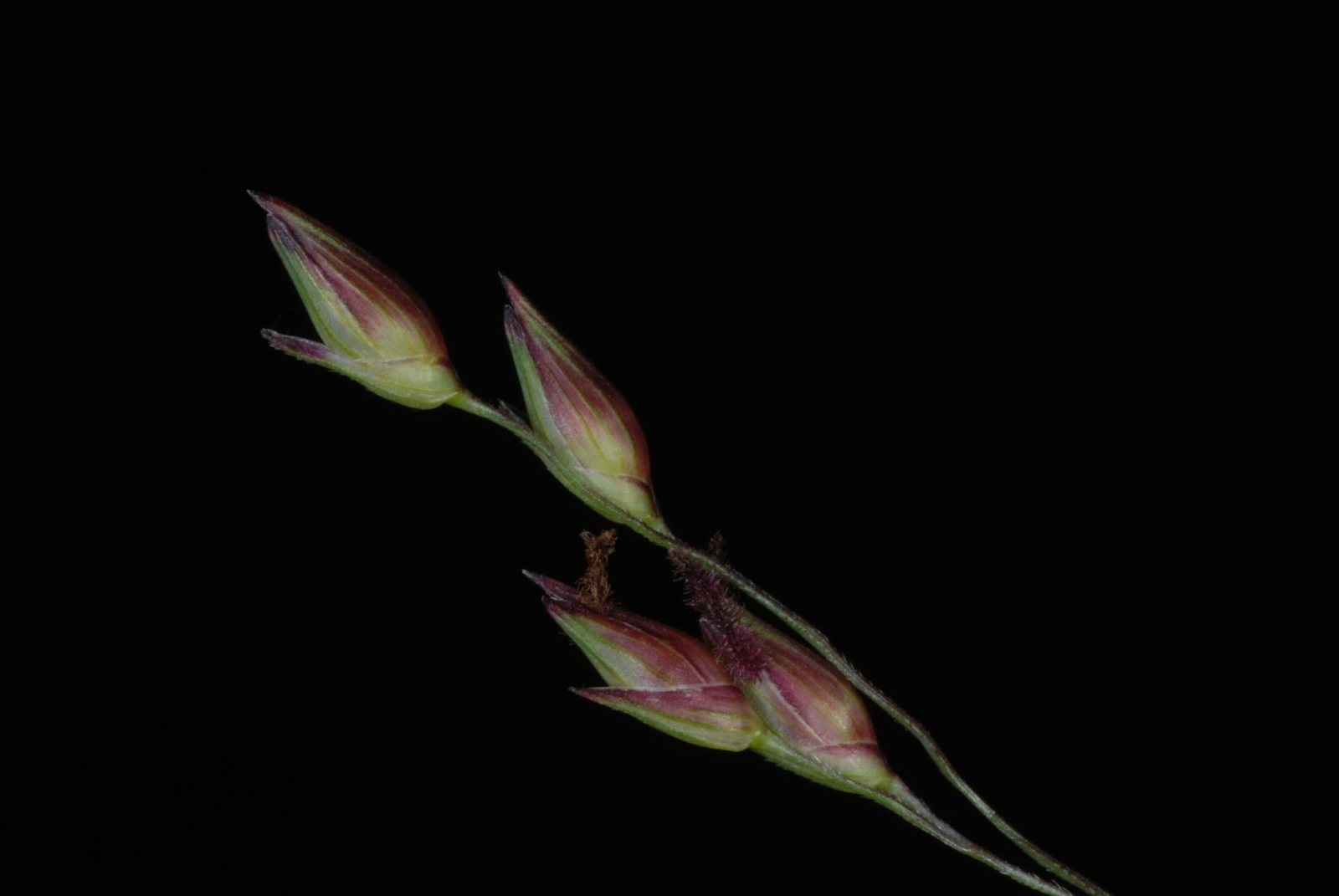
- Late summer into autumn; fine, airy green flower panicles develop pinkish tones and mature to tan seedheads.
- Foliage
- Upright, relatively broad blue-green leaves turn golden yellow in autumn, then straw-coloured through winter. New growth emerges late in spring.
- Growth
- Moderate; usually forms a substantial clump within 2-3 growing seasons.
- Care needed
- Low
The year at a glance
- Deer resistant
- Drought tolerant
- Cold hardy
- Heat tolerant
- Wildlife
| J | F | M | A | M | J | J | A | S | O | N | D | |
|---|---|---|---|---|---|---|---|---|---|---|---|---|
| Flowers | ||||||||||||
| Fruit | ||||||||||||
| Plant |
Northern hemisphere months. In Australia, shift them by six.
- Difficulty
- Easy
- Toughness
- Very tough
Will it suit your garden?
Pick your zone, country, light and whether you have pets.
Full sun is 6 or more hours of direct sun a day, part shade 3 to 6 hours, shade under 3.
How it grows
Planting day
1.1 ft (0.35 m)
After 1 year
2.7 ft (0.81 m)
After 2 years
4 ft (1.3 m)
After 3 years
5 ft (1.5 m)
full size
About 3 years to full size.
From a typical nursery size, at an average rate for this kind of plant. A rule of thumb, not a forecast.
Good to know
- Cats and dogs
- Safe
- Native to
- the US and Canada
- Growth rate
- Moderate
Care
Jobs through the year
- WaterApr–May, Sep–Oct, every 21 days
- Water established ground-grown clumps only during prolonged drought; water new plants more regularly.
- WaterJun–Aug, every 14 days
- Give established clumps a deep soak during prolonged drought only; young plants need more frequent watering.
- PruneFeb–Mar
- Cut old stems to 10–15 cm before new shoots lengthen.
- MulchApr–May
- Apply a light mulch after planting, keeping it away from the crown.
- DivideApr–May
- Divide only if the centre thins or the clump outgrows its space.
- Plant in full sun, allowing room for the mature clump rather than crowding it against neighbouring plants.
- Water deeply during dry spells in its first growing season; established clumps need much less attention.
- Avoid routine feeding and heavy applications of manure, which can make stems flop.
- Apply a light mulch after planting, keeping it clear of the crown.
- Divide in spring if the centre thins or the clump becomes too large; routine annual division is unnecessary.
Pruning. Leave the standing stems through winter, then cut the whole clump to 4-6 in (10-15 cm) above ground in late winter or early spring, before new shoots lengthen. Take care not to cut emerging green growth.
Through the year
- Late winter
- Cut back last year's stems before fresh growth begins.
- Spring
- Plant container-grown plants as the soil warms; divide established clumps when new shoots appear.
- Late spring
- Check for new growth before assuming a dormant clump has died; switchgrass starts later than many border plants.
- Summer
- Water newly planted clumps during dry weather and avoid high-nitrogen feeding.
- Late summer
- Enjoy the flowers; remove unwanted seedlings nearby if any appear.
- Autumn
- Leave golden foliage and seedheads standing for winter structure and wildlife shelter.
In the garden
- Repeat upright clumps through a perennial border to give rhythm among looser flowering plants.
- Plant in drifts with coneflowers, black-eyed Susans and asters for a prairie-style border.
- Use beside paths or terraces as a narrow, seasonal screen that remains visually light.
- Set against a dark hedge or wall to show off the fine flower panicles and golden autumn foliage.
- Combine with low, rounded plants in a contemporary garden for a clear contrast in shape.
Garden styles it suits: Architectural minimal, Modern, New perennial (prairie), Native meadow, Midwest prairie and Winter interest.
Plant it with: Purple coneflower, Black-eyed Susan, New England aster, Blazing star, Russian sage and Stonecrop.
Wildlife: The North American species supports several butterfly and moth larvae, and its seed can feed small birds. Standing clumps provide winter cover for insects and other small wildlife; the flowers are wind-pollinated rather than a significant nectar source.
Problems to watch for
- Flopping or leaning: move to a sunnier position and stop feeding; rich soil and shade weaken the upright habit.
- Rust or leaf spots: improve airflow, water at soil level and remove affected debris when cutting back; minor spotting rarely needs treatment.
- Crown rot in persistently wet soil: improve drainage or replant on slightly raised ground; discard badly rotted crowns.
- Thin or dead clump centre: lift and divide in spring, replanting healthy outer sections.
Safety
Switchgrass can poison horses and other grazing livestock if they eat enough foliage; saponins can cause liver damage and severe sensitivity to sunlight. It is not generally known to be toxic to cats, dogs or people under ordinary garden exposure, but it is not an edible plant and should not be offered as animal feed.
Easily confused with
Switchgrass 'Heavy Metal' (Panicum virgatum 'Heavy Metal')
Usually shorter, with more distinctly metallic blue foliage; 'Northwind' has broader, more olive-blue leaves and a taller, strongly columnar habit.
Feather reed grass 'Karl Foerster' (Calamagrostis × acutiflora 'Karl Foerster')
Starts growing and flowering earlier, with narrow, dense flower spikes rather than switchgrass's open, airy panicles.
Chinese silver grass (Miscanthus sinensis)
Usually has more arching leaves with a conspicuous pale central stripe and fuller, silky flower plumes rather than fine, open panicles.
The name
The species name virgatum means twiggy or wand-like, referring to the slender, upright stems.
Propagation. Divide in spring as growth begins, using a sharp spade or knife to separate rooted sections with several shoots. Division preserves 'Northwind'; seedlings do not reliably retain its upright form or other cultivar traits.
Checked against open data
- Accepted botanical name
- Panicum virgatum
- In the US and Canada
- Native in Canada and the lower 48 states. Introduced in Hawaii.
- Native range
- Alabama, Arizona, Arkansas, Belize, Bermuda, Colorado, Connecticut, Cuba, Delaware, District of Columbia, Florida and Georgia.
- Measured
- Average height 100 cm.
Sources: GBIF (CC BY 4.0), USDA PLANTS and Trefle (CC BY 4.0). The care and design notes are LandscapeGPT's own.
See it in your own yard.
Upload a photo of your yard and see it redesigned with plants that suit your climate, each checked against your zone.