Sycamore 'Brilliantissimum'
Acer pseudoplatanus 'Brilliantissimum'. Family Sapindaceae. Tree.
Also called Brilliant sycamore, Sycamore maple 'Brilliantissimum'.
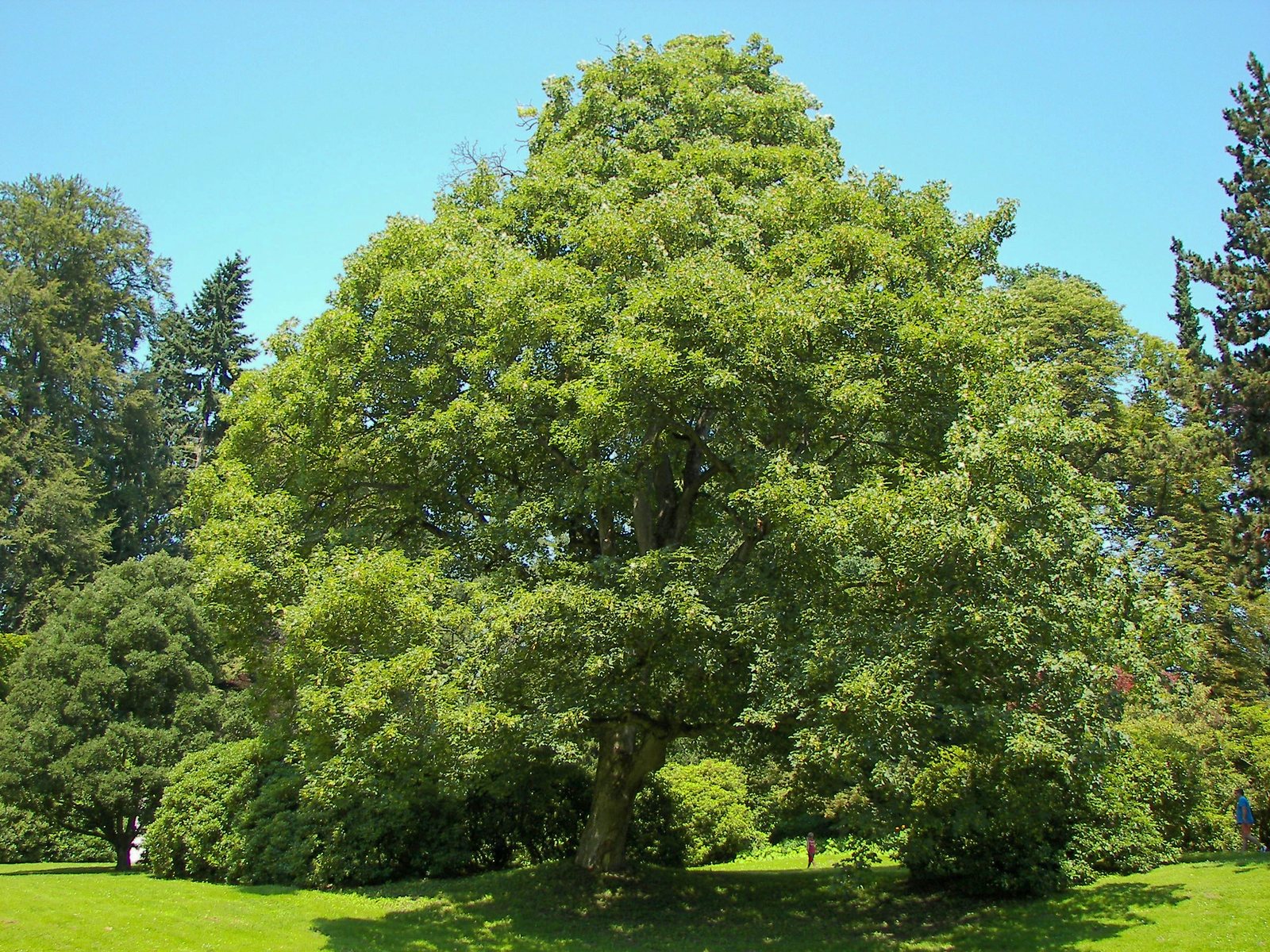
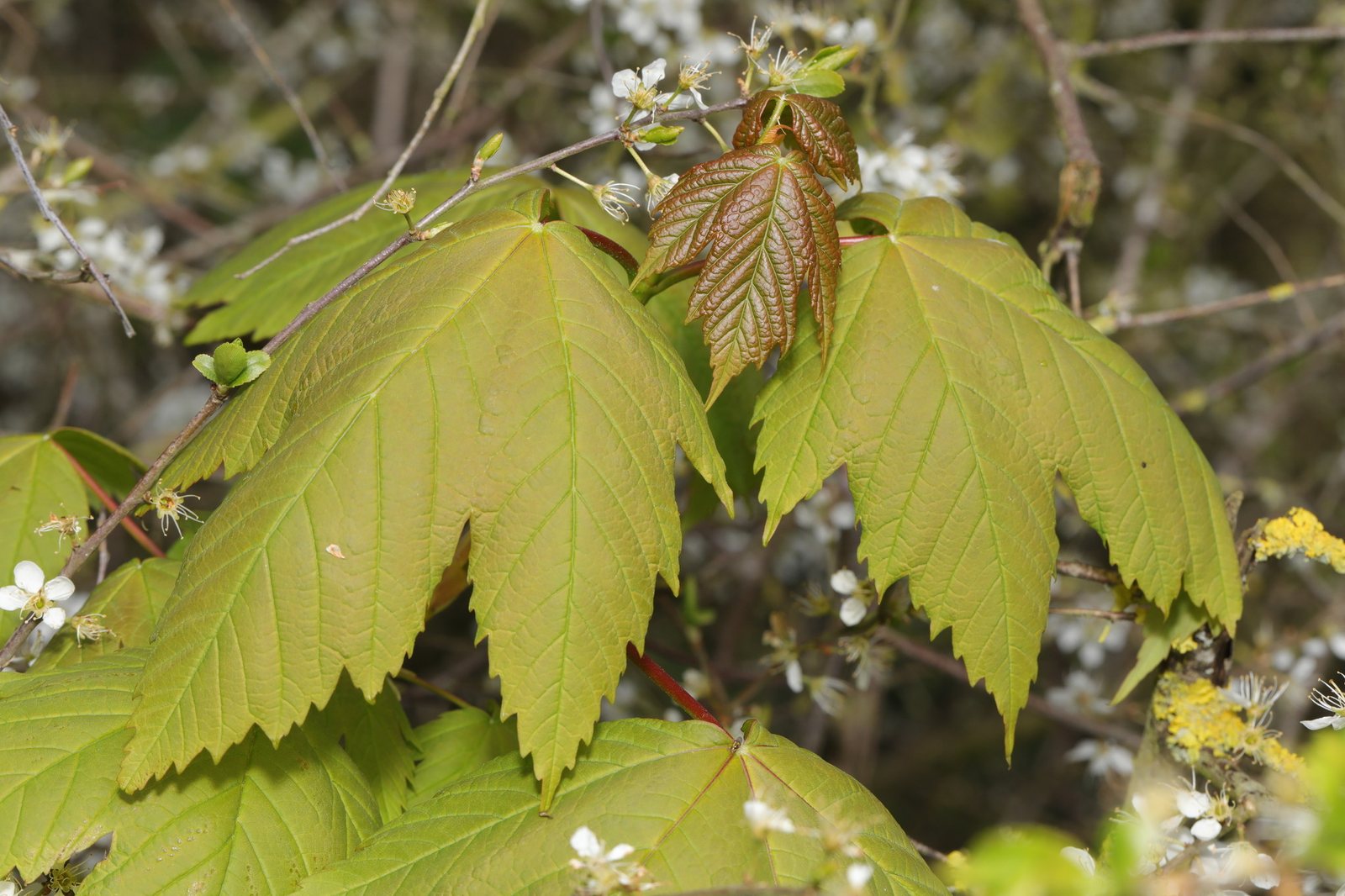
A slow-growing, deciduous sycamore grown for its shrimp-pink spring leaves, which turn creamy yellow before becoming green. Its rounded crown makes a striking specimen in a lawn or mixed garden, though it needs room to develop and is not a patio-sized tree.
At a glance
- Sun
- Full sun or partial shade; light afternoon shade helps protect the pale young leaves in hotter locations.
- Water
- Water regularly while establishing. Once established, water deeply during prolonged dry spells, especially on light soils.
- Soil
- Moist but well-drained soil, including clay, loam and chalk; tolerates acidic to alkaline conditions. Avoid persistently waterlogged ground.
- Height
- 15-25 ft (4.5-7.5 m)
- Spread
- 12-20 ft (3.7-6 m)
- Foliage
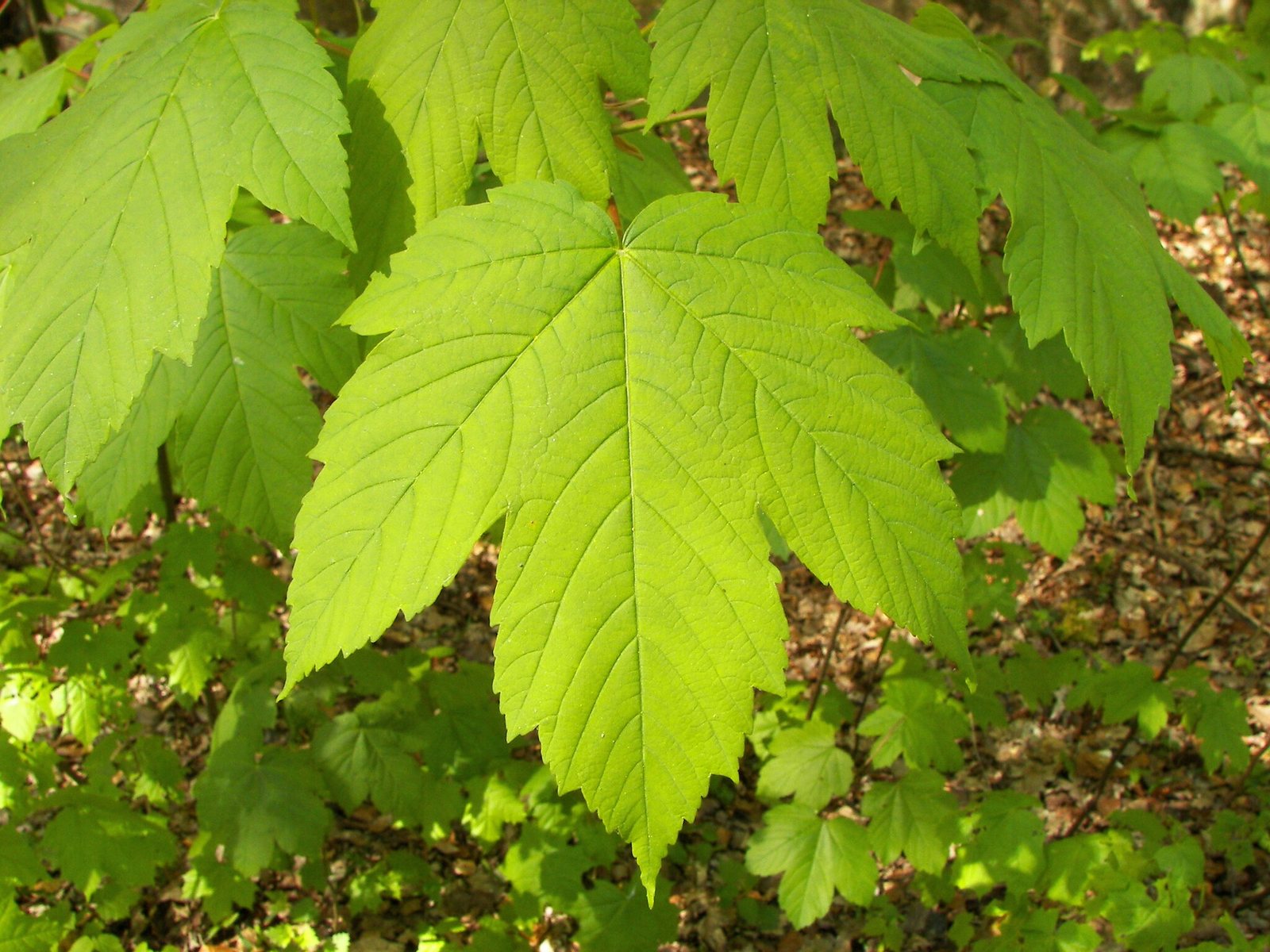
- Broad, five-lobed leaves emerge shrimp-pink, change to creamy yellow with green mottling, then become green through summer. Autumn colour is usually yellow and often modest.
- Growth
- Slow
- Care needed
- Low
The year at a glance
- Pollinators
- Cold hardy
- Wildlife
| J | F | M | A | M | J | J | A | S | O | N | D | |
|---|---|---|---|---|---|---|---|---|---|---|---|---|
| Fruit | ||||||||||||
| Plant |
Northern hemisphere months. In Australia, shift them by six.
- Difficulty
- Easy
- Toughness
- Very tough
Will it suit your garden?
Pick your zone, country, light and whether you have pets.
Full sun is 6 or more hours of direct sun a day, part shade 3 to 6 hours, shade under 3.
How it grows
Planting day
7 ft (2 m)
After 1 year
7 ft (2.1 m)
After 2 years
7 ft (2.3 m)
After 3 years
8 ft (2.4 m)
After 5 years
9 ft (2.6 m)
About 32 years to full size.
From a typical nursery size, at an average rate for this kind of plant. A rule of thumb, not a forecast.
Good to know
- Cats and dogs
- Safe
- Invasive in
- the US and Australia
- In the garden
- Spreads vigorously: plan to contain it.
- Growth rate
- Slow
Care
Jobs through the year
- WaterApr–May, Sep–Oct, every 21 days
- Water established trees deeply only during prolonged drought; young trees need more frequent watering.
- WaterJun–Aug, every 14 days
- Deeply soak the root zone during prolonged dry spells; water weekly in the first two summers.
- MulchMar, Oct
- Maintain 5–8 cm of organic mulch over the root area, keeping it away from the trunk.
- PruneAug
- Only if needed, remove damaged or crossing branches; do not top the crown.
- PruneApr–Sep
- Promptly remove shoots below the graft and vigorous reverted branches with plain-green spring leaves.
- ProtectFeb
- Check any stakes and ties; loosen rubbing ties and remove supports once the tree is firmly rooted.
- Plant with the root flare at soil level and allow space for the mature crown.
- Water deeply during dry weather for the first two growing seasons.
- Apply a 2-3 in (5-8 cm) layer of organic mulch, keeping it clear of the trunk.
- Feed only if growth is poor or a soil test shows a deficiency; avoid routine high-nitrogen feeding.
- Stake only if needed on an exposed site, and remove the support once the roots hold the tree firmly.
- Remove shoots arising below the graft and any vigorous shoots with plain green spring foliage.
Pruning. Prune only when needed, preferably in late summer while the tree is in leaf, to reduce sap bleeding. Remove dead, damaged or crossing branches and rootstock shoots; avoid topping or repeatedly cutting back the crown.
Through the year
- Autumn
- Plant while the soil is workable, water thoroughly and mulch the root area.
- Late winter
- Check ties, stakes and the graft union; loosen any ties that are rubbing or becoming tight.
- Spring
- Watch emerging leaves for frost damage and check for shoots growing from below the graft.
- Late spring
- Pull unwanted sycamore seedlings while they are small and easy to remove.
- Summer
- Water young trees deeply in dry spells and check pale leaves for scorch.
- Late summer
- Carry out essential light pruning and remove any reverted, plain-green growth.
In the garden
- Use as a specimen in a lawn where the changing spring foliage can be seen clearly.
- Place against dark evergreen shrubs to make the pink and cream young leaves stand out.
- Include in a mixed tree-and-shrub border with space for its rounded crown.
- Underplant with spring bulbs and shade-tolerant perennials for interest beneath the summer canopy.
Garden styles it suits: English country, Traditional, Woodland, Pastel border, Arts and Crafts and Grand estate.
Plant it with: Snowdrops, Daffodils, Hellebores, Hardy geraniums, Japanese forest grass and Yew.
Wildlife: The flowers provide pollen and nectar for insects, and the canopy offers shelter and nesting sites for birds. Leaves support various insects, although this is not a native tree in North America or Australia.
Problems to watch for
- Leaf scorch or late-frost damage can brown the young foliage. Keep the root zone evenly moist and choose a sheltered position away from frost pockets; damaged leaves do not recover, but later growth may be healthy.
- Aphids can cause curled leaves and sticky honeydew. Encourage natural predators and wash accessible colonies off with water rather than routinely spraying the tree.
- Tar spot produces black blotches on leaves, usually without seriously harming the tree. Collect fallen leaves where practical; fungicide is rarely justified.
- Rootstock shoots or reverted branches can outgrow the coloured crown. Remove shoots below the graft promptly and cut reverted branches back to their point of origin.
Safety
Seeds, seedlings and leaves can contain hypoglycin A, which can cause severe, often fatal atypical myopathy in horses. Do not plant near horse paddocks, and prevent windblown seeds and leaves from reaching grazing areas. It is not generally known to be toxic to cats, dogs or people through ordinary garden contact, but its seeds and seedlings should not be eaten.
Where it spreads. The species spreads by windblown seed and is invasive in parts of the northeastern United States and southeastern Australia, including Victoria and Tasmania; it is also an environmental weed in New Zealand. It can seed aggressively in Britain and Ireland. This cultivar is not guaranteed sterile, so remove seedlings and check local planting guidance.
Easily confused with
London plane (Platanus × acerifolia)
London plane has alternate leaves, conspicuously patchy bark and hanging round seed balls. Sycamore maple has opposite leaves and paired winged seeds.
Norway maple (Acer platanoides)
Norway maple usually has more sharply pointed leaf lobes and milky sap from a freshly broken leaf stalk; sycamore has coarser leaf teeth and clear sap.
Sycamore 'Prinz Handjery' (Acer pseudoplatanus 'Prinz Handjery')
Both have pink young foliage, but 'Prinz Handjery' typically has a conspicuous purple underside to its young leaves, unlike the paler undersides of 'Brilliantissimum'.
The name
Acer is the Latin name for maple, pseudoplatanus means 'false plane', referring to the plane-like leaves, and 'Brilliantissimum' means 'most brilliant'.
Propagation. Usually propagated by grafting or budding onto Acer pseudoplatanus rootstock. Seedlings will not reliably retain the cultivar's pink spring foliage or compact habit.
Checked against open data
- Accepted botanical name
- Acer pseudoplatanus
- In the US and Canada
- Introduced in Canada and the lower 48 states.
- Native range
- Albania, Austria, Bulgaria, Corse, Czechoslovakia, France, Germany, Greece, Hungary, Italy, Krym and North Caucasus.
- Measured
- Soil pH 5.8 to 7. Average height 2155 cm.
Sources: GBIF (CC BY 4.0), USDA PLANTS and Trefle (CC BY 4.0). The care and design notes are LandscapeGPT's own.
See it in your own yard.
Upload a photo of your yard and see it redesigned with plants that suit your climate, each checked against your zone.