Tall coreopsis
Coreopsis tripteris. Family Asteraceae. Perennial.
Also called Tall tickseed.
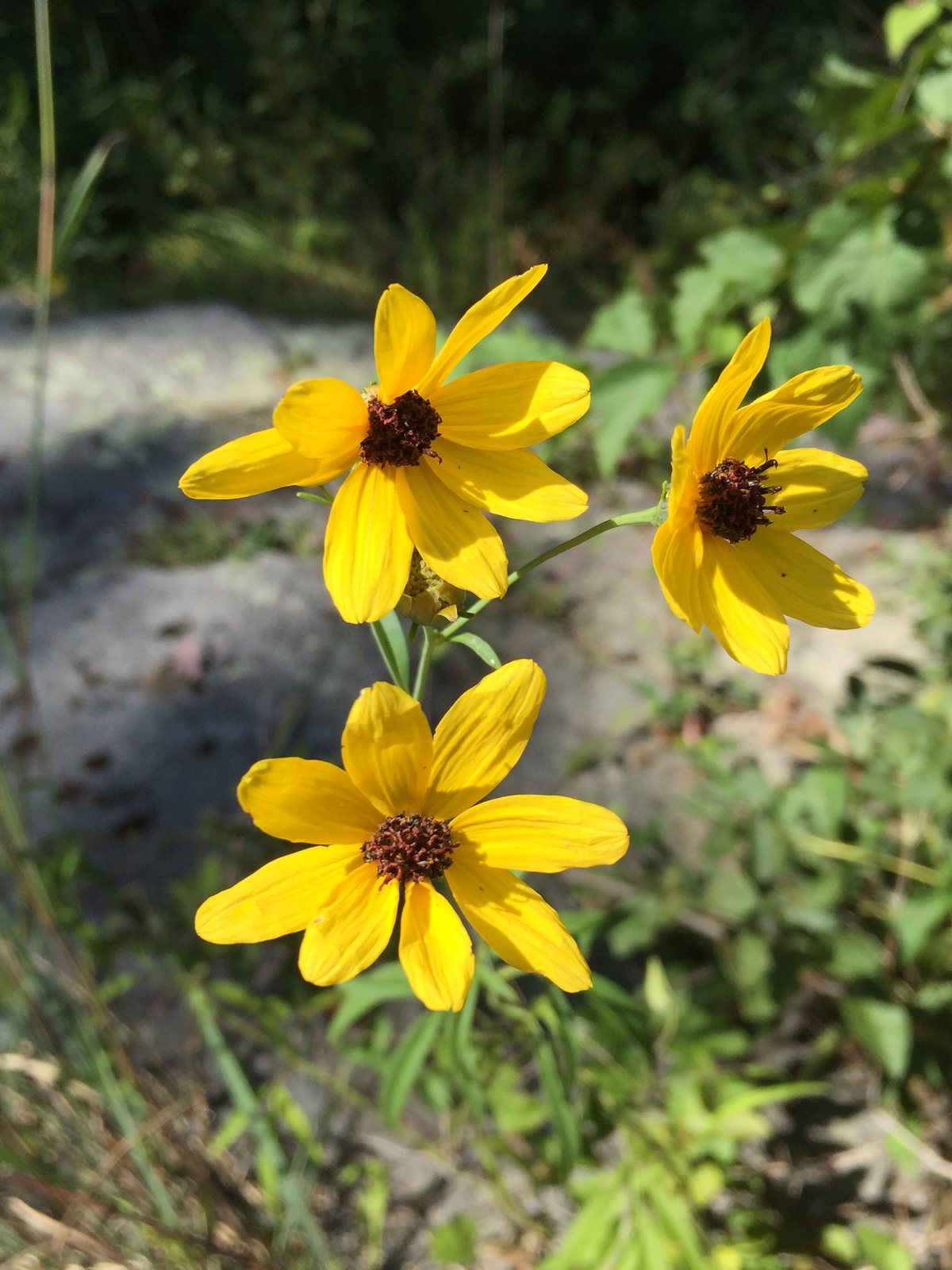
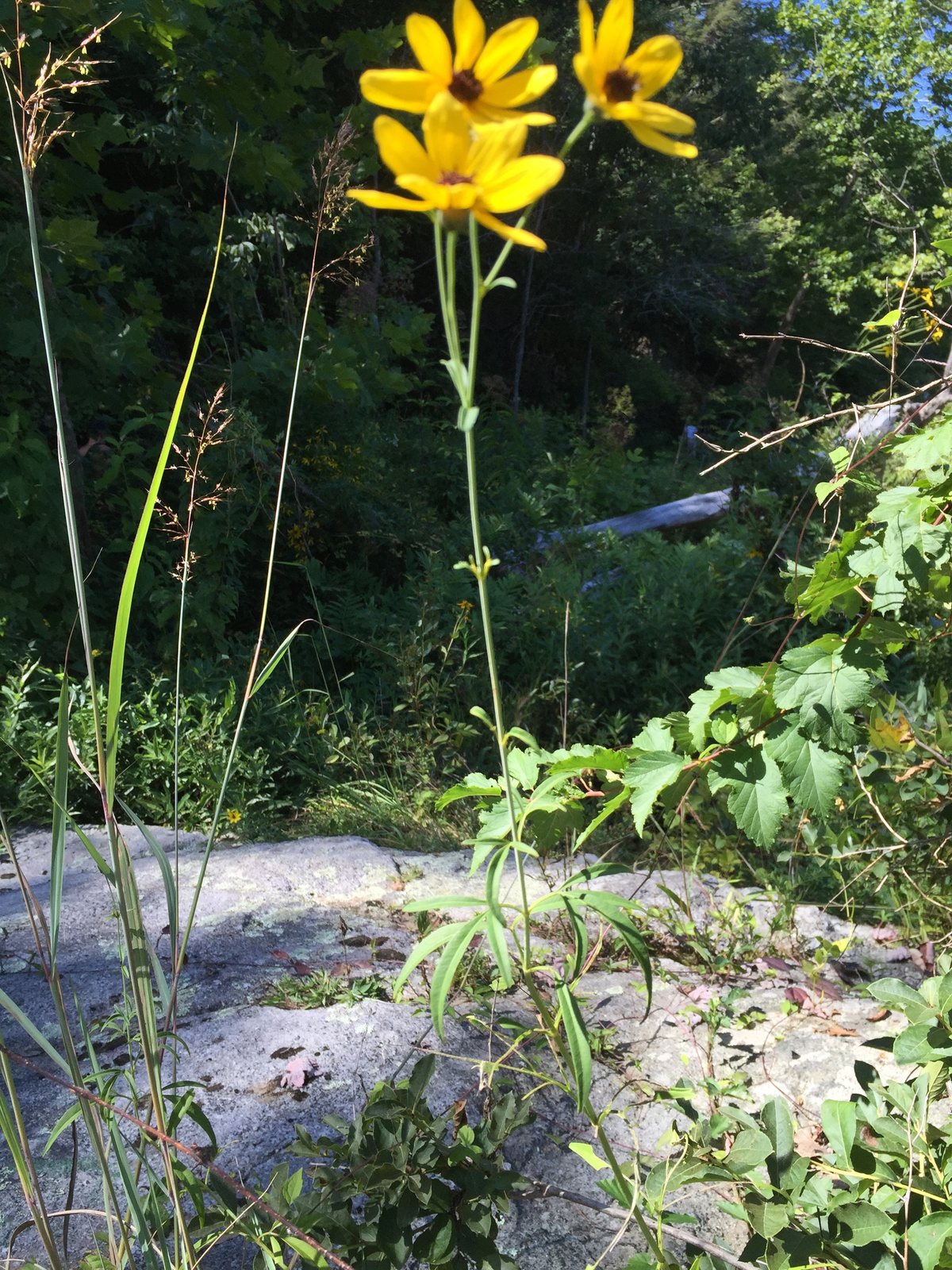
Tall coreopsis is a tall, clump-forming perennial native to eastern and central North America, grown for its yellow daisies in late summer and autumn. Its upright stems suit prairie-style planting and the backs of sunny borders, but it needs room because it spreads by rhizomes and seed.
At a glance
- Sun
- Full sun; tolerates light shade, but stems may lean and flowering may be reduced.
- Water
- Water regularly during the first growing season. Established plants tolerate some drought, though flowering is better with occasional deep watering during prolonged dry spells.
- Soil
- Average, well-drained soil, including clay that does not stay waterlogged. Tolerates relatively poor ground; rich soil can produce floppy growth.
- Height
- 4-8 ft (1.2-2.4 m)
- Spread
- 2-4 ft (0.6-1.2 m), widening over time
- Flowers
- Late summer to autumn; yellow daisy-like flowers with dark brown centres.
- Foliage
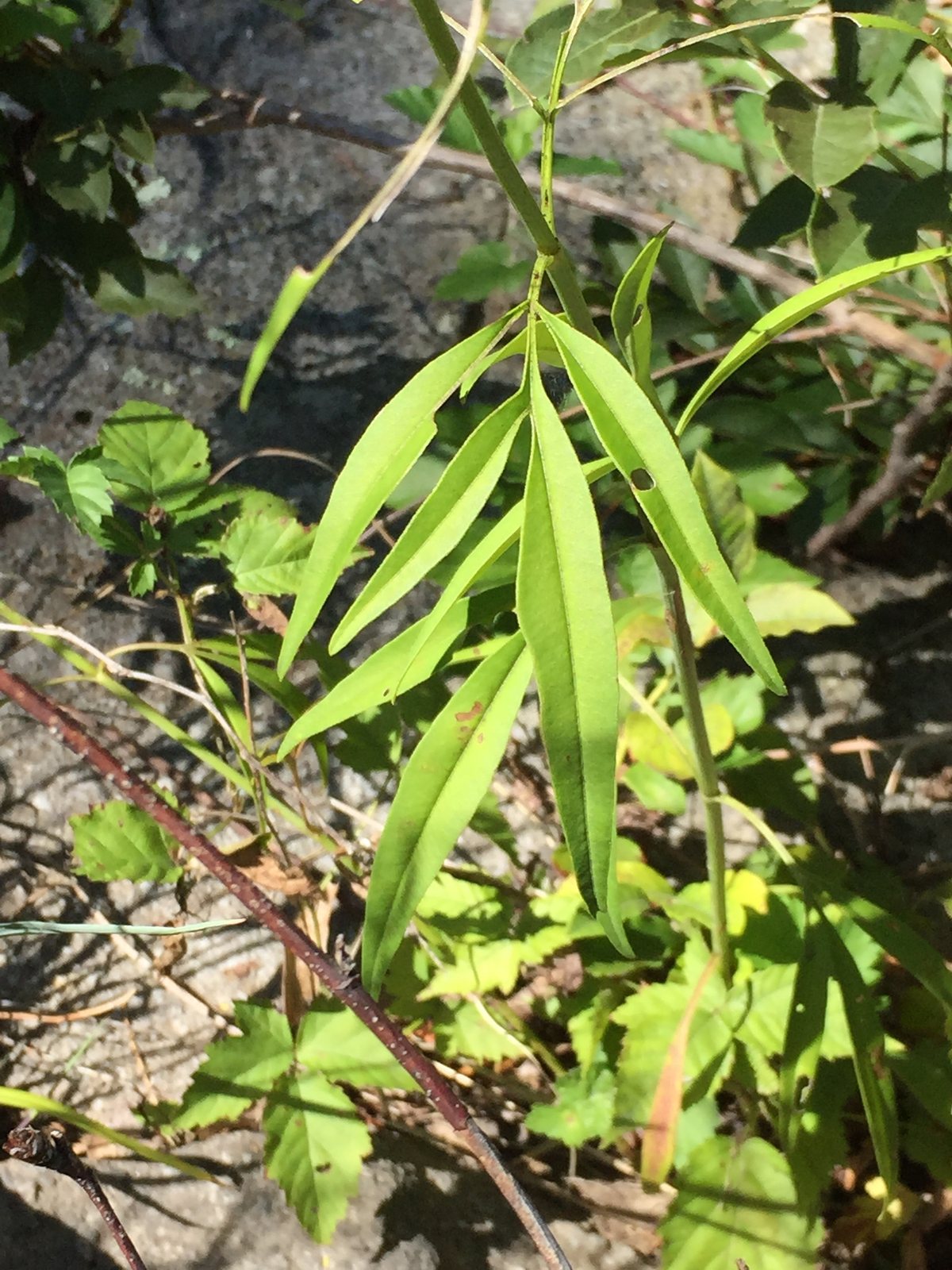
- Opposite green leaves, usually divided into three narrow, lance-shaped leaflets; lower leaves may have five leaflets.
- Growth
- Moderate to fast
- Care needed
- Low
The year at a glance
- Pollinators
- Deer resistant
- Drought tolerant
- Cold hardy
- Wildlife
- Low allergen
| J | F | M | A | M | J | J | A | S | O | N | D | |
|---|---|---|---|---|---|---|---|---|---|---|---|---|
| Flowers | ||||||||||||
| Fruit | ||||||||||||
| Plant |
Northern hemisphere months. In Australia, shift them by six.
- Difficulty
- Easy
- Toughness
- Very tough
Will it suit your garden?
Pick your zone, country, light and whether you have pets.
Full sun is 6 or more hours of direct sun a day, part shade 3 to 6 hours, shade under 3.
How it grows
Planting day
1 ft (0.3 m)
After 1 year
3 ft (0.92 m)
After 2 years
5 ft (1.5 m)
After 3 years
6 ft (1.8 m)
full size
About 2 years to full size.
From a typical nursery size, at an average rate for this kind of plant. A rule of thumb, not a forecast.
Good to know
- Cats and dogs
- Safe
- Native to
- the US and Canada
- In the garden
- Spreads vigorously: plan to contain it.
- Growth rate
- Fast
Care
Jobs through the year
- WaterApr–May, Sep–Oct, every 14 days
- Check established clumps and water if prolonged drought dries the root zone; water new plants more often.
- WaterJun–Aug, every 7 days
- Check established clumps; give a deep soak during prolonged dry spells, not while soil remains moist.
- MulchMar–Apr
- Apply a thin organic mulch, keeping it away from the crown.
- DivideMar–Apr
- Divide every three to four years and remove unwanted spreading sections.
- PruneFeb–Mar
- Cut dead stems near ground level before new shoots emerge.
- PruneMay
- Optionally shorten stems by one-third for bushier plants; flowering may be delayed.
- ProtectApr–May
- Install a support ring around exposed clumps before stems become tall.
- DeadheadAug–Oct
- Remove spent heads if seedlings are unwanted, or retain seed heads for birds.
- Water deeply during establishment, allowing the soil surface to dry between waterings.
- Avoid routine feeding; excess fertility encourages tall, weak stems.
- Apply a thin layer of organic mulch, keeping it away from the crown.
- Support exposed clumps with a discreet ring or neighbouring sturdy perennials before stems reach full height.
- Divide crowded clumps in spring every three to four years, removing unwanted spreading sections.
Pruning. For shorter, bushier plants, cut stems back by about one-third in late spring; this may delay flowering. Leave seedheads standing for birds, then cut dead stems close to the ground in late winter or early spring, or remove spent flowers earlier to limit seedlings.
Through the year
- Late winter
- Cut down last year's dead stems before new shoots emerge.
- Spring
- Plant or divide clumps, water thoroughly, and remove unwanted shoots around established plants.
- Late spring
- Install supports where needed, or shorten stems by one-third to reduce their final height.
- Summer
- Water young plants during dry weather; give established clumps a deep soak during prolonged drought.
- Late summer
- Enjoy flowering and remove spent heads if you want to reduce self-seeding.
- Autumn
- Leave some seedheads for birds and mark spreading clumps for division next spring.
In the garden
- Plant at the back of a sunny border for a tall screen of late-season yellow flowers.
- Combine with switchgrass and little bluestem in prairie-style planting for contrasting flower and grass textures.
- Mix with asters and Joe-Pye weed in a large wildlife border to extend the flowering season.
- Use in generous drifts in meadow-style gardens where spreading growth has room to develop.
Garden styles it suits: Native meadow, Midwest prairie, New perennial (prairie), Wildlife garden, Pollinator garden and Cottage garden.
Plant it with: Switchgrass, Little bluestem, New England aster, Joe-Pye weed, Purple coneflower and Blazing star.
Wildlife: Flowers attract bees, butterflies and other pollinating insects. Seedheads provide food for seed-eating birds, including goldfinches in its native range.
Problems to watch for
- Flopping stems: grow in full sun, avoid rich feeding, and support stems early or shorten them in late spring.
- Powdery mildew: allow space for airflow, avoid drought stress, and remove badly affected fallen foliage.
- Crown or root rot in wet ground: improve drainage or move the plant to a site that does not stay saturated.
- Unwanted spreading and seedlings: remove spent flowerheads before seed ripens and dig out excess rhizomes in spring.
Safety
Not known to be toxic to people, cats, dogs or horses. No particular plant part is recognised as poisonous, though species-specific toxicity information is limited and it is not a food plant.
Where it spreads. Can spread assertively by rhizomes and self-seeding in eastern and central North American gardens, especially in moist, fertile soil. It is a native spreader there rather than an introduced invasive plant.
Easily confused with
Prairie coreopsis (Coreopsis palmata)
Usually much shorter, with leaves deeply divided into three lobes rather than the distinct leaflets typical of tall coreopsis; its flower centres are yellow rather than dark brown.
Threadleaf coreopsis (Coreopsis verticillata)
Has finely divided, threadlike foliage and a much lower, bushier habit.
Cutleaf coneflower (Rudbeckia laciniata)
Has alternate, broadly lobed leaves and prominent raised greenish flower cones, rather than opposite leaves and relatively flat, dark flower centres.
The name
Coreopsis comes from Greek words meaning bug-like, referring to the seeds' appearance, while tripteris means three-winged and refers to the usually three-part leaves.
Propagation. Divide established clumps in spring. Sow seed outdoors in autumn, or give spring-sown seed a period of cold, moist treatment; seedlings may take until their second year to flower.
Checked against open data
- Accepted botanical name
- Coreopsis tripteris
- In the US and Canada
- Native in Canada and the lower 48 states.
Sources: GBIF (CC BY 4.0) and USDA PLANTS. The care and design notes are LandscapeGPT's own.
See it in your own yard.
Upload a photo of your yard and see it redesigned with plants that suit your climate, each checked against your zone.