Tamarack
Larix laricina. Family Pinaceae. Tree.
Also called American larch, Eastern larch, Hackmatack.
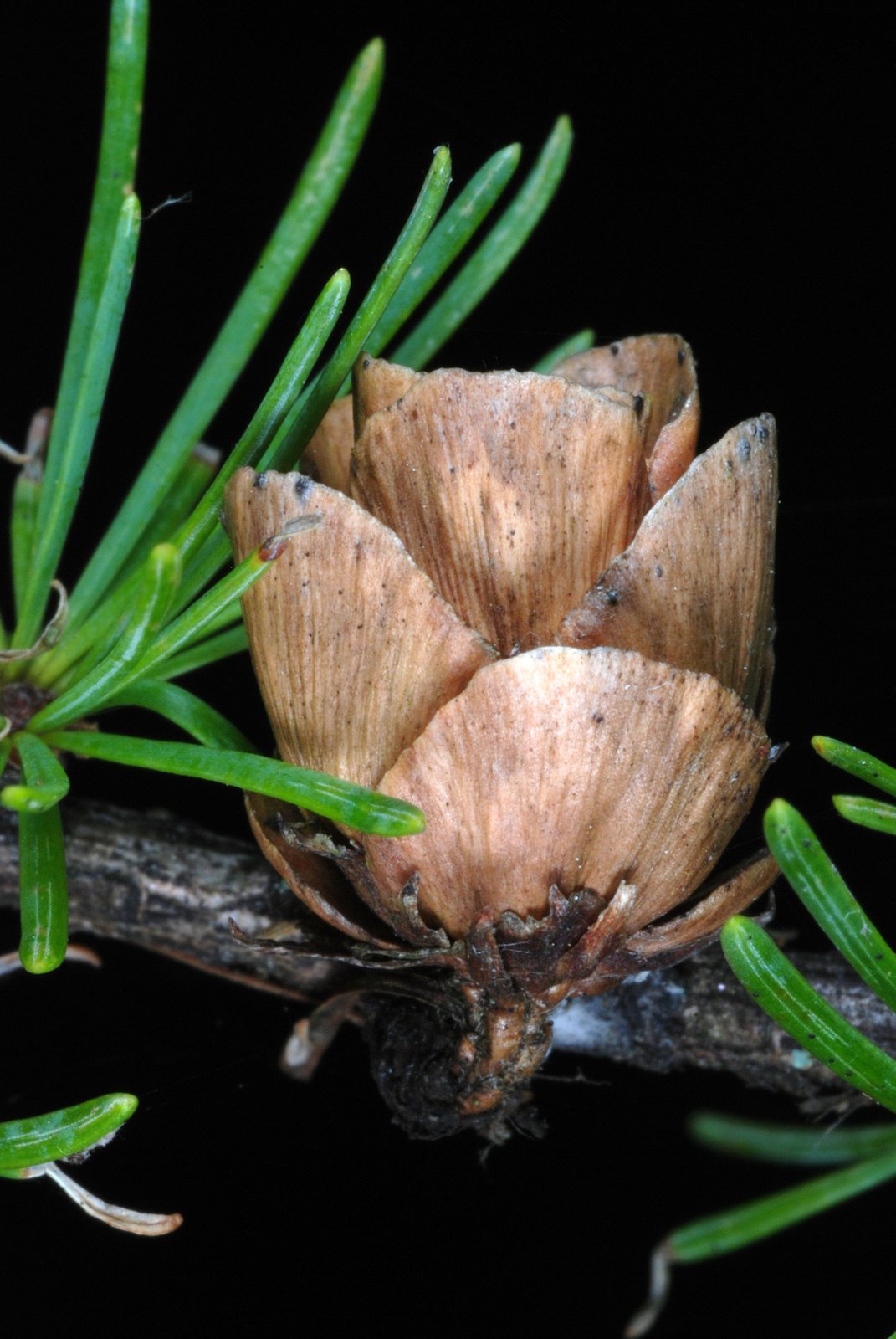
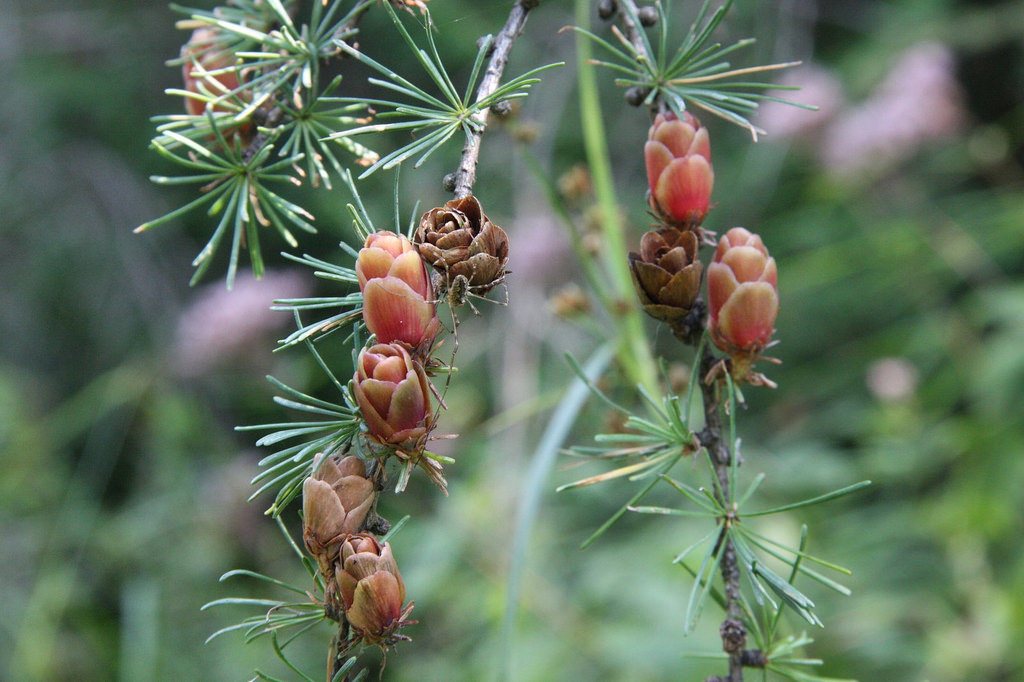
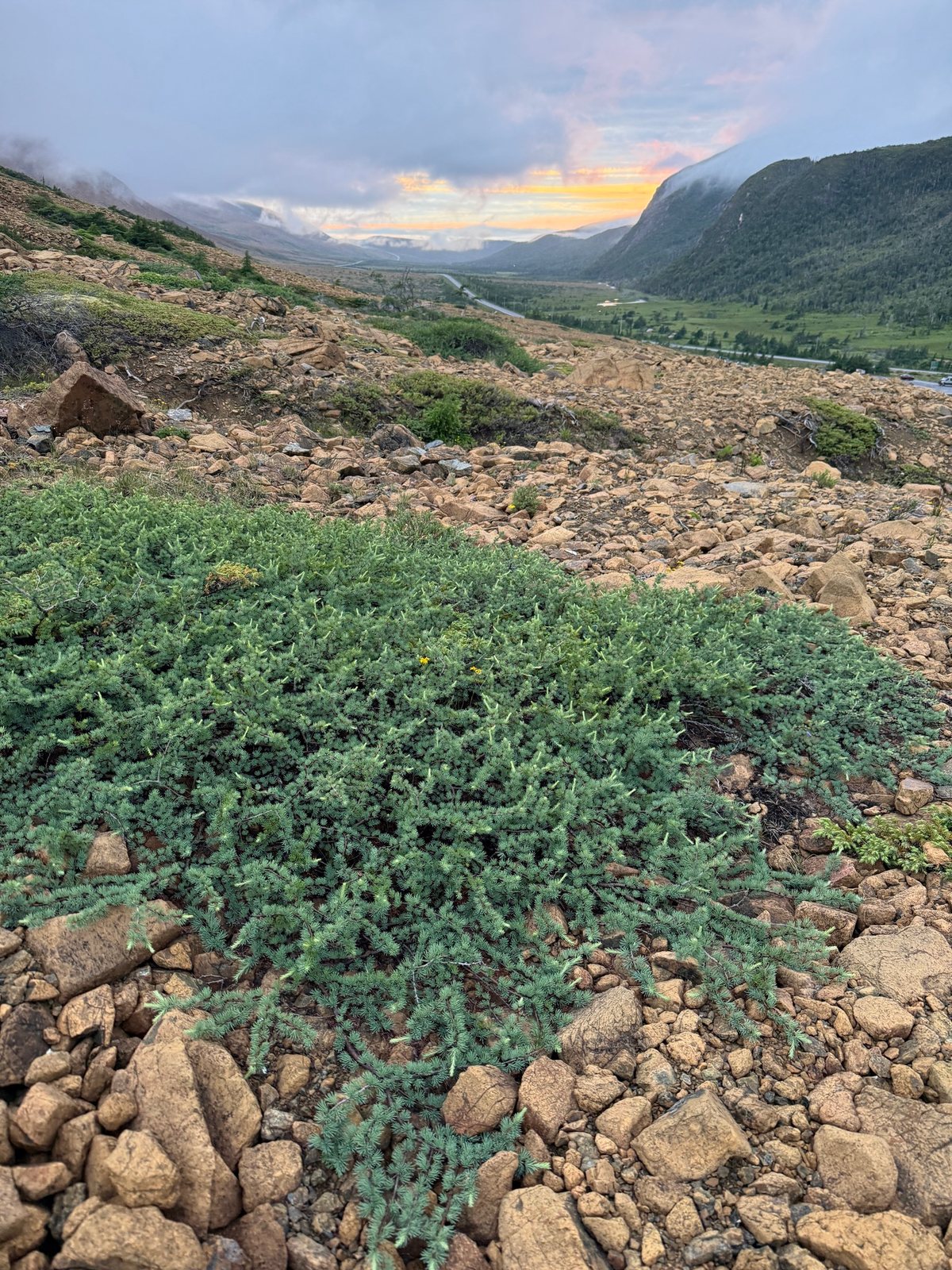
Tamarack is a deciduous conifer native to northern North America, grown for its soft green needles, golden autumn colour and open, pyramidal crown. It suits large gardens with cool summers and consistently moist soil, especially naturalistic wetland planting; it struggles in hot, dry conditions.
At a glance
- Sun
- Full sun; intolerant of substantial shade.
- Water
- Keep the root zone consistently moist. Established trees tolerate wet ground, but drought and hot, drying winds cause stress.
- Soil
- Moist to wet, acidic soil, including peaty or sandy ground. Also grows in moisture-retentive loam; avoid dry, chalky sites and prolonged deep flooding.
- Height
- 40-60 ft (12-18 m)
- Spread
- 15-30 ft (4.5-9 m)
- Foliage
- Soft, short, blue-green to light green needles grow in clusters on short shoots. They turn clear golden yellow in autumn and fall, leaving a fine framework of bare branches through winter.
- Growth
- Moderate to fast in cool conditions with ample moisture.
- Care needed
- Medium
The year at a glance
- Cold hardy
- Wildlife
| J | F | M | A | M | J | J | A | S | O | N | D | |
|---|---|---|---|---|---|---|---|---|---|---|---|---|
| Fruit | ||||||||||||
| Plant |
Northern hemisphere months. In Australia, shift them by six.
- Difficulty
- Moderate
- Toughness
- Needs looking after
Will it suit your garden?
Pick your zone, country, light and whether you have pets.
Full sun is 6 or more hours of direct sun a day, part shade 3 to 6 hours, shade under 3.
How it grows
Planting day
7 ft (2 m)
After 1 year
9 ft (2.8 m)
After 2 years
12 ft (3.6 m)
After 3 years
15 ft (4.4 m)
After 5 years
20 ft (6.1 m)
About 16 years to full size.
From a typical nursery size, at an average rate for this kind of plant. A rule of thumb, not a forecast.
Good to know
- Cats and dogs
- Mildly toxic: may upset a stomach
- Native to
- the US and Canada
- Growth rate
- Fast
Care
Jobs through the year
- WaterApr–May, Sep–Oct, every 7 days
- Water established trees deeply when rain is insufficient; keep young root balls moist.
- WaterJun–Aug, every 4 days
- Maintain moist soil during dry weather; check young trees more often and avoid hot, exposed sites.
- MulchApr–May
- Maintain 5–8 cm of organic mulch over roots, leaving the trunk clear.
- PruneFeb–Mar
- Remove damaged or crossing branches only as needed; retain one leader and never top.
- ProtectOct–Nov
- Fit or inspect young-tree guards against deer rubbing, ensuring room for trunk growth.
- Plant in full sun with enough room for a full-sized tree; do not rely on pruning to keep it small.
- Water deeply during dry spells, especially for the first two or three growing seasons.
- Apply 2-3 in (5-8 cm) of organic mulch over the root zone, keeping it clear of the trunk.
- Avoid routine feeding; use fertiliser only where a soil test identifies a deficiency.
- Protect young trunks from deer rubbing and keep lawn equipment away from the bark.
Pruning. Prune in late winter while dormant, removing dead, damaged or crossing branches and retaining one main leader. Avoid topping or cutting back into old, bare wood, which may not regrow.
Through the year
- Late winter
- Inspect the branch structure and remove damaged branches or a competing leader if necessary.
- Spring
- Plant while dormant or before growth is well advanced, and water the root ball thoroughly.
- Late spring
- Refresh mulch and check new needles for casebearer damage or feeding larvae.
- Summer
- Check soil moisture during dry weather and water deeply before needles begin to brown.
- Autumn
- Enjoy the yellow foliage; normal needle fall does not indicate that the tree is dying.
- Late autumn
- Check tree guards and water young trees if the ground is dry before winter.
In the garden
- Use as a specimen beside a pond or rain-fed hollow, with the trunk above any permanently submerged ground.
- Plant in loose groups in a large wet meadow for light shade and strong autumn colour.
- Combine with moisture-loving shrubs and ferns at a sunny woodland edge.
- Contrast its soft summer needles and golden autumn foliage with dark evergreen conifers.
Garden styles it suits: Bog garden, Woodland, Wildlife garden, Rewilded, Autumn colour and New England.
Plant it with: Black spruce, Red-osier dogwood, Winterberry, Highbush blueberry, Royal fern and Tussock sedge.
Wildlife: Seeds feed birds, including crossbills and siskins, as well as small mammals. Branches provide nesting and shelter, and the foliage supports several moth and sawfly species.
Problems to watch for
- Larch sawfly: larvae can strip needles. Inspect young trees in late spring and summer, remove small colonies by hand, and seek local advice if heavy defoliation recurs.
- Larch casebearer: tiny larvae in portable cases cause pale or browned needles in spring. Support tree vigour and beneficial insects; consult a qualified arborist for repeated severe damage.
- Heat and drought stress: needles brown or drop early. Water deeply, mulch the root zone and avoid planting where summers are persistently hot.
- Cankers and branch dieback: prune affected branches back to healthy wood in dry weather, avoid bark injuries and have extensive or trunk-level damage assessed by an arborist.
Safety
Tamarack is not known to be toxic to people, cats, dogs or horses. Its needles, bark, cones and resin are not intended as food; chewing plant material or resin may cause irritation or stomach upset.
Easily confused with
European larch (Larix decidua)
Usually has larger cones, about 1-1.5 in (2.5-4 cm) long, compared with tamarack's small cones of about 0.5-0.75 in (1.3-2 cm). Its young branchlets are often yellowish rather than tamarack's orange-brown.
Japanese larch (Larix kaempferi)
Its cone scales curl conspicuously outward at their tips, giving the cones a rose-like appearance; tamarack's cone scales do not.
Bald cypress (Taxodium distichum)
Its soft needles sit individually along slender shoots rather than in larch-like clusters, and its cones are rounded rather than small and upright.
The name
Larix is the Latin name for larch, and laricina means larch-like.
Propagation. Grow from seed collected from ripe cones in autumn. Sow outdoors in a protected seedbed or give seed a period of cold, moist stratification before spring sowing; cuttings are difficult and unreliable.
Checked against open data
- Accepted botanical name
- Larix laricina
- In the US and Canada
- Native in Alaska, Canada, the lower 48 states and St. Pierre and Miquelon.
- Native range
- Alaska, Alberta, British Columbia, Connecticut, Illinois, Indiana, Labrador, Maine, Manitoba, Maryland, Masachusettes and Michigan.
- Measured
- Soil pH 5.5 to 6.5. Average height 1055 cm.
Sources: GBIF (CC BY 4.0), USDA PLANTS and Trefle (CC BY 4.0). The care and design notes are LandscapeGPT's own.
See it in your own yard.
Upload a photo of your yard and see it redesigned with plants that suit your climate, each checked against your zone.