Tamukeyama Japanese maple
Acer palmatum 'Tamukeyama'. Family Sapindaceae. Tree.
Also called Tamukeyama laceleaf maple, Tamukeyama dissected Japanese maple.
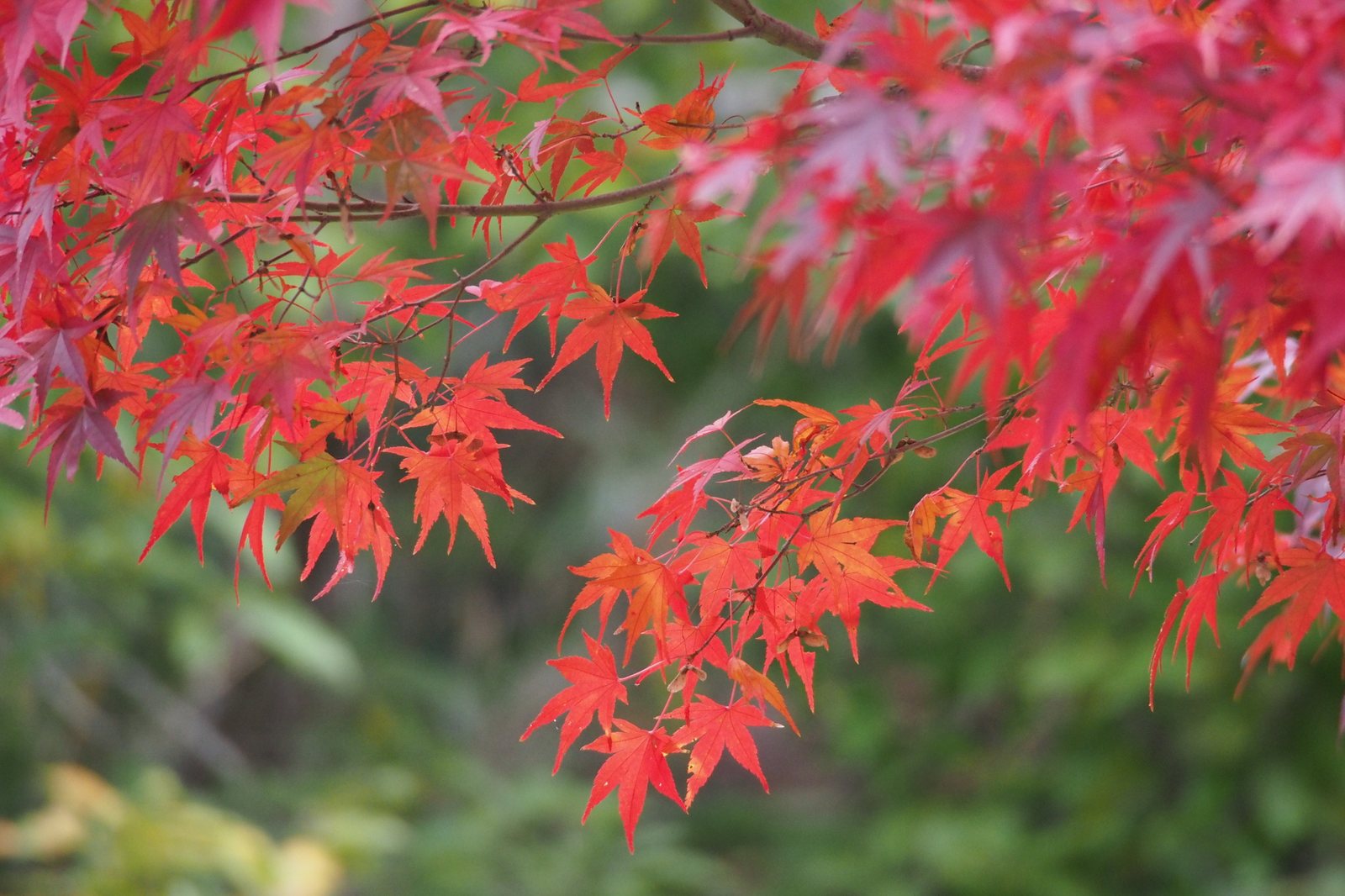
A small, deciduous Japanese maple with finely divided purple-red leaves and cascading branches that form a broad mound. Gardeners grow it for its delicate texture, sculptural shape and bright crimson autumn colour; give it shelter from drying winds and harsh afternoon sun.
At a glance
- Sun
- Partial shade, ideally morning sun and afternoon shade. Full sun is possible in cooler climates if the roots stay evenly moist.
- Water
- Keep evenly moist but not waterlogged, especially during establishment and hot weather. Container-grown trees need more frequent checks.
- Soil
- Moist, well-drained, humus-rich soil, preferably slightly acidic. Avoid waterlogged ground and very chalky soil.
- Height
- 6-8 ft (1.8-2.4 m)
- Spread
- 8-12 ft (2.4-3.7 m)
- Foliage
- Deeply cut, lace-like leaves emerge crimson-red, deepen to purple-red or burgundy in summer, and turn bright red in autumn. Summer colour varies with light and heat.
- Growth
- Slow; develops its broad, mature outline over many years and may eventually exceed these dimensions.
- Care needed
- Medium
The year at a glance
- Pollinators
- Wildlife
| J | F | M | A | M | J | J | A | S | O | N | D | |
|---|---|---|---|---|---|---|---|---|---|---|---|---|
| Plant |
Northern hemisphere months. In Australia, shift them by six.
- Difficulty
- Moderate
- Toughness
- Fairly tough
Will it suit your garden?
Pick your zone, country, light and whether you have pets.
Full sun is 6 or more hours of direct sun a day, part shade 3 to 6 hours, shade under 3.
How it grows
Planting day
7 ft (2 m)
After 1 year
7 ft (2 m)
After 2 years
7 ft (2 m)
After 3 years
7 ft (2 m)
After 5 years
7 ft (2 m)
About 32 years to full size.
From a typical nursery size, at an average rate for this kind of plant. A rule of thumb, not a forecast.
Good to know
- Cats and dogs
- Safe
- Invasive in
- the US
- Growth rate
- Slow
Care
Jobs through the year
- WaterApr–May, Sep–Oct, every 14 days
- Deep-water established in-ground trees during dry spells; water more often for the first two growing seasons.
- WaterJun–Aug, every 7 days
- Water deeply in dry weather; young trees and containers need more frequent moisture checks.
- MulchMar–Apr
- Refresh organic mulch to 5–8 cm deep, keeping it clear of the trunk.
- FeedMar–Apr
- Feed lightly only if soil is poor or growth is weak; avoid heavy nitrogen feeding.
- ProtectApr–May
- Protect tender new leaves with fleece when late frost is forecast.
- ProtectJun–Aug
- Provide afternoon shade and shelter from hot, drying winds.
- PruneJan, Nov–Dec
- After leaf fall, remove dead or rubbing branches sparingly; preserve the cascading outline and remove rootstock shoots.
- ProtectJan–Feb, Nov–Dec
- Insulate exposed containers against severe freezing while maintaining drainage.
- Plant with the root flare at soil level and the graft union above the soil; allow room for the branches to spread.
- Water deeply during dry spells for the first two growing seasons, then during prolonged drought.
- Apply 2-3 in (5-8 cm) of organic mulch over the root area, keeping it away from the trunk.
- Feed lightly in spring only if growth is weak or the soil is poor; avoid heavy nitrogen feeding.
- In containers, use a large pot with drainage holes and protect the root ball from severe winter freezing.
- Remove any shoots growing from below the graft union.
Pruning. Prune sparingly in late autumn to midwinter, after leaf fall and before sap begins rising. Remove dead, damaged or rubbing branches and shorten only where necessary, preserving the cascading outline rather than shearing it.
Through the year
- Early spring
- Check soil moisture as buds open, refresh mulch and give a light feed only if needed.
- Late spring
- Watch tender leaves for late frost damage and check new growth for aphids.
- Summer
- Water deeply in dry weather and check pots frequently; protect foliage from hot, drying winds.
- Early autumn
- Maintain moisture during dry spells and avoid nitrogen feeding.
- Late autumn
- Plant while the soil is workable and well drained; collect fallen leaves if disease has been a problem.
- Winter
- Make any necessary light structural pruning and insulate exposed containers in cold regions.
In the garden
- Use as a specimen beside a path or terrace, leaving enough space to see its spreading outline.
- Place above a low wall or on a gentle bank so the cascading branches are visible.
- Pair with ferns, hostas and green groundcovers for a contrast in leaf colour and texture.
- Grow in a large container in a sheltered courtyard where its root moisture can be monitored.
- Position beside a pond or dry stream feature, but keep its roots out of saturated soil.
Garden styles it suits: Japanese, Zen dry garden, Modern courtyard, Woodland, Autumn colour and Small-space.
Plant it with: Hostas, Japanese painted fern, Japanese forest grass, Epimedium, Azaleas and Snowdrops.
Wildlife: Small flowers provide some food for insects, and the branches offer cover for small birds. It is not a major wildlife food plant.
Problems to watch for
- Leaf scorch: brown, crisp leaf edges usually indicate drought, hot sun or drying wind. Water consistently, mulch and provide afternoon shade or wind shelter.
- Aphids: check soft new growth for clusters and sticky honeydew. Wash off small colonies with water and encourage natural predators.
- Root rot: persistent wet soil can cause yellowing, dieback and root decay. Improve drainage and avoid frequent shallow watering; badly affected trees may need replacing.
- Verticillium wilt: sudden wilting or branch dieback can indicate this soil-borne disease. Have the cause confirmed, remove dead wood and avoid replanting a susceptible tree in affected soil.
Safety
Not known to be toxic to people, cats or dogs. Toxicity to horses is not well established; keep fallen leaves and prunings out of paddocks because some other maple species are poisonous to horses.
Where it spreads. The species Acer palmatum is listed as invasive in Virginia, United States. 'Tamukeyama' is not usually an aggressive spreader, but remove unwanted seedlings near natural woodland.
Easily confused with
Crimson Queen Japanese maple (Acer palmatum 'Crimson Queen')
Another red laceleaf maple with a low, spreading habit. It can be very difficult to distinguish reliably from 'Tamukeyama' by appearance alone; use a trustworthy nursery label.
Inaba-shidare Japanese maple (Acer palmatum 'Inaba-shidare')
Usually has a somewhat more upright framework before its branches cascade, with comparatively large, finely divided purple leaves. Young plants can be difficult to separate confidently.
Bloodgood Japanese maple (Acer palmatum 'Bloodgood')
Forms a taller, upright tree with broad, palm-shaped leaves rather than the finely dissected leaves and low cascading crown of 'Tamukeyama'.
The name
The botanical name palmatum refers to the hand-like arrangement of the leaf lobes.
Propagation. Usually propagated by grafting onto Japanese maple rootstock. Seedlings will not reliably retain the cultivar's leaf colour or weeping habit; grafting is generally a specialist nursery task.
Checked against open data
- Accepted botanical name
- Acer palmatum
- In the US and Canada
- Introduced in Canada and the lower 48 states.
- Native range
- Japan and Korea.
- Measured
- Soil pH 6.5 to 7. Average height 700 cm.
Sources: GBIF (CC BY 4.0), USDA PLANTS and Trefle (CC BY 4.0). The care and design notes are LandscapeGPT's own.
See it in your own yard.
Upload a photo of your yard and see it redesigned with plants that suit your climate, each checked against your zone.