Tanika lomandra
Lomandra longifolia 'Tanika'. Family Asparagaceae. Perennial.
Also called Tanika mat rush, Tanika basket grass, Lomandra longifolia 'LM300'.
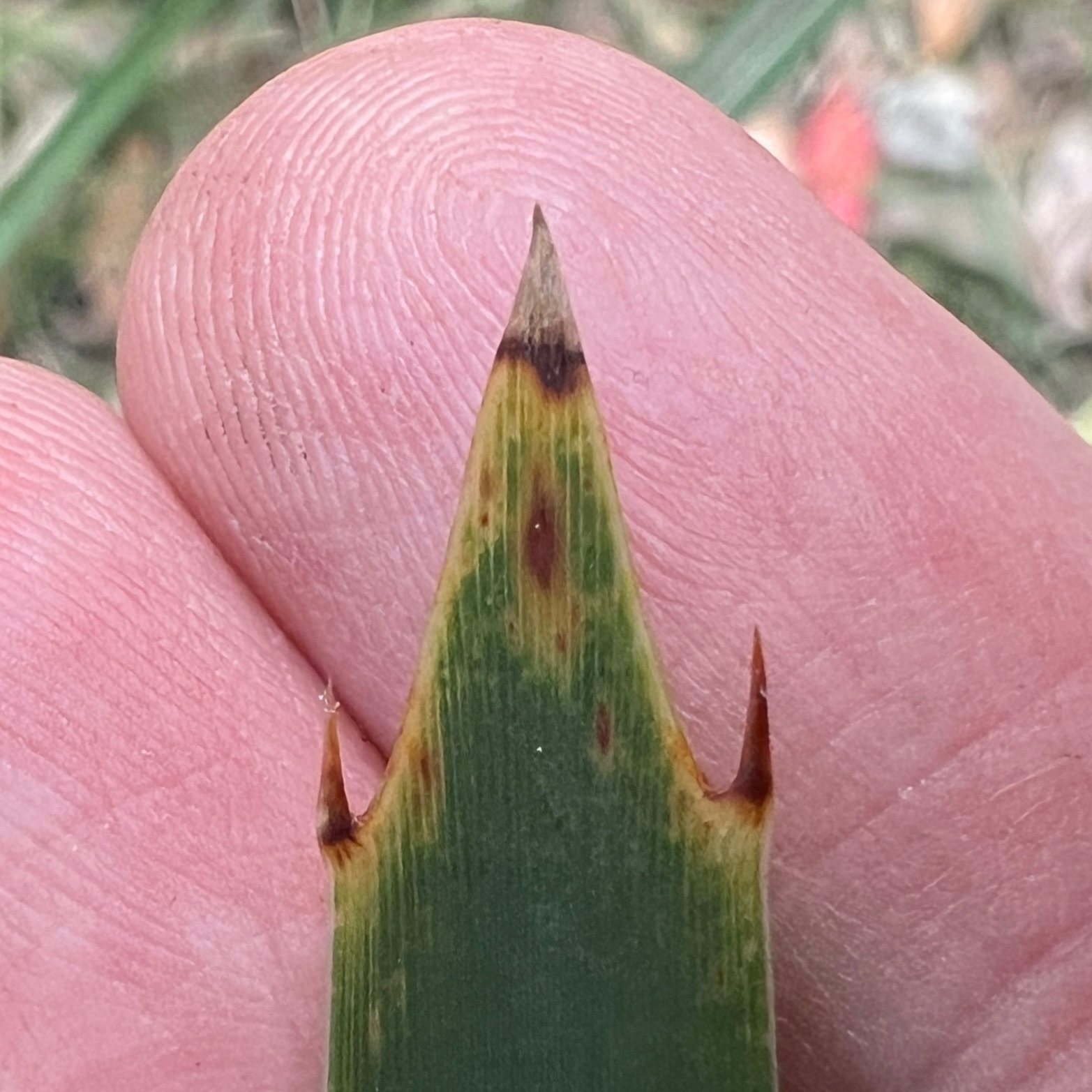
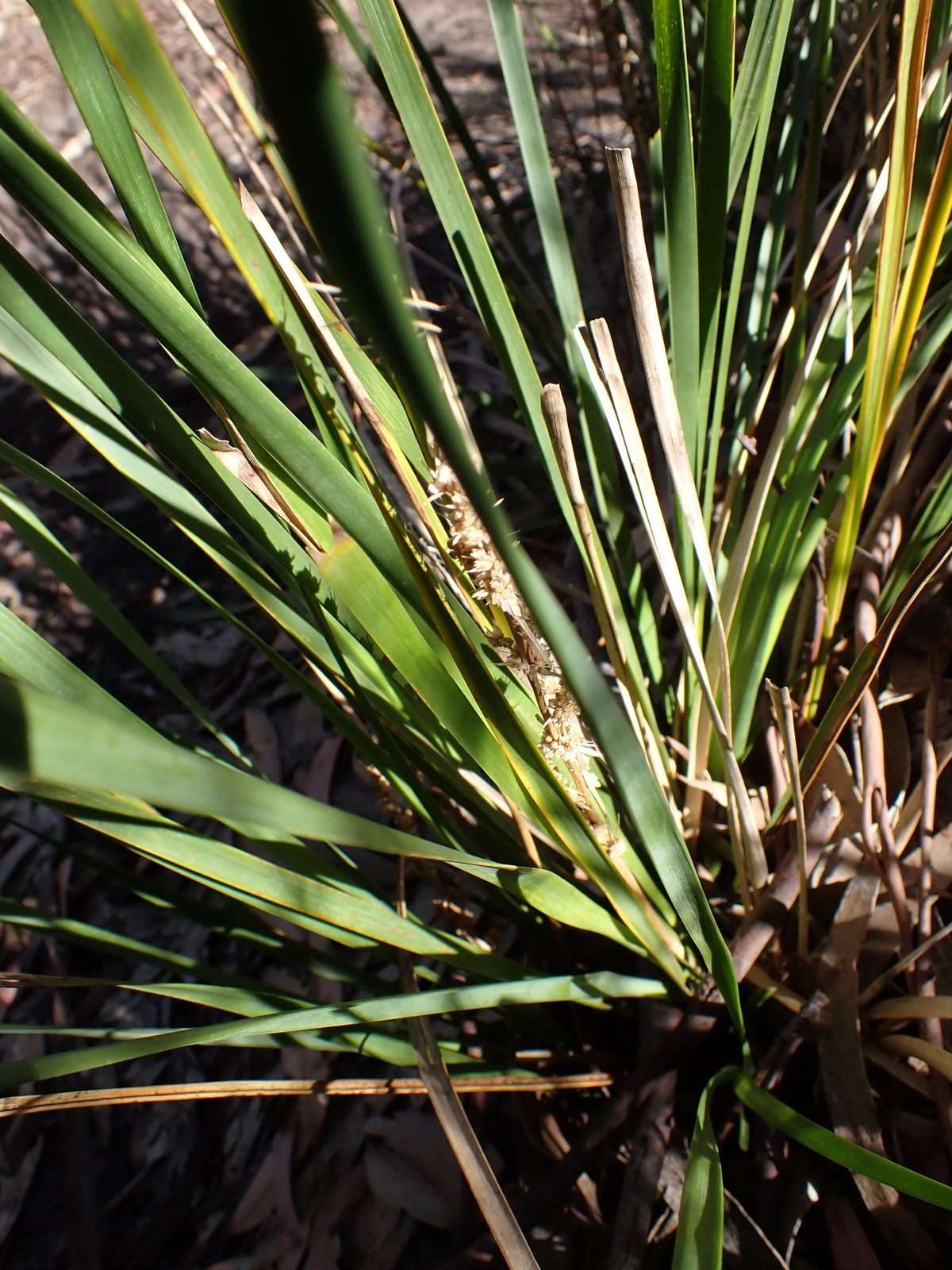
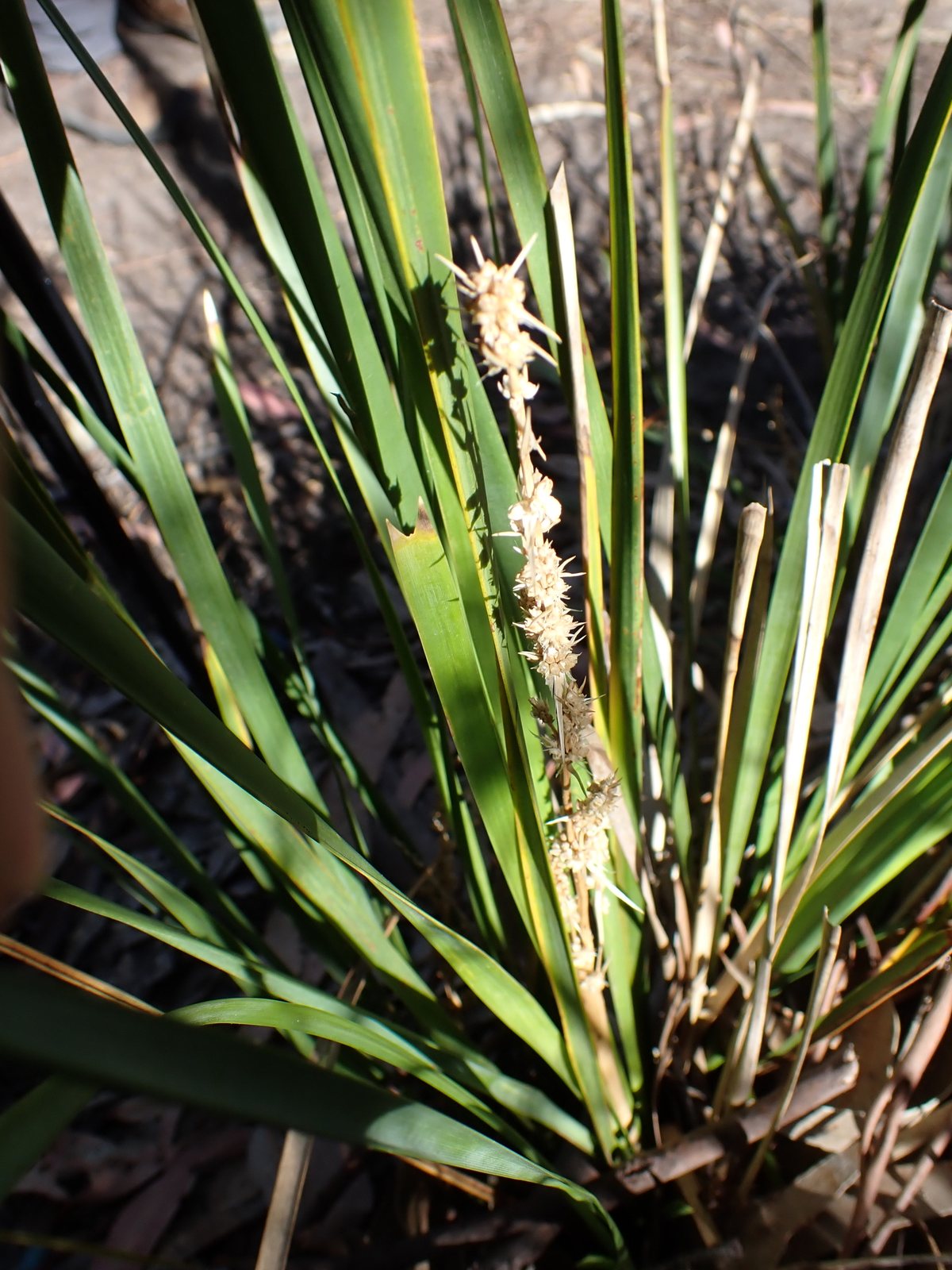
Tanika is a compact, evergreen Australian perennial with fine, arching leaves that form a rounded, grass-like clump. Gardeners use it for soft edging, repeated planting and drought-tolerant ground cover; it tolerates coastal conditions but needs protection from severe cold and waterlogged winter soil.
At a glance
- Sun
- Full sun to partial shade; growth is usually denser in good light.
- Water
- Water regularly while establishing, then during prolonged dry spells. Established plants tolerate drought but look better with occasional deep watering.
- Soil
- Well-drained sandy, loamy or clay soil; tolerates a broad pH range. Avoid persistently wet soil, especially in winter.
- Height
- 1.5-2 ft (0.45-0.6 m)
- Spread
- 2-3 ft (0.6-0.9 m)
- Flowers
- Small, fragrant, pale yellow flowers among the foliage in spring to early summer.
- Foliage
- Fine, bright green, strap-shaped leaves arch from a dense basal clump; generally evergreen, though hard frost can brown the foliage.
- Growth
- Moderate
- Care needed
- Low
The year at a glance
- Pollinators
- Deer resistant
- Drought tolerant
- Heat tolerant
- Wildlife
- Low allergen
- Fragrant
| J | F | M | A | M | J | J | A | S | O | N | D | |
|---|---|---|---|---|---|---|---|---|---|---|---|---|
| Flowers | ||||||||||||
| Plant |
Northern hemisphere months. In Australia, shift them by six.
- Difficulty
- Moderate
- Toughness
- Fairly tough
Will it suit your garden?
Pick your zone, country, light and whether you have pets.
Full sun is 6 or more hours of direct sun a day, part shade 3 to 6 hours, shade under 3.
How it grows
Planting day
1 ft (0.3 m)
After 1 year
1.2 ft (0.37 m)
After 2 years
1.5 ft (0.45 m)
After 3 years
1.7 ft (0.53 m)
full size
About 3 years to full size.
From a typical nursery size, at an average rate for this kind of plant. A rule of thumb, not a forecast.
Good to know
- Cats and dogs
- Mildly toxic: may upset a stomach
- Native to
- Australia
- Growth rate
- Moderate
Care
Jobs through the year
- WaterApr–May, Sep–Oct, every 21 days
- Water established clumps only if dry; new plants need regular watering through their first season.
- WaterJun–Aug, every 14 days
- Deep-water established clumps during prolonged drought; water new plants more often.
- PruneApr–May
- After severe frosts, remove dead leaves and old flower stems; avoid annual shearing.
- FeedMay
- Feed lightly only if soil is poor or growth is weak.
- MulchMay
- Apply a light mulch, keeping the crown clear.
- ProtectJan–Apr, Oct–Dec
- Not reliably hardy in zones 6–7; overwinter in a bright, frost-free place, watering sparingly.
- Plant with the crown at soil level, allowing room for the mature clump.
- Water deeply through the first growing season, letting the surface soil dry between waterings.
- Apply a light mulch, keeping it clear of the crown.
- Feed lightly in spring only if growth is weak or the soil is poor.
- In cold climates, choose a sheltered, freely draining position; overwinter containers under cover where hard freezes are likely.
Pruning. Remove dead leaves and spent flower stems in spring. If an old clump becomes badly untidy, cut it back to about 6 in (15 cm) above the ground in late winter or early spring, after the worst frosts; annual shearing is unnecessary.
Through the year
- Spring
- Plant once severe frost has passed, and water thoroughly.
- Spring
- Remove winter-damaged leaves; lightly feed only if needed.
- Early summer
- Check new plantings regularly and water deeply when the root zone starts to dry.
- Summer
- Water established clumps during prolonged drought and check for mites in hot, dry conditions.
- Autumn
- Clear fallen leaves from the crown and check that surrounding soil drains freely.
- Winter
- Keep container plants out of standing water and protect them from prolonged hard freezes.
In the garden
- Repeat along paths or driveways for a soft, consistent evergreen edge.
- Mass on sunny slopes to cover soil and help reduce surface erosion once established.
- Plant beside upright shrubs or succulents to contrast their rigid shapes with arching foliage.
- Use in large containers for year-round texture, with reliable drainage and winter protection where needed.
- Combine with drought-tolerant flowering perennials in coastal or gravel gardens.
Garden styles it suits: Australian native, Coastal, Low-maintenance, Contemporary minimal, Dry gravel garden and Mediterranean.
Plant it with: Kangaroo paw, Westringia, Flax lily, Lavender, Salvia and Yarrow.
Wildlife: Dense clumps shelter small invertebrates and, in suitable gardens, small reptiles. Flowers can attract visiting insects.
Problems to watch for
- Crown or root rot in saturated soil: improve drainage, keep mulch off the crown and replace badly affected plants.
- Frost-browned leaves: leave damaged foliage until severe frost has passed, then remove it; use a sheltered site in colder areas.
- Spider mites in hot, dry conditions: look for fine stippling and webbing, rinse foliage thoroughly and avoid severe drought stress.
- Yellowing or sparse growth in deep shade: move to a brighter position and check that the roots are not staying wet.
Safety
Not known to be toxic to cats, dogs, horses or people. No part is generally recognized as poisonous, but it is an ornamental rather than a food plant; chewing large amounts of fibrous foliage may cause digestive upset.
Easily confused with
Common mat rush (Lomandra longifolia)
Typical seed-grown plants are usually taller and coarser, with broader leaves and a less uniform habit than Tanika.
Spiny-headed mat rush (Lomandra hystrix)
Usually forms a much larger clump with longer, broader leaves and more prominent, branched flower stems; it also tolerates wetter sites.
Flax lily (Dianella species)
Usually has more obvious fans of leaves, blue or violet flowers and often blue berries, rather than lomandra's small yellowish flowers.
The name
Lomandra comes from Greek words referring to the bordered anthers, while longifolia means long-leaved.
Propagation. Division preserves the cultivar; divide healthy clumps in spring and replant rooted sections promptly. Seed will not reliably reproduce Tanika. It is sold under the cultivar name 'LM300'; check local plant breeders' rights or patent restrictions before propagating.
Checked against open data
- Accepted botanical name
- Lomandra longifolia
- Native range
- New South Wales, Queensland, South Australia, Tasmania and Victoria.
- Measured
- Average height 80 cm.
Sources: GBIF (CC BY 4.0) and Trefle (CC BY 4.0). The care and design notes are LandscapeGPT's own.
See it in your own yard.
Upload a photo of your yard and see it redesigned with plants that suit your climate, each checked against your zone.