Tar bush
Eremophila glabra. Family Scrophulariaceae. Shrub.
Also called Common emu bush, Tarbush.
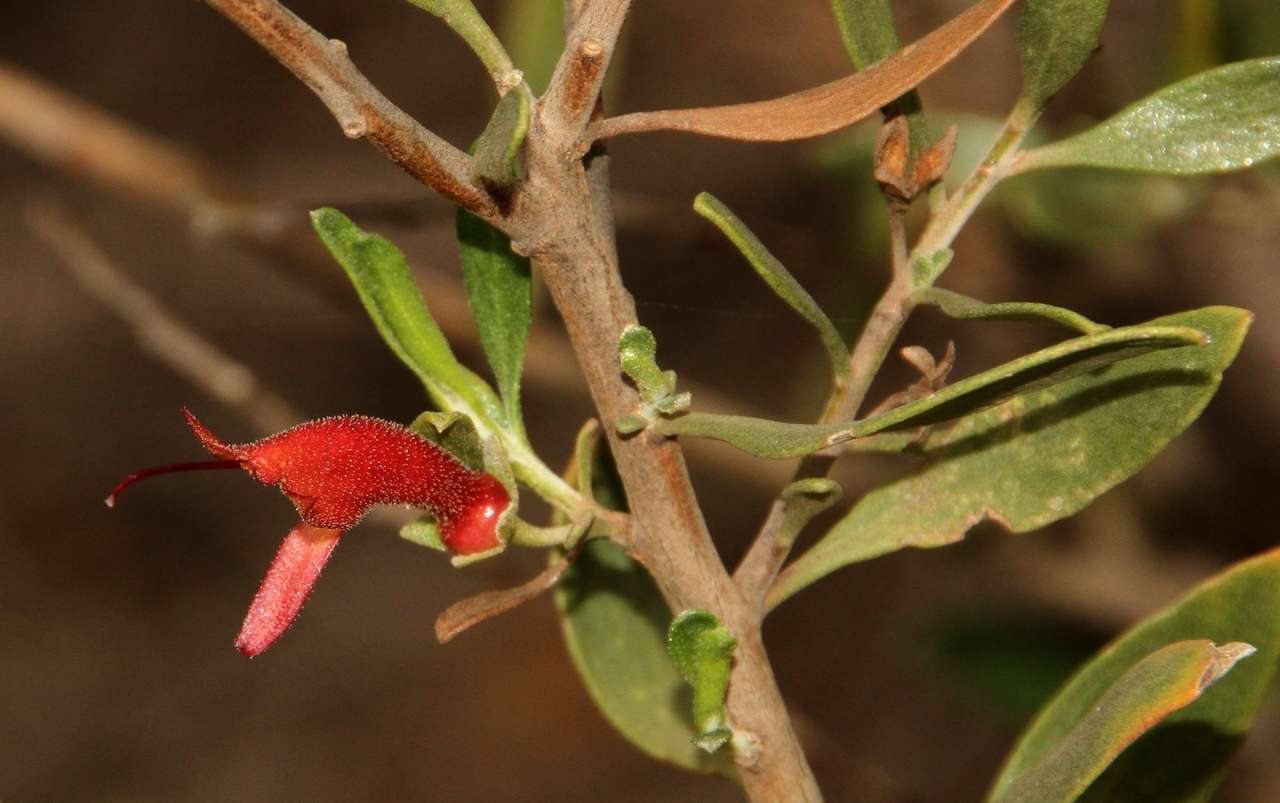
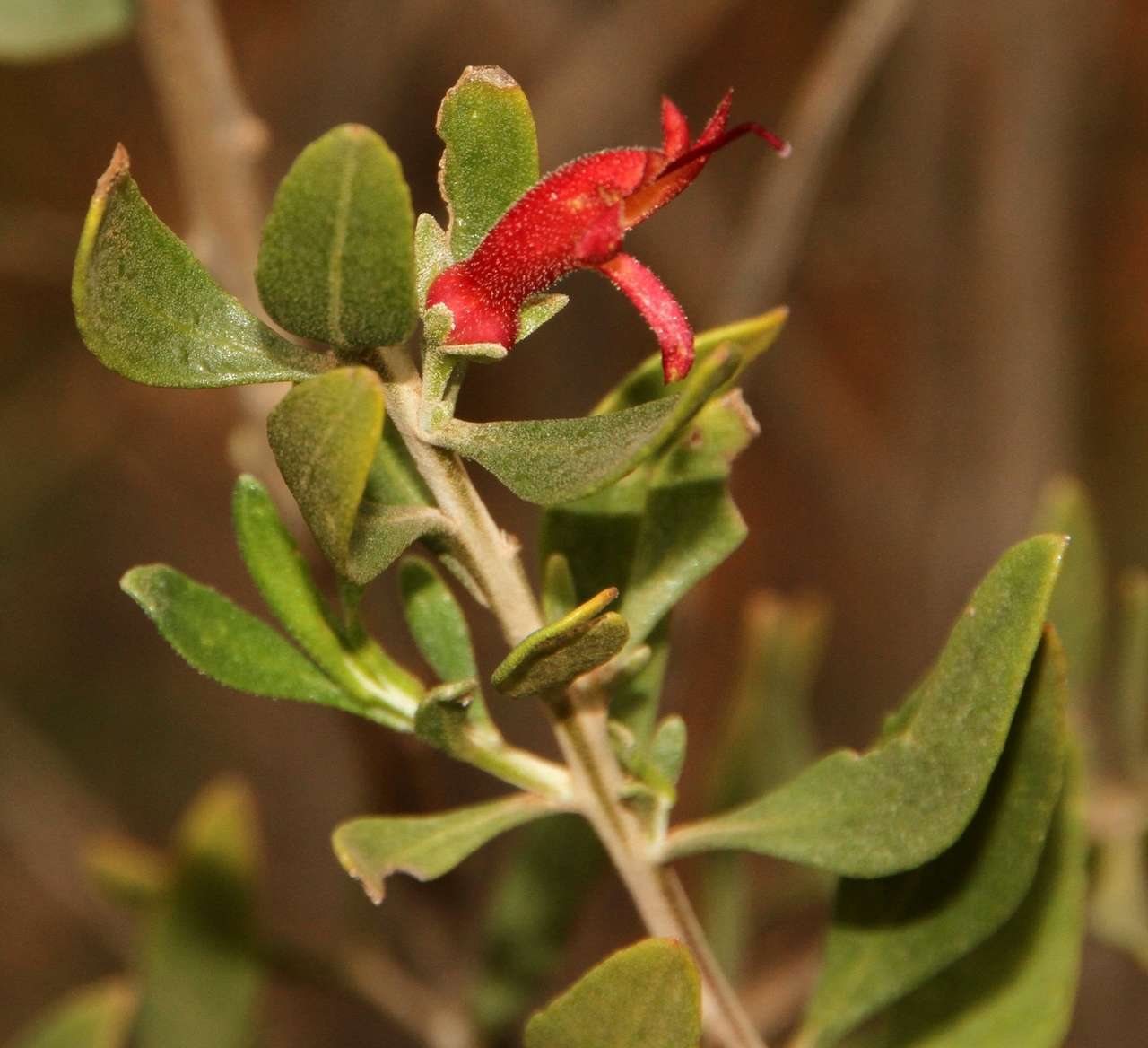
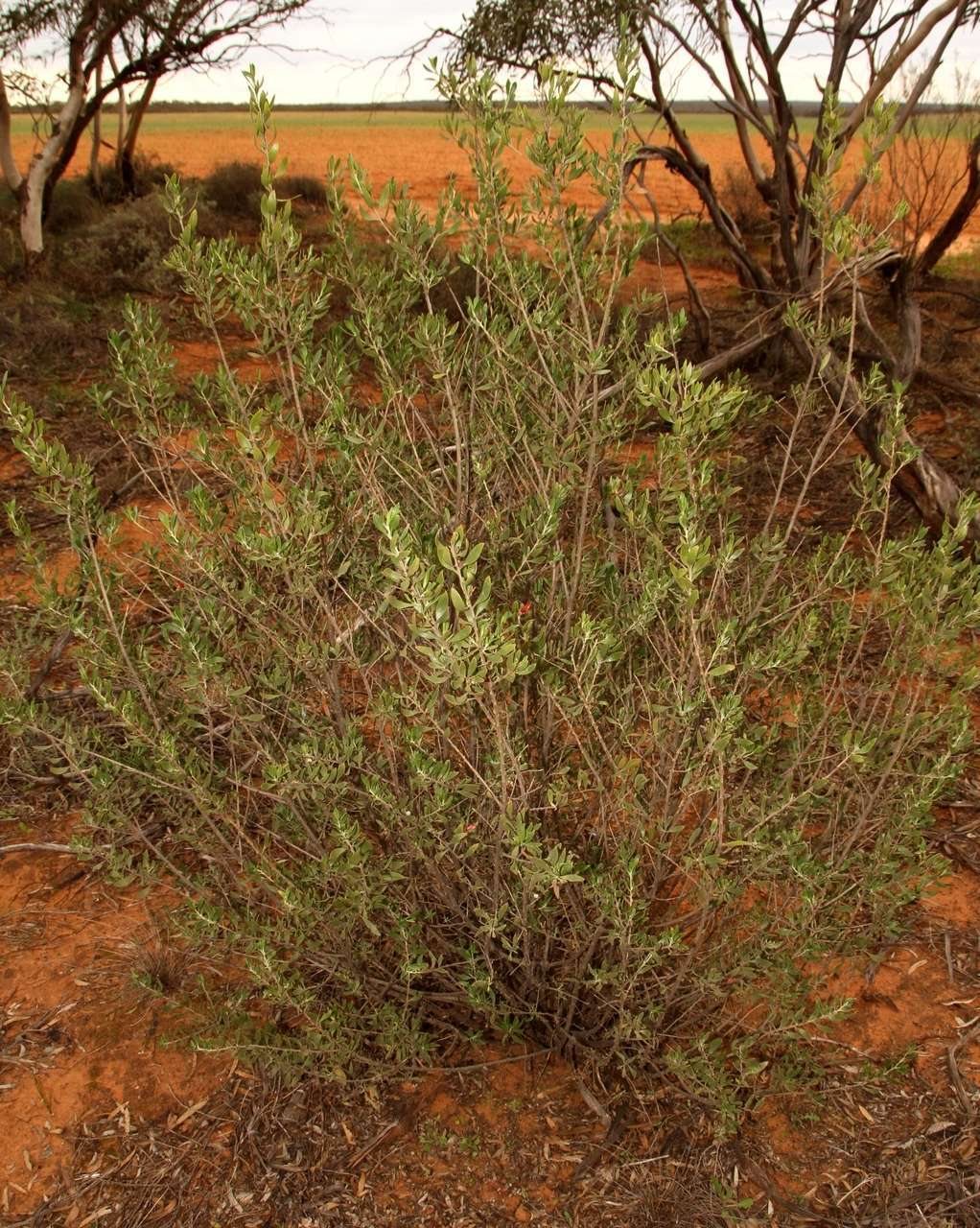
Tar bush is a variable evergreen Australian shrub, with forms ranging from spreading groundcovers to upright bushes. Gardeners grow it for its tubular red, orange, yellow or green flowers, bird appeal and tolerance of dry conditions once established. It needs excellent drainage and is best suited to mild-winter gardens; in colder regions, grow it in a container and overwinter it under cover.
At a glance
- Sun
- Full sun gives the densest growth and best flowering; tolerates light shade.
- Water
- Low once established. Water young plants regularly, then give an occasional deep soaking during prolonged dry weather; avoid constantly damp roots.
- Soil
- Well-drained sandy, gravelly or loamy soil. Tolerates some clay if drainage is good; use a raised bed where soil stays wet in winter.
- Height
- 1-6 ft (0.3-1.8 m), depending on form; some upright forms grow taller
- Spread
- 3-8 ft (0.9-2.4 m), depending on form
- Flowers
- Usually spring to autumn, sometimes intermittently through the year in mild climates; tubular flowers in red, orange, yellow or green, depending on the form.
- Foliage
- Evergreen. Small, narrow to oval leaves, ranging from green to silver-grey and from nearly smooth to hairy; some forms have sticky foliage.
- Growth
- Moderate; often faster in warm weather with occasional watering.
- Care needed
- Low
The year at a glance
- Pollinators
- Drought tolerant
- Heat tolerant
- Wildlife
- Low allergen
| J | F | M | A | M | J | J | A | S | O | N | D | |
|---|---|---|---|---|---|---|---|---|---|---|---|---|
| Flowers | ||||||||||||
| Plant |
Northern hemisphere months. In Australia, shift them by six.
- Difficulty
- Moderate
- Toughness
- Fairly tough
Will it suit your garden?
Pick your zone, country, light and whether you have pets.
Full sun is 6 or more hours of direct sun a day, part shade 3 to 6 hours, shade under 3.
How it grows
Planting day
1.6 ft (0.5 m)
After 1 year
2.1 ft (0.64 m)
After 2 years
2.5 ft (0.78 m)
After 3 years
3 ft (0.91 m)
After 5 years
3 ft (1.1 m)
full size
About 4 years to full size.
From a typical nursery size, at an average rate for this kind of plant. A rule of thumb, not a forecast.
Good to know
- Cats and dogs
- Safe
- Native to
- Australia
- Growth rate
- Fast
Care
Jobs through the year
- WaterApr–May, Sep, every 21 days
- Water established ground plants only if dry; young plants and pots need more frequent checks.
- WaterJun–Aug, every 21 days
- Give established ground plants a deep soaking only during prolonged drought; water new plants more often.
- FeedMay
- Apply a small amount of low-phosphorus native-plant fertiliser only if needed.
- MulchMay
- Use a light mulch layer and keep stems and crown clear.
- PruneMay
- Remove frost-damaged shoots once healthy new growth is visible.
- PruneJun
- Lightly trim after the main spring flowering flush, leaving plenty of leafy growth.
- ProtectJan–Apr, Oct–Dec
- Overwinter containers in bright frost-free shelter; keep only slightly moist and never waterlogged.
- Plant in a sunny position with free drainage, keeping the root crown at soil level.
- Water deeply during establishment, allowing the soil surface to dry between waterings.
- Once established, water only during extended dry spells; reduce watering sharply in cool weather.
- Feed sparingly in spring, if needed, with a low-phosphorus fertiliser suitable for Australian native plants.
- Keep mulch away from the stems and crown.
- Protect container plants from freezing weather in a bright, frost-free place.
Pruning. Lightly trim after the main flowering flush to encourage branching and maintain shape. Avoid severe cuts into old, leafless wood, and remove frost-damaged shoots in spring once new growth shows.
Through the year
- Spring
- Plant after hard frosts have passed, or repot container plants into a freely draining mix.
- Spring
- Remove dead or frost-damaged shoots once healthy new growth is visible.
- Late spring
- Lightly trim after the main flowering flush, leaving plenty of leafy growth.
- Summer
- Check newly planted shrubs regularly and water deeply when the root zone begins to dry.
- Late summer
- Take semi-ripe cuttings from healthy, non-flowering shoots.
- Autumn
- Reduce watering as temperatures fall and move pots under cover before frost in cold regions.
- Winter
- Keep sheltered container plants bright and only slightly moist; check outdoor plants for standing water around their roots.
In the garden
- Use low-growing forms to cover sunny banks or soften the edges of raised beds.
- Mix upright forms with drought-tolerant grasses and other Australian shrubs in an informal dry border.
- Set silver-leaved forms against dark gravel or green foliage for contrast.
- Grow compact forms in freely draining courtyard containers where winter protection is practical.
- Include near a seating area or window to watch nectar-feeding birds visit the flowers.
Garden styles it suits: Australian native, Desert / xeriscape, Dry gravel garden, Mediterranean, Wildlife garden and Low-maintenance.
Plant it with: Kangaroo paw, Westringia, Lomandra, Dianella, Grevillea and Rock rose.
Wildlife: The tubular flowers attract nectar-feeding birds, especially honeyeaters in Australia, and are also visited by insects. Dense forms provide small birds with shelter.
Problems to watch for
- Root rot and sudden collapse in wet soil: improve drainage, reduce watering and avoid planting in low spots that collect winter rain.
- Frost-damaged tips: provide shelter or move pots under cover; wait until spring growth appears before cutting back damaged stems.
- Sparse growth and poor flowering in shade: move to a sunnier position and lightly trim leafy shoots to encourage branching.
- Scale insects: inspect stems and leaf undersides; remove small infestations by hand or use a labelled horticultural oil, testing a small area first.
Safety
Species-specific toxicity information for people, cats, dogs and horses is limited, so its safety if eaten is not established. Do not treat the leaves, flowers or fruit as edible, and prevent pets and livestock from browsing it.
Easily confused with
Spotted emu bush (Eremophila maculata)
Usually has conspicuous darker spots inside the tubular flowers; tar bush flowers generally lack such prominent throat spotting. Foliage and habit overlap, so check flowers rather than leaves alone.
Silky eremophila (Eremophila nivea)
Has densely woolly, silvery-white foliage and lilac to purple flowers; silver-leaved tar bush forms usually bear red, orange, yellow or green flowers.
The name
Eremophila means 'desert-loving' in Greek, while glabra means 'smooth' or 'hairless' in Latin, although some forms have hairy foliage.
Propagation. Take semi-ripe cuttings in summer or early autumn and root them in a free-draining propagation mix with gentle humidity. Cuttings preserve the parent plant's habit and flower colour; seed germination can be slow and unreliable.
Checked against open data
- Accepted botanical name
- Eremophila glabra
- Native range
- New South Wales, Northern Territory, Queensland, South Australia, Victoria and Western Australia.
- Measured
- Average height 170 cm.
Sources: GBIF (CC BY 4.0) and Trefle (CC BY 4.0). The care and design notes are LandscapeGPT's own.
See it in your own yard.
Upload a photo of your yard and see it redesigned with plants that suit your climate, each checked against your zone.