Thryallis
Galphimia gracilis. Family Malpighiaceae. Shrub.
Also called Golden thryallis, Rain-of-gold.
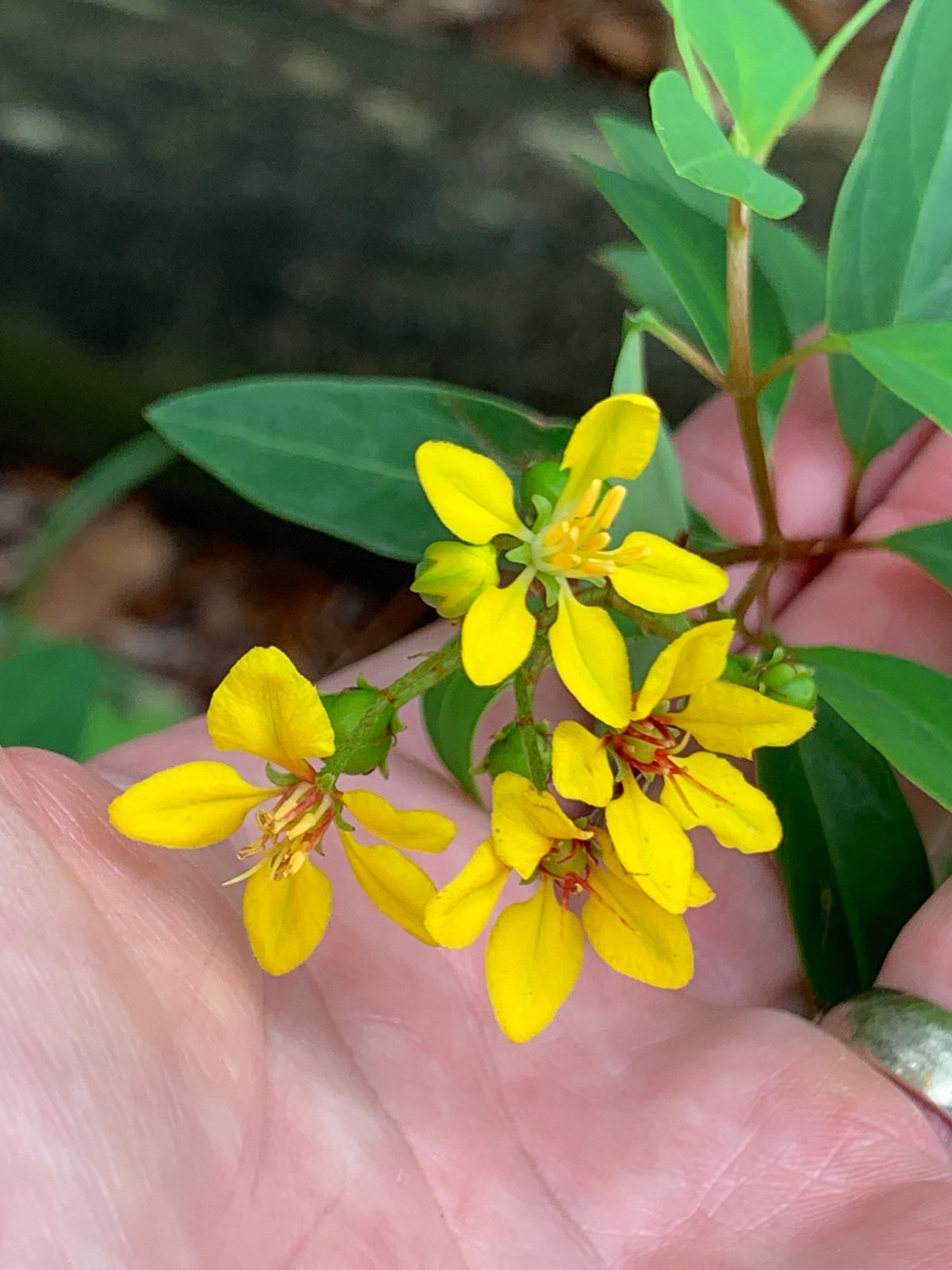
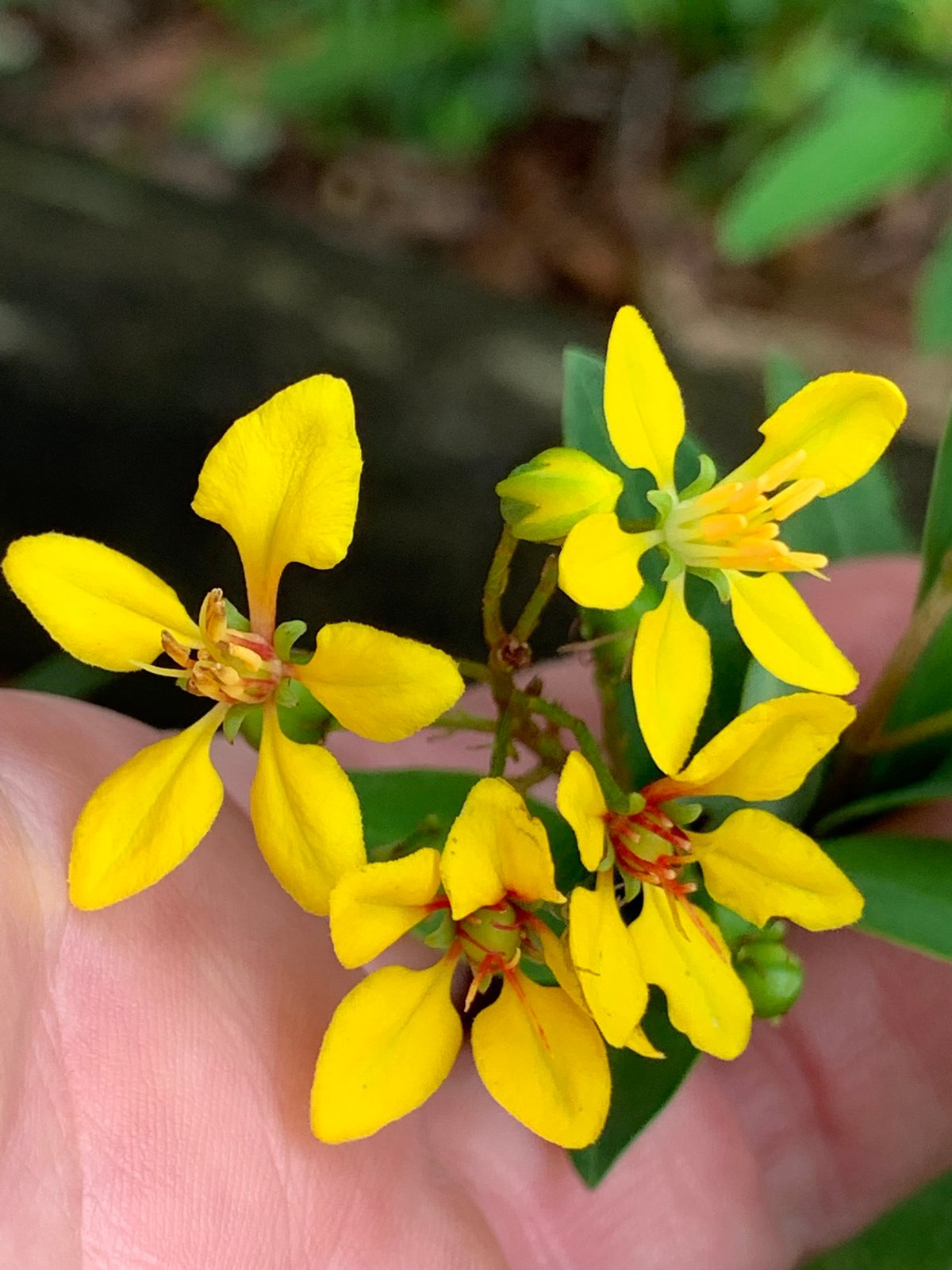
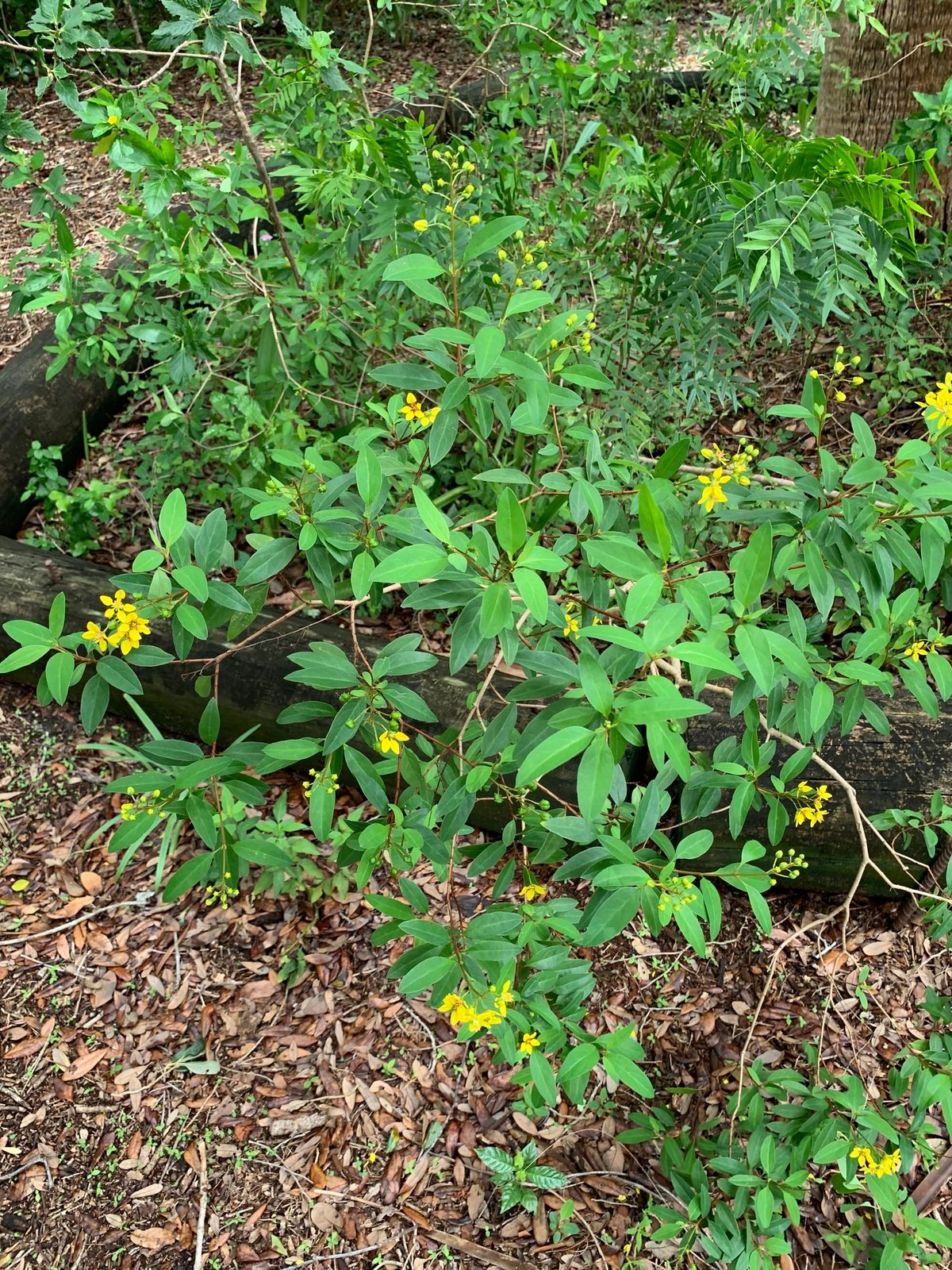
Thryallis is a rounded, fine-branched shrub grown for its long display of small yellow flowers. It is evergreen in frost-free gardens, but frost can strip its leaves or kill back its stems. In colder parts of the United States, Canada, the United Kingdom and Australia, grow it in a container that can be moved under cover for winter.
At a glance
- Sun
- Full sun gives the densest growth and most flowers; tolerates light partial shade.
- Water
- Water regularly while establishing. Once established, it tolerates short dry spells, but flowers better with occasional deep watering during prolonged drought.
- Soil
- Well-drained sandy or loamy soil; tolerates a range of soil pH but struggles in persistently wet ground.
- Height
- 4-6 ft (1.2-1.8 m)
- Spread
- 4-6 ft (1.2-1.8 m)
- Flowers
- Small golden-yellow flowers in upright clusters from spring into autumn; flowering can continue through much of the year in frost-free climates.
- Foliage
- Evergreen. Small, opposite, oval green leaves on slender stems; young stems may be reddish.
- Growth
- Moderate to fast in warm weather.
- Care needed
- Low
The year at a glance
- Pollinators
- Drought tolerant
- Heat tolerant
- Low allergen
| J | F | M | A | M | J | J | A | S | O | N | D | |
|---|---|---|---|---|---|---|---|---|---|---|---|---|
| Flowers | ||||||||||||
| Plant |
Northern hemisphere months. In Australia, shift them by six.
- Difficulty
- Moderate
- Toughness
- Fairly tough
Will it suit your garden?
Pick your zone, country, light and whether you have pets.
Full sun is 6 or more hours of direct sun a day, part shade 3 to 6 hours, shade under 3.
How it grows
Planting day
1.6 ft (0.5 m)
After 1 year
2.5 ft (0.75 m)
After 2 years
3 ft (1 m)
After 3 years
4 ft (1.3 m)
After 5 years
5 ft (1.5 m)
full size
About 4 years to full size.
From a typical nursery size, at an average rate for this kind of plant. A rule of thumb, not a forecast.
Good to know
- Cats and dogs
- Safe
- Growth rate
- Fast
Care
Jobs through the year
- WaterApr–May, Sep–Oct, every 14 days
- Check established plants and water if upper soil dries; young plants and pots need more frequent attention.
- WaterJun–Aug, every 7 days
- Water deeply during prolonged dry weather to sustain flowering; skip when soil remains moist.
- WaterJan–Mar, Nov–Dec, every 14 days
- Check overwintering pots and water sparingly without allowing complete drying.
- FeedApr–May
- Apply a light dose of balanced slow-release fertilizer only if growth is weak.
- MulchMay
- Spread 5–8 cm of mulch over roots, leaving stem bases clear.
- PruneMay
- After frost risk passes, remove dead stems and shorten straggly growth to healthy buds.
- PruneJul–Aug
- Lightly trim after a flowering flush only if needed; avoid shearing developing flower clusters.
- ProtectJan–May, Sep–Dec
- Grow in a movable container locally; overwinter bright and frost-free and acclimatise outdoors after frost.
- Water deeply when the upper soil dries during the first growing season; avoid keeping the root zone constantly wet.
- Apply a light dose of balanced, slow-release fertiliser in spring if growth is weak; avoid heavy feeding.
- Spread 2-3 in (5-8 cm) of mulch over the root area, keeping it clear of the stems.
- Use a container with drainage holes and a free-draining potting mix where winter protection is needed.
- Move container plants into a bright, frost-free place before the first frost, and reduce watering over winter.
Pruning. In spring, once frost risk has passed, remove dead or frost-damaged stems and shorten straggly growth to healthy buds. Lightly trim after a flowering flush if needed, rather than repeatedly shearing off developing flower clusters.
Through the year
- Spring
- After frost risk has passed, prune damaged growth and lightly feed plants that need it.
- Late spring
- Plant outdoors once the soil is warm, or gradually acclimatise overwintered containers to outdoor sun.
- Summer
- Check soil moisture during dry weather and water deeply when needed; containers need more frequent checks.
- Summer
- Take semi-ripe cuttings from healthy, non-flowering shoots.
- Autumn
- Move container plants under bright, frost-free cover before cold nights arrive.
- Winter
- Water sheltered plants sparingly without letting the root ball dry out completely; leave outdoor frost-damaged stems until spring.
In the garden
- Plant as a loose, flowering hedge along a sunny path or boundary in frost-free gardens.
- Use in the middle or back of a warm-climate border, with blue or purple flowers to contrast with the yellow blooms.
- Grow in a large patio container where its long flowering season can be enjoyed and winter shelter is available.
- Mass several shrubs on a sunny, well-drained bank for a soft outline and repeated colour.
Garden styles it suits: Tropical, Modern tropical, Modern courtyard, Florida subtropical, Caribbean and Low-maintenance.
Plant it with: Blue plumbago, Mexican bush sage, Society garlic, Dwarf fountain grass and Agapanthus.
Wildlife: The flowers attract bees and other flower-visiting insects. Its branching growth can provide modest shelter for small garden wildlife.
Problems to watch for
- Frost damage: leaves and shoots may blacken after cold weather. Protect containers and wait until spring growth begins before cutting back outdoor plants.
- Root rot in wet soil: improve drainage, reduce watering and avoid planting where water collects.
- Sparse flowering and loose growth: move container plants into stronger sun, or reduce shade around established shrubs.
- Spider mites in hot, dry conditions or under cover: check for fine webbing and stippled leaves; rinse leaf undersides and use insecticidal soap if necessary, following the label.
Safety
Not known to be toxic to people, cats, dogs or horses, but reliable species-specific poisoning information is limited. It is not an edible plant; discourage pets and children from eating any part.
Easily confused with
Gold shower (Galphimia glauca)
The two species are frequently confused in nursery labels. Galphimia gracilis sheds its petals after flowering, while Galphimia glauca retains its petals around the developing fruit.
The name
The species name gracilis is Latin for slender or graceful, referring to the plant's delicate growth.
Propagation. Take semi-ripe stem cuttings in summer and root them in a moist, free-draining medium with gentle humidity. Seed is another option where mature seed is available.
Checked against open data
- Accepted botanical name
- Galphimia gracilis
- In the US and Canada
- Introduced in the lower 48 states, Puerto Rico and US Virgin Islands.
- Native range
- Brazil Northeast, Colombia, El Salvador, Guatemala, Mexico Gulf, Mexico Northeast, Mexico Northwest, Mexico Southeast, Mexico Southwest, Nicaragua and Peru.
Sources: GBIF (CC BY 4.0), USDA PLANTS and Trefle (CC BY 4.0). The care and design notes are LandscapeGPT's own.
See it in your own yard.
Upload a photo of your yard and see it redesigned with plants that suit your climate, each checked against your zone.