Thryptomene
Thryptomene saxicola. Family Myrtaceae. Shrub.
Also called Rock thryptomene.
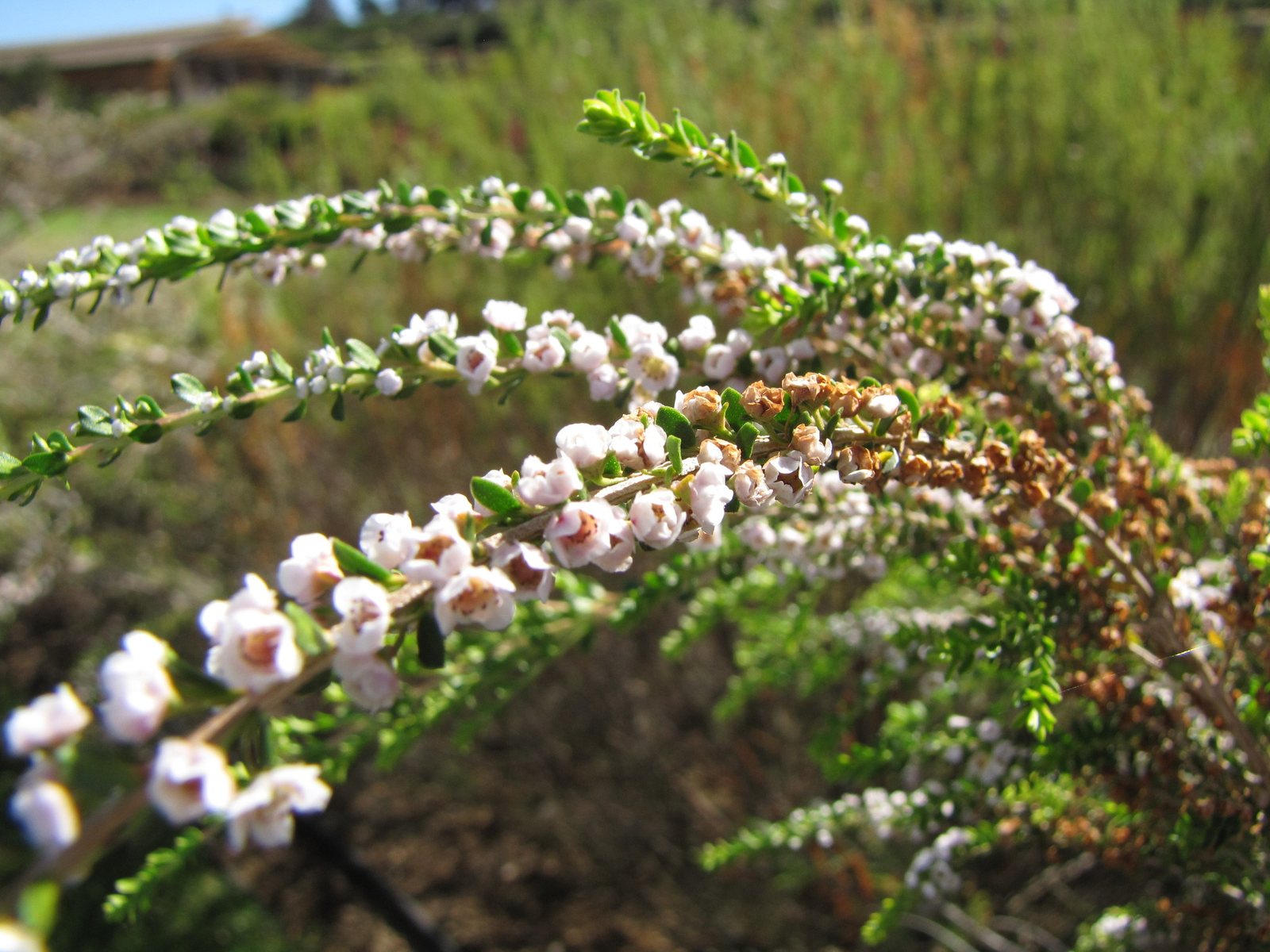
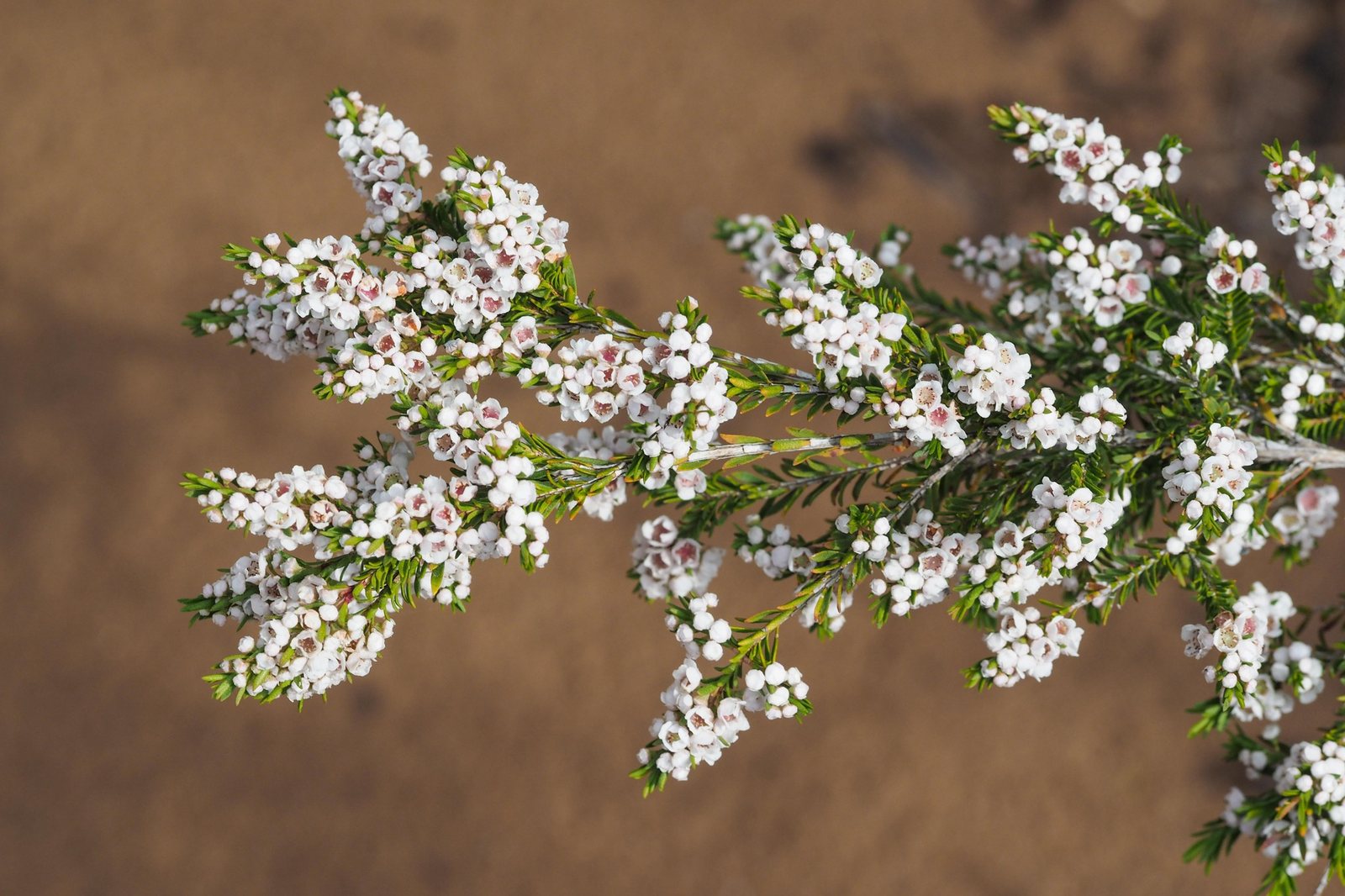
Thryptomene saxicola is a small evergreen shrub from southwestern Australia, with fine, arching branches covered in tiny pink or white flowers in the cooler months. Gardeners grow it for its long flowering season, informal shape and useful cut stems. It needs mild winters and freely draining soil; in colder climates, grow it in a container and overwinter it under cover.
At a glance
- Sun
- Full sun to light partial shade; flowering is usually best in sun.
- Water
- Water regularly during establishment, then occasionally during prolonged dry spells. Avoid persistently wet roots.
- Soil
- Freely draining sandy, gravelly or light loamy soil, preferably slightly acidic to neutral. Poor drainage is a greater problem than low fertility.
- Height
- 3-5 ft (0.9-1.5 m)
- Spread
- 3-6 ft (0.9-1.8 m)
- Flowers
- Mainly winter through spring, sometimes beginning in autumn; masses of tiny pale pink to white flowers.
- Foliage
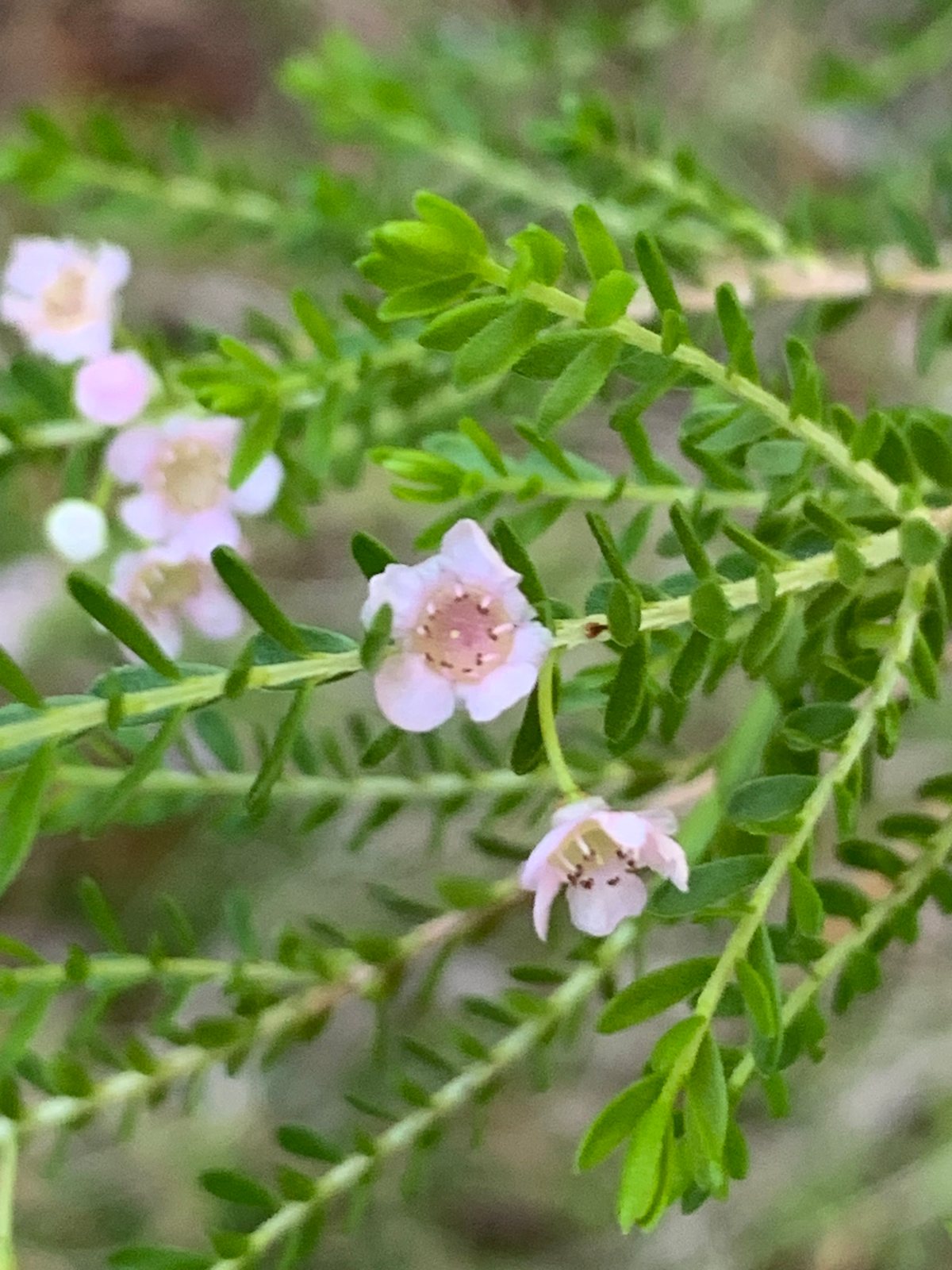
- Evergreen. Small, closely spaced, oval green leaves on slender, branching stems.
- Growth
- Moderate
- Care needed
- Low
The year at a glance
- Pollinators
- Drought tolerant
- Heat tolerant
- Wildlife
- Low allergen
| J | F | M | A | M | J | J | A | S | O | N | D | |
|---|---|---|---|---|---|---|---|---|---|---|---|---|
| Flowers | ||||||||||||
| Plant |
Northern hemisphere months. In Australia, shift them by six.
- Difficulty
- Moderate
- Toughness
- Needs looking after
Will it suit your garden?
Pick your zone, country, light and whether you have pets.
Full sun is 6 or more hours of direct sun a day, part shade 3 to 6 hours, shade under 3.
How it grows
Planting day
1.6 ft (0.5 m)
After 1 year
2.1 ft (0.64 m)
After 2 years
2.6 ft (0.78 m)
After 3 years
3 ft (0.92 m)
After 5 years
4 ft (1.2 m)
full size
About 5 years to full size.
From a typical nursery size, at an average rate for this kind of plant. A rule of thumb, not a forecast.
Good to know
- Cats and dogs
- Safe
- Native to
- Australia
- Growth rate
- Moderate
Care
Jobs through the year
- WaterApr–May, Sep–Oct, every 14 days
- For established plants, water only if drying; pots and young plants need more frequent checks.
- WaterJun–Aug, every 14 days
- Established ground plants need water only in extended drought; check pots much more often.
- WaterJan–Mar, Nov–Dec, every 14 days
- Check overwintered pots and water lightly when partly dry; do not leave roots wet.
- FeedApr
- Only if growth is weak, apply a light low-phosphorus native-plant fertiliser.
- MulchMay
- Apply a thin mulch, leaving stem bases clear.
- PruneMay–Jun
- Trim lightly after the main flowering flush; avoid cutting into bare old wood.
- ProtectJan–Apr, Oct–Dec
- In zone 6–7, overwinter in a bright, frost-free space; move outdoors only after frost risk passes.
- Water deeply during the first growing season, allowing the surface soil to dry between waterings.
- Once established, water during extended drought, especially while flowering.
- Use a light application of low-phosphorus native-plant fertiliser in spring if growth is weak; avoid heavy feeding.
- Apply a thin mulch over the root area, keeping it clear of the stem bases.
- In cold districts, grow in a pot with free-draining compost and move it into a bright, frost-free space for winter.
Pruning. Trim lightly after the main flowering flush to keep the shrub compact and encourage branching. Remove dead stems, but avoid cutting hard into old, leafless wood.
Through the year
- Spring
- Plant after damaging frosts have passed in cooler districts; water thoroughly and mulch lightly.
- Late spring
- After the main flowering flush, shorten flowered shoots lightly and remove dead growth.
- Summer
- Check young plants and containers during dry weather; water deeply rather than giving frequent small amounts.
- Late summer
- Take semi-ripe cuttings from healthy, non-flowering shoots.
- Autumn
- Plant in mild, winter-rainfall climates while the soil is warm; move tender container plants under cover before frost.
- Winter
- Enjoy the flowers, check drainage after heavy rain and keep sheltered container plants only lightly moist.
In the garden
- Use near paths or seating where the small winter and spring flowers can be seen closely.
- Mix with compact Australian native shrubs for an informal, fine-textured border.
- Plant among rocks and gravel with other shrubs needing sharp drainage.
- Grow in a container on a sunny patio where winter protection is practical.
- Include in a cutting garden for small flowering branches that soften arrangements.
Garden styles it suits: Australian native, Dry gravel garden, Mediterranean, Cottage garden, Low-maintenance and Small-space.
Plant it with: Waxflower, Correa, Westringia, Kangaroo paw, Dwarf lomandra and Native everlasting daisies.
Wildlife: The small flowers attract bees and other flower-visiting insects. Its branching evergreen growth provides modest shelter for small garden wildlife.
Problems to watch for
- Root rot in wet soil: improve drainage before planting, use a raised bed or container, and avoid watering already moist soil.
- Frost damage: choose a sheltered position in mild areas and overwinter containers under bright, frost-free cover where winters are colder.
- Sparse or woody growth: provide more sun and trim lightly after flowering rather than cutting hard into bare stems.
- Drought stress in pots: check the root ball regularly in hot weather and water thoroughly when it begins to dry.
Safety
Not known to be toxic to people, cats, dogs or horses, but reliable species-specific information is limited. No particular poisonous part is established; do not treat the leaves or flowers as edible.
Easily confused with
Geraldton wax (Chamelaucium uncinatum)
Geraldton wax has much larger, waxy flowers and long, narrow, needle-like leaves, often with hooked tips; thryptomene has tiny oval leaves and much smaller flowers.
Pink breath of heaven (Coleonema pulchellum)
It also bears many small pink flowers, but its leaves are narrow, needle-like and strongly aromatic when rubbed, rather than the short oval leaves of thryptomene.
The name
The species name saxicola means 'rock-dwelling', referring to its occurrence in rocky habitats.
Propagation. Take semi-ripe cuttings in late summer or early autumn and root them in a freely draining propagation mix with gentle humidity. Seed propagation is possible, but germination can be variable; cuttings preserve the characteristics of a selected plant.
Checked against open data
- Accepted botanical name
- Thryptomene saxicola
- Native range
- Western Australia.
Sources: GBIF (CC BY 4.0) and Trefle (CC BY 4.0). The care and design notes are LandscapeGPT's own.
See it in your own yard.
Upload a photo of your yard and see it redesigned with plants that suit your climate, each checked against your zone.