Tick bush
Kunzea ambigua. Family Myrtaceae. Shrub.
Also called White kunzea, White cloud, Tick scrub.
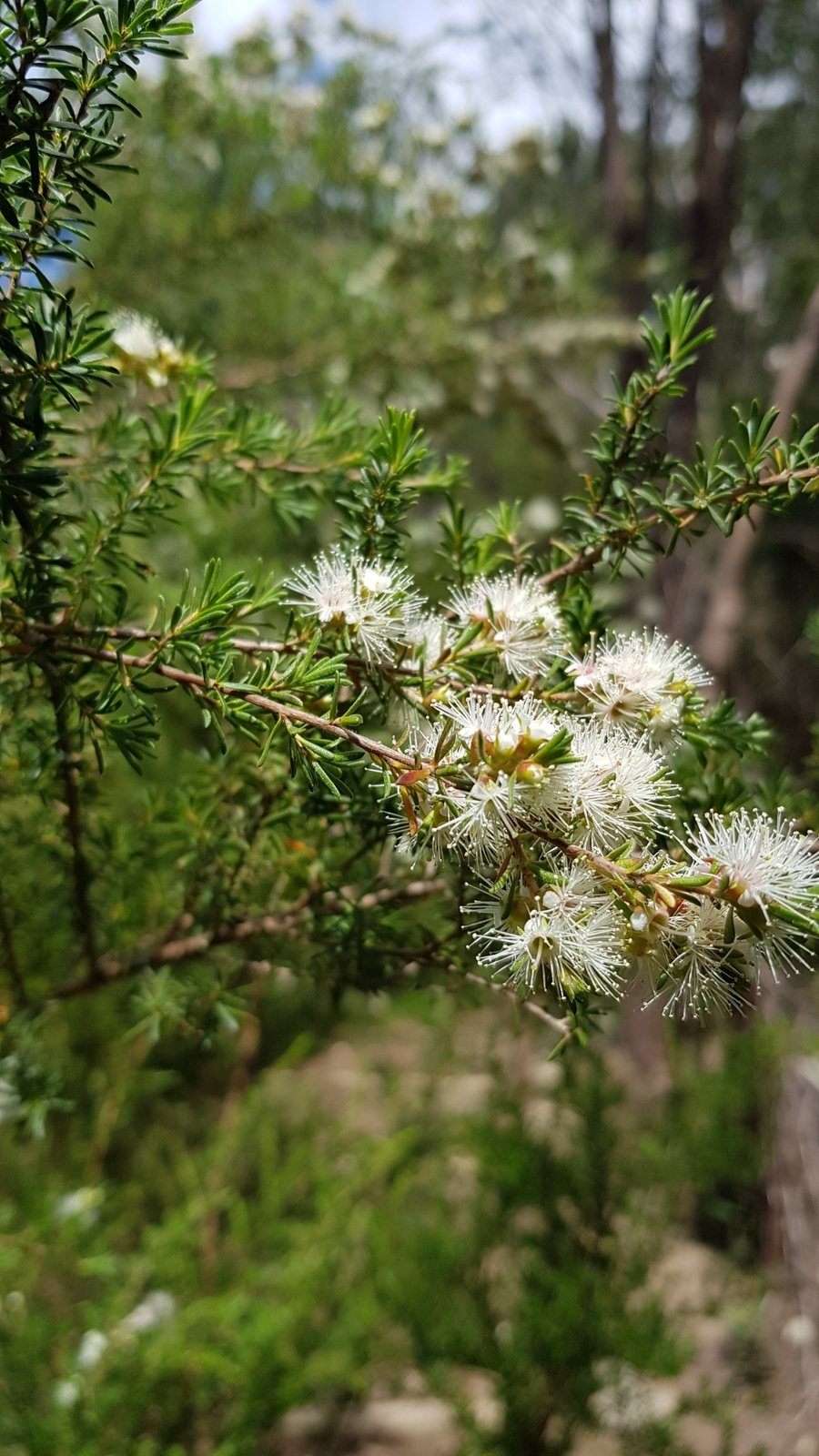
Tick bush is an evergreen shrub from southeastern Australia, grown for its arching branches and masses of fragrant, fluffy white flowers. It suits coastal and wildlife gardens in mild climates, tolerating wind and dry spells once established, but needs shelter from hard frost.
At a glance
- Sun
- Full sun for the best flowering; tolerates light partial shade.
- Water
- Water regularly during the first growing season. Once established, water deeply during prolonged dry spells rather than keeping the soil constantly moist.
- Soil
- Well-drained sandy or loamy soil, preferably acidic to neutral. Tolerates low fertility; avoid persistently wet, heavy ground.
- Height
- 6-10 ft (1.8-3 m)
- Spread
- 6-10 ft (1.8-3 m)
- Flowers
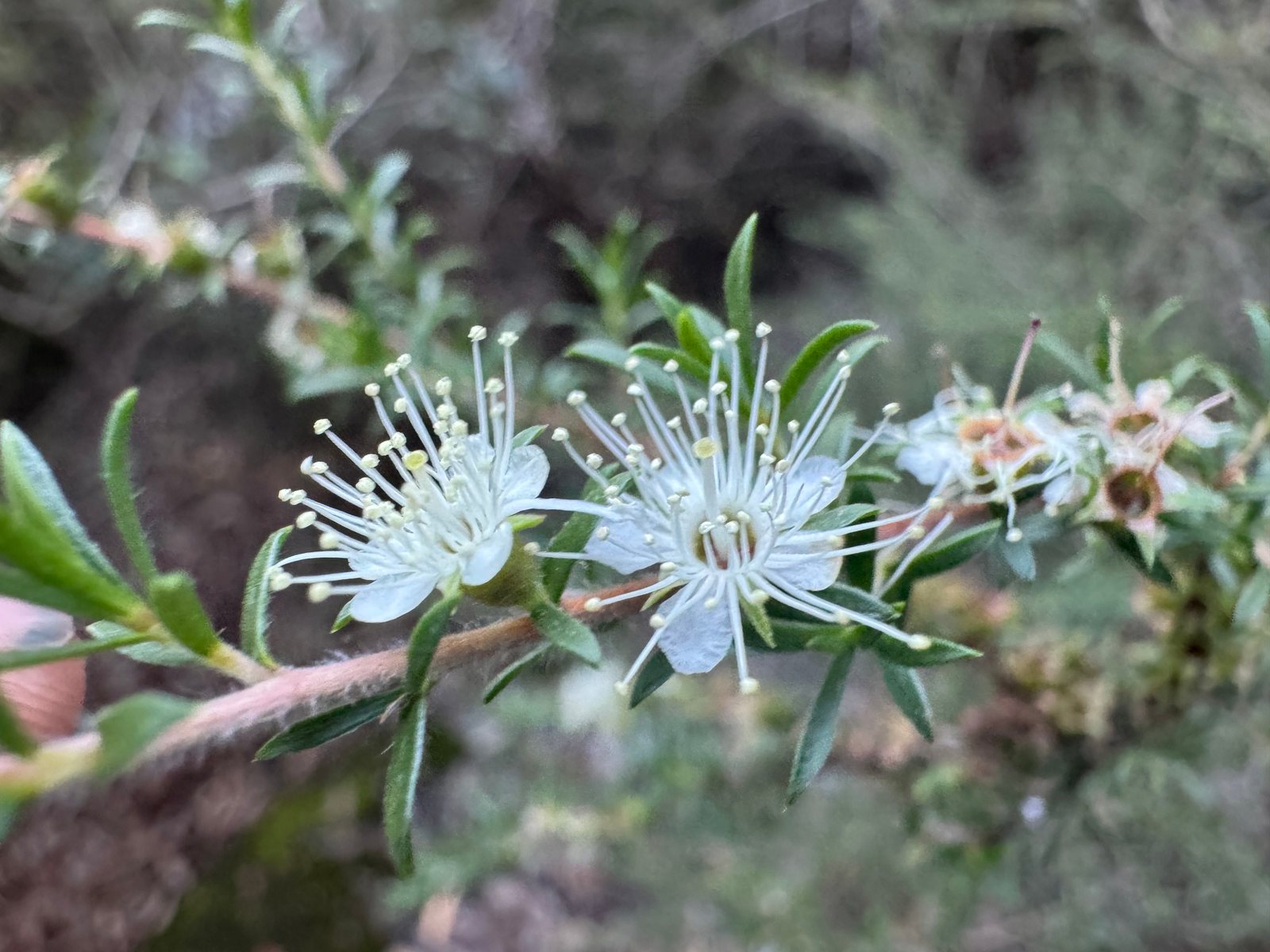
- Fragrant white flowers with prominent stamens in late spring and summer; usually November-January in Australia and approximately May-July in the Northern Hemisphere.
- Foliage
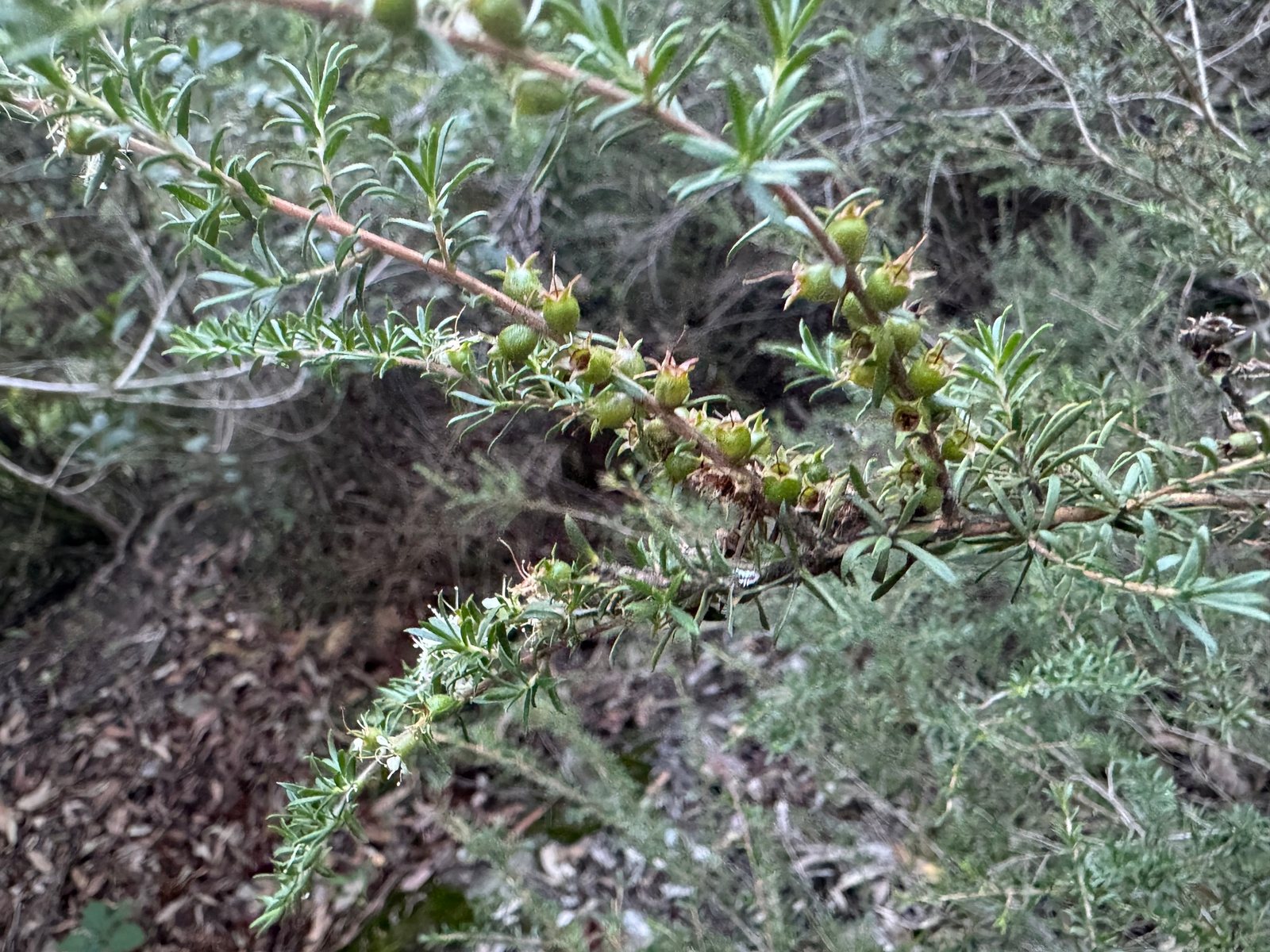
- Evergreen. Small, narrow, dark green leaves, aromatic when crushed, on fine, spreading branches.
- Growth
- Moderate to fast in mild climates.
- Care needed
- Low
The year at a glance
- Pollinators
- Drought tolerant
- Heat tolerant
- Wildlife
- Low allergen
- Fragrant
| J | F | M | A | M | J | J | A | S | O | N | D | |
|---|---|---|---|---|---|---|---|---|---|---|---|---|
| Flowers | ||||||||||||
| Plant |
Northern hemisphere months. In Australia, shift them by six.
- Difficulty
- Moderate
- Toughness
- Fairly tough
Will it suit your garden?
Pick your zone, country, light and whether you have pets.
Full sun is 6 or more hours of direct sun a day, part shade 3 to 6 hours, shade under 3.
How it grows
Planting day
1.6 ft (0.5 m)
After 1 year
3 ft (0.98 m)
After 2 years
5 ft (1.5 m)
After 3 years
6 ft (1.9 m)
After 5 years
8 ft (2.4 m)
full size
About 4 years to full size.
From a typical nursery size, at an average rate for this kind of plant. A rule of thumb, not a forecast.
Good to know
- Cats and dogs
- Safe
- Native to
- Australia
- Growth rate
- Fast
Care
Jobs through the year
- WaterApr–May, Sep–Oct, every 21 days
- Water established ground plants only when dry; young plants and pots require more frequent checks.
- WaterJun–Aug, every 14 days
- Water deeply during prolonged dry spells, allowing surface soil to dry between waterings.
- FeedApr–May
- Feed only weak growth with a modest dose of low-phosphorus native-plant fertiliser.
- MulchMay
- Refresh a light organic mulch, leaving the main stems clear.
- PruneMay
- Remove frost-killed tips once severe frost risk has passed.
- PruneJul–Aug
- Lightly shorten flowered shoots after blooming, retaining leafy growth.
- ProtectJan–Apr, Oct–Dec
- In zones 6–7, overwinter container plants in bright, frost-free shelter; water sparingly.
- Plant in a sunny position with room for the branches to spread.
- Water deeply through the first growing season, allowing the surface soil to dry between waterings.
- Apply a light organic mulch, keeping it clear of the main stems.
- Feed only if growth is weak, using a modest amount of low-phosphorus native-plant fertiliser.
- In frost-prone gardens, choose a sheltered position away from frost pockets.
Pruning. Lightly shorten flowered shoots after flowering to encourage dense growth. Avoid cutting hard into old, leafless wood, where regrowth can be unreliable.
Through the year
- Early spring
- Check for frost damage and trim dead tips once the risk of severe frost has passed.
- Spring
- Plant in cooler districts once the soil warms, and water new plants thoroughly.
- Late spring
- Refresh mulch and check that developing growth is not crowded by neighbouring plants.
- Summer
- Water establishing plants during dry weather and lightly prune after flowering finishes.
- Autumn
- Plant in mild-winter districts while the soil is warm; take semi-ripe cuttings from suitable current-season shoots.
- Winter
- Protect young plants during exceptional freezes and check that water drains away from their roots.
In the garden
- Use as an informal flowering hedge or loose screen, allowing space for its arching outline.
- Plant behind low-growing Australian native shrubs and grasses for a soft, white-flowered backdrop.
- Include in a sunny coastal border with other wind-tolerant shrubs.
- Place near a path or seating area where the flower fragrance can be appreciated without branches obstructing access.
Garden styles it suits: Australian native, Coastal, Wildlife garden, Pollinator garden, Low-maintenance and White garden.
Plant it with: Coastal rosemary, Lomandra, Kangaroo grass, Flax lily and Native violet.
Wildlife: The flowers attract bees and other nectar- and pollen-feeding insects. Dense branching can provide shelter for small birds.
Problems to watch for
- Root decline in waterlogged soil: improve drainage or replant on a broad mound; do not keep watering saturated ground.
- Frost-scorched shoots: use a sheltered site and remove dead growth after the danger of further hard frost has passed.
- Sparse growth and poor flowering in shade: move young plants to a sunnier position or reduce surrounding shade.
- An open, woody outline with age: lightly prune after flowering each year rather than relying on severe renovation pruning.
Safety
Not known to be toxic to people, cats, dogs or horses, but species-specific safety information is limited. Do not treat the foliage as food, and keep concentrated essential oil away from children and pets; it is not equivalent to the living plant.
Easily confused with
Coast tea tree (Leptospermum laevigatum)
Coast tea tree has broader, grey-green leaves and open flowers with five conspicuous petals; tick bush has narrower leaves and fluffy flowers dominated by projecting stamens.
Twiggy heath myrtle (Sannantha virgata)
Twiggy heath myrtle has opposite pairs of leaves and small, clearly five-petalled flowers; tick bush has alternate leaves and more conspicuously fluffy flower clusters.
The name
Kunzea honours the German botanist Gustav Kunze, while ambigua is Latin for ambiguous or uncertain.
Propagation. Take semi-ripe cuttings from healthy, non-flowering shoots in late summer or early autumn. Seed can also be surface-sown in a fine, well-drained propagation mix and kept moist; seedlings may vary.
Checked against open data
- Accepted botanical name
- Kunzea ambigua
- Native range
- New South Wales, Tasmania and Victoria.
Sources: GBIF (CC BY 4.0) and Trefle (CC BY 4.0). The care and design notes are LandscapeGPT's own.
See it in your own yard.
Upload a photo of your yard and see it redesigned with plants that suit your climate, each checked against your zone.