Tiger lily
Lilium lancifolium. Family Liliaceae. Bulb.
Also called Lilium tigrinum.
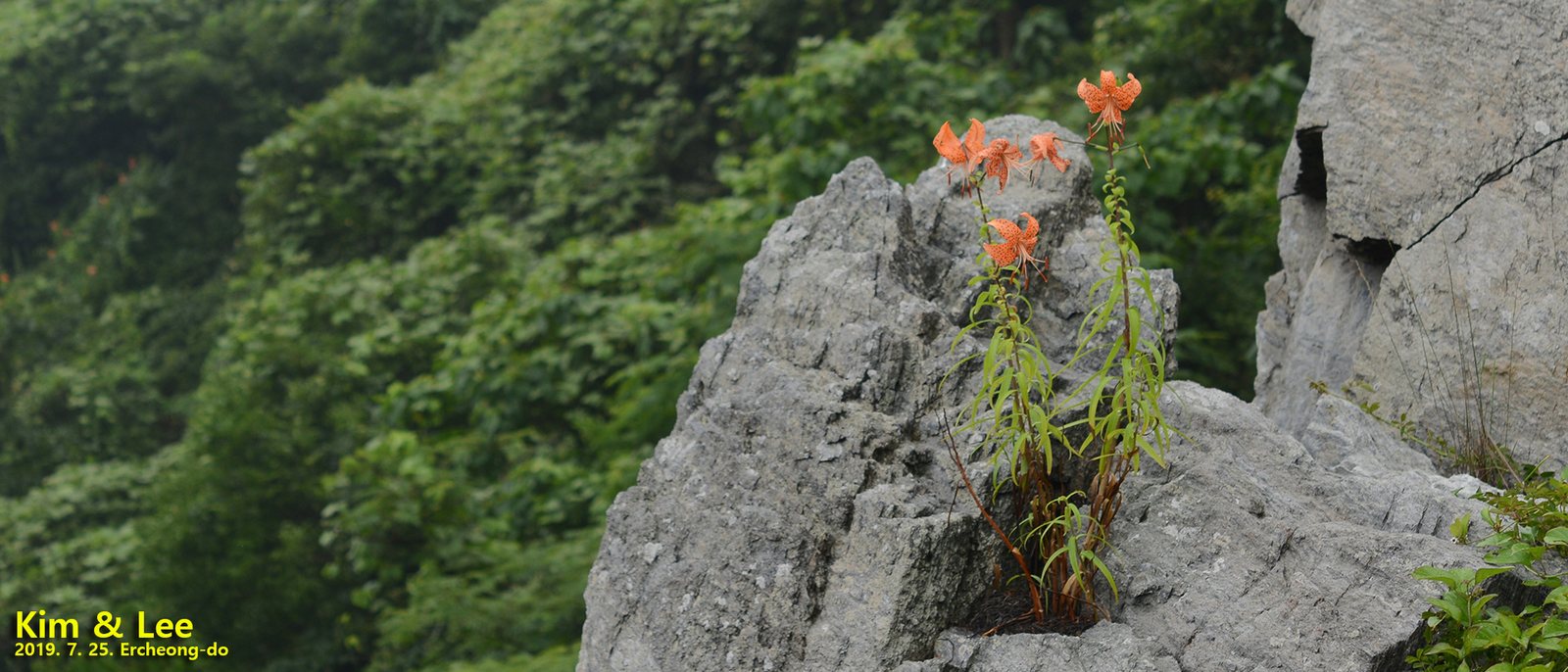
Tiger lily is a hardy, summer-flowering bulb with tall stems carrying nodding orange flowers, dark spots and strongly swept-back petals. Gardeners grow it for height and late-season colour in borders; small black bulbils along the stems can produce new plants.
At a glance
- Sun
- Full sun to partial shade; flowers best with at least six hours of sun, with some afternoon shade in hot climates.
- Water
- Keep evenly moist during growth and flowering, watering deeply during dry spells. Avoid waterlogged soil, especially while dormant.
- Soil
- Fertile, humus-rich, well-drained soil; tolerates mildly acidic to mildly alkaline conditions.
- Height
- 3-6 ft (0.9-1.8 m)
- Spread
- 1-2 ft (0.3-0.6 m), with colonies expanding through offsets and bulbils
- Flowers
- Mid- to late summer; orange flowers with dark brown to black spots and strongly recurved petals.
- Foliage
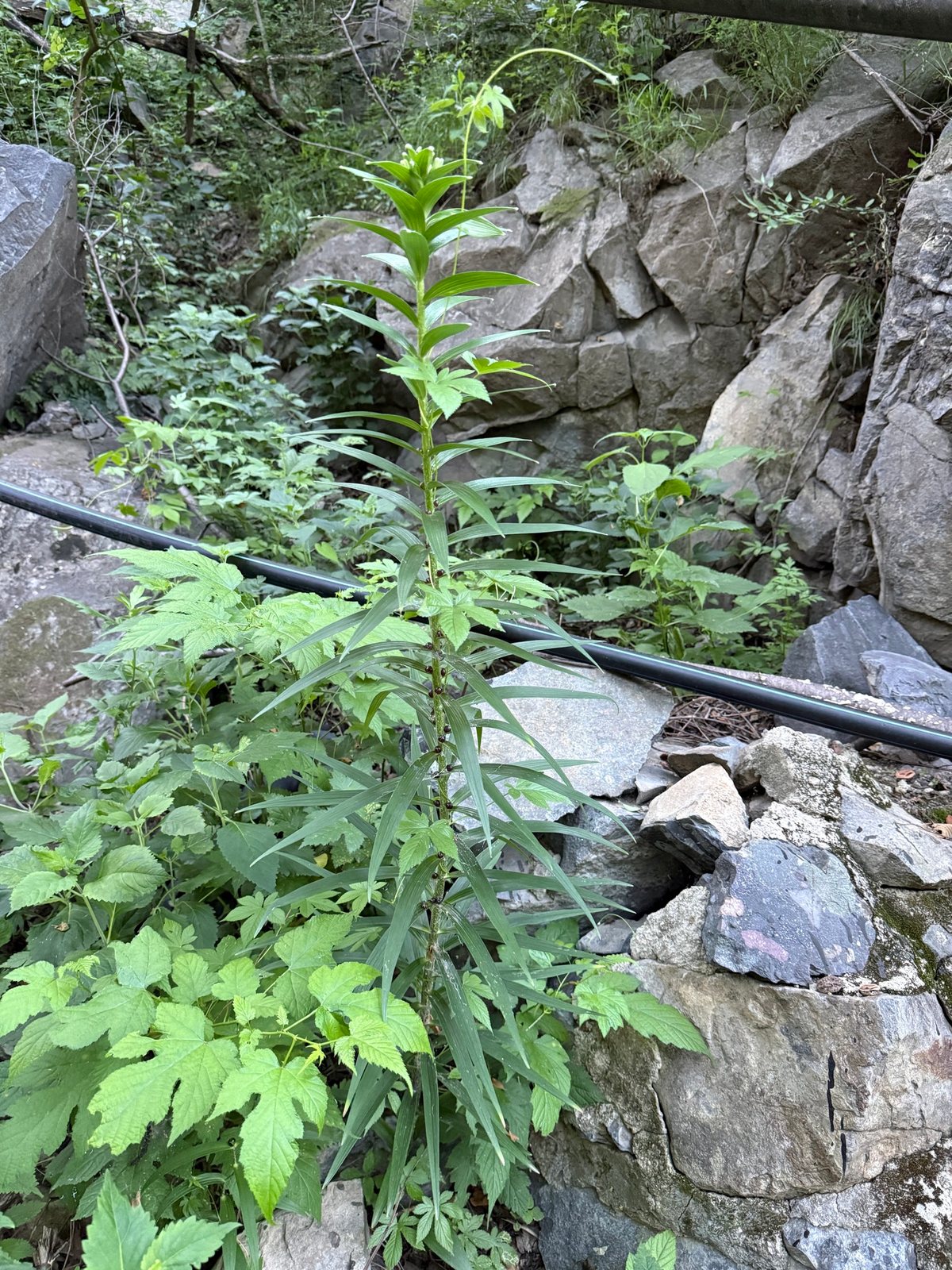
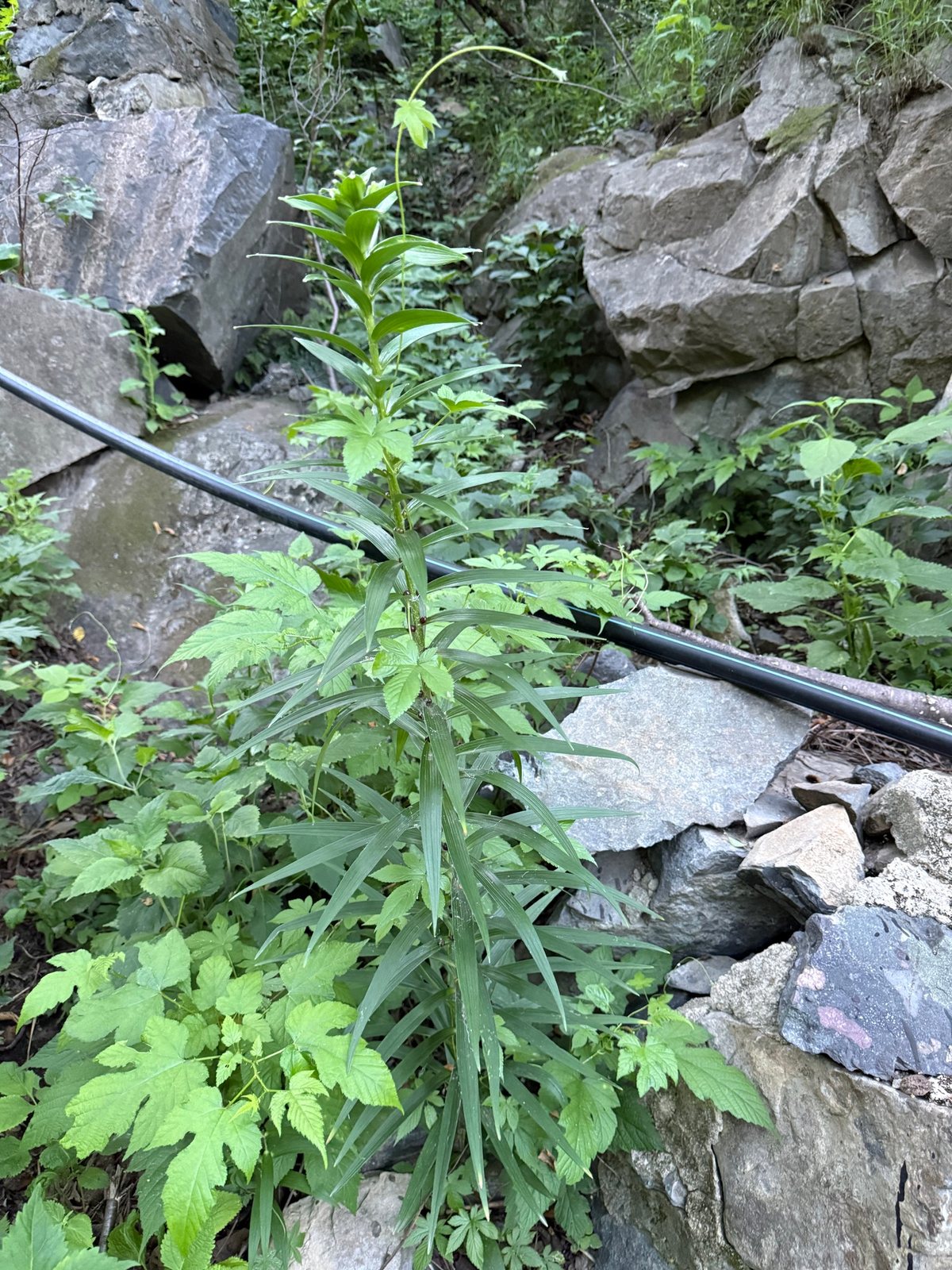
- Narrow, lance-shaped green leaves arranged along upright stems, often with shiny black bulbils in the leaf axils.
- Growth
- Moderate
- Care needed
- Medium
The year at a glance
- Pollinators
- Cold hardy
- Heat tolerant
- Low allergen
| J | F | M | A | M | J | J | A | S | O | N | D | |
|---|---|---|---|---|---|---|---|---|---|---|---|---|
| Flowers | ||||||||||||
| Fruit | ||||||||||||
| Plant |
Northern hemisphere months. In Australia, shift them by six.
- Difficulty
- Moderate
- Toughness
- Fairly tough
Will it suit your garden?
Pick your zone, country, light and whether you have pets.
Full sun is 6 or more hours of direct sun a day, part shade 3 to 6 hours, shade under 3.
How it grows
Planting day
0.5 ft (0.16 m)
After 1 year
4 ft (1.4 m)
full size
About 1 years to full size.
From a typical nursery size, at an average rate for this kind of plant. A rule of thumb, not a forecast.
Good to know
- Cats and dogs
- Toxic
- In the garden
- Spreads vigorously: plan to contain it.
- Growth rate
- Moderate
Care
Jobs through the year
- WaterApr–May, Sep, every 14 days
- Water established bulbs if dry while foliage is green; newly planted bulbs need closer checks.
- WaterJun–Aug, every 7 days
- Water established plants deeply at soil level during dry weather without waterlogging bulbs.
- FeedMar–Apr
- Apply balanced fertilizer as shoots emerge, following the label rate.
- MulchApr–May
- Apply 5–8 cm of compost or leaf mould, clear of emerging stems.
- ProtectMay–Aug, every 7 days
- Inspect for lily beetles and remove beetles, eggs and larvae by hand.
- ProtectMay–Jun
- Support tall stems before flowering on exposed sites.
- DeadheadJul–Aug, every 7 days
- Remove faded flowers without cutting leafy stems.
- PruneAug–Sep
- Remove stem bulbils before they fall if you want to limit spread.
- PruneOct–Nov
- Cut stems to ground level only once foliage has yellowed and died.
- DivideOct–Nov
- Lift crowded bulbs after foliage dies and replant promptly before they dry out.
- Plant bulbs in autumn or early spring, with about 6 in (15 cm) of soil above their tops; space them 12-18 in (30-45 cm) apart.
- Water at soil level during dry weather while stems are growing and flowering.
- Apply a balanced fertiliser as shoots emerge, following the product rate.
- Mulch with 2-3 in (5-8 cm) of compost or leaf mould, keeping it clear of emerging stems.
- Support tall stems before flowering in exposed positions.
- Lift and divide crowded clumps after the foliage dies back; replant promptly so bulbs do not dry out.
Pruning. Remove faded flowers without cutting away leafy stems. Cut stems to ground level only after the foliage has yellowed and died back; remove bulbils before they drop if you want to limit spread.
Through the year
- Early spring
- Plant bulbs if needed, feed emerging shoots and check for slug damage.
- Late spring
- Install supports and inspect leaves for lily beetles where these occur.
- Summer
- Water during dry spells and keep mulch topped up without covering the stems.
- Mid- to late summer
- Remove faded flowers and collect or discard stem bulbils before they fall.
- Autumn
- Let foliage yellow naturally, then cut down dead stems and divide crowded clumps.
- Winter
- Check that planting sites drain freely; protect outdoor pots from prolonged saturation.
In the garden
- Plant in small groups through the middle or back of a mixed border for tall orange summer accents.
- Combine with purple coneflowers and meadow sage for strong orange-purple contrast.
- Use among ornamental grasses, whose foliage helps soften and support the upright stems.
- Plant in a sunny woodland-edge border with lower perennials shading the soil around the bulbs.
Garden styles it suits: Cottage garden, English country, Traditional, Hot border, Woodland and Modern rustic.
Plant it with: Purple coneflower, Meadow sage, Catmint, Hardy geranium, Switchgrass and Lady's mantle.
Wildlife: Flowers can attract butterflies and other insect visitors. It is native to East Asia, not North America, the UK or Australia.
Problems to watch for
- Scarlet lily beetles can strip leaves in the UK and parts of North America: inspect shoots regularly and hand-pick beetles, eggs and larvae.
- Slugs and snails damage emerging shoots: check at dusk, remove hiding places nearby and use locally approved iron phosphate bait if needed.
- Bulb and basal rots occur in wet soil: improve drainage, avoid overwatering and discard soft or rotting bulbs.
- Tiger lilies can carry lily viruses without obvious symptoms and infect other lilies through aphids: keep them away from valuable lily collections and remove plants showing mottled leaves or distorted growth.
Safety
Extremely toxic to cats: all parts, including leaves, flowers, bulbs and pollen, can cause fatal kidney failure, and vase water is also dangerous. Suspected exposure requires immediate veterinary care. It is not known to be toxic to dogs, horses or people; nevertheless, do not eat ornamental bulbs or unidentified plant material.
Where it spreads. Can spread into persistent colonies through stem bulbils and underground offsets, particularly in parts of the northeastern and midwestern United States where it has naturalized. Remove bulbils before they fall and check local invasive-plant guidance before planting near natural areas.
Easily confused with
Orange daylily (Hemerocallis fulva)
Has arching, strap-shaped leaves arising from the ground and flowers on mostly leafless stalks; each flower lasts one day. Tiger lily has leaves along its stems and black stem bulbils.
Turk's-cap lily (Lilium superbum)
Usually has conspicuous whorls of leaves and a green star at the centre of its spotted orange flowers. Tiger lily has mostly scattered leaves and black bulbils in the leaf axils.
Henry's lily (Lilium henryi)
Has orange, recurved flowers with conspicuous raised papillae and a greenish central star, but normally lacks the black stem bulbils characteristic of tiger lily.
The name
The common name refers to the spotted orange flowers, while lancifolium means lance-leaved, describing the narrow foliage.
Propagation. Divide bulb offsets in autumn after the stems die back, or collect ripe stem bulbils in late summer and plant them shallowly in pots or a nursery bed. Bulbil-grown plants generally take several years to flower; the commonly grown triploid form rarely produces viable seed.
Checked against open data
- Accepted botanical name
- Lilium lancifolium
- In the US and Canada
- Introduced in Canada and the lower 48 states.
- Native range
- China North-Central, China South-Central, China Southeast, Japan, Korea, Kuril Is., Manchuria, Primorye, Qinghai, Sakhalin and Tibet.
- Measured
- Average height 80 cm.
Sources: GBIF (CC BY 4.0), USDA PLANTS and Trefle (CC BY 4.0). The care and design notes are LandscapeGPT's own.
See it in your own yard.
Upload a photo of your yard and see it redesigned with plants that suit your climate, each checked against your zone.