Tiny Wine ninebark
Physocarpus opulifolius 'SMPOTW'. Family Rosaceae. Shrub.
Also called Physocarpus opulifolius 'SMPOTW', Tiny Wine eastern ninebark.
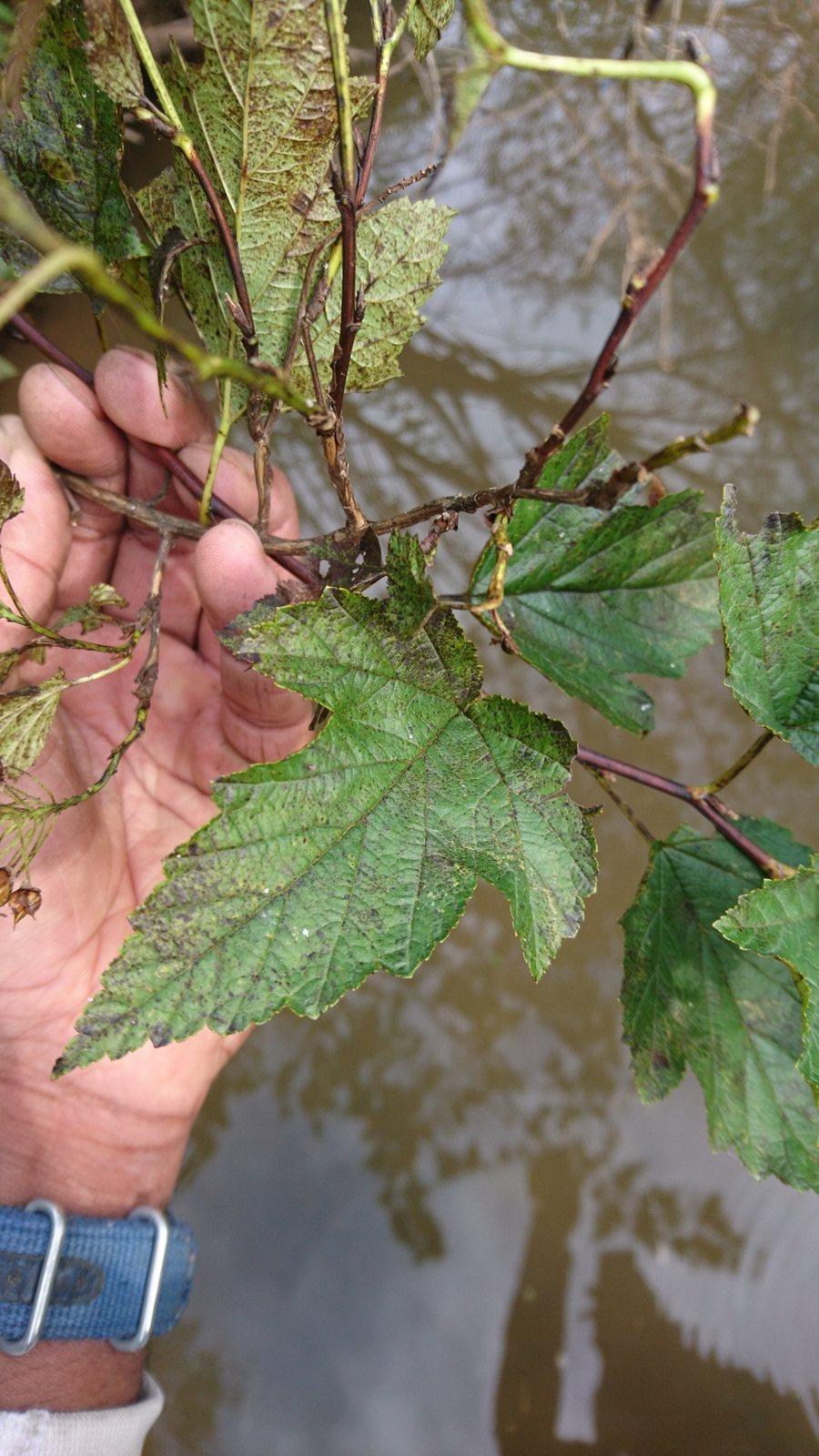
Tiny Wine is a compact, deciduous ninebark grown for its small, dark bronze-purple leaves and clusters of pink buds opening to white flowers. Its upright, branching shape suits smaller borders and informal hedges, with the strongest foliage colour in full sun.
At a glance
- Sun
- Full sun to partial shade; allow at least six hours of direct sun for the darkest foliage and best flowering.
- Water
- Water regularly during the first growing season. Once established, water deeply during prolonged dry spells; avoid persistently saturated soil.
- Soil
- Well-drained clay, loam or sandy soil; tolerates a broad pH range and relatively poor soil.
- Height
- 3-5 ft (0.9-1.5 m)
- Spread
- 3-5 ft (0.9-1.5 m)
- Flowers
- Late spring to early summer; pink buds open into rounded clusters of small white to pale pink flowers.
- Foliage
- Small, three- to five-lobed leaves emerge bronze and deepen to dark purple. Leaves become greener in shade and fall in autumn.
- Growth
- Moderate.
- Care needed
- Low
The year at a glance
- Pollinators
- Deer resistant
- Drought tolerant
- Cold hardy
- Disease resistant
- Wildlife
- Low allergen
| J | F | M | A | M | J | J | A | S | O | N | D | |
|---|---|---|---|---|---|---|---|---|---|---|---|---|
| Flowers | ||||||||||||
| Fruit | ||||||||||||
| Plant |
Northern hemisphere months. In Australia, shift them by six.
- Difficulty
- Easy
- Toughness
- Very tough
Will it suit your garden?
Pick your zone, country, light and whether you have pets.
Full sun is 6 or more hours of direct sun a day, part shade 3 to 6 hours, shade under 3.
How it grows
Planting day
1.6 ft (0.5 m)
After 1 year
2.1 ft (0.64 m)
After 2 years
2.6 ft (0.78 m)
After 3 years
3 ft (0.92 m)
After 5 years
4 ft (1.2 m)
full size
About 5 years to full size.
From a typical nursery size, at an average rate for this kind of plant. A rule of thumb, not a forecast.
Good to know
- Cats and dogs
- Safe
- Native to
- the US and Canada
- Growth rate
- Moderate
Care
Jobs through the year
- WaterApr–May, Sep–Oct, every 21 days
- For established shrubs, water deeply only during prolonged dry spells; young plants need more.
- WaterJun–Aug, every 14 days
- Water established shrubs deeply if the root zone is dry; skip after soaking rain.
- MulchMar–Apr
- Renew a 5-8 cm organic mulch, keeping it clear of the stems.
- PruneFeb–Mar
- Remove dead or damaged wood only; preserve branches carrying spring flower buds.
- PruneJun–Jul
- After flowering, shape individual branches if needed and remove an occasional crowded old stem.
- ProtectOct–Nov
- Remove fallen leaves if powdery mildew was troublesome.
- Plant with the root flare at soil level and enough space for its mature width.
- Water deeply when the root zone begins to dry during the first growing season.
- Spread 2-3 in (5-8 cm) of organic mulch over the roots, keeping it clear of the stems.
- In reasonably fertile soil, skip routine feeding; avoid heavy nitrogen applications.
- Leave space around the shrub for airflow, especially in humid gardens.
Pruning. Prune just after flowering if shaping is needed, shortening individual branches rather than shearing the whole shrub. Remove dead or damaged wood whenever noticed, and occasionally cut an old, crowded stem to ground level.
Through the year
- Late winter
- Check for dead, damaged or crossing branches; avoid general trimming that would remove spring flower buds.
- Spring
- Plant while the soil is workable, water thoroughly and renew mulch.
- Late spring
- Enjoy flowering and check young shoots for aphids.
- Early summer
- After flowering, lightly shape only where necessary.
- Summer
- Water newly planted shrubs during dry weather and watch for powdery mildew.
- Autumn
- Plant in mild regions while the soil remains warm; remove fallen leaves if mildew was troublesome.
In the garden
- Use as a dark-leaved anchor in a small mixed border, beside pale flowers or silver foliage.
- Plant several as an informal low hedge, allowing their natural branching shape to develop.
- Combine with ornamental grasses and flowering perennials for contrasting leaf textures.
- Use in foundation planting where a deciduous shrub of modest size will not need constant clipping.
Garden styles it suits: Modern rustic, Cottage garden, New perennial (prairie), Low-maintenance, Small-space and Traditional.
Plant it with: Catmint, Purple coneflower, Switchgrass, Hardy geranium, Lamb's ears and Panicle hydrangea.
Wildlife: Flowers provide pollen and nectar for visiting insects, including bees. Dense branches offer cover for small birds; this cultivar is derived from a species native to eastern and central North America.
Problems to watch for
- Powdery mildew can coat or distort leaves, especially in humid, crowded sites. Improve airflow, avoid overhead watering and remove badly affected fallen leaves; Tiny Wine has useful resistance but is not immune.
- Aphids may cluster on soft shoots. Wash them off with water and allow ladybirds and other predators to work before considering insecticidal soap.
- Root decline can occur in waterlogged soil. Improve drainage or move the shrub to a better-drained position.
- Leaves may scorch during hot, dry weather, particularly near paving. Water deeply, mulch the root zone and avoid reflected heat in hot climates.
Safety
Not generally regarded as toxic to people, cats, dogs or horses, although species-specific safety information is limited. No part should be treated as edible; chewing or swallowing plant material may cause stomach upset.
Easily confused with
Summer Wine ninebark (Physocarpus opulifolius 'Seward')
Usually grows taller and broader, with longer, more arching branches; Tiny Wine has smaller leaves and a more compact framework.
Diabolo ninebark (Physocarpus opulifolius 'Monlo')
Has larger leaves and becomes a much larger, broader shrub unless regularly pruned.
Japanese spirea (Spiraea japonica)
Has unlobed, pointed leaves and flatter flower clusters, usually produced later in summer; ninebark has lobed leaves and rounded spring flower clusters.
The name
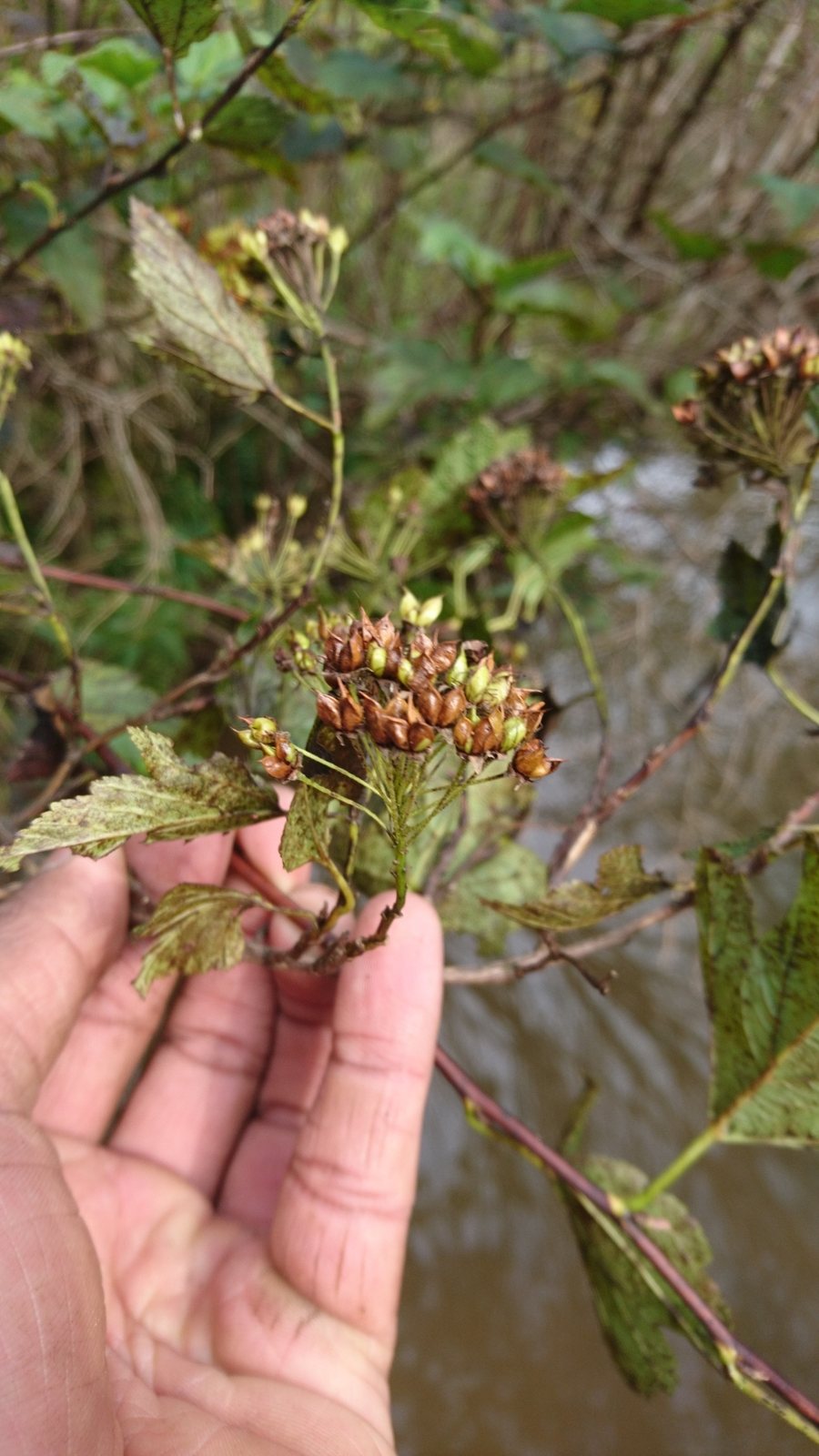
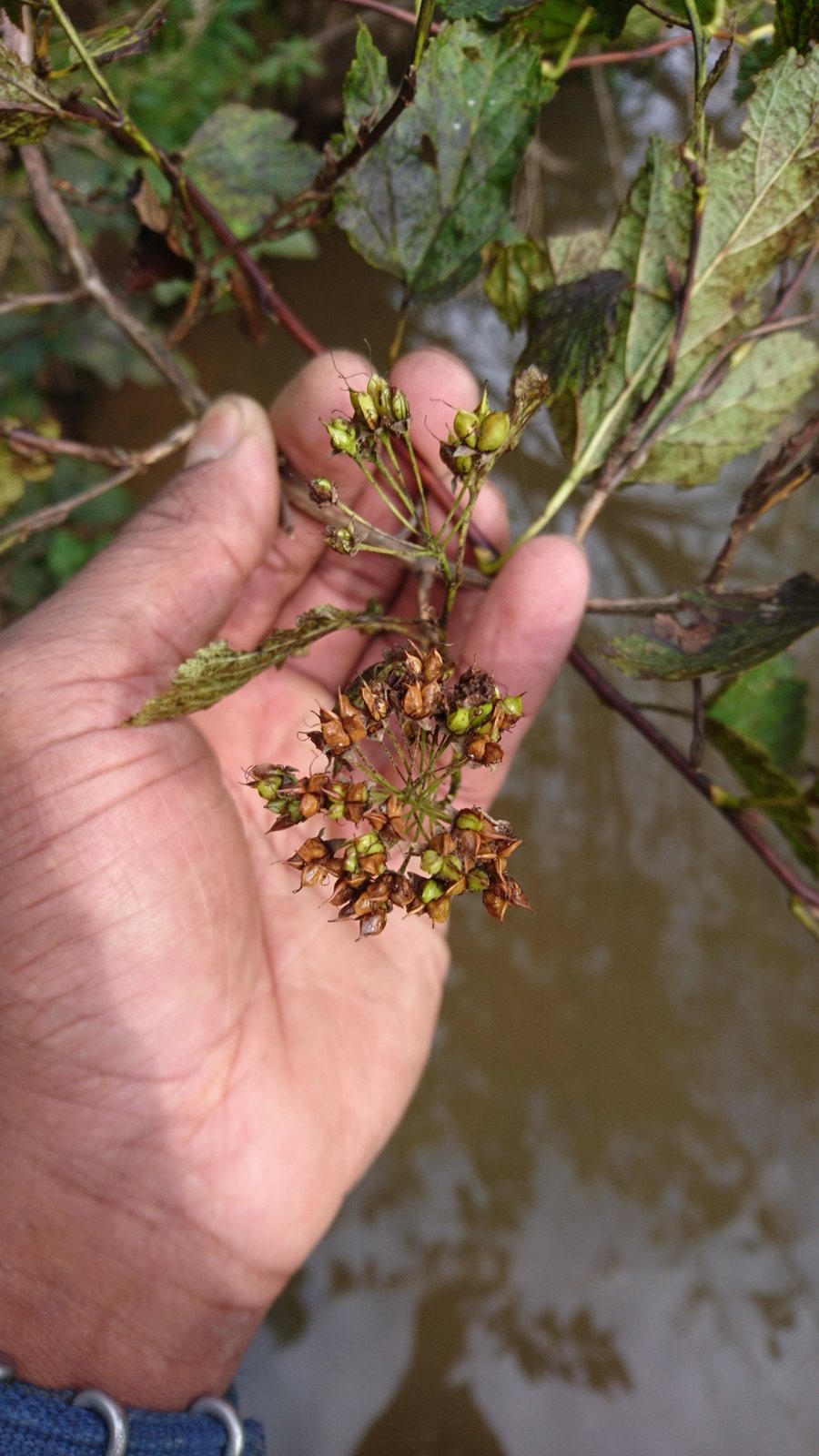
Physocarpus means 'bladder fruit', referring to its inflated seed capsules, opulifolius refers to leaves resembling those of guelder rose, and ninebark describes the peeling layers of older bark.
Propagation. Named plants are normally propagated by softwood cuttings; seedlings will not reliably retain Tiny Wine's features. This cultivar is protected by plant breeders' rights or patents in some countries, so check local restrictions before taking cuttings.
Checked against open data
- Accepted botanical name
- Physocarpus opulifolius
- In the US and Canada
- Native in Canada and the lower 48 states.
- Native range
- Alabama, Arizona, Connecticut, Delaware, District of Columbia, Florida, Georgia, Illinois, Indiana, Iowa, Kansas and Kentucky.
- Measured
- Soil pH 4.5 to 6.5. Average height 300 cm.
Sources: GBIF (CC BY 4.0), USDA PLANTS and Trefle (CC BY 4.0). The care and design notes are LandscapeGPT's own.
See it in your own yard.
Upload a photo of your yard and see it redesigned with plants that suit your climate, each checked against your zone.