Tom Thumb pittosporum
Pittosporum tenuifolium 'Tom Thumb'. Family Pittosporaceae. Shrub.
Also called Tom Thumb kōhūhū, Dwarf purple pittosporum.
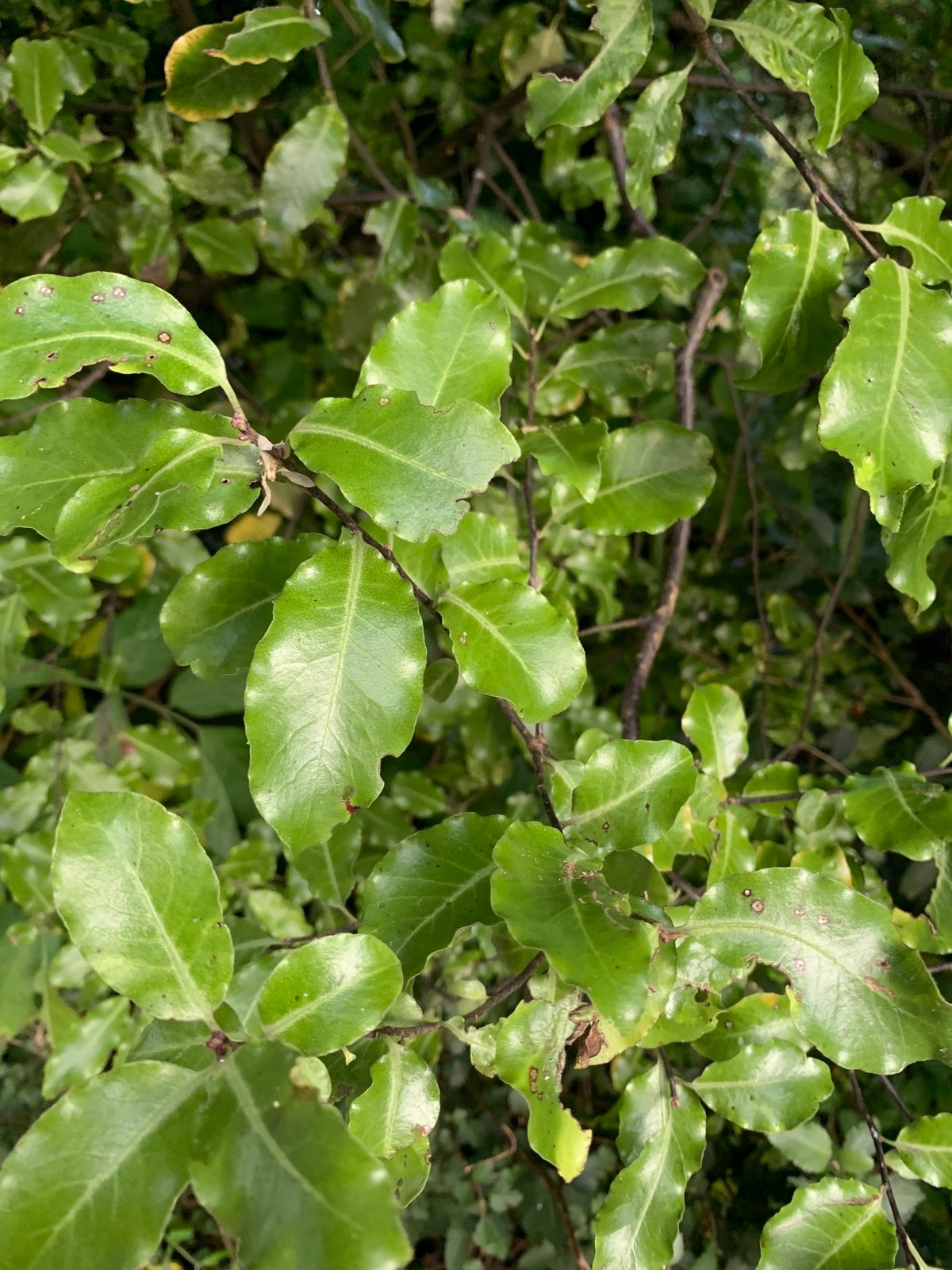
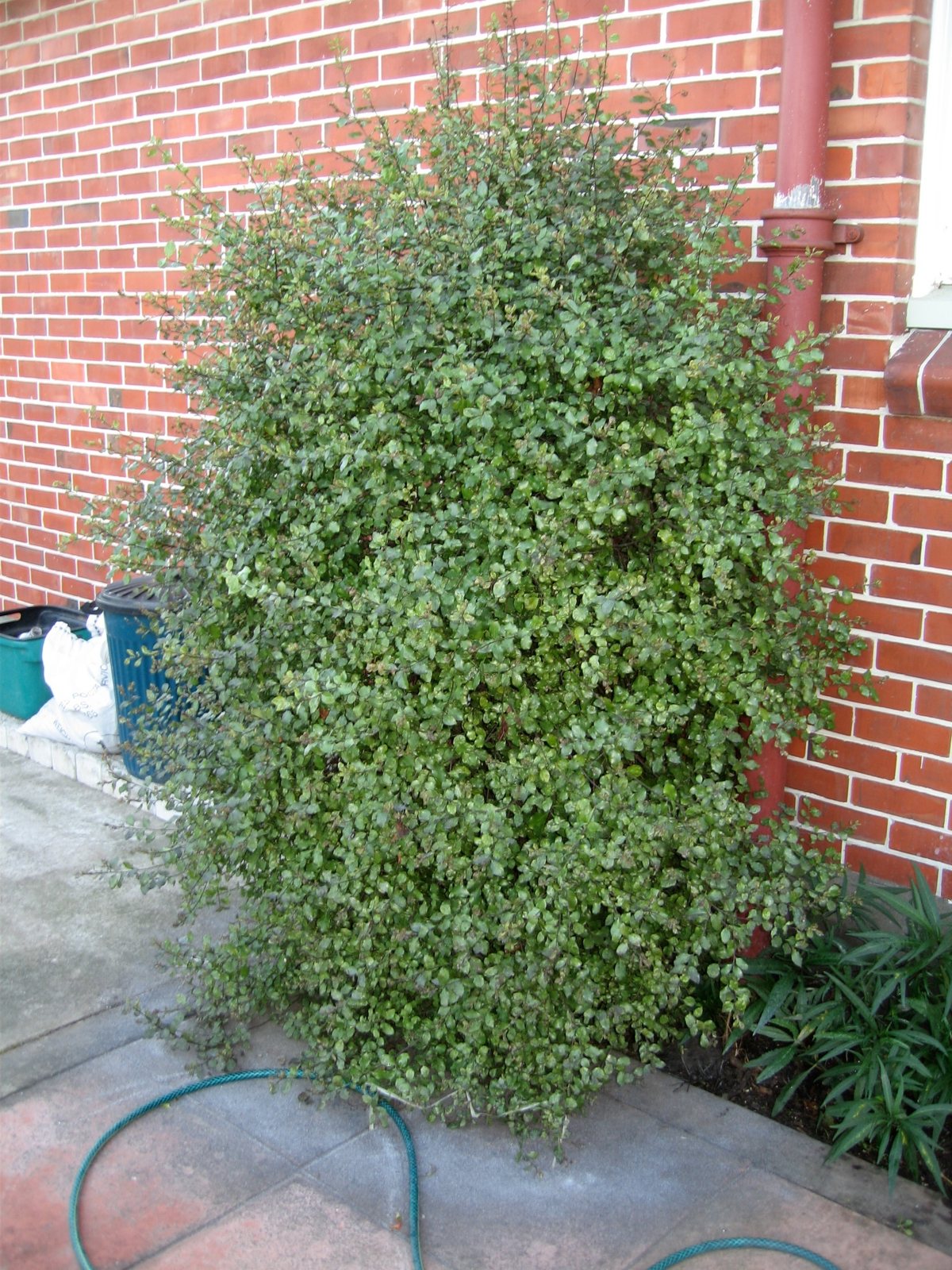
A compact, rounded evergreen shrub grown for its dark purple leaves and contrasting lime-green new growth. It makes a useful low accent or informal edging in mild-climate gardens, but needs shelter from cold, drying winds and soil that drains freely.
At a glance
- Sun
- Full sun for the darkest leaf colour; tolerates partial shade, where foliage is usually greener.
- Water
- Water regularly during establishment, then during prolonged dry spells. Keep container plants evenly moist but never waterlogged.
- Soil
- Well-drained loam, sandy soil or improved clay; tolerates acidic, neutral and mildly alkaline conditions. Avoid sites that stay wet in winter.
- Height
- 2-3 ft (0.6-0.9 m)
- Spread
- 3-4 ft (0.9-1.2 m)
- Flowers
- Small, dark purple, honey-scented flowers in late spring to early summer; often sparse and hidden among the leaves.
- Foliage
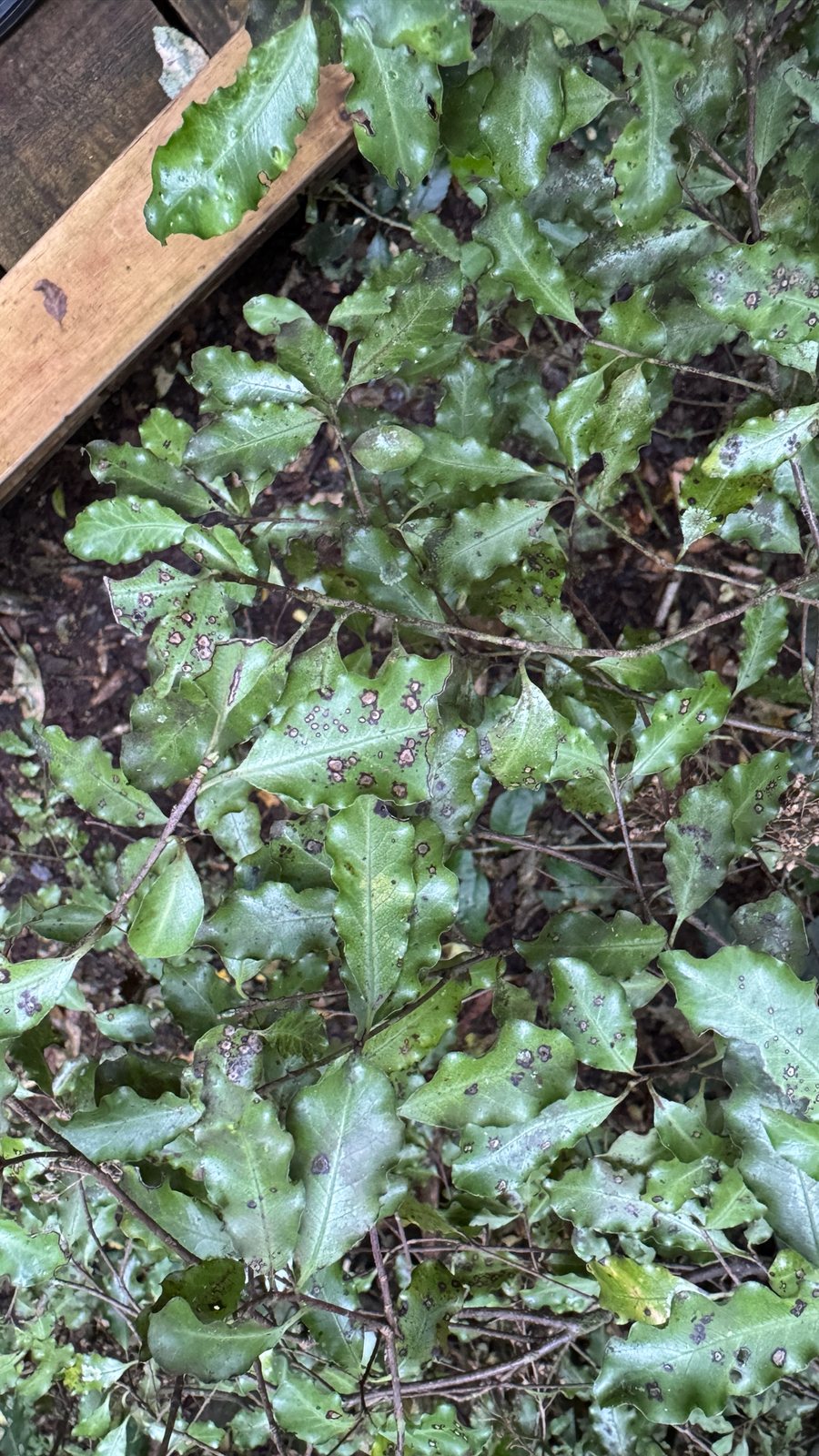
- Evergreen. Small, glossy, slightly wavy-edged leaves open lime green, then mature to deep purple or bronze-purple.
- Growth
- Slow
- Care needed
- Low
The year at a glance
- Deer resistant
- Drought tolerant
- Heat tolerant
- Low allergen
- Fragrant
| J | F | M | A | M | J | J | A | S | O | N | D | |
|---|---|---|---|---|---|---|---|---|---|---|---|---|
| Flowers | ||||||||||||
| Plant |
Northern hemisphere months. In Australia, shift them by six.
- Difficulty
- Hard
- Toughness
- Needs looking after
Will it suit your garden?
Pick your zone, country, light and whether you have pets.
Full sun is 6 or more hours of direct sun a day, part shade 3 to 6 hours, shade under 3.
How it grows
Planting day
1.6 ft (0.5 m)
After 1 year
1.7 ft (0.53 m)
After 2 years
1.8 ft (0.56 m)
After 3 years
1.9 ft (0.59 m)
After 5 years
2.2 ft (0.66 m)
About 8 years to full size.
From a typical nursery size, at an average rate for this kind of plant. A rule of thumb, not a forecast.
Good to know
- Cats and dogs
- Safe
- Growth rate
- Slow
Care
Jobs through the year
- WaterApr–May, Sep–Oct, every 14 days
- For established plants in mild gardens, water only if soil is dry; young and potted plants need more.
- WaterJun–Aug, every 10 days
- Water deeply during dry spells; container plants need much more frequent moisture checks.
- MulchApr–May
- Apply 5 cm of organic mulch, keeping it clear of the stems.
- FeedApr–May
- Feed lightly only if growth is weak; avoid encouraging soft growth.
- PruneMay–Jun
- Trim lightly and remove frost-killed shoots once new growth appears; avoid bare old wood.
- ProtectJan–Apr, Oct–Dec
- Not reliably hardy in zones 6–7; overwinter pots in a bright frost-free space.
- Water deeply through the first growing season, allowing the soil surface to dry slightly between waterings.
- Apply a 2 in (5 cm) layer of organic mulch in spring, keeping it clear of the stems.
- Feed lightly in spring if growth is weak; avoid heavy feeding that encourages soft growth.
- Choose a sheltered position away from frost pockets and cold, drying winds.
- Use a container with drainage holes and protect its root ball from prolonged freezing.
Pruning. Lightly trim in late spring or early summer to maintain a rounded shape, and remove dead or frost-damaged shoots once new growth reveals what has survived. Avoid hard cutting into old, leafless wood and late-season trimming.
Through the year
- Spring
- Plant once the soil is workable and severe frost has passed; water thoroughly.
- Spring
- Refresh mulch and apply a light feed only if needed.
- Late spring
- Check for winter damage and cut dead shoots back to healthy growth.
- Early summer
- Lightly trim stray shoots; take semi-ripe cuttings as the season progresses.
- Summer
- Water young plants during dry weather and check container moisture regularly.
- Late autumn
- Move pots to a sheltered position and check that drainage holes remain clear.
- Winter
- Use horticultural fleece during severe cold spells, especially on young plants.
In the garden
- Repeat rounded shrubs along a path for low, dark evergreen structure.
- Pair with silver-leaved lavender or pale ornamental grasses for foliage contrast.
- Use as a compact anchor in a sunny mixed border, beside lighter green or white-flowered plants.
- Grow in a large, well-drained container in a sheltered courtyard.
Garden styles it suits: Modern, Modern courtyard, Coastal, Dry gravel garden, Small-space and Winter interest.
Plant it with: English lavender, Santolina, Lamb's ears, Mexican feather grass, White gaura and Hebes.
Wildlife: The small scented flowers can attract visiting insects when produced. Its dense evergreen growth provides modest shelter, but this cultivar is grown mainly for foliage rather than wildlife value.
Problems to watch for
- Frost scorch and shoot dieback: provide shelter, protect young plants during severe freezes and wait until spring growth before removing damaged wood.
- Root rot in wet soil: improve drainage or relocate the plant; do not leave pots standing in water.
- Scale insects and associated sooty mould: inspect stems and leaf undersides, remove small infestations by hand and use a labelled horticultural oil if needed.
- Greener-than-expected foliage: move to a sunnier position if practical; fresh lime-green growth is normal and darkens as it matures.
Safety
Not known to be toxic to people, cats, dogs or horses, although species-specific information is limited. No part is intended as food; discourage pets and children from eating the leaves, fruit or seeds.
Easily confused with
Purple kōhūhū (Pittosporum tenuifolium 'Purpureum')
Has similar purple foliage but develops into a much larger, more upright shrub rather than a low, compact mound.
Golf Ball pittosporum (Pittosporum tenuifolium 'Golf Ball')
Also forms a compact rounded shrub, but its foliage stays green rather than maturing to deep purple.
Purple hop bush (Dodonaea viscosa 'Purpurea')
Usually taller and more upright, with longer, narrower leaves and papery winged fruits rather than pittosporum's splitting seed capsules.
The name
Pittosporum means 'pitch seed', referring to the sticky seed coating, tenuifolium means 'thin-leaved', and 'Tom Thumb' refers to the cultivar's small stature.
Propagation. Take semi-ripe cuttings in summer and root them in a free-draining propagation mix under humid conditions. Seed-grown plants will not reliably retain the cultivar's compact habit and purple foliage.
Checked against open data
- Accepted botanical name
- Pittosporum tenuifolium
- In the US and Canada
- Introduced in the lower 48 states.
- Native range
- New Zealand North and New Zealand South.
- Measured
- Average height 710 cm.
Sources: GBIF (CC BY 4.0), USDA PLANTS and Trefle (CC BY 4.0). The care and design notes are LandscapeGPT's own.
See it in your own yard.
Upload a photo of your yard and see it redesigned with plants that suit your climate, each checked against your zone.