Torch aloe
Aloe arborescens. Family Asphodelaceae. Succulent.
Also called Candelabra aloe, Krantz aloe.
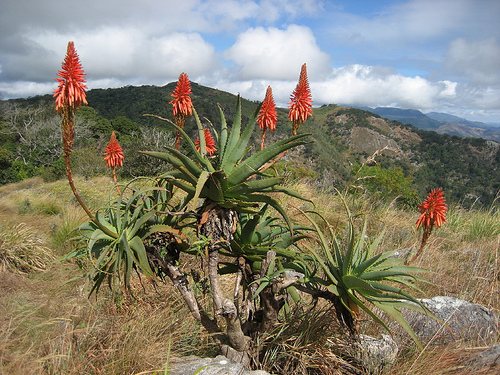
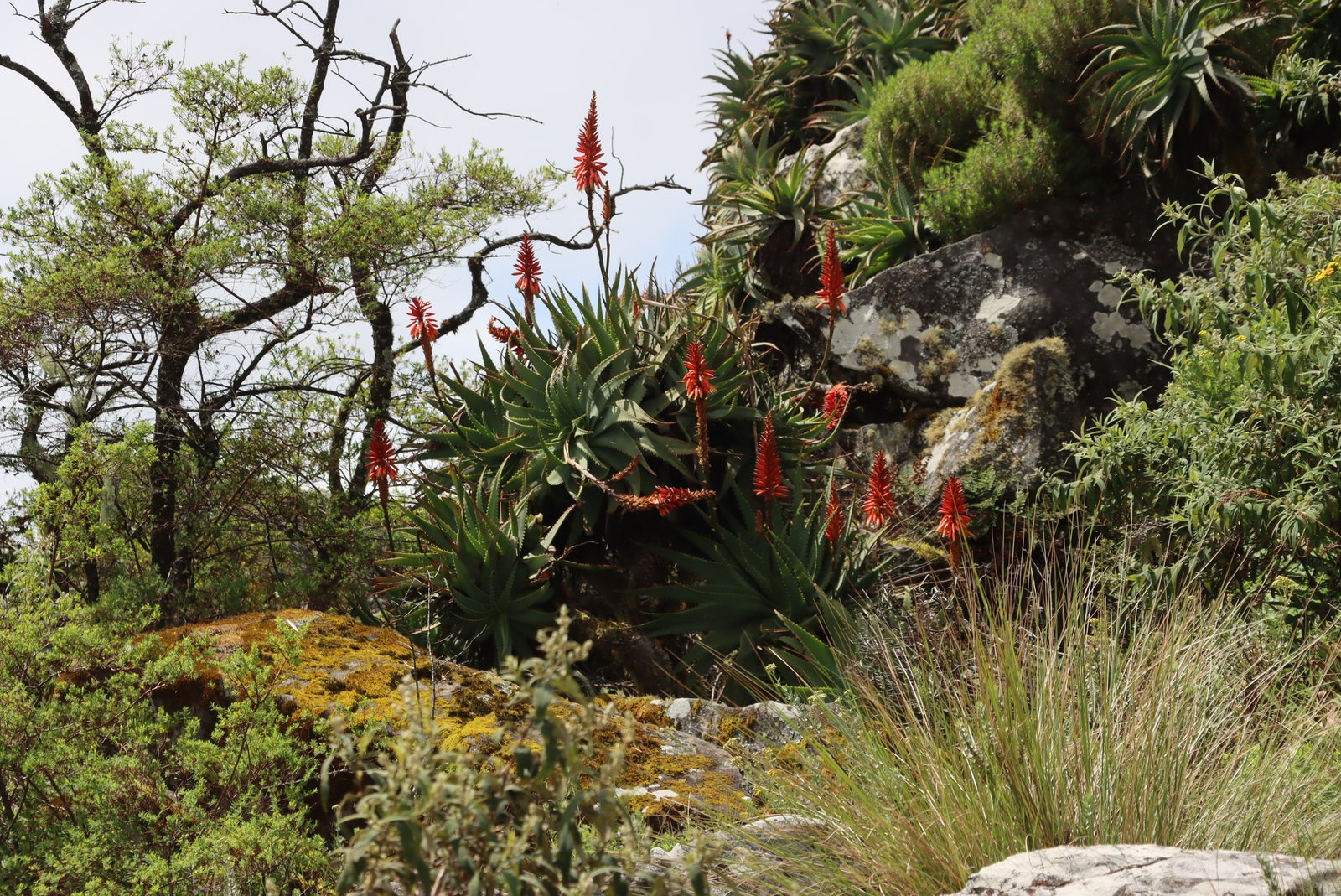
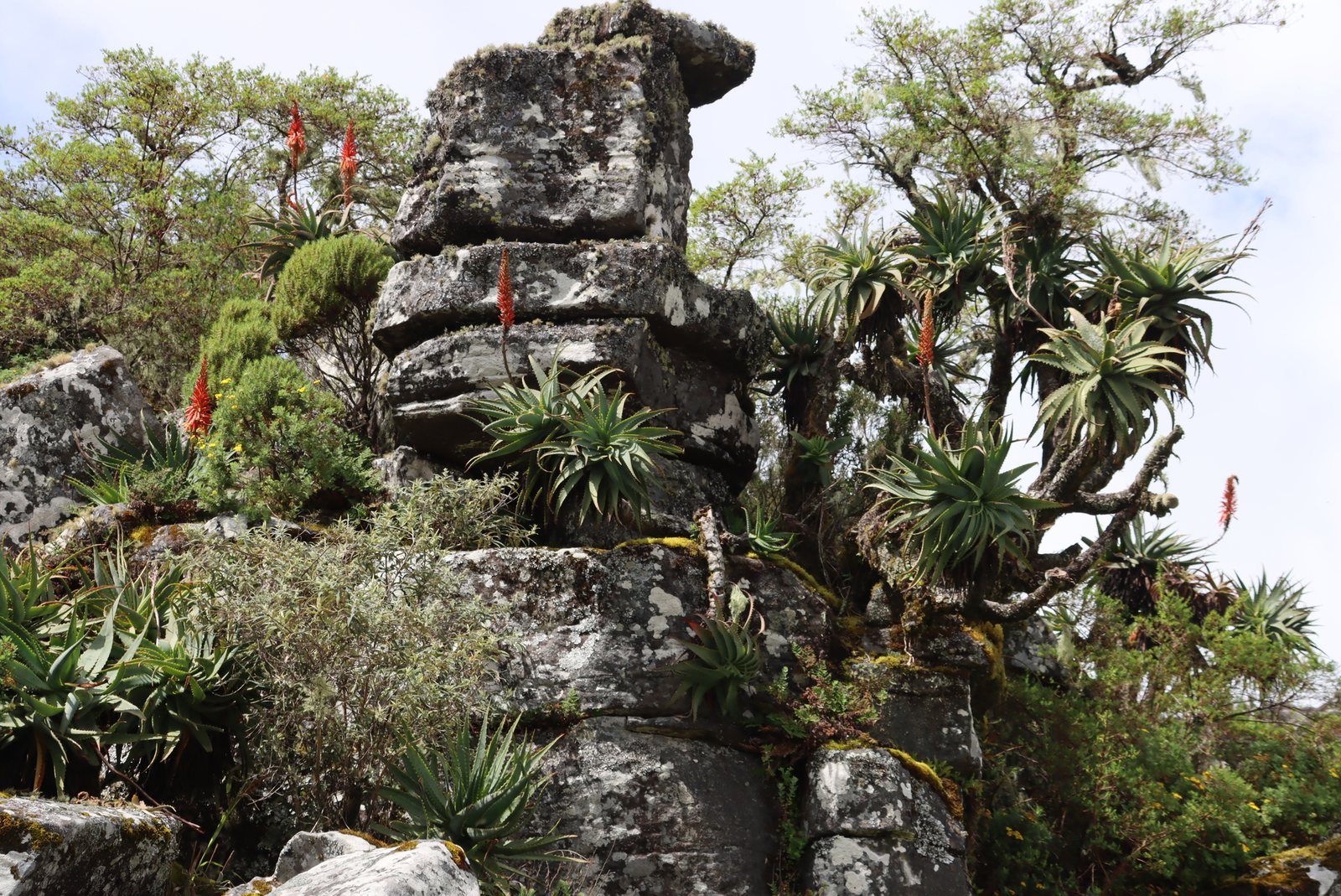
Torch aloe is a large, branching succulent with evergreen rosettes and upright spikes of orange-red winter flowers. Grow it as a bold specimen or informal barrier in mild, dry gardens; in colder regions, keep it in a container that can overwinter under bright, frost-free cover.
At a glance
- Sun
- Full sun; tolerates light shade, but flowers less freely. Acclimatise indoor-grown plants gradually to direct sunlight.
- Water
- Low once established outdoors. Water containers thoroughly, then let the compost dry substantially before watering again; keep much drier in winter.
- Soil
- Very free-draining sandy or gravelly soil. In containers, use cactus compost with added grit or pumice and a pot with drainage holes.
- Height
- 6-10 ft (1.8-3 m)
- Spread
- 6-10 ft (1.8-3 m)
- Flowers
- Late autumn to early spring, depending on climate; dense, upright spikes of tubular orange-red flowers.
- Foliage
- Evergreen. Arching, fleshy, grey-green to blue-green leaves form rosettes at the ends of branching stems. Leaf margins have firm teeth.
- Growth
- Moderate
- Care needed
- Low
The year at a glance
- Pollinators
- Deer resistant
- Drought tolerant
- Heat tolerant
- Low allergen
| J | F | M | A | M | J | J | A | S | O | N | D | |
|---|---|---|---|---|---|---|---|---|---|---|---|---|
| Flowers | ||||||||||||
| Plant |
Northern hemisphere months. In Australia, shift them by six.
- Difficulty
- Moderate
- Toughness
- Fairly tough
Will it suit your garden?
Pick your zone, country, light and whether you have pets.
Full sun is 6 or more hours of direct sun a day, part shade 3 to 6 hours, shade under 3.
How it grows
Planting day
0.9 ft (0.29 m)
After 1 year
2.1 ft (0.64 m)
After 2 years
3 ft (0.99 m)
After 3 years
4 ft (1.3 m)
After 5 years
7 ft (2 m)
About 6 years to full size.
From a typical nursery size, at an average rate for this kind of plant. A rule of thumb, not a forecast.
Good to know
- Cats and dogs
- Toxic
- Invasive in
- Australia
- In the garden
- Spreads vigorously: plan to contain it.
- Growth rate
- Moderate
Care
Jobs through the year
- WaterApr–May, Sep, every 21 days
- Grow in a draining pot in this climate; water thoroughly only when the mix has dried substantially.
- WaterJun–Aug, every 14 days
- Water when the mix is substantially dry, then drain fully; never leave the pot standing in water.
- WaterJan–Mar, Oct–Dec, every 30 days
- Keep mostly dry under cool frost-free cover; water lightly only if dry and leaves begin to shrivel.
- FeedApr–May
- Give container plants one light spring feed with diluted balanced fertiliser.
- DeadheadFeb–Apr
- After flowering, cut spent stalks near their bases without damaging rosettes.
- PruneApr–May
- Remove dead stems and selectively shorten overgrown branches; wear gloves against leaf teeth.
- ProtectSep–Oct
- Move pots into bright frost-free shelter before freezing weather and persistent cold rain.
- ProtectMay–Jun
- After frost risk passes, gradually acclimatise plants to outdoor sunlight.
- Plant on a slope, raised bed or other sharply drained site; avoid places where winter rain collects.
- Water new plants when the root zone dries, then reduce watering once established.
- Feed container plants lightly with a balanced fertiliser in spring; established garden plants rarely need feeding.
- Keep mulch away from stems and rosette centres; gravel is preferable to moisture-retaining organic mulch.
- Move pots under bright, frost-free cover before freezing weather and keep them away from cold, wet conditions.
Pruning. After flowering, cut spent flower stalks near their bases and remove dead or damaged stems with clean tools. In spring, shorten overgrown branches or remove selected stems at the base; wear gloves to avoid the leaf teeth.
Through the year
- Spring
- Plant or repot once frost risk has passed, using a sharply drained growing medium.
- Spring
- Remove frost-damaged growth once new growth reveals which stems are alive; take healthy stem cuttings if needed.
- Summer
- Water container plants deeply when the compost has dried substantially; do not leave pots standing in water.
- Early autumn
- Reduce watering as growth slows and prepare a bright, frost-free place for container plants.
- Winter
- Keep sheltered plants mostly dry and check leaf bases for mealybugs.
- After flowering
- Cut away spent flower stalks without damaging the surrounding rosette.
In the garden
- Use as a branching focal point in a sunny gravel garden, with lower succulents around its base.
- Plant in broad groups on a frost-free slope for evergreen structure and winter flower colour.
- Grow in a large, stable container on a sunny terrace where winter shelter is available.
- Use as an informal boundary planting in mild climates, set back from paths because of its toothed leaves.
Garden styles it suits: Architectural minimal, Modern Mediterranean, Dry gravel garden, Desert / xeriscape, Coastal and Winter interest.
Plant it with: Rock rose, Lavender, Rosemary, Blue chalk sticks, Echeveria and Red hot poker.
Wildlife: Nectar-rich flowers attract sunbirds in its native southern African range and hummingbirds where these occur in the Americas. Bees also visit the flowers.
Problems to watch for
- Root and stem rot: prevent with sharp drainage and restrained winter watering; remove rotten tissue and salvage healthy stems as cuttings.
- Mealybugs and scale insects: inspect leaf bases and stems, isolate affected pots and treat with a product labelled for these pests on succulents.
- Frost damage: move pots under cover before freezing weather; wait until spring to remove damaged growth.
- Aloe gall mite: distorted, knobbly growth may indicate this pest where it occurs; remove affected growth and seek local advice, as badly affected plants may need disposal.
Safety
Treat as toxic to cats, dogs and horses if eaten. The yellow latex beneath the leaf skin contains compounds that can cause vomiting, diarrhoea and abdominal pain; people can also become ill from swallowing it. Do not use this plant for home remedies, and keep cut leaves away from children and pets. Leaf teeth can scratch skin.
Where it spreads. Escapes cultivation and can spread locally in coastal parts of southern Australia, including South Australia and Victoria, and in parts of Portugal and Spain. Broken or dumped stems can root; keep garden waste out of bushland and coastal vegetation.
Easily confused with
Aloe vera (Aloe vera)
Usually forms low clumps of much thicker, broader leaves rather than a tall, woody, branching shrub; its flowers are commonly yellow.
Bitter aloe (Aloe ferox)
Usually has one stout trunk topped by a large rosette, with broader leaves and a branched flower display, rather than many slender branches carrying smaller rosettes.
Mountain aloe (Aloe marlothii)
Usually grows on a single stout trunk, with broad leaves bearing conspicuous prickles on their surfaces and a spreading, branched flower head.
The name
The species name arborescens means becoming tree-like, referring to its woody, branching habit, while torch aloe describes its upright, brightly coloured flower spikes.
Propagation. Take offsets or healthy stem cuttings in spring or summer. Let cut surfaces dry and callus for several days, then insert into a gritty propagation mix and water sparingly until rooted. Seed is another option, but seedlings may vary where other aloes grow nearby.
Checked against open data
- Accepted botanical name
- Aloe arborescens
- In the US and Canada
- Introduced in Pacific Basin.
- Native range
- Botswana, Cape Provinces, Free State, KwaZulu-Natal, Malawi, Mozambique, Northern Provinces, Swaziland and Zimbabwe.
Sources: GBIF (CC BY 4.0), USDA PLANTS and Trefle (CC BY 4.0). The care and design notes are LandscapeGPT's own.
See it in your own yard.
Upload a photo of your yard and see it redesigned with plants that suit your climate, each checked against your zone.