Trailing lantana
Lantana montevidensis. Family Verbenaceae. Groundcover.
Also called Creeping lantana, Weeping lantana, Purple lantana.
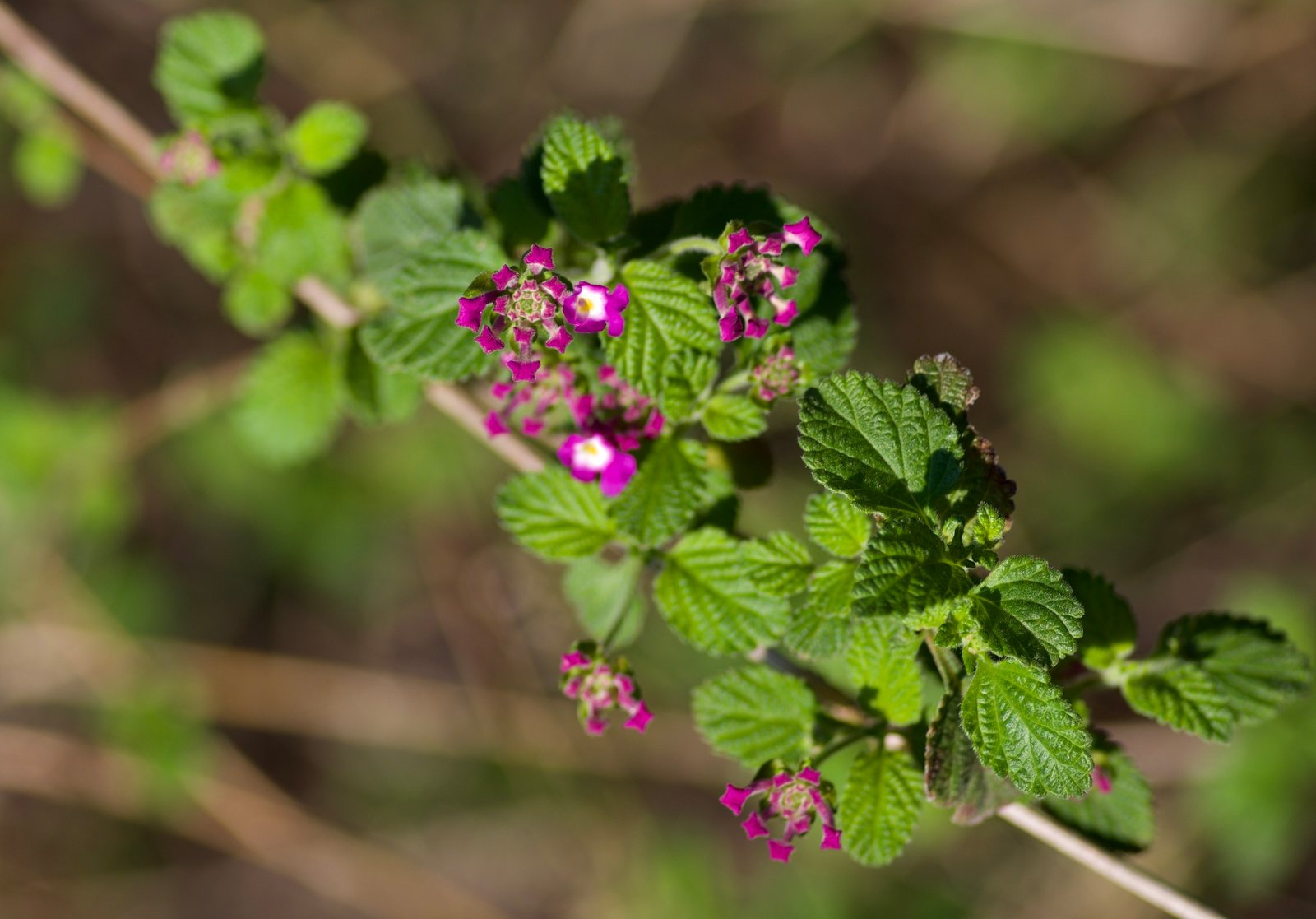
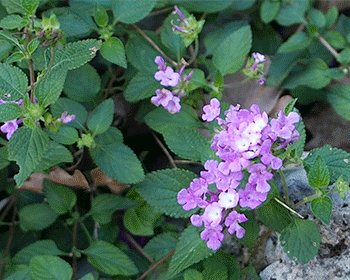
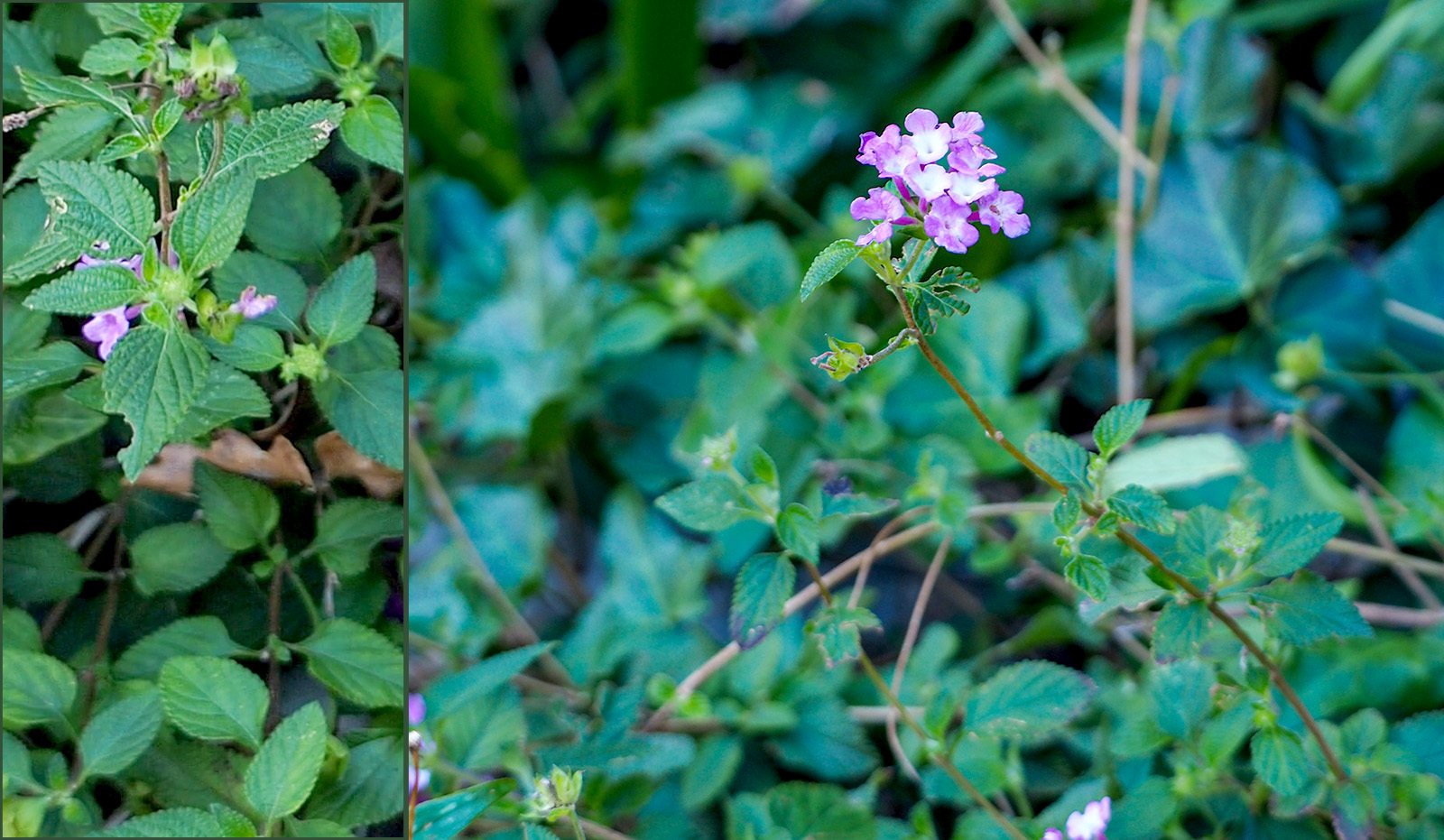
Trailing lantana is a spreading, woody evergreen grown for its low, cascading stems and clusters of lilac-purple flowers. It flowers for months in warm, sunny gardens and tolerates drought once established; in colder regions, it is grown as an annual or overwintered indoors. Check local weed restrictions before planting, especially in Australia.
At a glance
- Sun
- Full sun gives the best flowering; tolerates light shade but flowers less.
- Water
- Water regularly while establishing, then deeply during prolonged dry weather. Let container compost dry slightly between waterings.
- Soil
- Well-drained sandy, loamy or gravelly soil; tolerates relatively poor soil but not prolonged waterlogging.
- Height
- 1-2 ft (0.3-0.6 m)
- Spread
- 3-5 ft (0.9-1.5 m), sometimes wider where stems root
- Flowers
- Lilac-purple flower clusters with pale centres from late spring through autumn; flowering may continue much of the year in frost-free climates. White-flowered forms also occur.
- Foliage
- Evergreen. Small, opposite, oval leaves with toothed edges, a rough surface and a strong scent when crushed.
- Growth
- Fast in warm weather
- Care needed
- Low
The year at a glance
- Pollinators
- Deer resistant
- Drought tolerant
- Heat tolerant
- Wildlife
- Low allergen
| J | F | M | A | M | J | J | A | S | O | N | D | |
|---|---|---|---|---|---|---|---|---|---|---|---|---|
| Flowers | ||||||||||||
| Fruit | ||||||||||||
| Plant |
Northern hemisphere months. In Australia, shift them by six.
- Difficulty
- Moderate
- Toughness
- Fairly tough
Will it suit your garden?
Pick your zone, country, light and whether you have pets.
Full sun is 6 or more hours of direct sun a day, part shade 3 to 6 hours, shade under 3.
How it grows
Planting day
0.4 ft (0.11 m)
After 1 year
1.1 ft (0.32 m)
After 2 years
1.5 ft (0.45 m)
full size
About 2 years to full size.
From a typical nursery size, at an average rate for this kind of plant. A rule of thumb, not a forecast.
Good to know
- Cats and dogs
- Toxic
- Invasive in
- the US and Australia
- In the garden
- Spreads vigorously: plan to contain it.
- Growth rate
- Fast
Care
Jobs through the year
- WaterMay–Jun, Sep, every 14 days
- Water established ground plants during dry spells; new plants and containers need closer checks.
- WaterJul–Aug, every 7 days
- Water deeply if dry, letting soil dry slightly between waterings.
- WaterJan–Apr, Oct–Dec, every 21 days
- For plants overwintered under cover, water just enough to prevent complete root-ball drying.
- FeedApr–May
- Give container plants a light balanced feed; established ground plants rarely need feeding.
- PruneApr–May
- As growth resumes under frost-free conditions, remove dead stems and shorten leggy shoots.
- PruneJun–Sep, every 30 days
- Trim sprawling stems after flowering flushes and remove unwanted rooted runners.
- ProtectJan–May, Sep–Dec
- Move pots into bright frost-free shelter before frost; outdoor plants will not survive typical zone 6–7 winters.
- Plant after frost risk has passed, leaving room for the stems to spread.
- Water the root zone thoroughly during establishment, then reduce watering as roots develop.
- Use containers with drainage holes and keep saucers free of standing water.
- Feed container plants lightly in spring; avoid heavy nitrogen feeding, which encourages leaves rather than flowers.
- Keep mulch clear of the woody crown and remove stems that root beyond the intended planting area.
Pruning. In early spring, after frost risk has passed, remove dead or damaged stems and shorten leggy growth to healthy leafy shoots. Lightly trim after a flowering flush to keep plants compact and clear of paths.
Through the year
- Early spring
- After frost risk has passed, prune out damaged stems and shorten untidy growth.
- Spring
- Plant in a sunny, well-drained position once frosts are over; begin regular establishment watering.
- Early summer
- Check container moisture regularly and give container plants a light feed if growth is weak.
- Summer
- Trim sprawling stems and remove any that have rooted outside the planting area.
- Late summer
- Take non-flowering cuttings if you want young plants to overwinter under cover.
- Autumn
- In cold regions, move pots into bright, frost-free shelter before the first frost.
- Winter
- Keep sheltered plants bright and relatively dry, watering just enough to prevent the root ball drying out completely.
In the garden
- Let stems cascade over sunny retaining walls or the edges of raised beds.
- Use in large patio pots with upright salvias for contrasting height and flower shape.
- Plant as a low flowering cover between widely spaced shrubs in warm, dry gardens where it is not invasive.
- Combine with rosemary and lavender along sunny gravel borders for contrasting foliage and a long flowering season.
Garden styles it suits: Mediterranean, Dry gravel garden, Desert / xeriscape, Coastal, Pollinator garden and Small-space.
Plant it with: Lavender, Rosemary, Autumn sage, Society garlic, Blue fescue and Agapanthus.
Wildlife: Flowers attract butterflies and other nectar-feeding insects. Birds may eat the berries and carry seed beyond the garden; wildlife feeding does not mean the fruit is safe for people or pets.
Problems to watch for
- Root rot in wet soil: improve drainage, reduce watering and avoid planting in low spots that collect water.
- Whiteflies and spider mites, especially under cover: inspect leaf undersides, rinse pests off and use a labelled insecticidal soap if needed.
- Poor flowering: move into stronger sun and reduce nitrogen fertiliser.
- Frost damage: wait until spring growth reveals living stems before pruning; overwinter pots in frost-free shelter.
Safety
Treat as toxic to cats, dogs, horses and people if eaten. Leaves and unripe berries are of particular concern; keep all parts out of reach of children and grazing animals. Poisoning can cause digestive upset, and substantial ingestion can cause serious liver injury and photosensitivity, especially in livestock. Sap or foliage may irritate sensitive skin.
Where it spreads. An invasive weed in parts of eastern Australia, notably Queensland and New South Wales, where legal controls vary by jurisdiction. It is also invasive in Hawaii. Stems can root where they touch soil, and birds spread its seed; do not plant near natural vegetation in affected regions.
Easily confused with
Common lantana (Lantana camara)
Usually forms a taller, more upright shrub with larger leaves, sometimes prickly stems, and flower heads containing yellow, orange, pink or red flowers.
Frogfruit (Phyla nodiflora)
Forms a much lower, herbaceous mat with smaller leaves and tiny white-to-pale-lilac flower heads around a darker central cone.
Moss verbena (Glandularia pulchella)
Has finely divided, fernlike leaves rather than trailing lantana's broad, rough, toothed leaves.
The name
The species name montevidensis means 'from Montevideo', referring to the city in Uruguay.
Propagation. Take softwood or semi-ripe cuttings from non-flowering shoots in late spring or summer and root in a free-draining medium under bright, indirect light. Do not propagate or distribute it where local weed rules prohibit this.
Checked against open data
- Accepted botanical name
- Lantana montevidensis
- In the US and Canada
- Introduced in Hawaii, the lower 48 states, Puerto Rico and US Virgin Islands.
- Native range
- Argentina Northeast, Argentina Northwest, Bolivia, Brazil Northeast, Brazil South, Brazil Southeast, Paraguay and Uruguay.
Sources: GBIF (CC BY 4.0), USDA PLANTS and Trefle (CC BY 4.0). The care and design notes are LandscapeGPT's own.
See it in your own yard.
Upload a photo of your yard and see it redesigned with plants that suit your climate, each checked against your zone.