Trailing rosemary
Salvia rosmarinus 'Prostratus'. Family Lamiaceae. Shrub.
Also called Prostrate rosemary, Creeping rosemary, Rosmarinus officinalis 'Prostratus'.
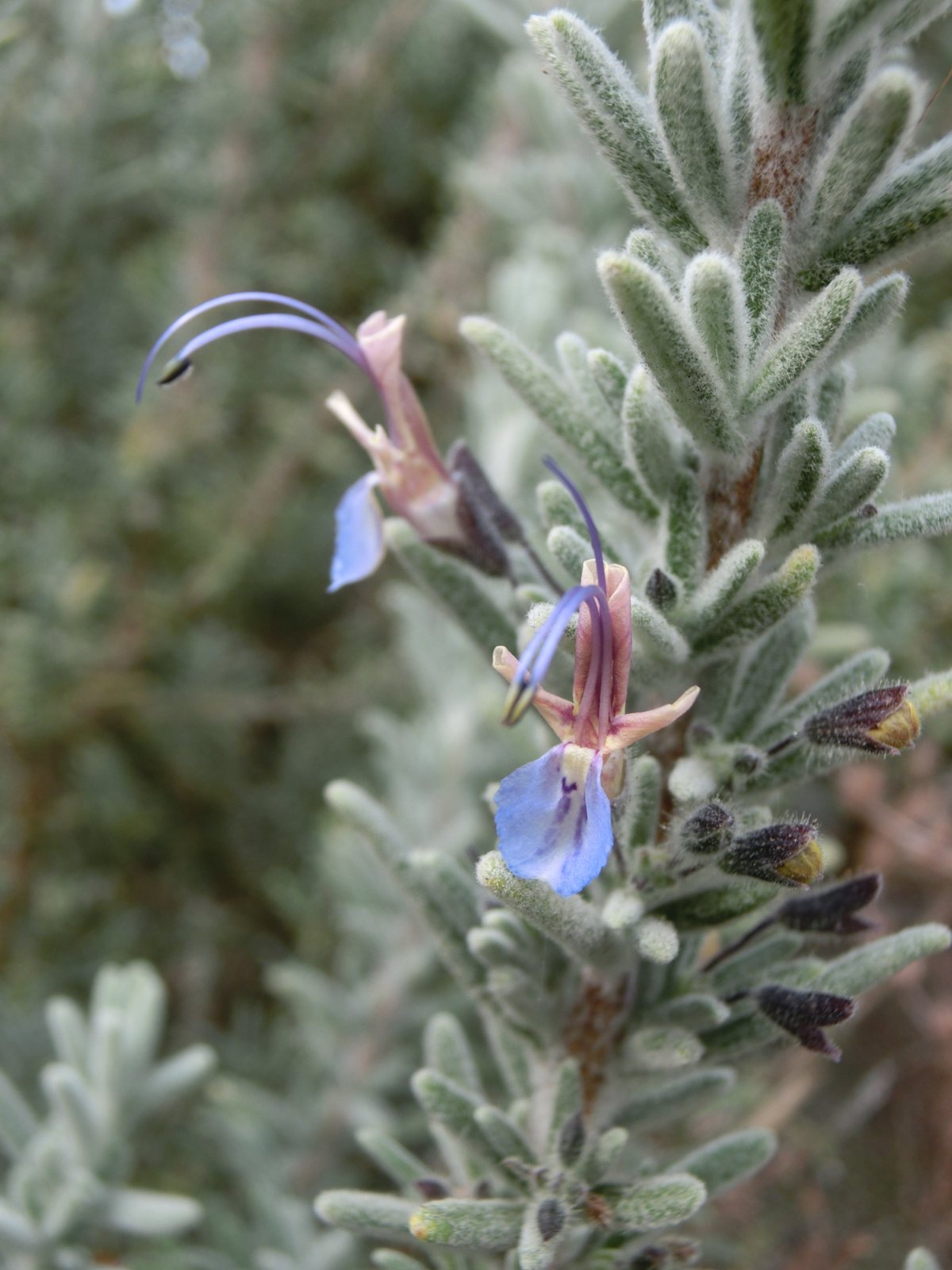
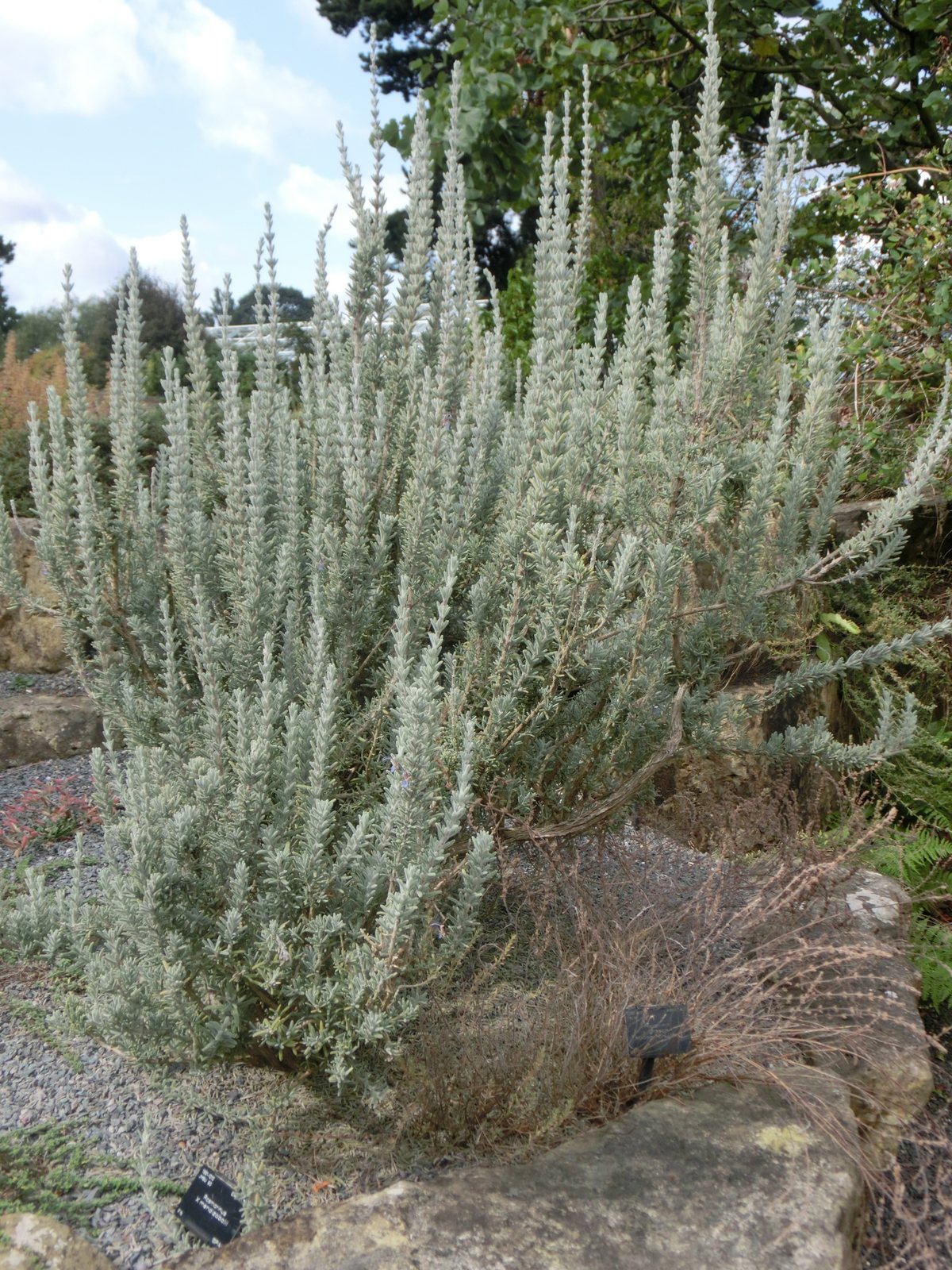
Trailing rosemary is a low, spreading evergreen shrub with aromatic, edible leaves and pale blue flowers. Gardeners grow it to spill over sunny walls, soften gravel gardens and provide a year-round culinary herb. It needs excellent drainage and may need frost protection or indoor winter shelter in colder regions.
At a glance
- Sun
- Full sun; flowering and growth are best with at least six hours of direct sun daily.
- Water
- Low once established in the ground; water containers when the upper soil has dried, allowing excess water to drain freely.
- Soil
- Well-drained sandy, gritty or stony soil; tolerates poor soil and mildly acidic to alkaline conditions. Avoid waterlogged clay.
- Height
- 1-2 ft (0.3-0.6 m)
- Spread
- 4-6 ft (1.2-1.8 m)
- Flowers
- Small pale blue flowers, mainly in spring, with intermittent flowering in other seasons in mild climates.
- Foliage
- Evergreen. Narrow, leathery, dark green leaves with pale undersides and a strong resinous scent when rubbed.
- Growth
- Moderate
- Care needed
- Low
The year at a glance
- Pollinators
- Deer resistant
- Drought tolerant
- Heat tolerant
- Low allergen
- Fragrant
- Edible
| J | F | M | A | M | J | J | A | S | O | N | D | |
|---|---|---|---|---|---|---|---|---|---|---|---|---|
| Flowers | ||||||||||||
| Fruit | ||||||||||||
| Plant |
Northern hemisphere months. In Australia, shift them by six.
- Difficulty
- Moderate
- Toughness
- Fairly tough
Will it suit your garden?
Pick your zone, country, light and whether you have pets.
Full sun is 6 or more hours of direct sun a day, part shade 3 to 6 hours, shade under 3.
How it grows
Planting day
1.5 ft (0.45 m)
full size
About 5 years to full size.
From a typical nursery size, at an average rate for this kind of plant. A rule of thumb, not a forecast.
Good to know
- Cats and dogs
- Safe
- Growth rate
- Moderate
Care
Jobs through the year
- WaterApr–May, Sep–Oct, every 21 days
- Water established ground plants only if dry; young plants and pots need more frequent checks.
- WaterJun–Aug, every 14 days
- Water established ground plants during prolonged drought; water pots sooner when upper soil dries.
- WaterJan–Mar, Nov–Dec, every 21 days
- Check sheltered pots and water sparingly when partly dry without letting the root ball dry completely.
- FeedApr
- Give weak container plants a light balanced feed; established garden plants usually need none.
- MulchApr–May
- Use a thin gravel mulch for drainage, keeping the woody crown clear.
- PruneMay–Jun
- Trim lightly after flowering, keeping every cut within leafy growth.
- HarvestJan–Dec
- Snip small amounts of leafy tips as needed; harvest sparingly from winter-protected plants.
- ProtectJan–Apr, Oct–Dec
- In zone 6–7, overwinter pots in a bright, cool, frost-free place; this trailing cultivar is frost-sensitive.
- Plant in spring where winters are cold; use a raised bed or container if your soil stays wet.
- Water regularly through the first growing season, letting the soil dry somewhat between waterings.
- Feed sparingly; give container plants a light balanced feed in spring, but usually leave established garden plants unfed.
- Keep mulch away from the woody crown; use gravel rather than moisture-holding organic mulch around the base.
- Move pots into a bright, cool, frost-free place where winter temperatures fall below its reliable range.
Pruning. Trim lightly after the main flowering flush to shorten trailing shoots and encourage branching. Keep cuts within leafy growth, because bare old wood often fails to resprout, and avoid hard pruning before winter.
Harvest
Snip leafy shoot tips once the plant is established, choosing healthy green growth before it becomes woody. Pick throughout the year in mild climates, taking small amounts from several stems and leaving plenty of foliage; use fresh or dry for storage.
Through the year
- Spring
- Plant after severe frost has passed, choosing full sun and freely draining soil.
- Spring
- Check container drainage and apply a light feed if growth is weak.
- Late spring
- After the main flowering flush, lightly trim long shoots while retaining leafy growth.
- Summer
- Harvest shoot tips and water containers when the upper soil dries.
- Summer
- Take non-flowering, semi-ripe cuttings to raise replacement plants.
- Autumn
- Reduce watering as growth slows and move pots under shelter before damaging frost.
- Winter
- Keep sheltered plants in bright light and water sparingly without letting the root ball dry out completely.
In the garden
- Let it cascade over a sunny retaining wall, keeping the crown above wet ground.
- Use it along gravel paths with lavender and thyme for scent and contrasting leaf textures.
- Grow it in a tall, well-drained pot where its stems can trail over the rim.
- Plant it as low evergreen cover on a sunny, freely draining bank.
Garden styles it suits: Mediterranean, Modern Mediterranean, Dry gravel garden, Coastal, Edible landscape and Sensory garden.
Plant it with: English lavender, Common thyme, Common sage, Santolina, Rockrose and Lamb's ears.
Wildlife: Flowers supply nectar and pollen for bees and other visiting insects, sometimes during mild winter weather when few other plants are flowering.
Problems to watch for
- Root rot and dieback in wet soil: improve drainage or move to a raised bed or container; do not keep watering a plant whose soil is already wet.
- Frost damage: shelter from cold winds, protect during severe freezes and wait until spring growth appears before removing damaged shoots.
- Rosemary beetle, particularly in the UK: inspect leaves and stems for striped metallic beetles and grey larvae, then pick them off by hand.
- Powdery mildew, especially under cover: improve airflow, provide stronger light and avoid crowding plants.
Safety
The leaves, stems and flowers are not known to be toxic to people, cats, dogs or horses in ordinary garden exposure. Leaves are edible, though eating large amounts may cause digestive upset. Concentrated rosemary essential oil is not equivalent to the plant and can be harmful if swallowed, especially by pets.
Easily confused with
Creeping thyme (Thymus serpyllum)
Forms a much lower mat with tiny oval leaves and usually pink-purple flowers; rosemary has longer, needle-like leaves and thicker woody stems.
English lavender (Lavandula angustifolia)
Has greyer foliage and upright flower spikes held above the leaves; trailing rosemary bears small flowers along its leafy stems.
The name
Rosmarinus comes from Latin words meaning 'dew of the sea', while 'Prostratus' describes its low, spreading habit.
Propagation. Take non-flowering semi-ripe cuttings in summer and root them in a gritty, free-draining medium. Low stems may also root where they touch soil and can be separated once well rooted; seed will not reliably reproduce the cultivar.
Checked against open data
- Accepted botanical name
- Salvia rosmarinus
- Native range
- Albania, Algeria, Baleares, Corse, Cyprus, East Aegean Is., Egypt, France, Greece, Italy, Libya and Morocco.
- Measured
- Soil pH 5 to 7.5. Average height 74 cm.
Sources: GBIF (CC BY 4.0) and Trefle (CC BY 4.0). The care and design notes are LandscapeGPT's own.
See it in your own yard.
Upload a photo of your yard and see it redesigned with plants that suit your climate, each checked against your zone.