Treasure flower
Gazania rigens. Family Asteraceae. Perennial.
Also called Gazania, Trailing gazania.
Treasure flower is a low, spreading South African perennial grown for its large, bright daisies and tolerance of heat, drought and coastal exposure. It is evergreen in frost-free climates but usually grown as an annual in colder regions. Its flowers open best in direct sunshine and close at night or in dull weather.
At a glance
- Sun
- Full sun; shade reduces flowering and keeps flowers closed.
- Water
- Low once established. Water young plants regularly, then let the soil dry between thorough waterings; containers need more frequent attention.
- Soil
- Well-drained sandy, gritty or gravelly soil; tolerates poor soil and coastal conditions but dislikes wet clay and winter waterlogging.
- Height
- 0.5-1 ft (0.15-0.3 m)
- Spread
- 1-2 ft (0.3-0.6 m)
- Flowers
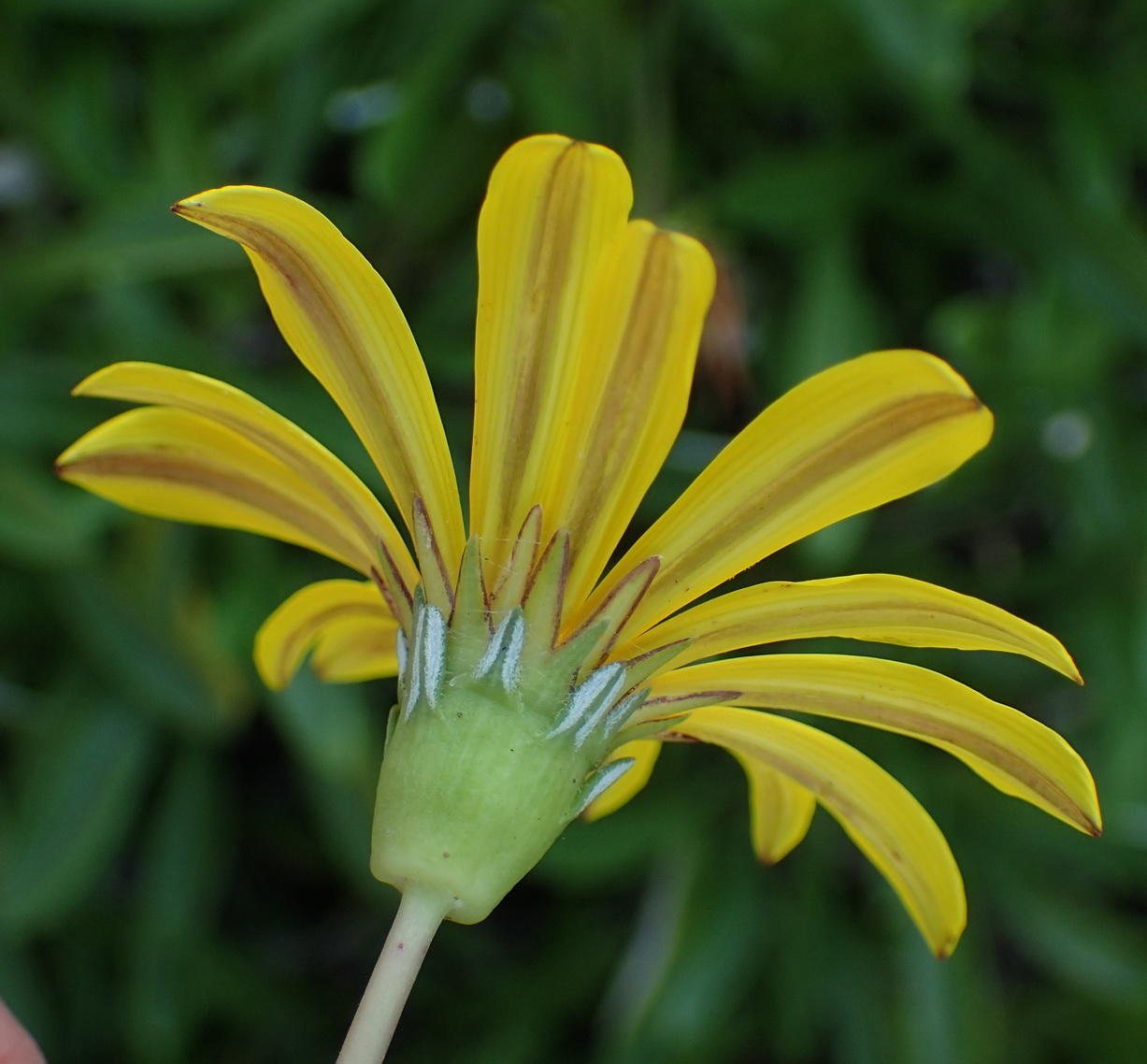
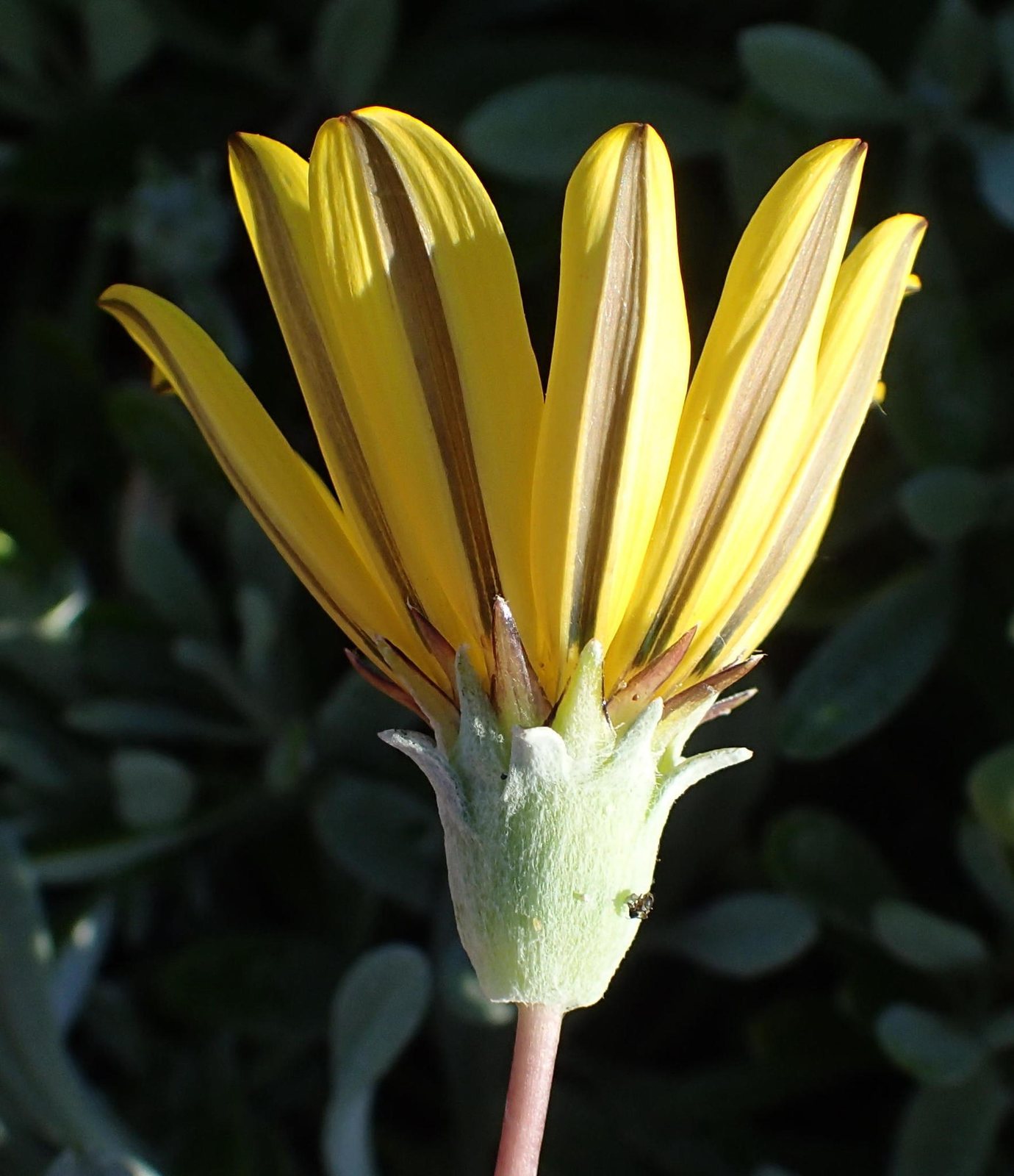
- Late spring to autumn, sometimes longer in frost-free climates. The species usually has yellow to orange daisies, often with dark markings near the petal bases; garden selections and hybrids offer additional colours.
- Foliage
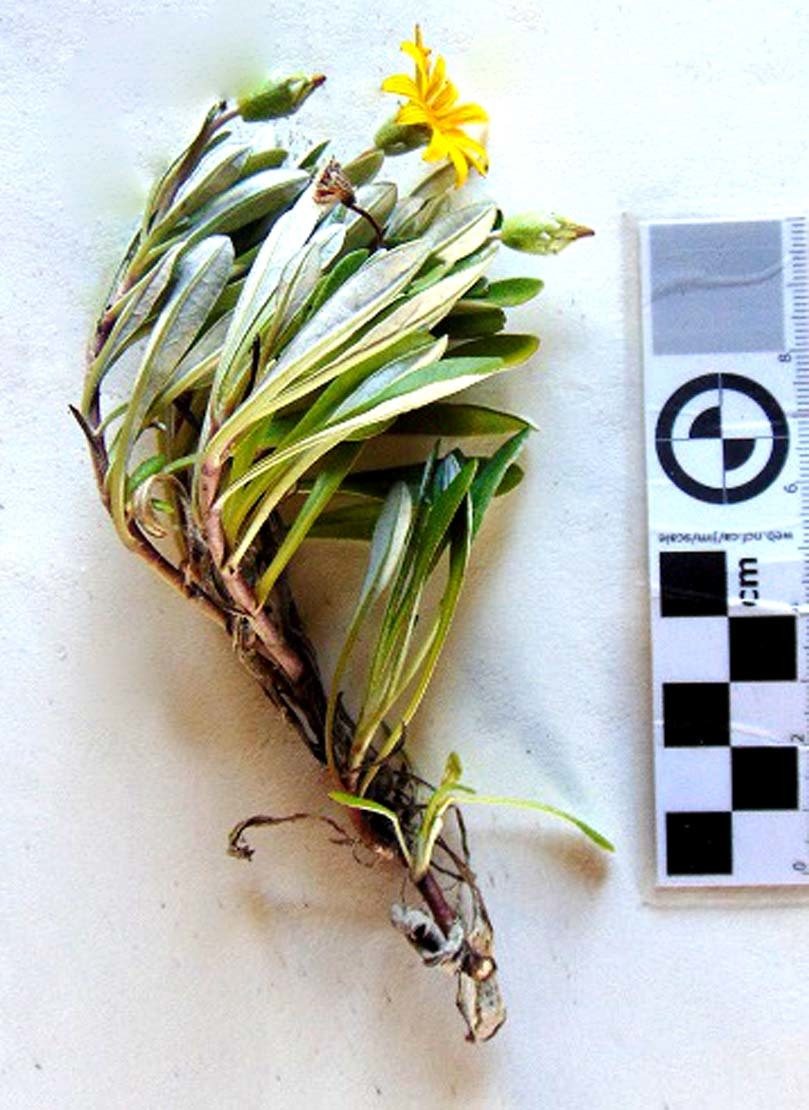
- Evergreen. Narrow to spoon-shaped leaves, sometimes lobed, with green or grey-green upper surfaces and white-felted undersides.
- Growth
- Moderate to fast in warm weather.
- Care needed
- Low
The year at a glance
- Pollinators
- Drought tolerant
- Heat tolerant
- Low allergen
| J | F | M | A | M | J | J | A | S | O | N | D | |
|---|---|---|---|---|---|---|---|---|---|---|---|---|
| Flowers | ||||||||||||
| Plant |
Northern hemisphere months. In Australia, shift them by six.
- Difficulty
- Easy
- Toughness
- Fairly tough
Will it suit your garden?
Pick your zone, country, light and whether you have pets.
Full sun is 6 or more hours of direct sun a day, part shade 3 to 6 hours, shade under 3.
How it grows
Planting day
0.7 ft (0.22 m)
full size
About 2 years to full size.
From a typical nursery size, at an average rate for this kind of plant. A rule of thumb, not a forecast.
Good to know
- Cats and dogs
- Safe
- Invasive in
- Australia
- In the garden
- Spreads vigorously: plan to contain it.
- Growth rate
- Fast
Care
Jobs through the year
- WaterMay, Sep, every 14 days
- Water established outdoor plants only when soil is dry; water new plants more frequently.
- WaterJun–Aug, every 10 days
- Water deeply during dry spells, letting soil dry between waterings; pots need more frequent checks.
- WaterJan–Apr, Oct–Dec, every 21 days
- For frost-free overwintered pots only, water lightly if nearly dry; never leave them standing in water.
- FeedMay
- Apply a light balanced feed only if growth is weak.
- MulchMay
- Use a thin gravel mulch around plants rather than moisture-retentive organic material.
- DeadheadMay–Oct, every 7 days
- Remove faded flower stems at their bases.
- PruneApr
- Trim damaged foliage and straggling stems on successfully overwintered plants.
- ProtectSep–Oct
- Move pots into bright, frost-free shelter before frost; otherwise grow as a disposable summer annual.
- Plant after frost danger has passed, leaving room for the spreading stems.
- Water at soil level and let the surface dry before watering again.
- Feed sparingly; use a light application of balanced fertiliser in spring only if growth is weak.
- Use gravel mulch rather than moisture-holding mulch around the crowns.
- Move pots into a bright, frost-free shelter before winter in cold regions.
Pruning. Remove spent flower stems at their base to keep plants tidy and reduce seed production. In spring, trim frost-damaged leaves and straggling stems back to healthy growth.
Through the year
- Early spring
- Sow seed under cover in cold climates, providing warmth and strong light.
- Spring
- Trim overwintered plants and check that crowns have not rotted.
- Late spring
- Harden off young plants and plant outside after the last frost.
- Summer
- Remove faded flowers and water containers when their compost dries.
- Late summer
- Take non-flowering basal cuttings if you want to preserve a particular plant.
- Autumn
- Shelter pots before frost, or remove plants being grown as annuals.
- Winter
- Keep sheltered plants bright and barely moist; protect outdoor plants from persistent wet.
In the garden
- Edge sunny paths and raised beds with a low band of bright flowers.
- Plant among gravel and rocks with compact succulents for a drought-tolerant display.
- Use in sunny containers with other plants that prefer dry conditions.
- Cover small, well-drained coastal banks where escape into nearby natural vegetation is not a concern.
Garden styles it suits: Mediterranean, Dry gravel garden, Desert / xeriscape, Coastal, Hot border and Small-space.
Plant it with: Lavender, Santolina, Blue fescue, Rosemary, Stonecrop and Ice plant.
Wildlife: Open flowers provide pollen and nectar for bees and other visiting insects. Single-flowered forms offer easier access than heavily doubled selections.
Problems to watch for
- Root or crown rot in wet soil: improve drainage, reduce watering and discard badly rotted plants.
- Aphids on tender growth: wash them off with water or use insecticidal soap according to the label.
- Slugs and snails damaging young plants: remove hiding places, hand-pick at dusk or use an approved iron-phosphate bait.
- Few flowers or flowers staying shut: move plants into full sun; closed blooms during cloudy weather are normal.
Safety
Not known to be toxic to cats, dogs, horses or people. No part is generally recognised as poisonous, but it is not an edible plant, and eating substantial amounts may cause stomach upset.
Where it spreads. Gazania rigens and closely related garden gazanias can escape cultivation and spread aggressively in coastal southern Australia, particularly Western Australia, South Australia and Victoria. It is also naturalised in parts of coastal California. Identification within garden gazanias can be difficult; check local weed guidance before planting near dunes, coastal scrub or reserves.
Easily confused with
Clumping gazania (Gazania linearis)
Usually forms tighter basal clumps with long, narrow leaves rather than the spreading, leafy stems typical of Gazania rigens. Garden hybrids can blur this distinction.
African daisy (Osteospermum ecklonis)
Usually grows taller and bushier, with broader, often toothed leaves that lack the conspicuously white-felted undersides of gazania.
Livingstone daisy (Cleretum bellidiforme)
Has fleshy leaves covered with sparkling bladder-like cells and many narrower petals; gazania has felt-backed leaves and broader ray florets.
The name
Gazania honours the Greek scholar Theodorus Gaza, while rigens means stiff or rigid.
Propagation. Sow seed in warmth in early spring, or take basal cuttings in late summer. Rooted portions of spreading clumps can be separated in spring. Seedlings from named selections or hybrids may differ from the parent.
Checked against open data
- Accepted botanical name
- Gazania rigens
- Native range
- Cape Provinces, KwaZulu-Natal, Mozambique, Northern Provinces and Swaziland.
Sources: GBIF (CC BY 4.0) and Trefle (CC BY 4.0). The care and design notes are LandscapeGPT's own.
See it in your own yard.
Upload a photo of your yard and see it redesigned with plants that suit your climate, each checked against your zone.