Tree dahlia
Dahlia imperialis. Family Asteraceae. Perennial.
Also called Bell tree dahlia, Giant dahlia.
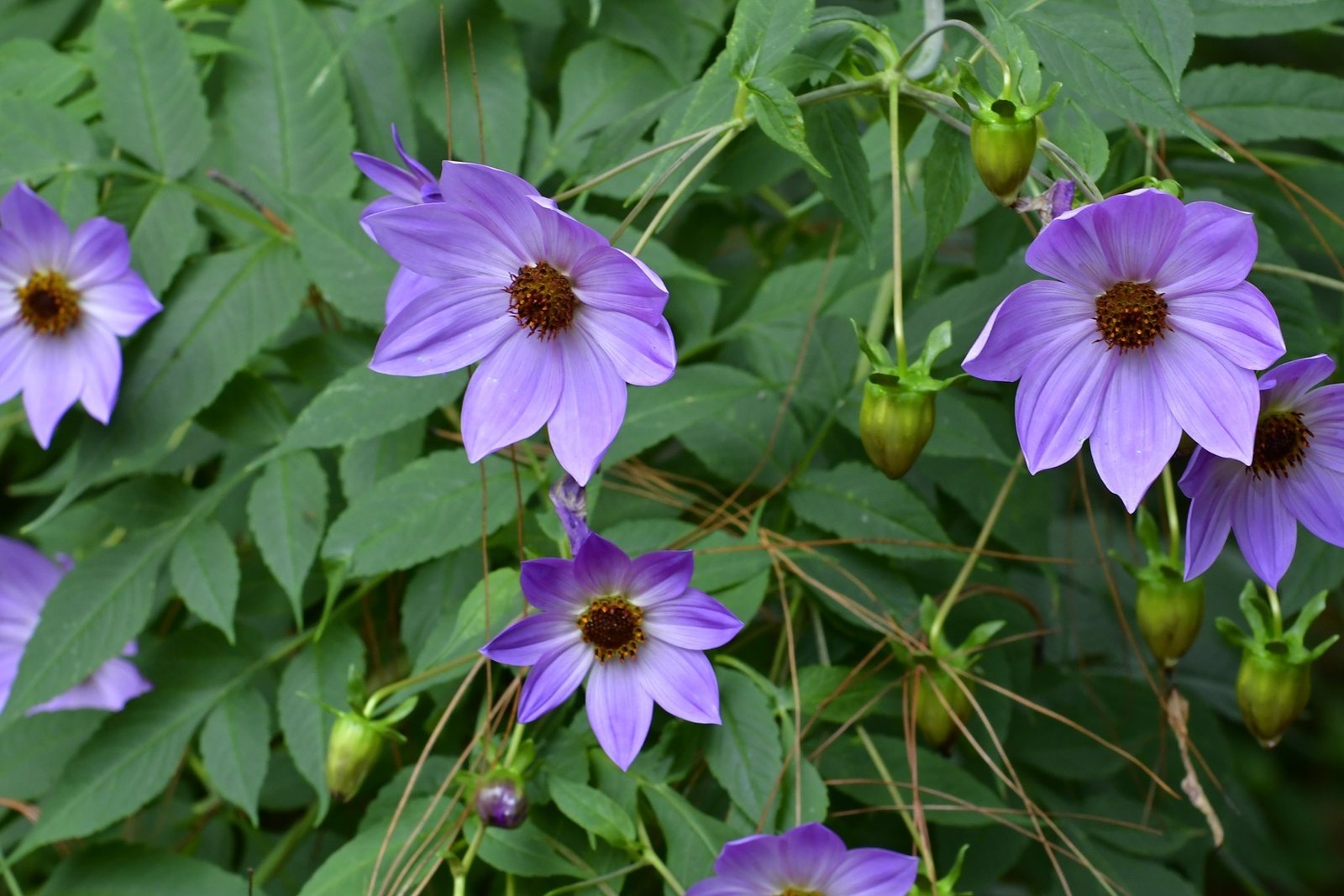
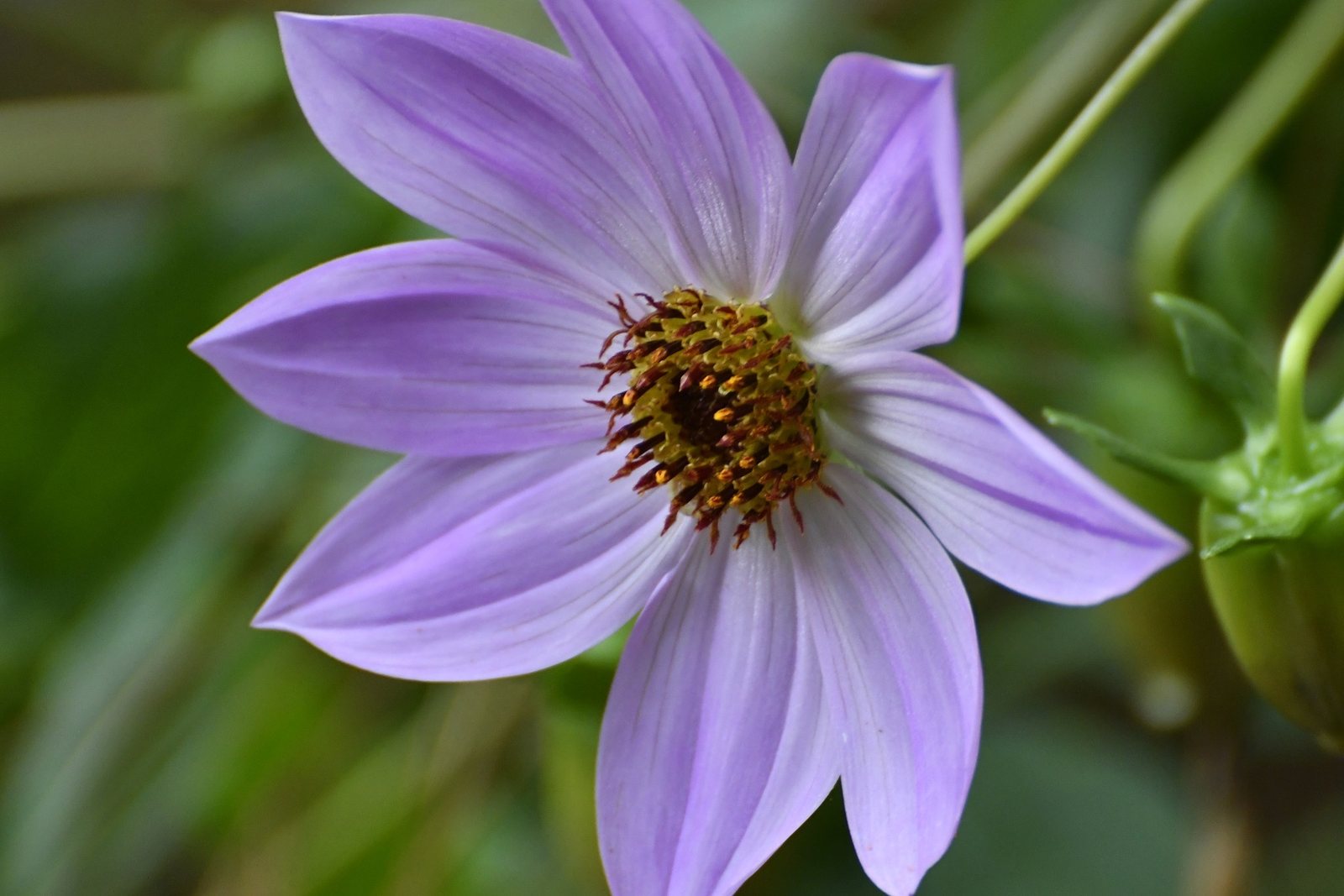
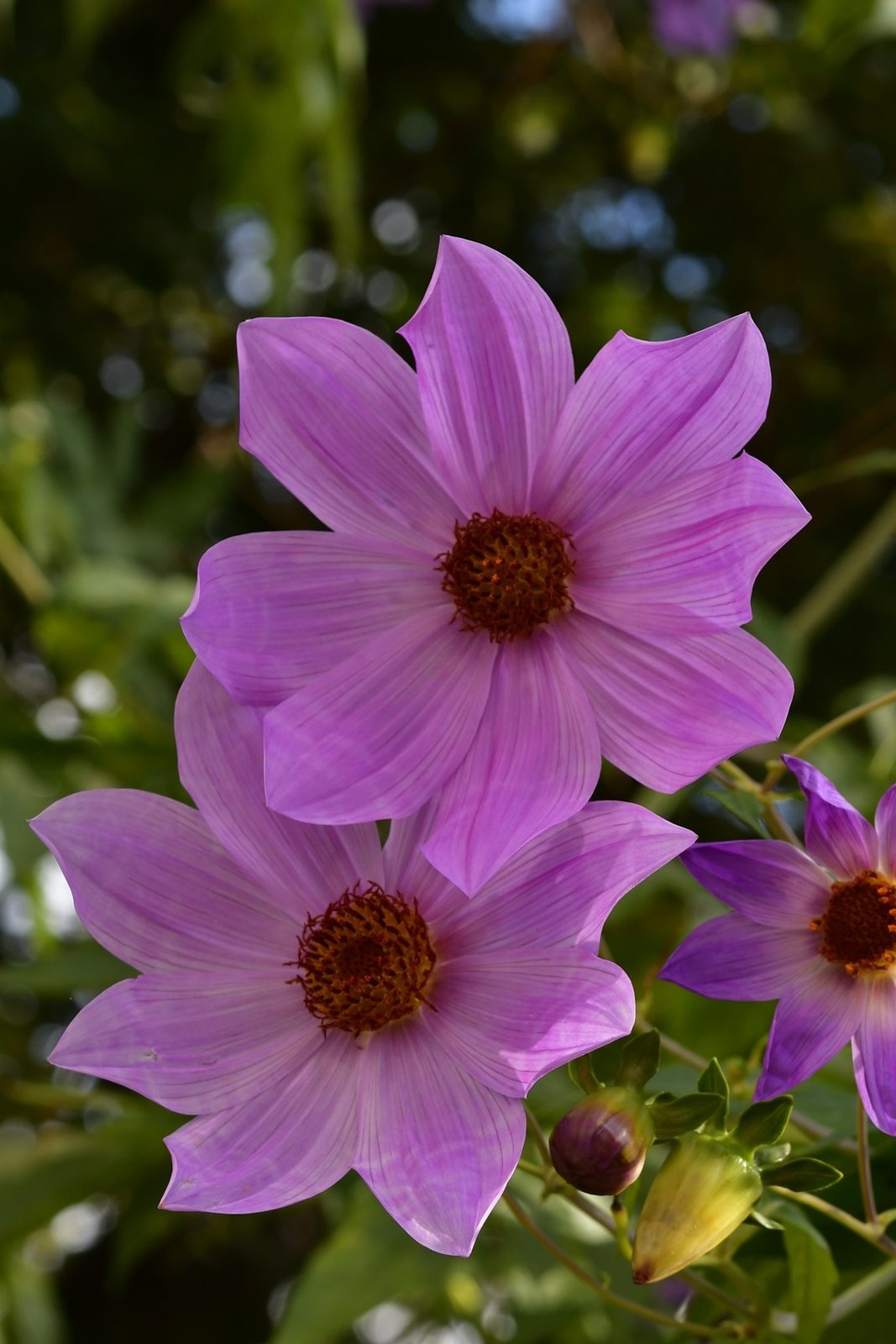
Tree dahlia is a tuberous perennial, not a woody tree, with tall, bamboo-like stems and large clusters of pink flowers late in the year. Grow it for height and a tropical effect in a sheltered garden; early autumn frosts can kill the flower buds before they open.
At a glance
- Sun
- Full sun; light afternoon shade is useful in hot climates. Shelter from strong winds.
- Water
- Water deeply during active growth, keeping the soil evenly moist but not waterlogged. Reduce watering as the stems die back.
- Soil
- Fertile, humus-rich, well-drained soil. Avoid sites that remain wet through winter.
- Height
- 8-20 ft (2.4-6 m)
- Spread
- 4-8 ft (1.2-2.4 m)
- Flowers
- Late autumn into early winter, with open, nodding lilac-pink flowers and yellow centres; flowering may be cut short or prevented by frost.
- Foliage
- Large, divided green leaves on thick, hollow, jointed stems; leaves and stems are killed by frost.
- Growth
- Fast; established plants can make their full height in one growing season.
- Care needed
- Medium
The year at a glance
- Pollinators
- Heat tolerant
- Low allergen
| J | F | M | A | M | J | J | A | S | O | N | D | |
|---|---|---|---|---|---|---|---|---|---|---|---|---|
| Flowers | ||||||||||||
| Plant |
Northern hemisphere months. In Australia, shift them by six.
- Difficulty
- Moderate
- Toughness
- Needs looking after
Will it suit your garden?
Pick your zone, country, light and whether you have pets.
Full sun is 6 or more hours of direct sun a day, part shade 3 to 6 hours, shade under 3.
How it grows
Planting day
1.7 ft (0.5 m)
After 1 year
8 ft (2.4 m)
After 2 years
14 ft (4.2 m)
full size
About 2 years to full size.
From a typical nursery size, at an average rate for this kind of plant. A rule of thumb, not a forecast.
Good to know
- Cats and dogs
- Mildly toxic: may upset a stomach
- Growth rate
- Fast
Care
Jobs through the year
- WaterMay–Jun, Sep–Oct, every 7 days
- Water established plants deeply if rain is insufficient; keep active roots evenly moist.
- WaterJul–Aug, every 4 days
- Water deeply in dry weather; young plants may need more frequent watering.
- FeedMay
- Add compost at planting or as growth starts; avoid excessive nitrogen.
- DivideMar–Apr
- Divide crowded tubers as buds emerge under cover, retaining crown and buds on each piece.
- ProtectMay–Sep
- Install strong stakes at planting, maintain loose ties and protect emerging shoots from slugs.
- PruneOct–Nov
- Cut stems near ground level once frost kills them; avoid late-season shortening.
- ProtectOct–Nov
- Lift after frost in zone 6–7 and store cool, frost-free and barely moist; frost may prevent flowering.
- ProtectJan–Mar, Dec
- Inspect stored tubers for rot or shrivelling; discard rotten sections.
- Plant after frost danger has passed, leaving enough room for the mature clump.
- Install strong stakes early and tie the stems loosely as they lengthen.
- Water deeply during dry spells rather than giving frequent light sprinklings.
- Apply compost in spring; avoid excessive nitrogen, which encourages soft, leafy growth.
- Mulch the root area for winter where plants remain outdoors, keeping drainage clear.
- In colder regions, lift the tuberous clump after frost and store it somewhere cool, frost-free and barely moist.
Pruning. Cut dead stems down near ground level after flowering or once frost has killed them. If a shorter plant is needed, shorten shoots in late spring, but avoid late pruning because it can delay or remove the autumn flowers.
Through the year
- Early spring
- Check stored tubers for rot and start them into growth under cover in cold regions.
- Spring
- Divide established clumps as buds begin to grow, keeping a section of crown with each division.
- Late spring
- Plant out after frost, add compost and install tall, sturdy supports.
- Summer
- Water during dry weather and check ties as the stems grow.
- Autumn
- Keep plants watered while buds develop; avoid pruning and unnecessary disturbance.
- Late autumn
- After frost kills the stems, cut them down and either mulch the clump or lift it for frost-free storage.
In the garden
- Place at the back of a deep border, where the flowers rise above lower perennials.
- Use beside a sheltered wall or fence for support and a tall seasonal backdrop.
- Combine with cannas and large-leaved plants for a tropical-looking summer planting.
- Plant behind autumn-flowering salvias and asters to extend colour into the end of the season.
Garden styles it suits: Tropical, Modern tropical, Architectural minimal, Cottage garden, Autumn colour and Mexican hacienda.
Plant it with: Cannas, Ginger lilies, Mexican bush sage, Salvia 'Amistad', Japanese anemones and Asters.
Wildlife: The open flowers provide pollen and nectar for bees and other insects when weather remains warm enough for them to forage.
Problems to watch for
- Slugs and snails eat emerging shoots: protect new growth with barriers, hand-picking or locally approved iron-phosphate bait.
- Strong winds snap the hollow stems: choose a sheltered position and use substantial stakes with several loose ties.
- Winter rot destroys tubers in saturated soil: improve drainage or lift and store the clump frost-free.
- Frost prevents flowering: use a warm, sheltered site; in short-season climates, treat the foliage rather than the flowers as the main attraction.
Safety
Dahlias are mildly toxic to cats and dogs if chewed, potentially causing stomach upset; sap contact may also irritate skin. Keep pets from chewing leaves, stems or tubers. Tree-dahlia-specific evidence is limited, and it is not known to be seriously toxic to people or horses.
Easily confused with
Garden dahlia (Dahlia pinnata and garden hybrids)
Most garden dahlias are much shorter and flower from summer onward, often with dense double blooms. Tree dahlia has towering, jointed stems and typically bears open pink flowers very late in the season.
The name
Dahlia honours the Swedish botanist Anders Dahl, while imperialis means imperial and refers to the plant's imposing stature.
Propagation. Divide the tuberous clump in spring, ensuring each piece carries part of the crown with a live bud. Young basal shoots can also be taken as cuttings; sections of mature stem containing nodes can root with warmth and careful moisture control.
Checked against open data
- Accepted botanical name
- Dahlia imperialis
- Native range
- Colombia, Costa Rica, El Salvador, Guatemala, Honduras, Mexico Central, Mexico Gulf, Mexico Northeast, Mexico Southeast, Mexico Southwest, Nicaragua and Panamá.
Sources: GBIF (CC BY 4.0) and Trefle (CC BY 4.0). The care and design notes are LandscapeGPT's own.
See it in your own yard.
Upload a photo of your yard and see it redesigned with plants that suit your climate, each checked against your zone.