Tree mallow 'Barnsley'
Malva × clementii 'Barnsley'. Family Malvaceae. Shrub.
Also called Lavatera 'Barnsley', Lavatera × clementii 'Barnsley', Shrubby mallow 'Barnsley'.
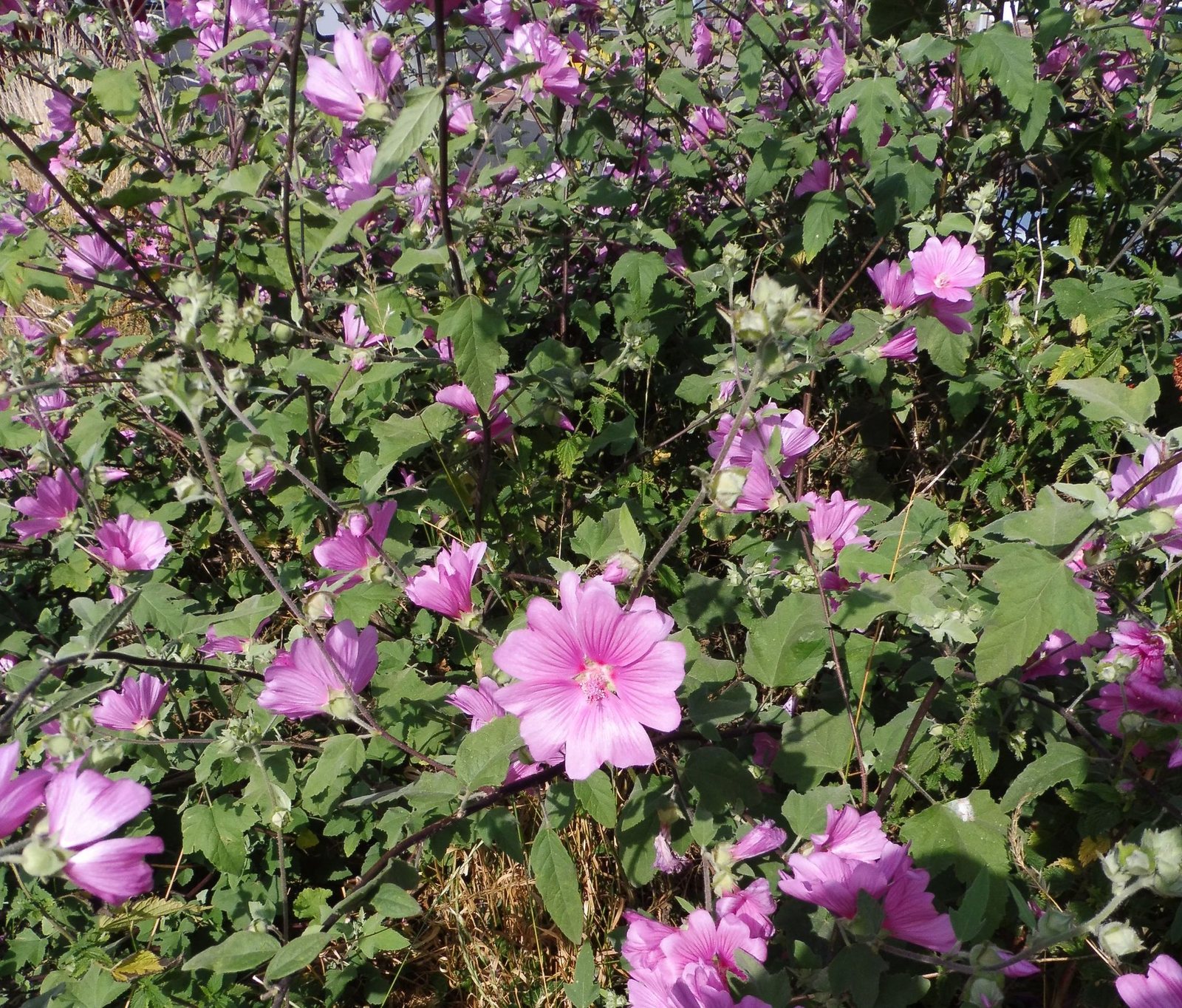
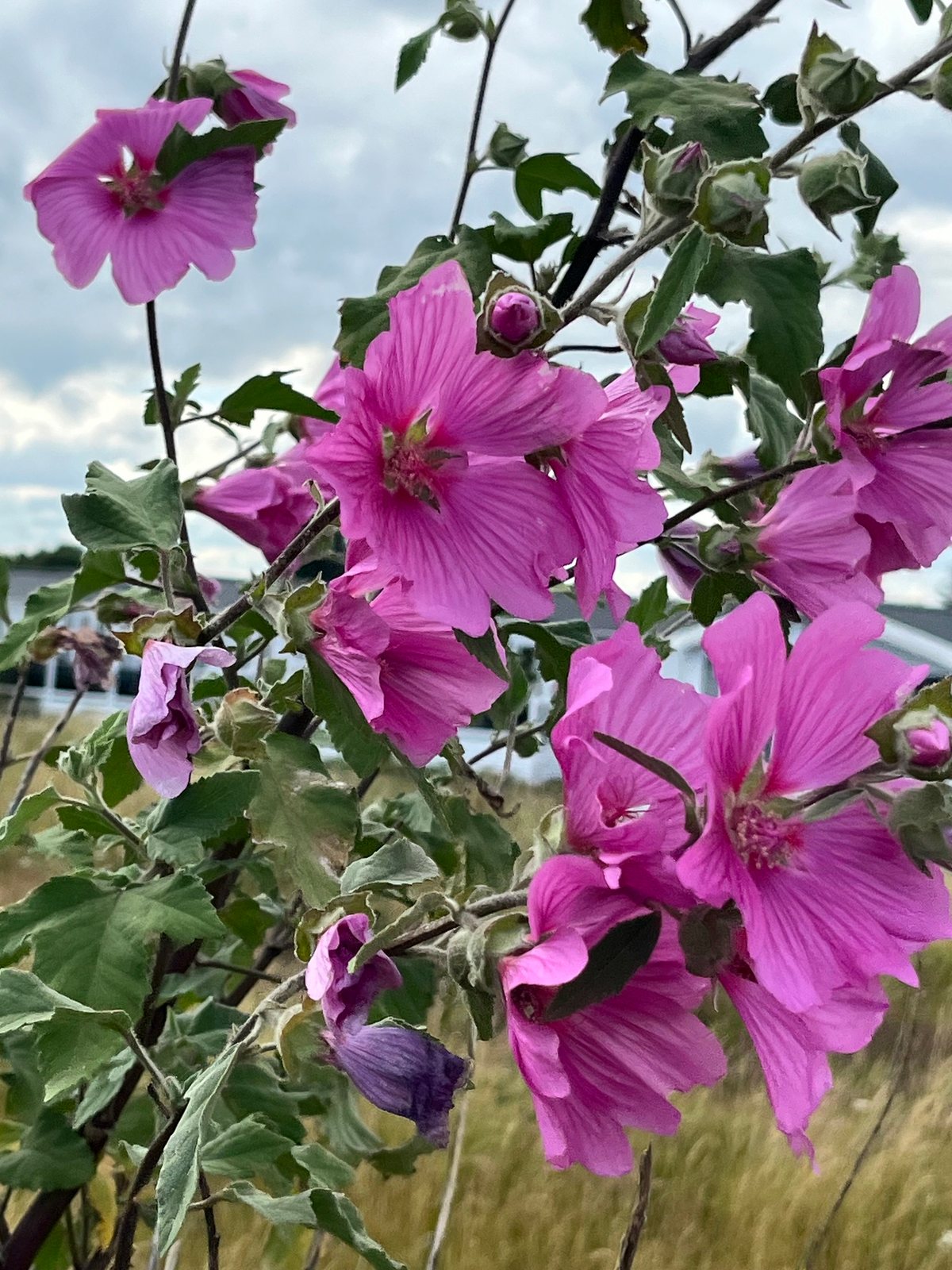
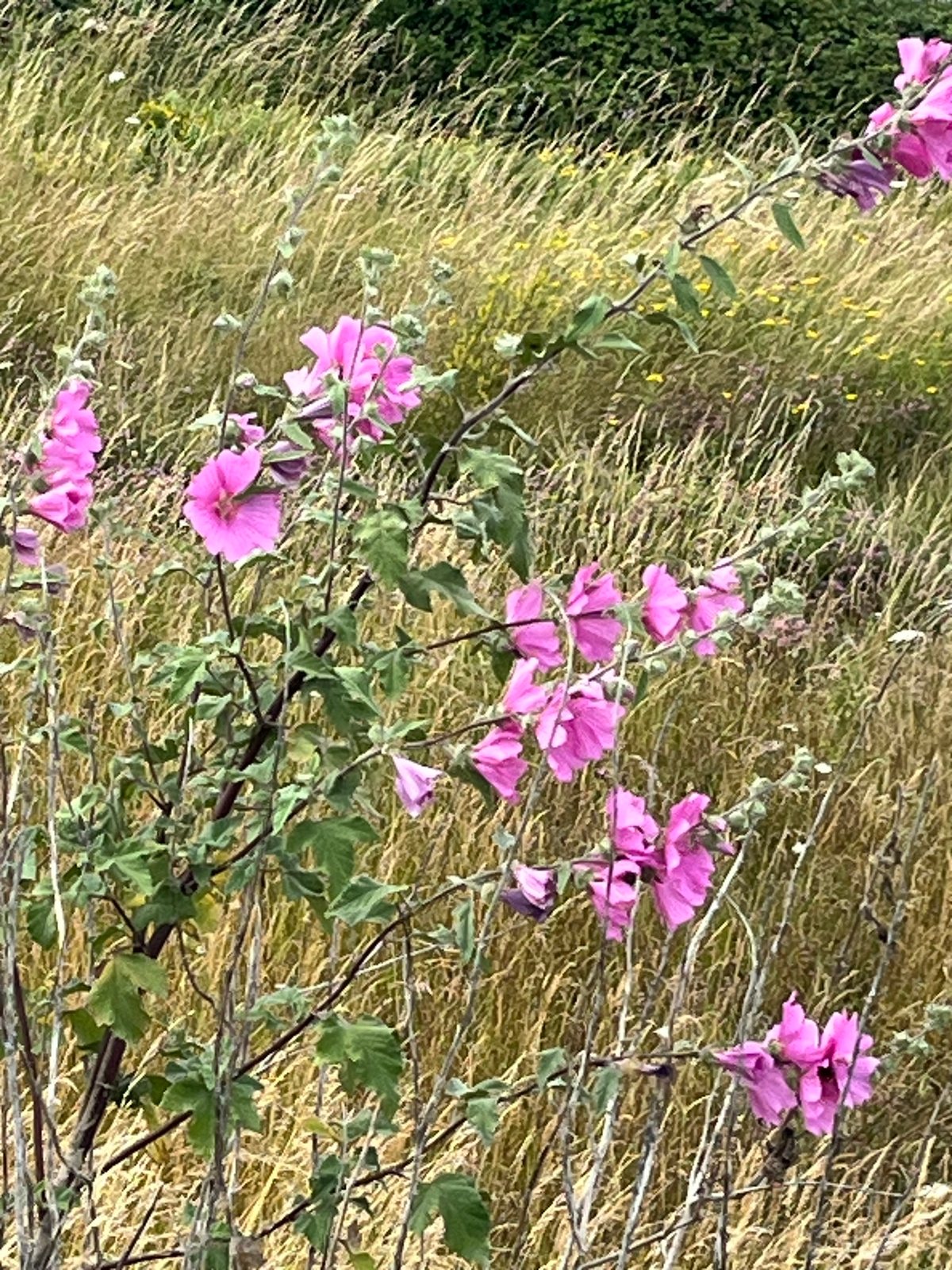
'Barnsley' is a fast-growing, woody shrub with grey-green leaves and a long display of pale pink to nearly white flowers with deep pink eyes. It fills a sunny border quickly and attracts bees, but needs annual pruning and can be short-lived, especially in cold, wet soil.
At a glance
- Sun
- Full sun; flowering and stem strength decline in shade.
- Water
- Water regularly during the first growing season. Once established, water deeply during prolonged dry spells rather than keeping the soil constantly moist.
- Soil
- Well-drained soil of moderate fertility; tolerates sandy, chalky and loamy soils. Avoid waterlogged ground, especially in winter.
- Height
- 6-8 ft (1.8-2.4 m)
- Spread
- 5-8 ft (1.5-2.4 m)
- Flowers
- Summer into autumn; open, five-petalled flowers are nearly white to pale pink with deep pink eyes, often becoming pinker as they age.
- Foliage
- Softly hairy, grey-green, shallowly lobed leaves. Usually deciduous in colder gardens but may retain some foliage in mild winters.
- Growth
- Fast; can make substantial flowering growth in one season after spring pruning.
- Care needed
- Medium
The year at a glance
- Pollinators
- Drought tolerant
- Heat tolerant
- Low allergen
| J | F | M | A | M | J | J | A | S | O | N | D | |
|---|---|---|---|---|---|---|---|---|---|---|---|---|
| Flowers | ||||||||||||
| Plant |
Northern hemisphere months. In Australia, shift them by six.
- Difficulty
- Moderate
- Toughness
- Fairly tough
Will it suit your garden?
Pick your zone, country, light and whether you have pets.
Full sun is 6 or more hours of direct sun a day, part shade 3 to 6 hours, shade under 3.
How it grows
Planting day
1.6 ft (0.5 m)
After 1 year
3 ft (0.99 m)
After 2 years
5 ft (1.5 m)
After 3 years
6 ft (2 m)
After 5 years
7 ft (2.1 m)
full size
About 3 years to full size.
From a typical nursery size, at an average rate for this kind of plant. A rule of thumb, not a forecast.
Good to know
- Cats and dogs
- Safe
- Growth rate
- Fast
Care
Jobs through the year
- WaterApr–May, Sep, every 21 days
- Water established shrubs only during prolonged dry spells; new shrubs need regular watering.
- WaterJun–Aug, every 14 days
- During prolonged drought, water established shrubs deeply; water more often through the first summer.
- PruneApr
- After severe frost risk passes, cut shoots to strong low buds on a 30–45 cm framework and remove dead wood.
- PruneJun–Sep
- Remove persistently solid dark-pink flowering shoots at their point of origin.
- MulchApr
- Apply a thin compost mulch after pruning, keeping woody stems clear.
- ProtectMay–Jun
- Install discreet supports before new shoots become tall and vulnerable to wind.
- ProtectJan–Feb, Nov–Dec
- Mulch roots against frost and use fleece during severe cold; zone 6 gardens may need a warmer sheltered site.
- Plant in spring in a sunny position sheltered from strong, cold winds.
- Water deeply through the first summer, allowing the surface soil to dry between waterings.
- Apply a thin layer of compost in spring; avoid heavy feeding, which encourages floppy growth.
- Mulch the root area, keeping mulch clear of the woody stems.
- Support young shoots with discreet stakes or a grow-through support on exposed sites.
Pruning. In early to mid-spring, once the worst frosts have passed and buds are swelling, cut the previous year's shoots back to strong low buds, usually leaving a framework 12-18 in (30-45 cm) high. Remove dead wood and cut any persistently solid dark-pink flowering shoots back to their point of origin.
Through the year
- Early spring
- Check for winter damage and wait for buds to swell before pruning.
- Mid-spring
- Prune hard to a low framework, then apply compost and mulch.
- Spring
- Plant new shrubs after severe frost risk has passed and water them in thoroughly.
- Early summer
- Install supports before new shoots become tall and heavy.
- Summer
- Water during prolonged drought and take softwood cuttings from healthy, non-flowering shoots.
- Autumn
- Remove broken stems but leave the main pruning until spring.
In the garden
- Place toward the back of a sunny mixed border for height and a long summer flower display.
- Combine with lavender, catmint and ornamental grasses for contrasting foliage and flower shapes.
- Use as an informal seasonal screen, allowing room for its broad spread.
- Plant in a sheltered coastal garden with freely draining soil.
- Use its pale flowers to link white, pink and mauve planting schemes.
Garden styles it suits: Cottage garden, English country, Coastal, Pollinator garden, Pastel border and Mediterranean.
Plant it with: Lavender, Catmint, Perennial salvia, Hardy geranium, Verbena and Feather reed grass.
Wildlife: The open flowers provide pollen and nectar for bees and other visiting insects over a long season.
Problems to watch for
- Mallow rust causes orange-brown pustules and damaged leaves: remove affected foliage and fallen leaves, improve airflow and avoid wetting the leaves when watering.
- Aphids cluster on soft shoots: wash them off with water and encourage ladybirds and other predators.
- Winter wet can cause root rot and dieback: improve drainage or move the plant to a raised position; replace plants with badly rotted roots.
- Strong winds can split or break long shoots: provide shelter and support, and prune annually to maintain a compact framework.
Safety
Not known to be toxic to people, cats, dogs or horses; no part is recognised as poisonous. It is an ornamental plant rather than a food plant, and eating plant material may still cause digestive upset.
Easily confused with
Thuringian mallow (Malva thuringiaca)
Usually has more uniformly pink flowers and a more herbaceous habit, rather than the persistent woody framework and nearly white, dark-eyed flowers of 'Barnsley'.
Annual mallow (Malva trimestris)
A non-woody annual raised from seed, usually with larger pink or white flowers; it does not form a lasting shrub.
Tree mallow (Malva arborea)
Typically has much larger, rounded leaves and smaller purple flowers with darker veins, rather than the pale flowers of 'Barnsley'.
The name
Malva is the Latin name for mallow, while 'tree mallow' refers to its tall, woody habit rather than a true tree form.
Propagation. Take softwood cuttings in late spring or early summer, or semi-ripe cuttings in late summer. Use healthy shoots with the cultivar's typical pale flowers; seedlings will not reliably retain its characteristics.
Checked against open data
- Accepted botanical name
- Malva clementii
Sources: GBIF (CC BY 4.0). The care and design notes are LandscapeGPT's own.
See it in your own yard.
Upload a photo of your yard and see it redesigned with plants that suit your climate, each checked against your zone.