Trout lily 'Pagoda'
Erythronium 'Pagoda'. Family Liliaceae. Bulb.
Also called Dog's-tooth violet 'Pagoda', Fawn lily 'Pagoda'.
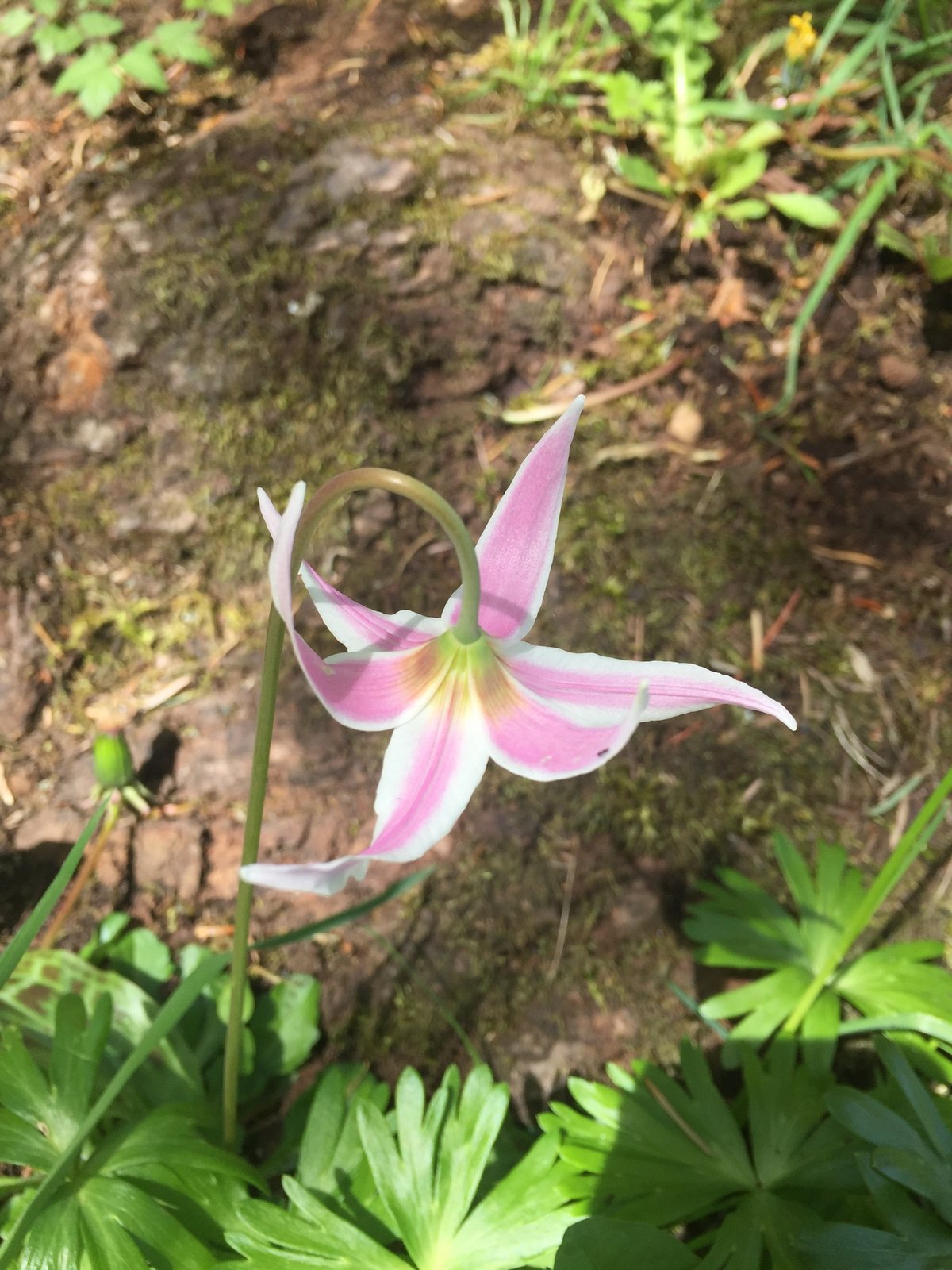
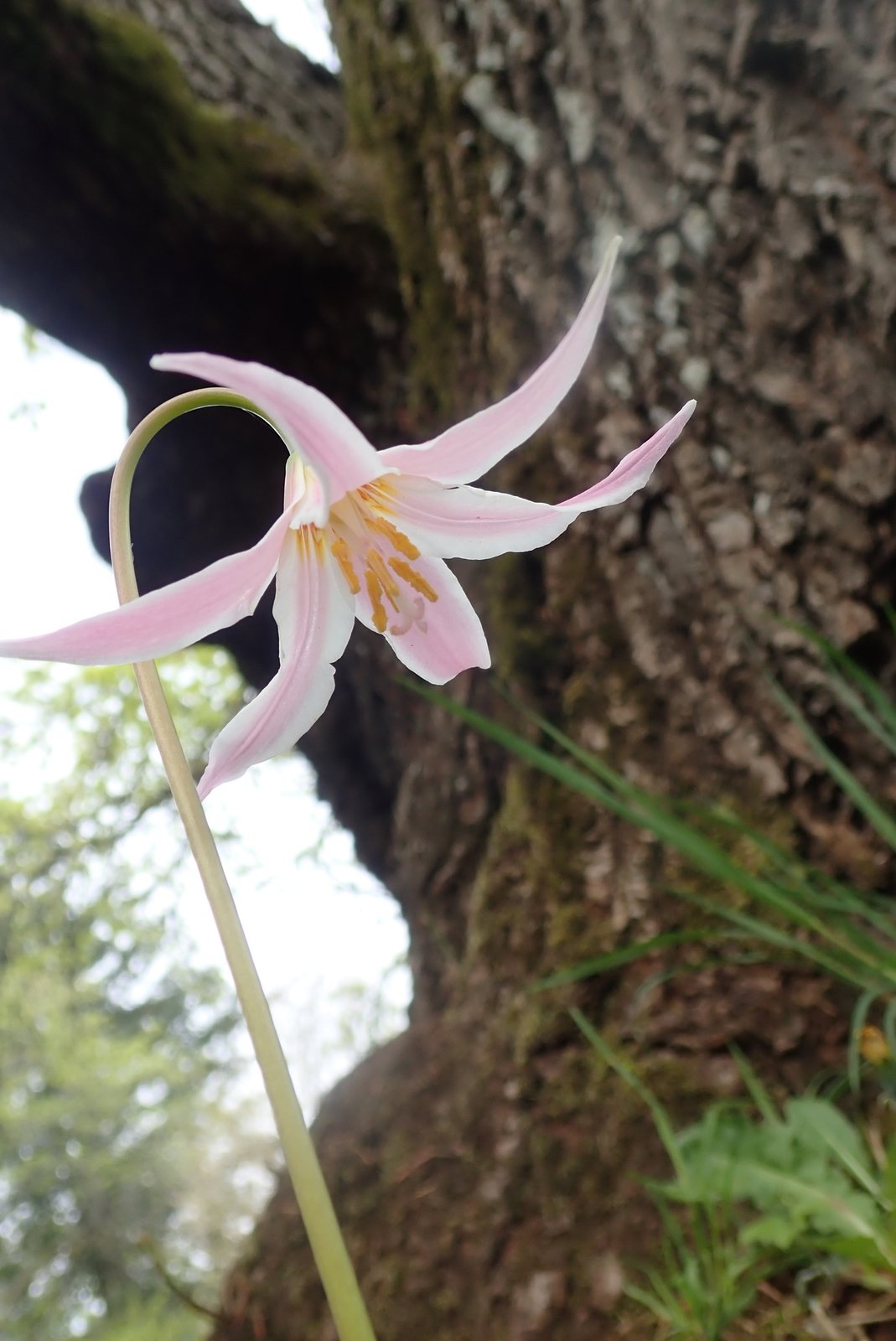
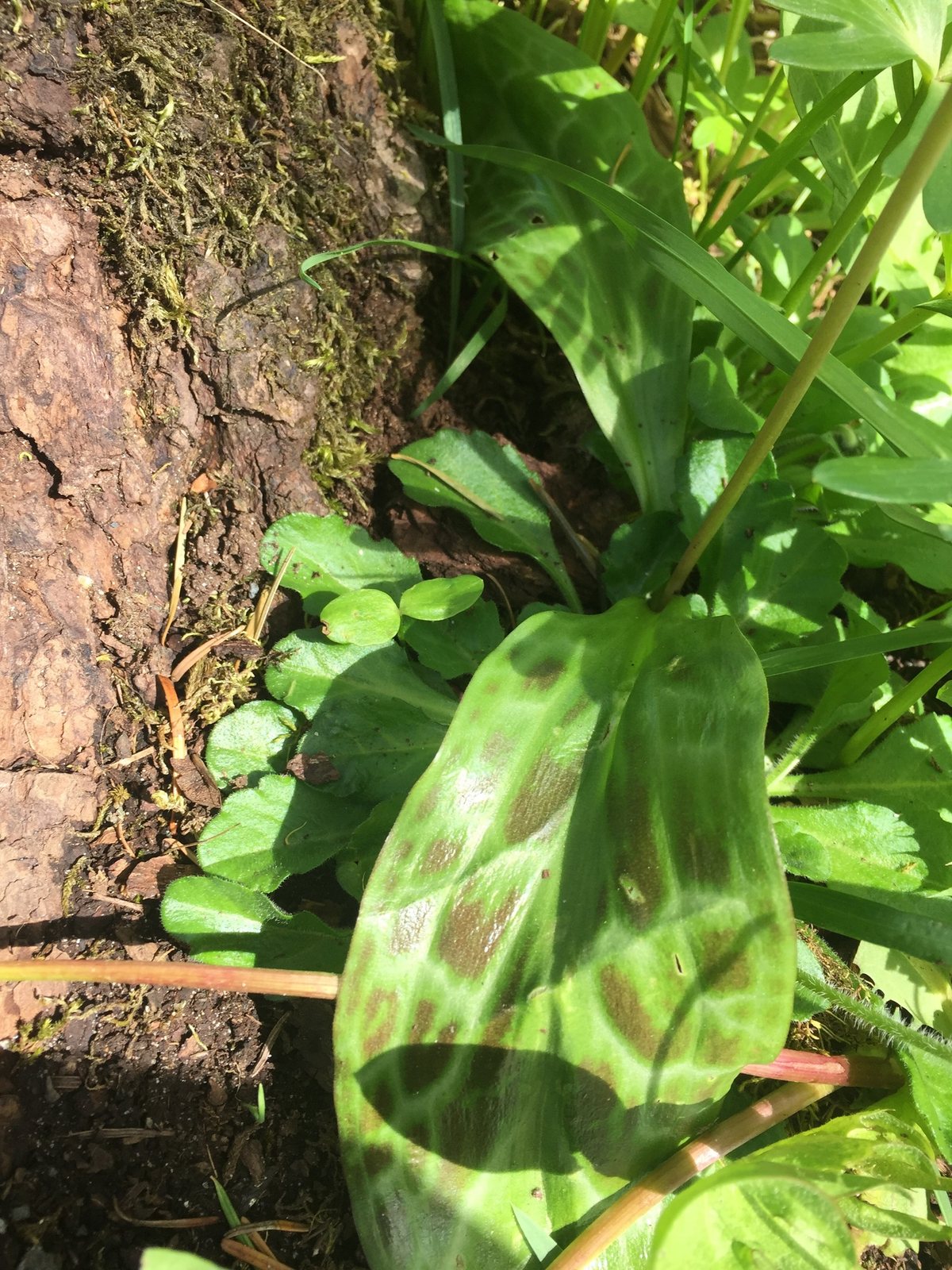
'Pagoda' is a spring-flowering bulb with nodding, pale yellow flowers, swept-back petals and broad, bronze-mottled leaves. It forms gradually expanding clumps in lightly shaded, humus-rich soil, then dies back for summer. It performs best where winters are cool and its planting site does not become hot and parched.
At a glance
- Sun
- Partial shade, ideally beneath deciduous trees or shrubs; gentle morning sun is suitable.
- Water
- Keep evenly moist during autumn root growth and spring growth and flowering. After the leaves die back, reduce watering but do not let the bulbs become completely desiccated; avoid waterlogged soil.
- Soil
- Humus-rich, well-drained soil, preferably slightly acidic to neutral. Improve sandy or heavy soil with leaf mould or well-rotted compost.
- Height
- 1-1.5 ft (0.3-0.45 m)
- Spread
- 0.5-1 ft (0.15-0.3 m), gradually widening into a colony
- Flowers
- Mid-spring; nodding, pale sulphur-yellow flowers with swept-back petals, usually several on each stem.
- Foliage
- Broad green leaves with bronze or brown mottling; emerges in spring and dies back by early summer.
- Growth
- Moderate; clumps build over several years.
- Care needed
- Low
The year at a glance
- Pollinators
- Cold hardy
- Low allergen
| J | F | M | A | M | J | J | A | S | O | N | D | |
|---|---|---|---|---|---|---|---|---|---|---|---|---|
| Flowers | ||||||||||||
| Plant |
Northern hemisphere months. In Australia, shift them by six.
- Difficulty
- Easy
- Toughness
- Fairly tough
Will it suit your garden?
Pick your zone, country, light and whether you have pets.
Full sun is 6 or more hours of direct sun a day, part shade 3 to 6 hours, shade under 3.
How it grows
Planting day
0.5 ft (0.15 m)
After 1 year
1.2 ft (0.38 m)
full size
About 1 years to full size.
From a typical nursery size, at an average rate for this kind of plant. A rule of thumb, not a forecast.
Good to know
- Cats and dogs
- Safe
- Growth rate
- Moderate
Care
Jobs through the year
- WaterMar–May, every 7 days
- Water established clumps if rain is insufficient to keep spring soil evenly moist; never saturate.
- WaterJun–Aug, every 21 days
- During dormancy, water lightly only if soil becomes extremely dry; avoid desiccating the bulbs.
- WaterSep–Nov, every 14 days
- Maintain autumn moisture during dry spells; plant new bulbs immediately and water them in.
- MulchOct–Nov
- Apply a thin layer of leaf mould or well-rotted compost.
- ProtectMar–Apr
- Inspect emerging shoots for slugs and snails and use wildlife-conscious controls if needed.
- PruneMay–Jun
- Remove foliage only once fully yellow and withered; mark dormant clumps.
- DivideAug–Sep
- Divide only crowded dormant clumps and replant immediately before roots resume growth.
- Plant bulbs promptly in autumn, about 4 in (10 cm) deep and 4-6 in (10-15 cm) apart; the unprotected bulbs dry out quickly.
- Water during dry spells while leaves are growing, without leaving the soil saturated.
- Apply a thin layer of leaf mould or well-rotted compost in autumn.
- Leave foliage in place until it has yellowed completely.
- Leave established clumps undisturbed; divide only when crowded or when you want more plants.
Pruning. No routine pruning is needed. Remove spent flower stems if desired, and clear away foliage only after it has yellowed and withered naturally.
Through the year
- Early autumn
- Plant newly purchased bulbs immediately in moist, well-drained soil in partial shade.
- Late autumn
- Top-dress with leaf mould and check that winter rain drains freely.
- Early spring
- Watch emerging shoots for slug and snail damage; water if the soil becomes dry.
- Mid-spring
- Keep soil evenly moist through flowering; remove faded flower stems if wanted.
- Early summer
- Allow leaves to yellow naturally, then remove them and mark the dormant clumps to avoid accidental digging.
- Late summer
- If necessary, lift dormant clumps, separate offsets and replant immediately before autumn root growth begins.
In the garden
- Plant in drifts beneath deciduous trees, where spring light reaches the flowers before the canopy closes.
- Combine with ferns and hostas, whose later foliage helps cover the gaps left by summer dormancy.
- Use along shaded paths so the nodding flowers and mottled leaves can be seen closely.
- Group among hellebores and other spring bulbs for a layered woodland display.
Garden styles it suits: Woodland, English country, Cottage garden, Romantic rose garden, Japanese and Pacific Northwest woodland.
Plant it with: Hellebores, Hostas, Epimediums, Japanese painted ferns, Snowdrops and Wood anemones.
Wildlife: The flowers provide pollen and nectar for visiting bees in spring.
Problems to watch for
- Slugs and snails can damage emerging leaves and flowers; inspect during damp evenings, remove pests and use wildlife-conscious slug controls where needed.
- Bulb rot occurs in waterlogged soil; improve drainage or move bulbs to a better-drained position.
- Bulbs may fail after drying out before planting; buy firm bulbs and plant immediately rather than storing them.
- Poor flowering can follow drought during spring growth or premature leaf removal; maintain spring moisture and let foliage die back naturally.
Safety
Not known to be toxic to people, cats, dogs or horses, but safety information specific to 'Pagoda' is limited. Do not treat the bulbs, leaves or flowers as food, and prevent pets from eating them.
Easily confused with
Yellow trout lily (Erythronium americanum)
Usually shorter, with one yellow flower per flowering stem; 'Pagoda' is taller and commonly carries several pale yellow flowers on each stem.
Tuolumne fawn lily (Erythronium tuolumnense)
Has plain green leaves and generally stronger yellow flowers; 'Pagoda' has bronze-mottled leaves and paler flowers.
Dog's-tooth violet (Erythronium dens-canis)
Usually bears a single pink, purple or white flower on a shorter stem, rather than several pale yellow flowers.
The name
The common name trout lily refers to the mottled leaves, which resemble a trout's markings, while dog's-tooth violet refers to the pointed, tooth-shaped bulb.
Propagation. Separate offsets from established clumps during summer dormancy and replant immediately. Division preserves 'Pagoda'; seedlings, if produced, will not reliably match the parent.
Checked against open data
- Accepted botanical name
- Erythronium
Sources: GBIF (CC BY 4.0). The care and design notes are LandscapeGPT's own.
See it in your own yard.
Upload a photo of your yard and see it redesigned with plants that suit your climate, each checked against your zone.