Trumpet gentian
Gentiana acaulis. Family Gentianaceae. Perennial.
Also called Stemless gentian, Alpine gentian.
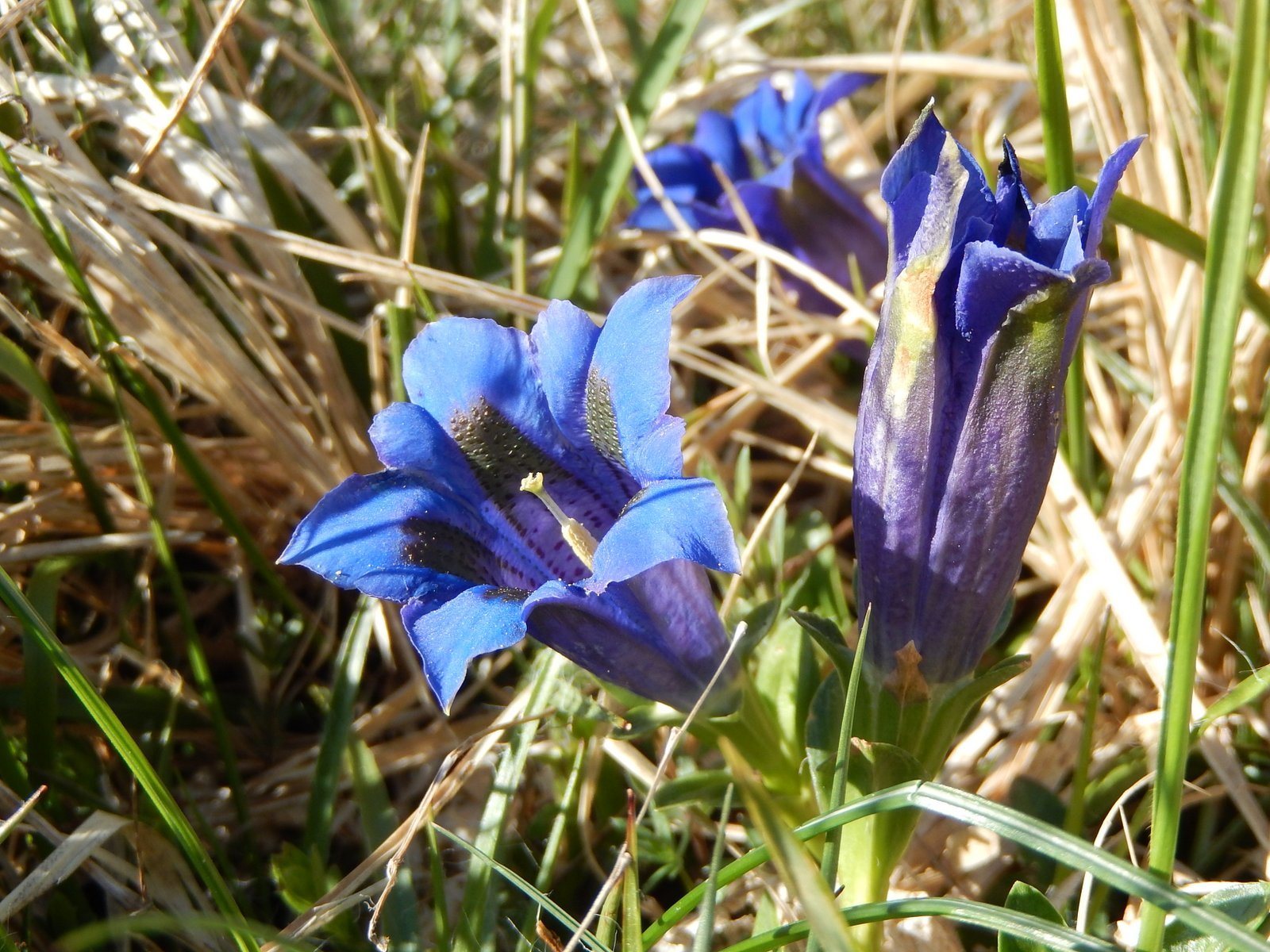
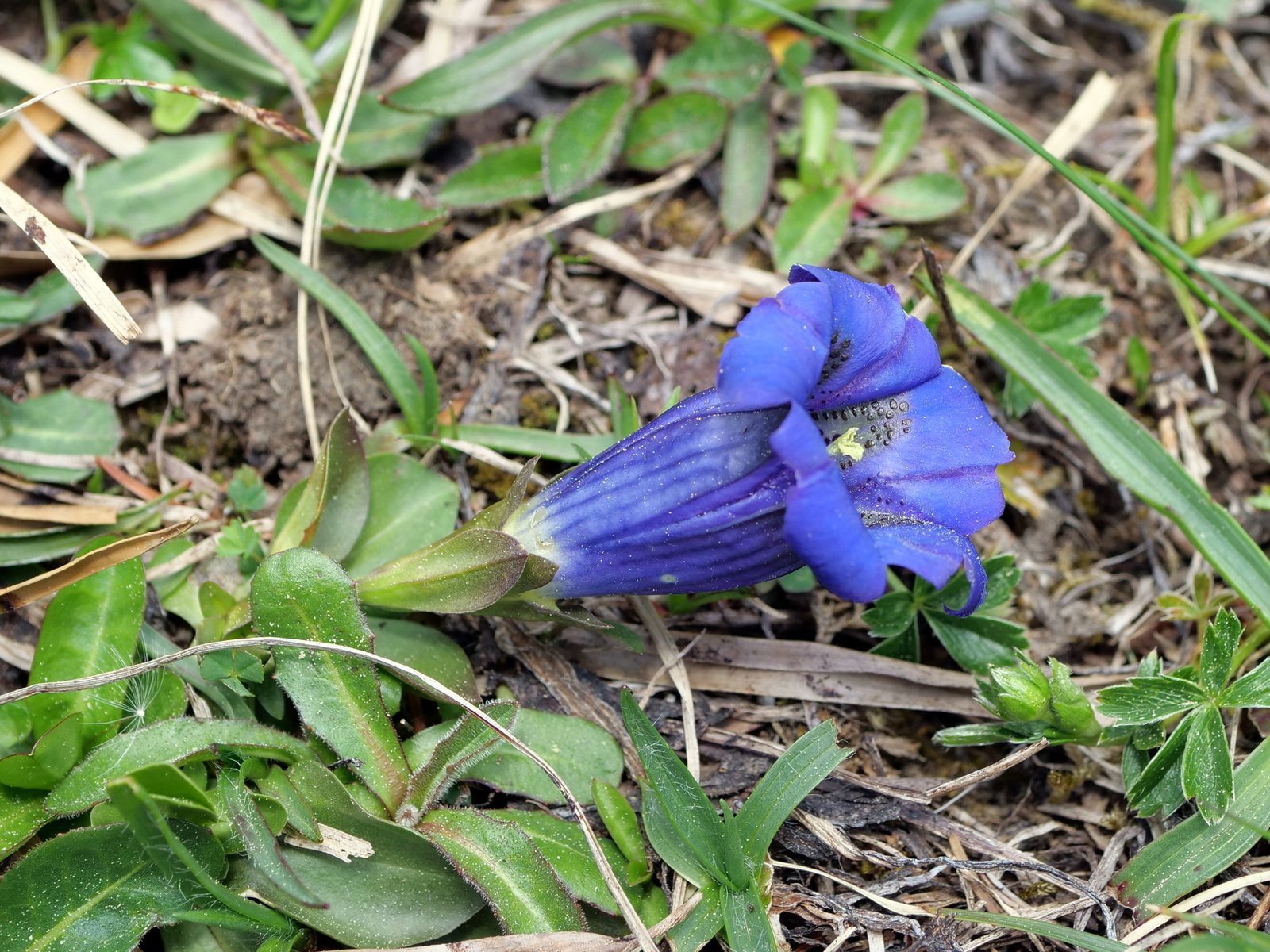
Trumpet gentian is a low, evergreen alpine perennial grown for large, deep blue trumpets that sit just above its leafy mats. It suits rock gardens and troughs where the roots stay cool and moist but water drains freely; hot, humid summers can make it difficult to keep.
At a glance
- Sun
- Full sun in cool climates; afternoon shade where summers are warmer.
- Water
- Keep evenly moist during growth, without waterlogging. Do not let the root ball dry out completely in summer.
- Soil
- Humus-rich, gritty, well-drained soil, preferably acidic to neutral. Avoid compacted clay and strongly alkaline soil.
- Height
- 0.25-0.5 ft (0.08-0.15 m)
- Spread
- 0.5-1 ft (0.15-0.3 m)
- Flowers
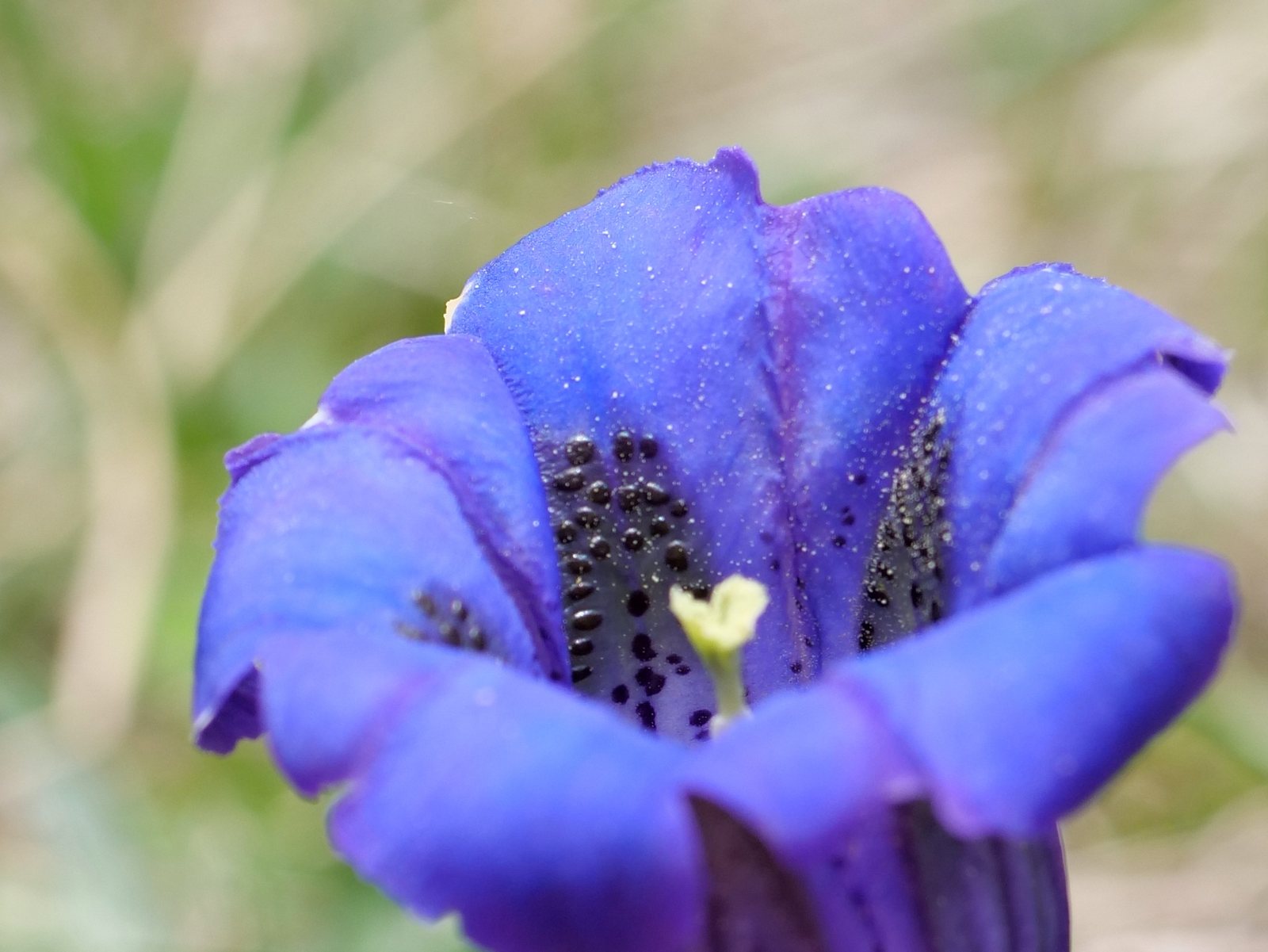
- Late spring to early summer; deep blue, upward-facing trumpets with green-spotted throats.
- Foliage
- Evergreen. Short rosettes of glossy, dark green, oval to lance-shaped leaves.
- Growth
- Slow to moderate, forming a gradually widening mat.
- Care needed
- Medium
The year at a glance
- Pollinators
- Cold hardy
- Low allergen
| J | F | M | A | M | J | J | A | S | O | N | D | |
|---|---|---|---|---|---|---|---|---|---|---|---|---|
| Flowers | ||||||||||||
| Plant |
Northern hemisphere months. In Australia, shift them by six.
- Difficulty
- Moderate
- Toughness
- Needs looking after
Will it suit your garden?
Pick your zone, country, light and whether you have pets.
Full sun is 6 or more hours of direct sun a day, part shade 3 to 6 hours, shade under 3.
How it grows
Planting day
0.4 ft (0.12 m)
full size
About 4 years to full size.
From a typical nursery size, at an average rate for this kind of plant. A rule of thumb, not a forecast.
Good to know
- Cats and dogs
- Safe
- Growth rate
- Slow
Care
Jobs through the year
- WaterMar–May, Sep–Oct, every 7 days
- Keep established root zones evenly moist when rain is insufficient; newly planted specimens need closer checks.
- WaterJun–Aug, every 4 days
- Water if the root zone begins drying, avoiding repeated soaking of the crown and any waterlogging.
- MulchMar–Apr
- Add a little leaf mould around mats and maintain a thin gravel layer beneath lower leaves.
- FeedApr
- Use a weak balanced feed only if growth is poor; otherwise omit feeding.
- PruneMar
- Pick out dead or damaged leaves without cutting healthy rosettes.
- DivideMar–Apr
- Divide only crowded established mats, keeping roots attached to every section.
- DeadheadJun–Jul
- Remove faded flowers unless seed is wanted.
- ProtectJun–Aug
- Provide afternoon shade in warm weather and keep roots cool.
- ProtectJan–Feb, Oct–Dec
- Clear fallen leaves and maintain free drainage around the evergreen mats.
- Plant with the crown at soil level in a well-drained pocket or alpine trough.
- Water during dry spells, especially in spring and summer; avoid repeatedly soaking the crown.
- Apply a light dressing of leaf mould around established plants in spring, keeping it off the rosettes.
- Use a thin gravel mulch to keep lower leaves clear of wet soil.
- Avoid heavy feeding; use a weak balanced feed in spring only if growth is poor.
- Divide crowded mats carefully in early spring, keeping roots attached to each section.
Pruning. Remove faded flowers after blooming unless you want seed. In early spring, pick out dead or damaged leaves without cutting back healthy rosettes.
Through the year
- Early spring
- Clear dead leaves, check drainage and divide established mats if needed.
- Spring
- Plant new specimens and add a light dressing of leaf mould around, not over, the crowns.
- Late spring
- Keep soil evenly moist while flower buds develop and plants bloom.
- Early summer
- Remove spent flowers unless saving seed.
- Summer
- Water during dry spells and protect trough-grown plants from strong afternoon heat.
- Autumn
- Remove fallen leaves from the mats and make sure drainage holes and channels remain clear.
In the garden
- Plant in rock-garden crevices where the blue flowers can be seen close up.
- Grow in an alpine trough with small primroses and mossy saxifrages.
- Edge a cool, well-drained path with small groups that form low evergreen mats.
- Use beside rocks at the front of an acidic planting, away from larger plants that would shade or smother it.
Garden styles it suits: Alpine rock garden, Mountain lodge, Dry gravel garden, Blues and silvers and Small-space.
Plant it with: Alpine primroses, Mossy saxifrages, Dwarf rhododendrons and Spring heath.
Wildlife: The flowers provide nectar and pollen for visiting bees, particularly bumblebees.
Problems to watch for
- Slugs and snails chew leaves and buds: remove hiding places, inspect after dark and use iron-phosphate bait according to its label if needed.
- Crown or root rot in wet soil: improve drainage, keep mulch off the crown and avoid standing containers in saucers of water.
- Scorched foliage or summer decline: provide afternoon shade and keep the roots cool and evenly moist.
- Poor flowering: increase light in cool climates, avoid high-nitrogen feeds and check that surrounding plants are not crowding the mat.
Safety
Not known to be toxic to people, cats, dogs or horses. Species-specific safety information is limited, so do not treat the leaves, flowers or roots as edible or use them for home remedies.
Easily confused with
Clusius' gentian (Gentiana clusii)
Very similar blue trumpets, but their throats lack the conspicuous green spots of trumpet gentian. Its leaves are generally narrower and firmer, and it naturally favours limestone soils.
Chinese autumn gentian (Gentiana sino-ornata)
Flowers mainly in autumn rather than late spring and has narrow, grass-like leaves along trailing stems instead of broad, compact rosettes.
The name
The species name acaulis means 'stemless', referring to its very short flower stalks, while trumpet gentian describes the shape of its flowers.
Propagation. Divide established mats in early spring, taking rooted sections and disturbing the parent plant as little as possible. Sow fresh seed in a gritty seed mix and leave outdoors in a sheltered place for natural winter chilling; germination can be slow and uneven.
Checked against open data
- Accepted botanical name
- Gentiana acaulis
- Native range
- Albania, Austria, Bulgaria, Czechoslovakia, France, Germany, Italy, Romania, Spain, Switzerland, Ukraine and Yugoslavia.
- Measured
- Soil pH 4 to 4.5. Average height 7 cm.
Sources: GBIF (CC BY 4.0) and Trefle (CC BY 4.0). The care and design notes are LandscapeGPT's own.
See it in your own yard.
Upload a photo of your yard and see it redesigned with plants that suit your climate, each checked against your zone.