Trumpet vine 'Madame Galen'
Campsis × tagliabuana 'Madame Galen'. Family Bignoniaceae. Climber.
Also called Trumpet creeper 'Madame Galen', Campsis × tagliabuana 'Madame Galen'.
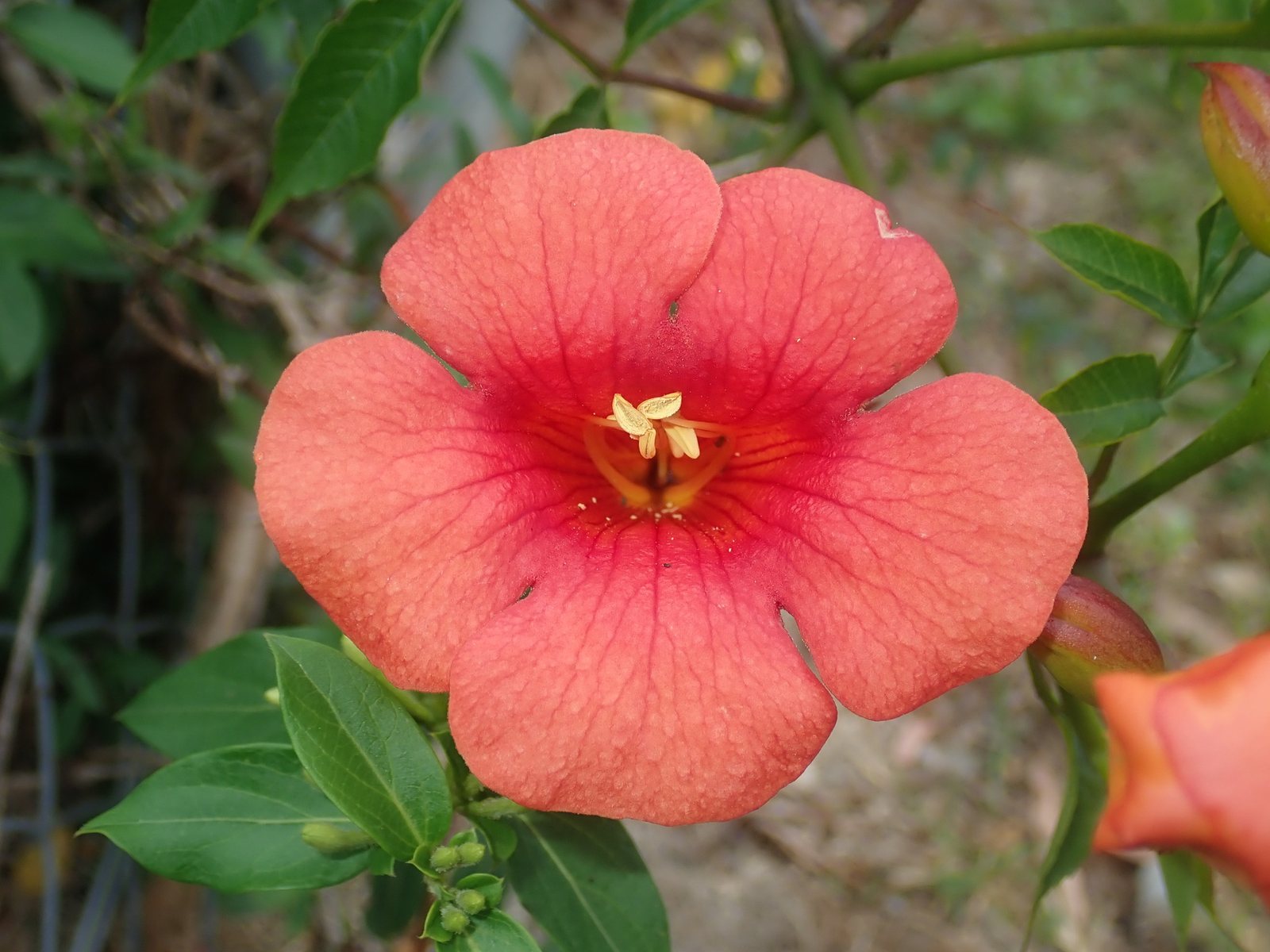
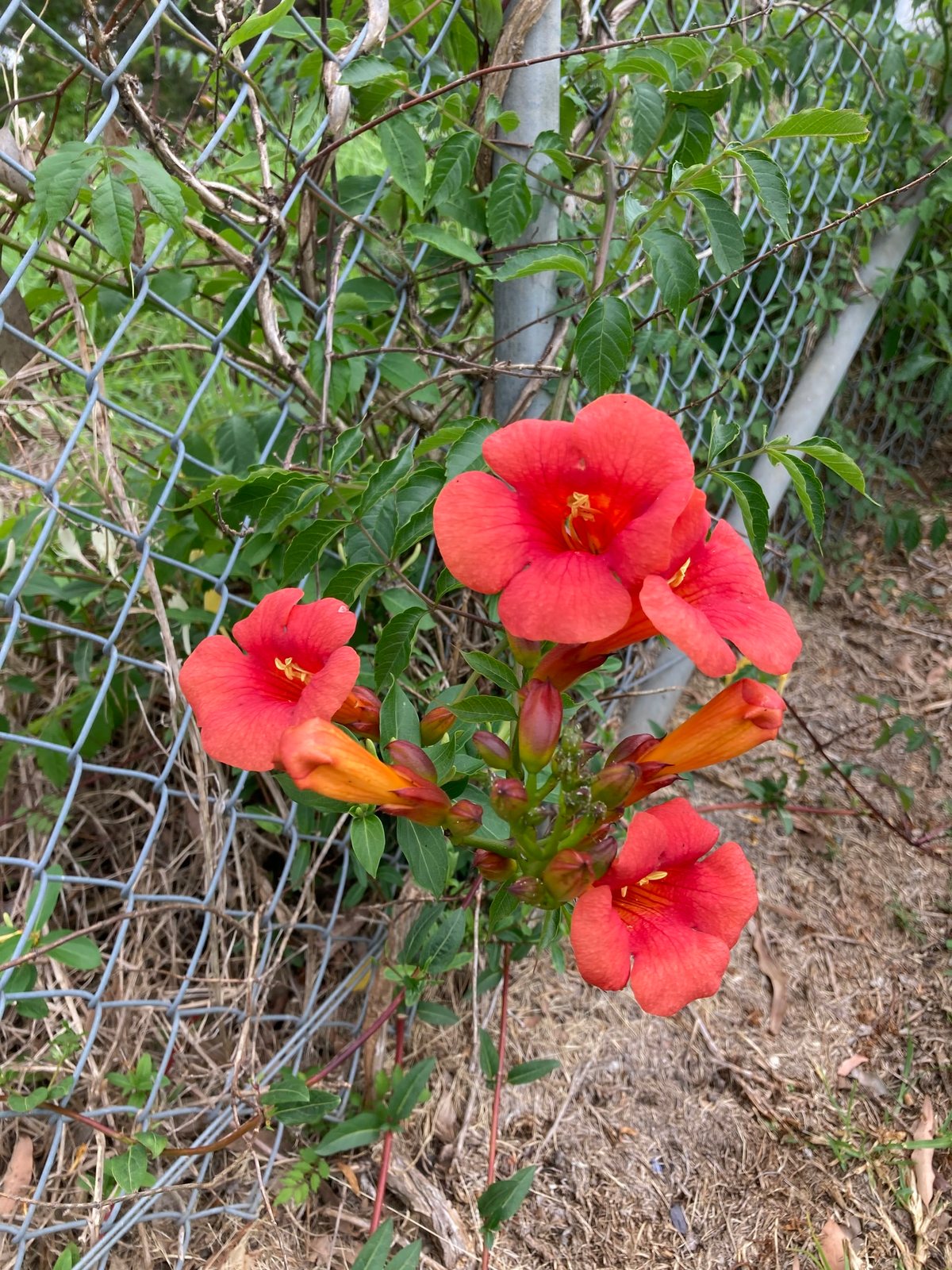
This vigorous, deciduous climber bears large clusters of salmon-orange to reddish-orange trumpet flowers in summer and early autumn. Grow it on a substantial pergola or sunny wall where its woody framework has room to develop; it needs regular pruning and control of root suckers.
At a glance
- Sun
- Full sun; a warm, sheltered, sunny wall gives the best flowering in cooler climates.
- Water
- Water regularly while establishing. Once rooted, it tolerates short dry spells, but water deeply during prolonged drought.
- Soil
- Fertile, well-drained soil; tolerates clay, loam and sandy soil provided it is not waterlogged.
- Height
- 20-30 ft (6-9 m)
- Spread
- 6-12 ft (1.8-3.7 m), with root suckers potentially spreading farther
- Flowers
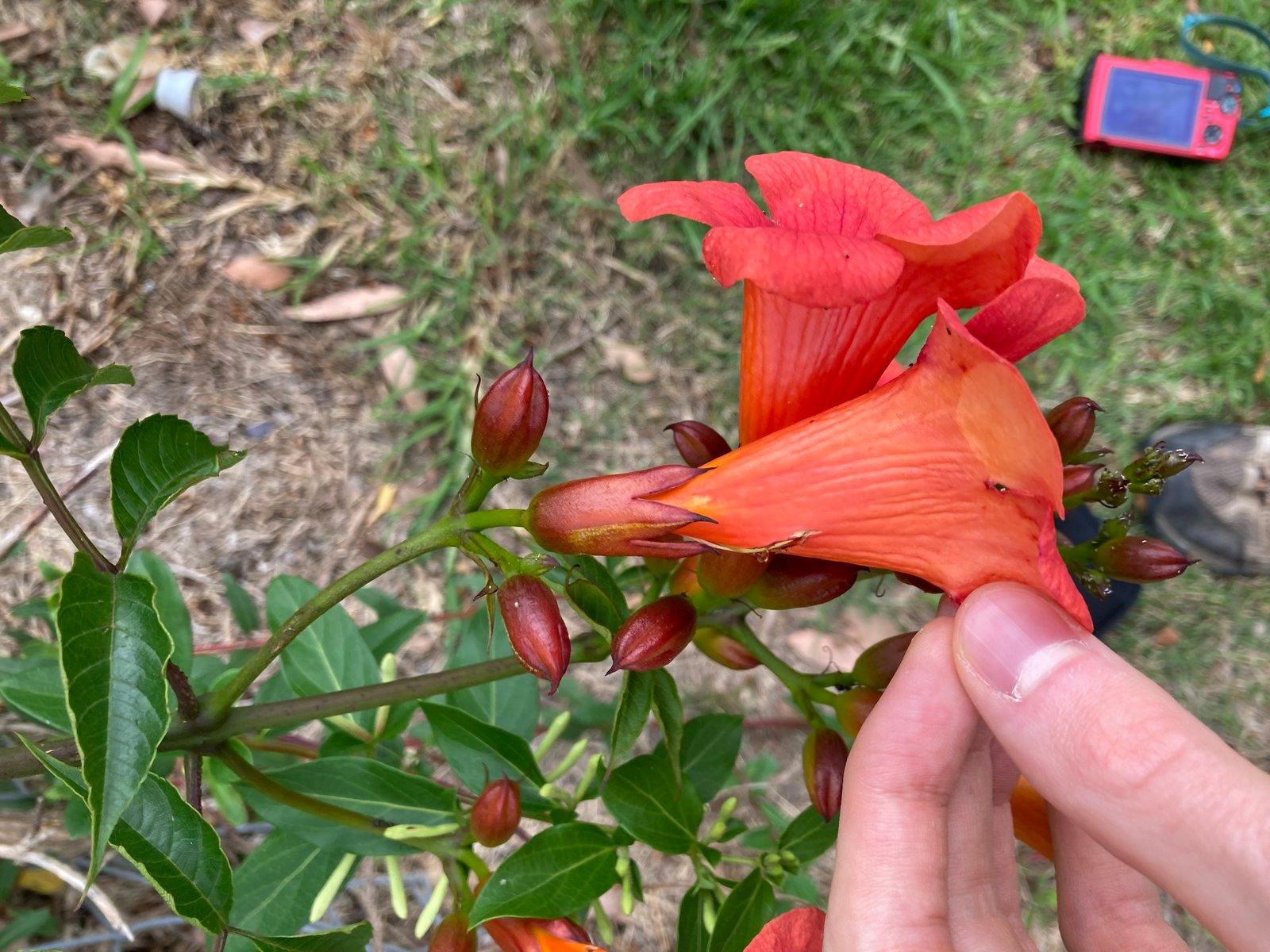
- Summer to early autumn; large salmon-orange to reddish-orange trumpets with deeper orange throats.
- Foliage
- Opposite, pinnate leaves with toothed, dark green leaflets; leaves fall in autumn.
- Growth
- Fast once established
- Care needed
- High
The year at a glance
- Pollinators
- Deer resistant
- Drought tolerant
- Heat tolerant
- Wildlife
- Low allergen
| J | F | M | A | M | J | J | A | S | O | N | D | |
|---|---|---|---|---|---|---|---|---|---|---|---|---|
| Flowers | ||||||||||||
| Fruit | ||||||||||||
| Plant |
Northern hemisphere months. In Australia, shift them by six.
- Difficulty
- Hard
- Toughness
- Very tough
Will it suit your garden?
Pick your zone, country, light and whether you have pets.
Full sun is 6 or more hours of direct sun a day, part shade 3 to 6 hours, shade under 3.
How it grows
Planting day
2 ft (0.6 m)
After 1 year
3 ft (1.1 m)
After 2 years
5 ft (1.5 m)
After 3 years
6 ft (1.8 m)
full size
About 3 years to full size.
From a typical nursery size, at an average rate for this kind of plant. A rule of thumb, not a forecast.
Good to know
- Cats and dogs
- Mildly toxic: may upset a stomach
- In the garden
- Spreads vigorously: plan to contain it.
- Growth rate
- Fast
Care
Jobs through the year
- WaterApr–May, Sep–Oct, every 14 days
- Water established plants deeply only during prolonged dry spells; water regularly for the first two seasons.
- WaterJun–Aug, every 7 days
- During prolonged drought, water established roots deeply; young plants need more consistent moisture.
- PruneFeb–Mar
- Shorten last year's side shoots to two or three buds; retain the permanent framework.
- PruneMay–Sep, every 14 days
- Remove suckers at their origin and redirect or shorten shoots approaching roofs and gutters.
- MulchApr
- Spread 5–8 cm of mulch over roots, keeping it clear of stems.
- ProtectMar, May–Jun
- Check strong supports and anchors, and tie young stems into the framework.
- PruneSep–Oct
- Remove unwanted seed pods and any rooted shoots outside the planting area.
- MulchNov
- Top up root-zone mulch in colder gardens without covering the stems.
- Provide a strong pergola or firmly anchored wires, and tie in young stems to build a permanent framework.
- Water deeply during the first two growing seasons and during prolonged dry weather.
- Apply a 2-3 in (5-8 cm) mulch in spring, keeping it clear of the main stems.
- Avoid high-nitrogen feeds, which encourage leafy growth at the expense of flowers.
- Remove root suckers promptly and keep shoots away from gutters, roof spaces and damaged masonry.
Pruning. In late winter or early spring, shorten the previous year's side shoots to two or three buds from the permanent framework; flowers form on new growth. Remove dead or overcrowded stems and shorten unwanted summer growth as needed.
Through the year
- Late winter
- Prune side shoots back to two or three buds and inspect the support before growth starts.
- Spring
- Plant once severe frost has passed, mulch the root area and water new plants thoroughly.
- Late spring
- Tie in new shoots and remove suckers emerging beyond the intended planting area.
- Summer
- Water during prolonged drought and redirect shoots before they reach roofs or gutters.
- Early autumn
- Remove unwanted seed pods and check nearby beds for rooted shoots or suckers.
- Late autumn
- After leaf fall, check ties and anchors and renew root-zone mulch in colder gardens.
In the garden
- Train over a substantial pergola to create summer shade and an overhead display of orange flowers.
- Grow against a sunny brick wall on dedicated supports for height and warmth-loving flowers.
- Use on a freestanding screen well away from house gutters and delicate structures.
- Pair with blue-flowered perennials and ornamental grasses for a strong late-summer colour contrast.
Garden styles it suits: Mediterranean, Cottage garden, Traditional, Hot border, Wildlife garden and Romantic rose garden.
Plant it with: Russian sage, Catmint, English lavender, Purple coneflower, Black-eyed Susan and Feather reed grass.
Wildlife: Flowers attract hummingbirds where they occur in North America, and some bees visit the blooms. The dense woody framework can provide shelter for birds.
Problems to watch for
- Few flowers: provide more sun and warmth, avoid nitrogen-rich feeding and prune in late winter rather than removing flowering shoots in summer; young plants may take several years to flower.
- Unwanted suckers: remove shoots at their point of origin and monitor surrounding ground regularly; cutting or disturbing roots can encourage more shoots.
- Aphids: wash colonies from young growth with water and encourage ladybirds and other predators.
- Scale insects: inspect woody stems, remove small infestations by hand and use a locally approved horticultural oil according to its label if needed.
Safety
Sap and plant contact can irritate human skin, so wear gloves when pruning. Campsis is reported to cause stomach upset if eaten, but reliable toxicity information specific to this hybrid in cats, dogs and horses is limited; keep leaves, flowers and other plant parts out of their feed and seek medical or veterinary advice after ingestion.
Where it spreads. Can spread aggressively by root suckers in warm and temperate gardens in the United States, southern Canada, the United Kingdom and Australia. Regional invasive listings often concern its parent, Campsis radicans, rather than this named hybrid; check local guidance before planting near natural areas.
Easily confused with
American trumpet vine (Campsis radicans)
Usually has narrower, more tubular flowers and more abundant aerial rootlets; 'Madame Galen' generally has larger, more flared flowers.
Chinese trumpet vine (Campsis grandiflora)
Has broadly flared orange flowers and fewer aerial rootlets; the hybrid is intermediate between this species and American trumpet vine, so flowers alone may not give a certain identification.
Cape honeysuckle (Tecomaria capensis)
Usually an evergreen or semi-evergreen scrambling shrub in mild climates, with smaller leaflets and narrower, curved orange flowers rather than the broad trumpets of 'Madame Galen'.
The name
Campsis comes from the Greek for bending, referring to the curved stamens, while trumpet vine describes the shape of the flowers.
Propagation. Take semi-ripe cuttings in summer, layer a low stem, or take root cuttings during dormancy. Use vegetative propagation to retain the cultivar; seedlings will not reliably match it.
Checked against open data
- Accepted botanical name
- Campsis tagliabuana
Sources: GBIF (CC BY 4.0). The care and design notes are LandscapeGPT's own.
See it in your own yard.
Upload a photo of your yard and see it redesigned with plants that suit your climate, each checked against your zone.