Tulip 'Princess Irene'
Tulipa 'Princess Irene'. Family Liliaceae. Bulb.
Also called Tulip 'Prinses Irene', Triumph tulip 'Princess Irene'.
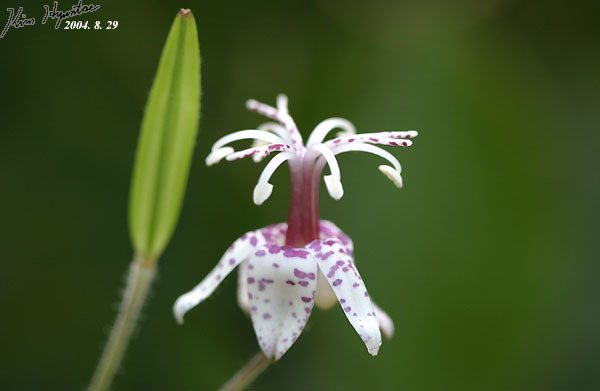
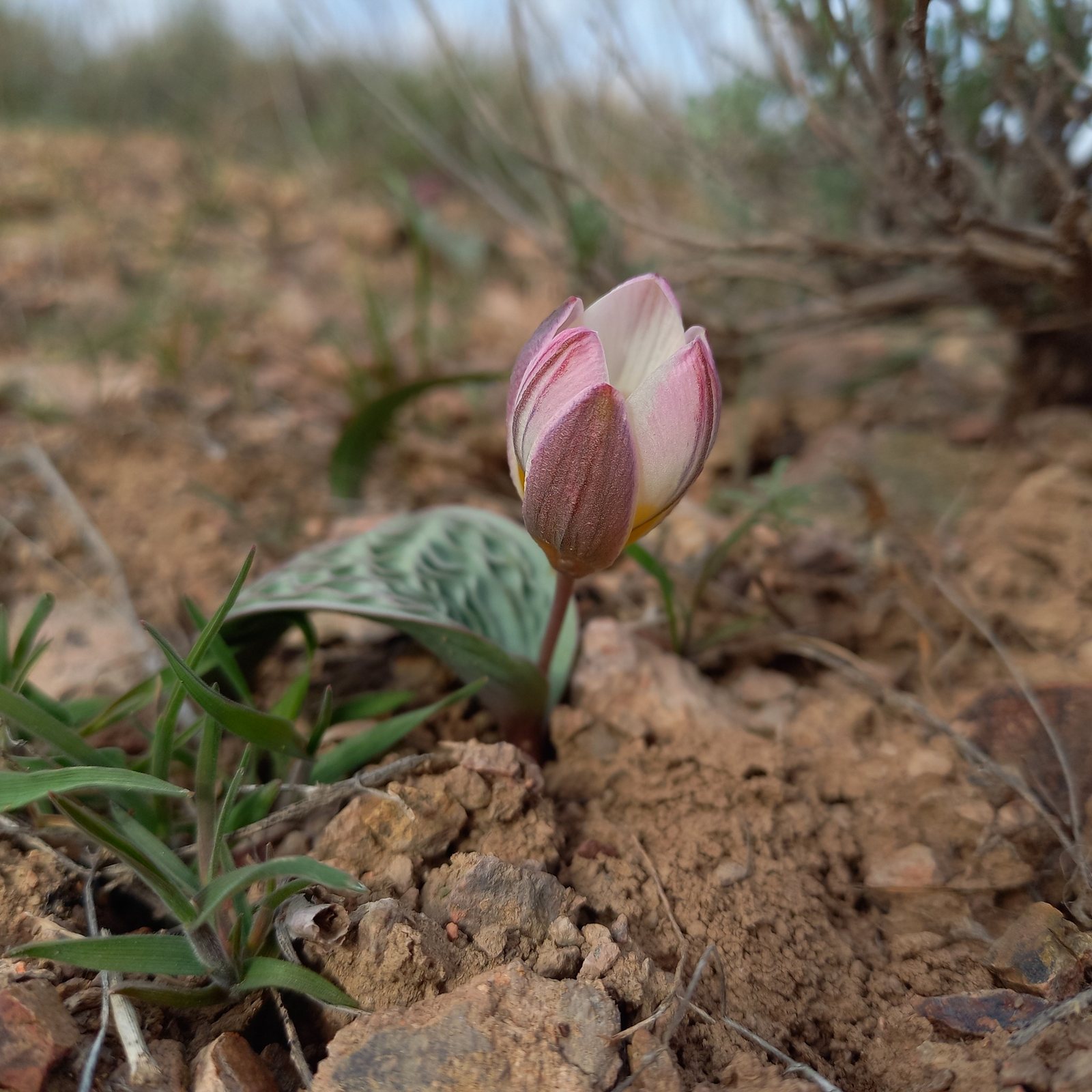
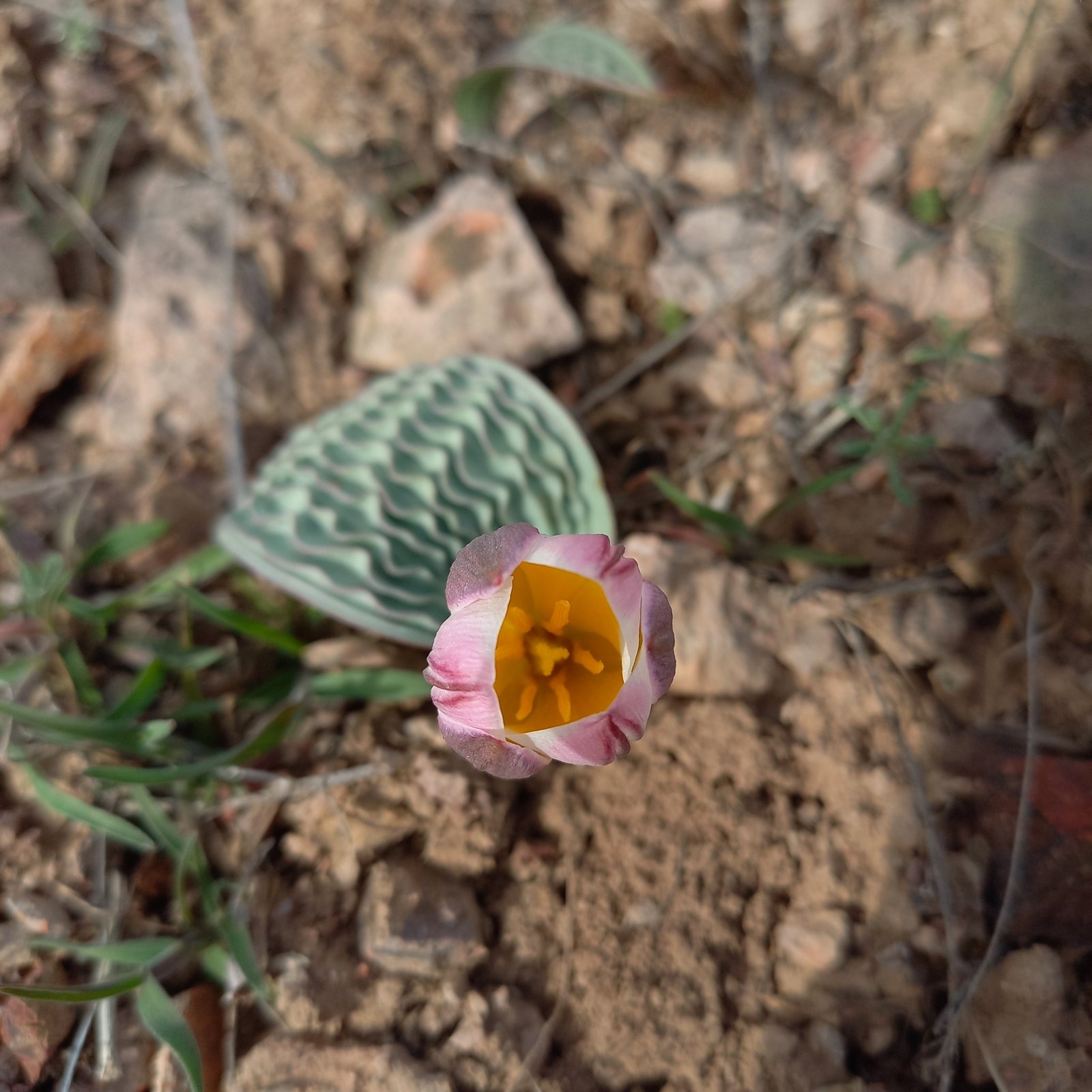
'Princess Irene' is a compact Triumph tulip with fragrant orange flowers marked by purple flames. Gardeners grow it for mid-spring colour in borders and containers, although repeat flowering can decline and bulbs are often replaced for reliable displays.
At a glance
- Sun
- Full sun; light afternoon shade is useful where spring temperatures rise quickly.
- Water
- Keep moderately moist during active growth, without waterlogging. Once the leaves die back, bulbs need relatively dry summer conditions.
- Soil
- Fertile, well-drained soil; neutral to slightly alkaline is ideal. Avoid heavy soil that stays wet through winter or summer dormancy.
- Height
- 0.8-1.2 ft (0.25-0.35 m)
- Spread
- 0.3-0.5 ft (0.1-0.15 m) per bulb
- Flowers
- Mid-spring; orange, cup-shaped flowers with purple flames and a light fragrance.
- Foliage
- Broad, upright, grey-green leaves that yellow and die back after flowering.
- Growth
- Fast seasonal growth; reaches flowering height in one spring.
- Care needed
- Medium
The year at a glance
- Cold hardy
- Low allergen
- Fragrant
| J | F | M | A | M | J | J | A | S | O | N | D | |
|---|---|---|---|---|---|---|---|---|---|---|---|---|
| Flowers | ||||||||||||
| Plant |
Northern hemisphere months. In Australia, shift them by six.
- Difficulty
- Moderate
- Toughness
- Fairly tough
Will it suit your garden?
Pick your zone, country, light and whether you have pets.
Full sun is 6 or more hours of direct sun a day, part shade 3 to 6 hours, shade under 3.
How it grows
Planting day
0.5 ft (0.15 m)
After 1 year
1 ft (0.3 m)
full size
Full size in one season.
From a typical nursery size, at an average rate for this kind of plant. A rule of thumb, not a forecast.
Good to know
- Cats and dogs
- Toxic
- Growth rate
- Fast
Care
Jobs through the year
- WaterFeb–Mar, every 14 days
- Water established bulbs only if soil dries during emerging growth.
- WaterApr–May, every 7 days
- Water during dry spells while foliage is green; stop as leaves yellow.
- WaterOct–Nov, every 14 days
- Water newly planted bulbs in, then water only if autumn rooting soil becomes dry.
- FeedFeb–Mar
- Apply balanced bulb fertilizer once as shoots emerge, following the label.
- DeadheadApr–May, every 7 days
- Remove faded flower heads before pods develop; retain stems and leaves.
- PruneMay–Jun
- Remove foliage only once fully yellow and easily detached.
- ProtectJun–Aug
- Keep dormant bulbs dry; lift and store cool, dry and airy if the bed stays wet.
- ProtectOct–Dec
- Secure mesh against digging rodents; adjust it before shoots emerge.
- Plant in autumn, about 6-8 in (15-20 cm) deep and 4-6 in (10-15 cm) apart.
- Water after planting, then water during dry spells while leaves and flowers are growing.
- Apply a balanced bulb fertiliser as shoots emerge, following the label rate.
- Leave foliage intact until it has yellowed naturally so the bulbs can rebuild reserves.
- Where summers are wet, lift bulbs after foliage dies, dry them, and store somewhere cool, dry and ventilated until autumn.
- In mild-winter areas, use suitably pre-chilled bulbs; reliable repeat flowering is unlikely without sufficient winter cold.
Pruning. Remove faded flower heads before seed pods develop, leaving the stems and leaves. Cut away foliage only when it is fully yellow and comes away easily.
Through the year
- Autumn
- Plant bulbs once the soil has cooled; use containers with drainage holes or a well-drained border.
- Winter
- Check that pots drain freely and protect planted bulbs from squirrels or other digging animals.
- Early spring
- Feed emerging shoots and water if the soil becomes dry.
- Mid-spring
- Enjoy the flowers, then remove faded heads before seed pods form.
- Late spring
- Keep leaves intact and water during dry weather until they begin to yellow.
- Summer
- Keep dormant bulbs relatively dry, or lift and store them if the planting site stays wet.
In the garden
- Plant in repeated groups through a sunny border for a clear rhythm of orange and purple.
- Use in containers near paths or seating where the flower markings and fragrance can be appreciated.
- Combine with purple violas or grape hyacinths to echo the dark markings.
- Plant among later-growing perennials whose foliage will conceal the tulips as they die back.
Garden styles it suits: Cottage garden, English country, Formal, Modern courtyard, Hot border and Sensory garden.
Plant it with: Grape hyacinths, Violas, Forget-me-nots, Wallflowers, Catmint and Hardy geraniums.
Wildlife: Flowers may attract visiting bees, but this cultivated tulip is not a dependable high-value wildlife plant. Deer, rabbits and rodents may eat flowers, leaves or bulbs.
Problems to watch for
- Tulip fire causes distorted shoots and spotted or scorched-looking leaves and flowers: remove affected plants and bulbs, discard debris, and avoid replanting tulips in that soil for at least three years.
- Bulb rot develops in waterlogged soil: improve drainage, discard soft or mouldy bulbs, and keep dormant bulbs relatively dry.
- Squirrels and rodents dig up or eat bulbs: protect newly planted areas with securely fixed wire mesh, removing or adjusting it before shoots emerge.
- Poor flowering in later years often follows insufficient winter chilling, early leaf removal or bulb decline: retain foliage until yellow, provide suitable winter conditions, or replace bulbs.
Safety
Toxic to cats, dogs, horses and people if eaten, especially the bulbs. Ingestion can cause vomiting, diarrhoea and drooling; large amounts can cause more serious poisoning. Bulb sap can also irritate skin, so wear gloves if sensitive and keep bulbs away from children and animals.
Easily confused with
Tulip 'Orange Emperor' (Tulipa 'Orange Emperor')
Usually flowers earlier, with larger, more open orange flowers and broader leaves; it lacks the distinctive purple flames of 'Princess Irene'.
The name
The cultivar is named after Princess Irene of the Netherlands; 'Prinses Irene' is the Dutch form of the name.
Propagation. Separate offsets from lifted bulbs after the foliage has died back, then replant in autumn. Small offsets may need several years to flower; seed will not reliably reproduce this cultivar.
Checked against open data
- Accepted botanical name
- Tulipa
Sources: GBIF (CC BY 4.0). The care and design notes are LandscapeGPT's own.
See it in your own yard.
Upload a photo of your yard and see it redesigned with plants that suit your climate, each checked against your zone.