Turkish sage
Phlomis russeliana. Family Lamiaceae. Perennial.
Also called Hardy Jerusalem sage.
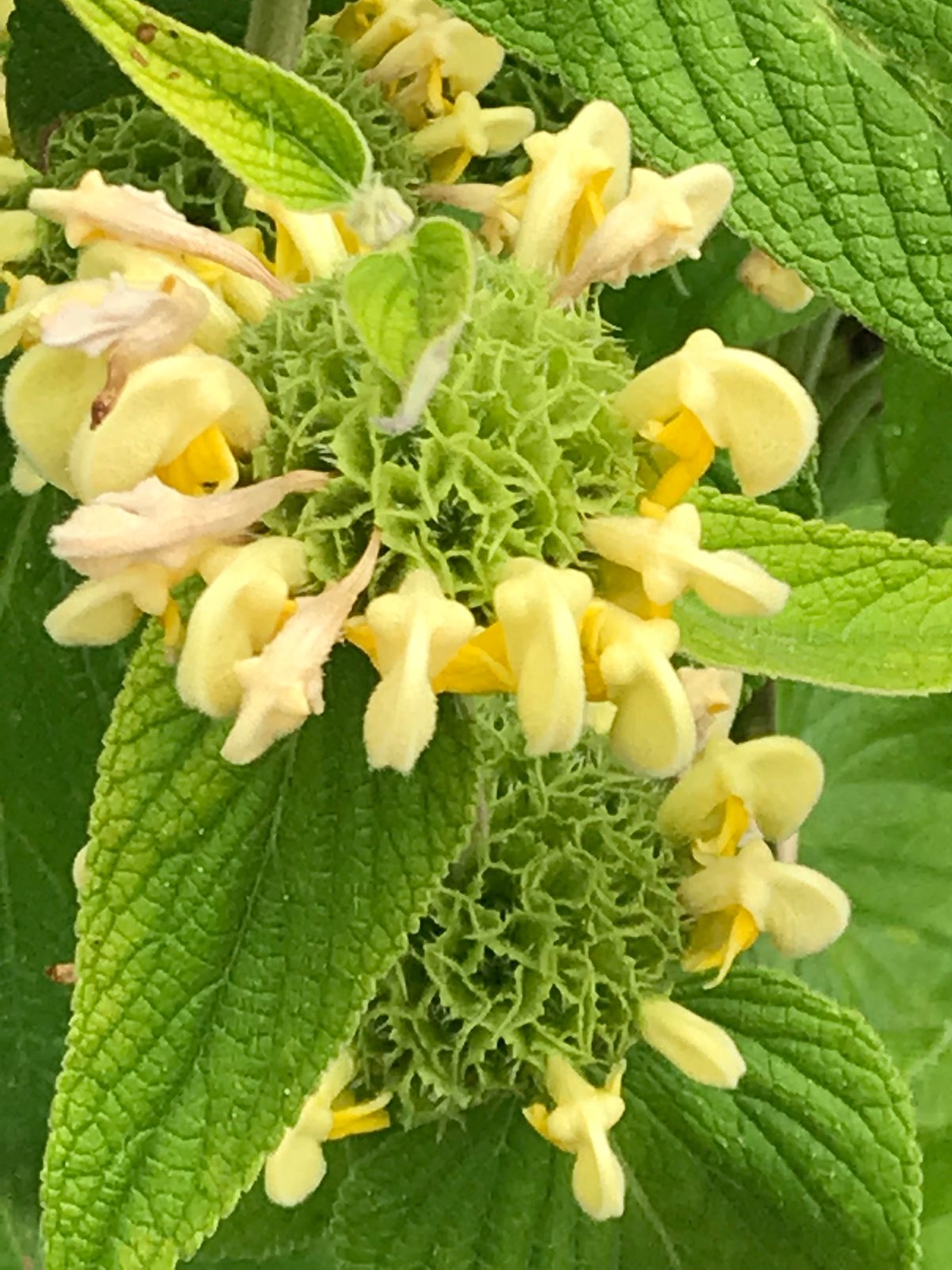
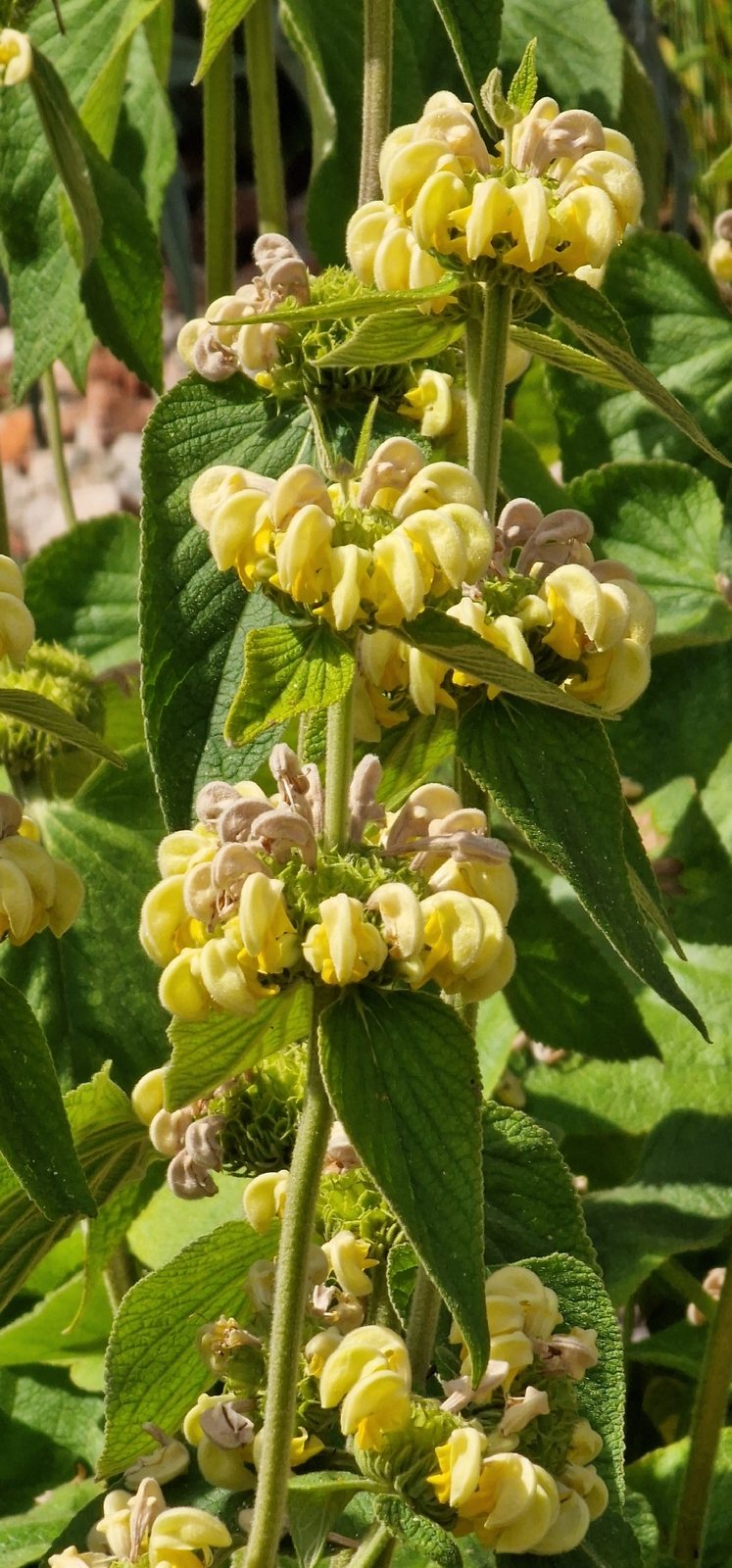
Turkish sage forms spreading clumps of broad, softly hairy leaves, with pale yellow flowers arranged in tiers around upright stems. Gardeners grow it for its bold foliage, bee-friendly flowers and seed heads that remain attractive through winter; it is not a culinary sage.
At a glance
- Sun
- Full sun to partial shade; flowering is usually strongest in sun.
- Water
- Water regularly while establishing. Once established, it tolerates dry spells, though prolonged drought can leave the foliage looking tired.
- Soil
- Well-drained soil, including clay improved for drainage; tolerates chalk and a range of soil pH. Avoid ground that stays wet in winter.
- Height
- 2-3 ft (0.6-0.9 m)
- Spread
- 2-3 ft (0.6-0.9 m), gradually wider through spreading rhizomes
- Flowers
- Pale yellow flowers in late spring and summer, held in spaced whorls around upright stems.
- Foliage
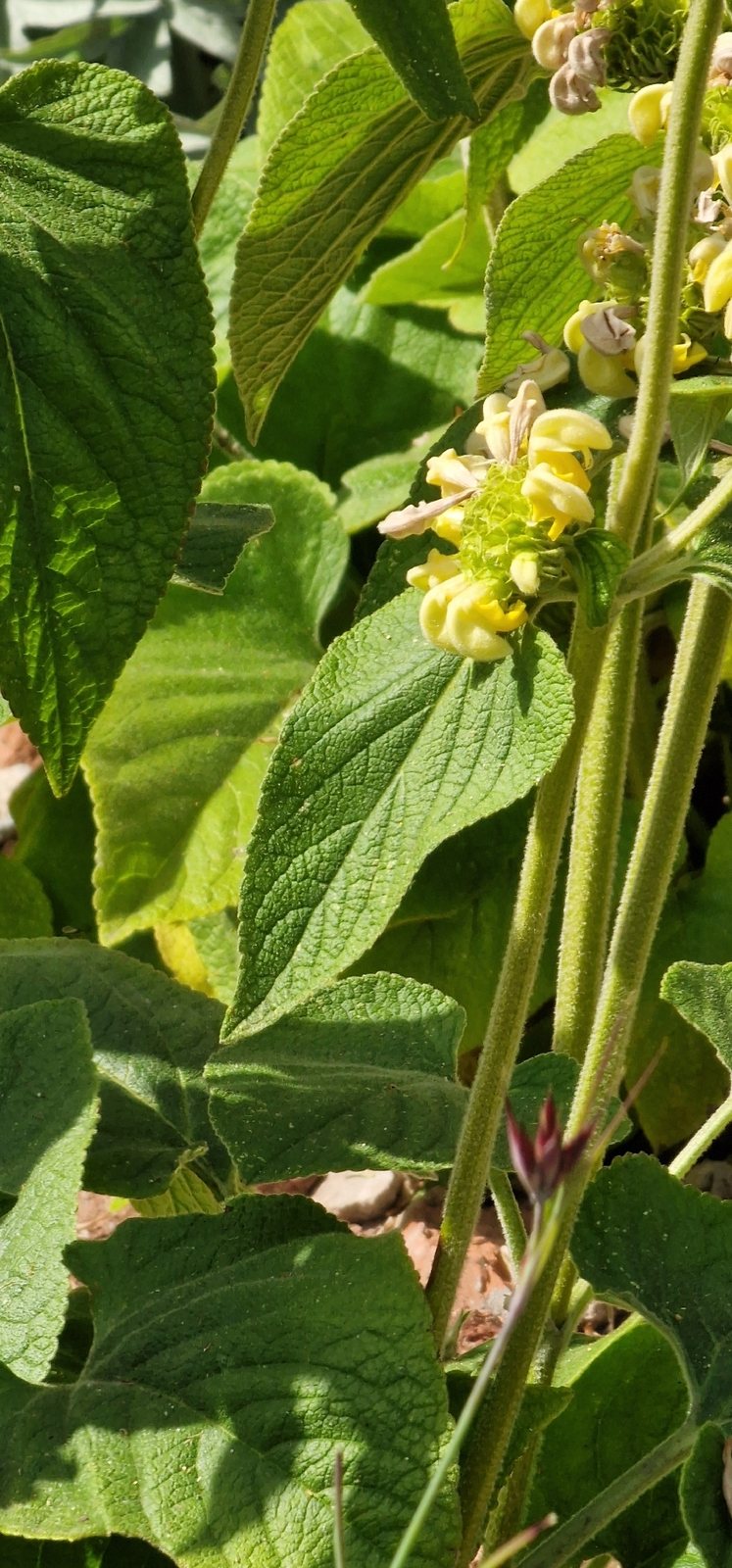
- Broad, heart-shaped to oval, wrinkled grey-green leaves with soft hairs. Semi-evergreen in mild climates, but foliage dies back in colder winters.
- Growth
- Moderate; established clumps can spread steadily.
- Care needed
- Low
The year at a glance
- Pollinators
- Deer resistant
- Drought tolerant
- Heat tolerant
- Wildlife
- Low allergen
| J | F | M | A | M | J | J | A | S | O | N | D | |
|---|---|---|---|---|---|---|---|---|---|---|---|---|
| Flowers | ||||||||||||
| Fruit | ||||||||||||
| Plant |
Northern hemisphere months. In Australia, shift them by six.
- Difficulty
- Easy
- Toughness
- Very tough
Will it suit your garden?
Pick your zone, country, light and whether you have pets.
Full sun is 6 or more hours of direct sun a day, part shade 3 to 6 hours, shade under 3.
How it grows
Planting day
1 ft (0.3 m)
After 1 year
1.5 ft (0.45 m)
After 2 years
2 ft (0.6 m)
After 3 years
2.5 ft (0.75 m)
full size
About 3 years to full size.
From a typical nursery size, at an average rate for this kind of plant. A rule of thumb, not a forecast.
Good to know
- Cats and dogs
- Safe
- In the garden
- Spreads vigorously: plan to contain it.
- Growth rate
- Moderate
Care
Jobs through the year
- WaterApr–May, Sep–Oct, every 21 days
- Water established clumps only if prolonged drought dries the soil; water new plants more often.
- WaterJun–Aug, every 14 days
- Water established clumps deeply only during prolonged drought; keep first-year plants more evenly moist.
- MulchMar–Apr
- Apply a light compost mulch, keeping it clear of the crowns.
- PruneFeb–Mar
- Cut old flower stems to the base and remove damaged leaves, retaining healthy basal growth.
- PruneApr–Jun
- Lift unwanted peripheral shoots and rhizomes to contain the clump.
- DivideMar–Apr
- Divide congested clumps only when flowering declines or spread needs controlling.
- ProtectJan–Feb, Nov–Dec
- Keep crowns free of standing water and correct drainage if water pools.
- Water deeply during dry spells in the first growing season.
- Avoid routine feeding; rich soil and excess fertiliser can encourage floppy growth.
- Apply a light compost mulch in spring, keeping it away from the crowns.
- Lift unwanted shoots at the edge of the clump to keep its spread within bounds.
- Divide congested clumps in spring if flowering declines.
Pruning. Leave the flowering stems standing through autumn and winter for structure. In late winter or early spring, cut old stems to the base and remove dead or damaged leaves without cutting away healthy basal growth.
Through the year
- Early spring
- Cut down old flower stems and clear damaged foliage before new growth develops.
- Spring
- Plant or divide clumps, water thoroughly and apply a light compost mulch.
- Late spring
- Remove spreading shoots where they are crowding neighbouring plants.
- Summer
- Water new plants during dry weather; leave established plants alone unless drought is prolonged.
- Autumn
- Retain the dry flower stems for winter interest.
- Winter
- Check that water is not collecting around the crowns and improve drainage where needed.
In the garden
- Plant in repeated groups through a sunny perennial border to give rhythm with its tiered flower stems.
- Combine with ornamental grasses and upright flowering perennials for a naturalistic planting.
- Use broad clumps beside paths or at the front of a deep border for contrasting leaf texture.
- Include in a well-drained gravel garden with other drought-tolerant perennials.
- Leave seed heads standing to add structure to a winter border.
Garden styles it suits: New perennial (prairie), Dry gravel garden, Cottage garden, Mediterranean, Pollinator garden and Winter interest.
Plant it with: Catmint, Russian sage, Yarrow, Purple coneflower, Feather reed grass and Hardy geranium.
Wildlife: The flowers provide nectar and pollen for bees and other visiting insects. Standing stems offer shelter for small invertebrates over winter.
Problems to watch for
- Winter crown rot in waterlogged soil: improve drainage or move the plant to a raised, better-drained position.
- Slugs and snails damaging young growth: inspect emerging shoots and use barriers, hand-picking or locally approved controls.
- Unwanted spreading: dig out peripheral rhizomes and divide the clump to maintain its allotted space.
- Floppy stems or weak flowering in deep shade or rich soil: move to a brighter position and stop high-nitrogen feeding.
Safety
Not known to be toxic to people, cats, dogs or horses. No poisonous parts are established, but it is not a food plant and species-specific toxicity information is limited; discourage pets and children from eating it.
Easily confused with
Jerusalem sage (Phlomis fruticosa)
A woody evergreen shrub with narrower, greyer leaves; Turkish sage forms herbaceous clumps with much broader basal leaves.
Tuberous Jerusalem sage (Phlomis tuberosa)
Has pink to lilac flowers, often on dark reddish stems, rather than the pale yellow flowers of Turkish sage.
The name
The common name Turkish sage refers to its native occurrence in Turkey and its sage-like appearance, although it belongs to Phlomis rather than the true sage genus Salvia.
Propagation. Divide clumps in spring, taking sections with roots and healthy shoots. It can also be raised from seed, though germination may be slow and uneven.
Checked against open data
- Accepted botanical name
- Phlomis russeliana
- Native range
- Turkey.
Sources: GBIF (CC BY 4.0) and Trefle (CC BY 4.0). The care and design notes are LandscapeGPT's own.
See it in your own yard.
Upload a photo of your yard and see it redesigned with plants that suit your climate, each checked against your zone.