Turk's cap
Malvaviscus arboreus. Family Malvaceae. Shrub.
Also called Wax mallow, Sleeping hibiscus, Turk's cap mallow.
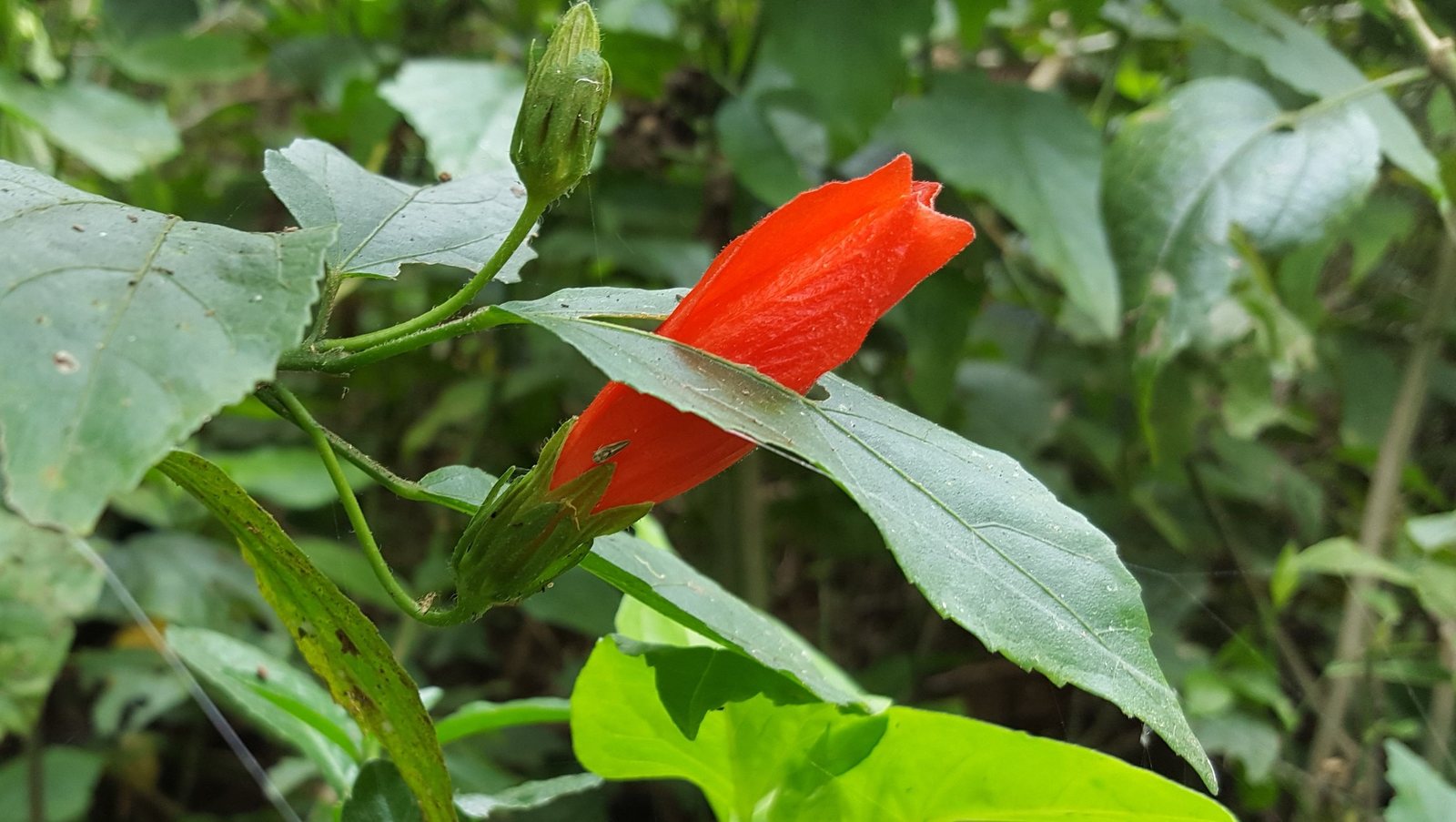
Turk's cap is a warm-climate shrub grown for its red, tightly furled flowers, which attract hummingbirds and butterflies. It flowers well in partial shade and remains evergreen where winters are frost-free. The hardier form usually sold as Malvaviscus arboreus var. drummondii can survive colder winters than the tropical forms covered by the hardiness range below.
At a glance
- Sun
- Full sun to partial shade; afternoon shade is helpful in hot, dry climates. Deep shade reduces flowering.
- Water
- Water regularly during establishment, then during prolonged dry spells. Established plants tolerate some drought but flower better with moderate moisture.
- Soil
- Well-drained soil enriched with organic matter; tolerates clay, loam and sandy soils provided they are not persistently waterlogged.
- Height
- 6-10 ft (1.8-3 m), sometimes taller in frost-free climates
- Spread
- 4-8 ft (1.2-2.4 m)
- Flowers
- Red, twisted flowers with protruding stamens from late spring through autumn; flowering may continue through winter in tropical climates.
- Foliage
- Evergreen. Green, alternate leaves with toothed margins, varying from broadly oval or heart-shaped to shallowly lobed.
- Growth
- Fast in warm weather with adequate moisture.
- Care needed
- Low
The year at a glance
- Pollinators
- Drought tolerant
- Heat tolerant
- Wildlife
- Low allergen
| J | F | M | A | M | J | J | A | S | O | N | D | |
|---|---|---|---|---|---|---|---|---|---|---|---|---|
| Flowers | ||||||||||||
| Fruit | ||||||||||||
| Plant |
Northern hemisphere months. In Australia, shift them by six.
- Difficulty
- Moderate
- Toughness
- Fairly tough
Will it suit your garden?
Pick your zone, country, light and whether you have pets.
Full sun is 6 or more hours of direct sun a day, part shade 3 to 6 hours, shade under 3.
How it grows
Planting day
1.6 ft (0.5 m)
After 1 year
4 ft (1.1 m)
After 2 years
5 ft (1.7 m)
After 3 years
7 ft (2.3 m)
After 5 years
8 ft (2.4 m)
full size
About 3 years to full size.
From a typical nursery size, at an average rate for this kind of plant. A rule of thumb, not a forecast.
Good to know
- Cats and dogs
- Safe
- Invasive in
- Australia
- In the garden
- Spreads vigorously: plan to contain it.
- Growth rate
- Fast
Care
Jobs through the year
- WaterApr–May, Sep–Oct, every 7 days
- For the container culture required here, water when the upper soil dries; do not leave roots saturated.
- WaterJun–Aug, every 3 days
- Check containers frequently and water deeply as the upper soil dries; flowering benefits from steady moisture.
- WaterJan–Mar, Nov–Dec, every 14 days
- In frost-free shelter, water sparingly without letting the root ball dry completely.
- PruneApr–May
- Remove dead stems once new growth appears and shorten crowded or overlong shoots.
- MulchMay
- Refresh organic mulch, keeping it away from the stems.
- FeedMay
- Feed lightly if growth is weak; avoid nitrogen-heavy fertiliser.
- ProtectSep–Oct
- Move containers into bright frost-free shelter before the first frost.
- ProtectJan–May, Nov–Dec
- Keep frost-free through winter and return outdoors gradually after frost risk has passed.
- Water deeply when the upper soil begins to dry during the first growing season.
- Apply a 2-3 in (5-8 cm) organic mulch, keeping it clear of the stems.
- Feed lightly in spring if growth is weak; avoid heavy nitrogen feeding, which encourages leaves rather than flowers.
- Give plants room to spread and remove unwanted seedlings or shoots.
- In colder regions, grow in a container and overwinter somewhere bright and frost-free.
Pruning. Prune in late winter or early spring, after the risk of hard frost, removing dead stems and shortening crowded or overlong growth. In frost-prone gardens, wait until new shoots appear before deciding how far to cut back.
Through the year
- Late winter
- Check overwintering container plants for pests and water sparingly without letting the root ball dry completely.
- Spring
- After frost risk has passed, prune damaged growth and plant out or move containers outdoors gradually.
- Late spring
- Refresh mulch and apply a light feed if needed.
- Summer
- Water during extended dry weather and take softwood or semi-ripe cuttings.
- Autumn
- Remove unwanted seedlings and move tender container plants under cover before frost.
In the garden
- Use as a loose flowering hedge or informal screen in warm-climate gardens.
- Plant beneath high-canopied trees to bring red flowers into lightly shaded borders.
- Combine with ferns, gingers and broad-leaved plants for a layered tropical planting.
- Place near a patio or window where visiting hummingbirds can be watched in the Americas.
Garden styles it suits: Tropical, Southern, Woodland, Wildlife garden, Pollinator garden and Cottage garden.
Plant it with: Beautyberry, Coral honeysuckle, Autumn sage, Cast-iron plant, Shell ginger and Inland sea oats.
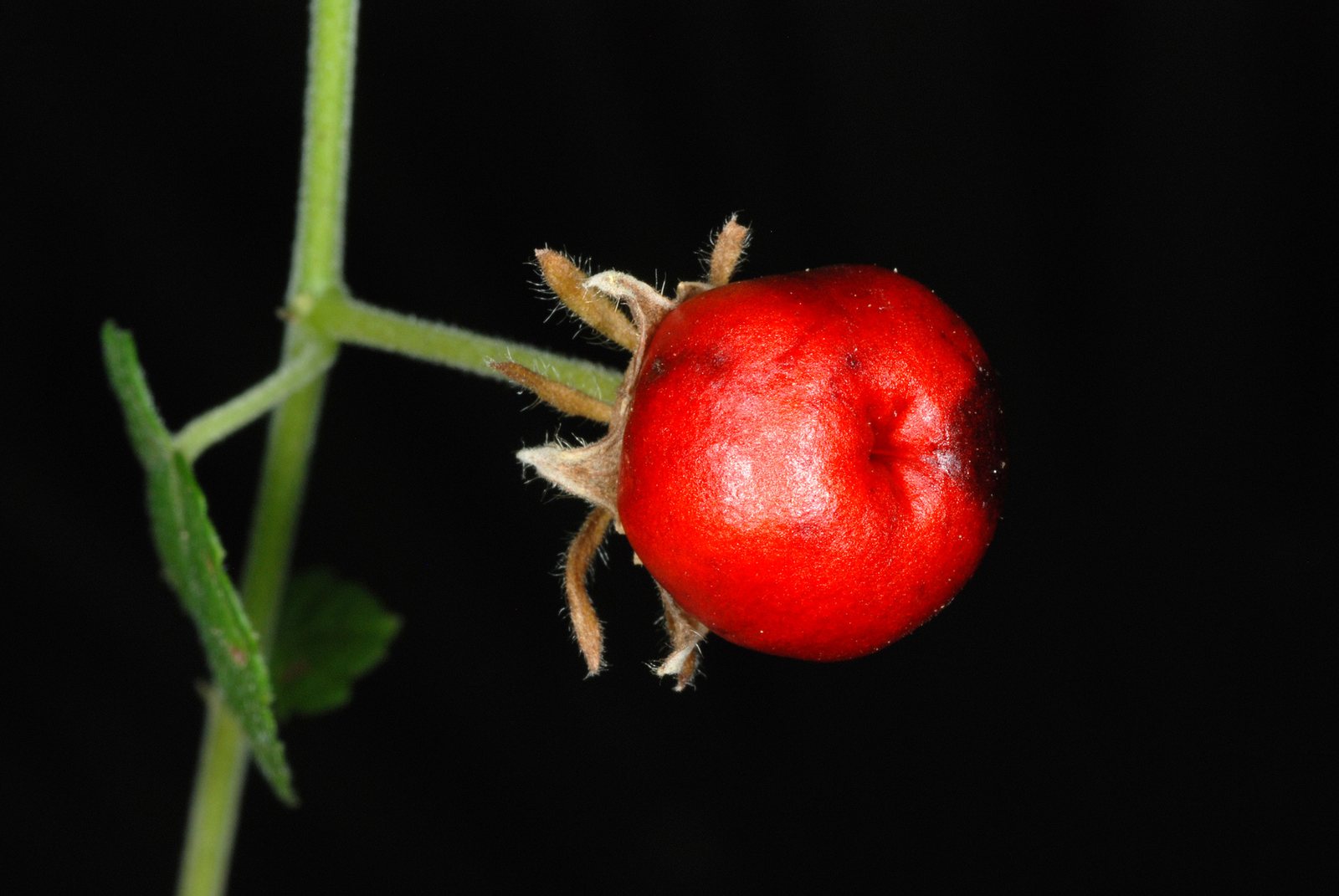
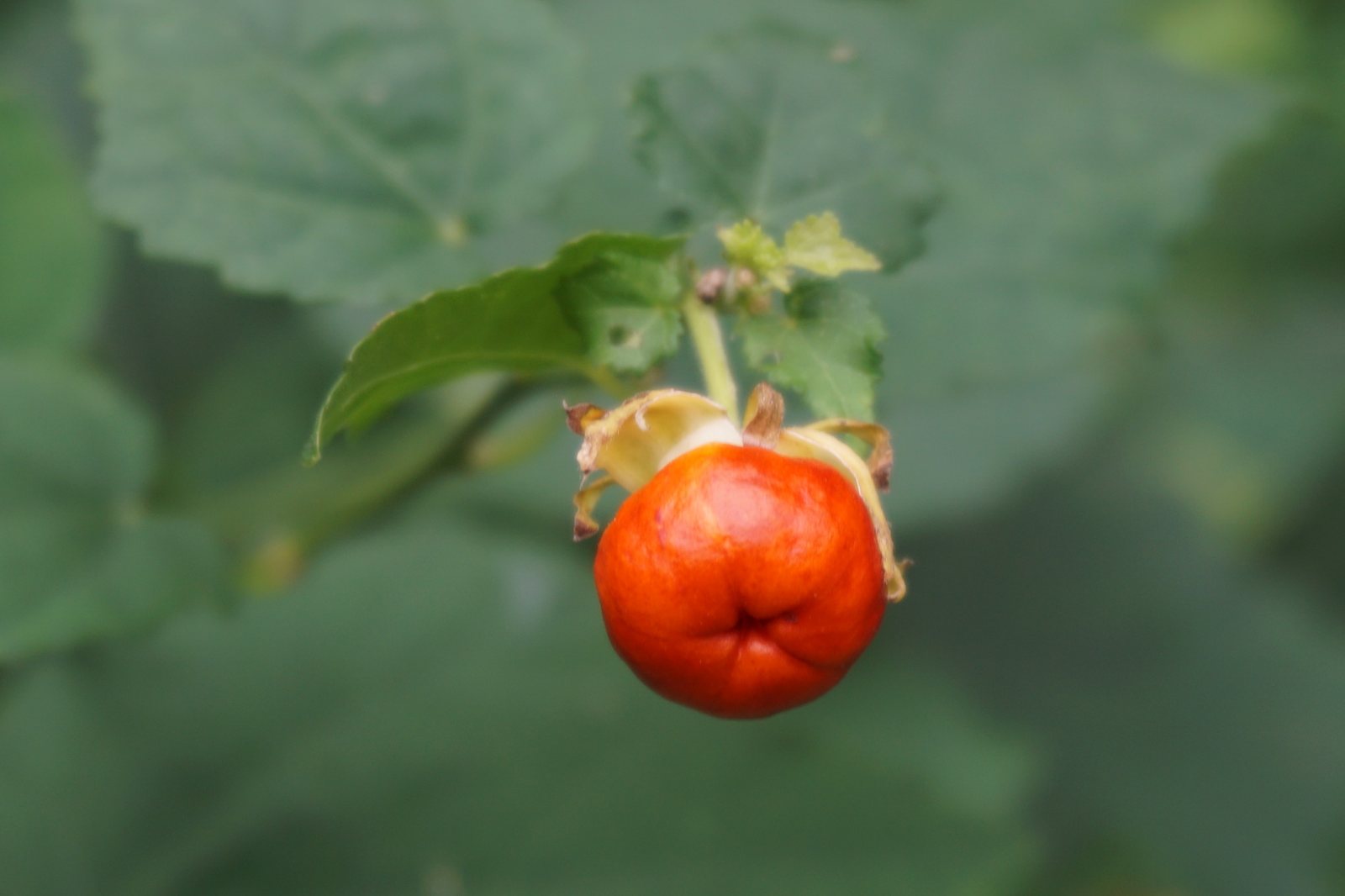
Wildlife: Flowers provide nectar for hummingbirds in the Americas and for butterflies and other insects. Birds and small mammals may eat the ripe fruit.
Problems to watch for
- Aphids and whiteflies may gather on soft growth; rinse off small colonies and use insecticidal soap if necessary, avoiding open flowers.
- Spider mites can cause pale, stippled leaves in hot, dry conditions; rinse leaf undersides and prevent severe moisture stress.
- Waterlogged soil can cause root rot; improve drainage and avoid frequent watering of already-wet soil.
- Frost can kill leaves and stems; protect tender plants and delay pruning until spring growth reveals surviving wood.
Safety
Not known to be toxic to people, cats, dogs or horses. Flowers and ripe fruit have a history of human consumption, but formal safety information for pets and horses is limited; discourage heavy browsing.
Where it spreads. Can escape cultivation and form thickets in warm, moist regions, including parts of Queensland and northern New South Wales, Australia. Check local weed guidance before planting near bushland.
Easily confused with
Hardy Turk's cap (Malvaviscus arboreus var. drummondii)
A closely related, often lower-growing form with typically broader, sometimes three-lobed leaves and more upright flowers. It commonly dies back in winter and is substantially more cold-hardy;
Chinese hibiscus (Hibiscus rosa-sinensis)
Most forms open their petals into a broad flower rather than keeping them wrapped into a narrow, twisted cap.
Turk's-cap lily (Lilium superbum)
An unrelated bulb with narrow leaves and hanging orange, spotted flowers whose petals curl sharply backwards.
The name
Malvaviscus combines Latin words for mallow and birdlime, referring to the sticky fruit, while arboreus means tree-like and Turk's cap describes the turban-shaped flowers.
Propagation. Root softwood or semi-ripe stem cuttings in a moist, free-draining medium during warm weather. Seed can also be sown when ripe, but seedlings may differ from the parent.
Checked against open data
- Accepted botanical name
- Malvaviscus arboreus
- Native range
- Belize, Colombia, Costa Rica, El Salvador, Guatemala, Honduras, Mexico Central, Mexico Gulf, Mexico Northeast, Mexico Northwest, Mexico Southeast and Mexico Southwest.
- Measured
- Average height 450 cm.
Sources: GBIF (CC BY 4.0) and Trefle (CC BY 4.0). The care and design notes are LandscapeGPT's own.
See it in your own yard.
Upload a photo of your yard and see it redesigned with plants that suit your climate, each checked against your zone.