Tuscan Blue rosemary
Salvia rosmarinus 'Tuscan Blue'. Family Lamiaceae. Shrub.
Also called Rosmarinus officinalis 'Tuscan Blue', Upright rosemary.
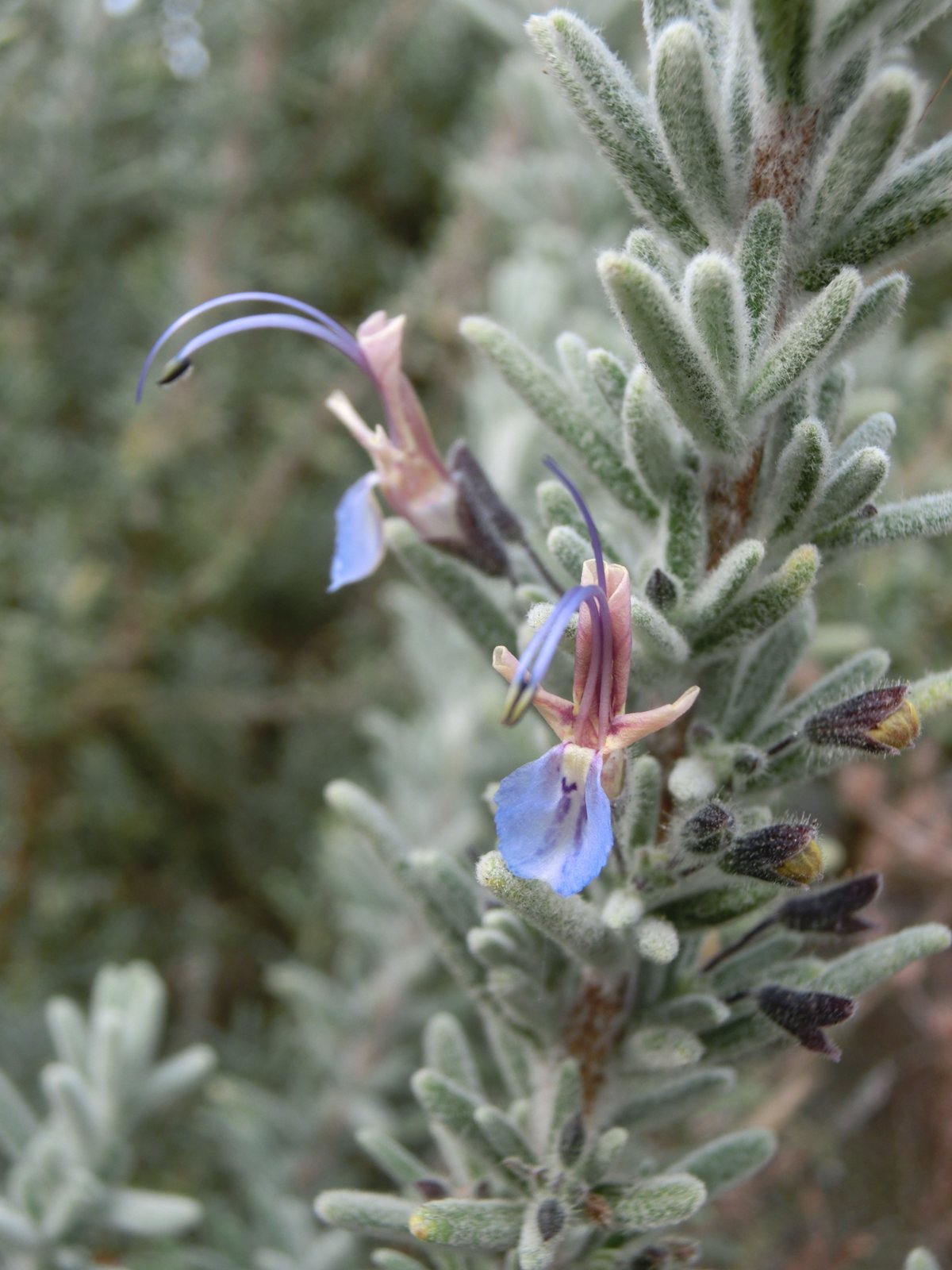
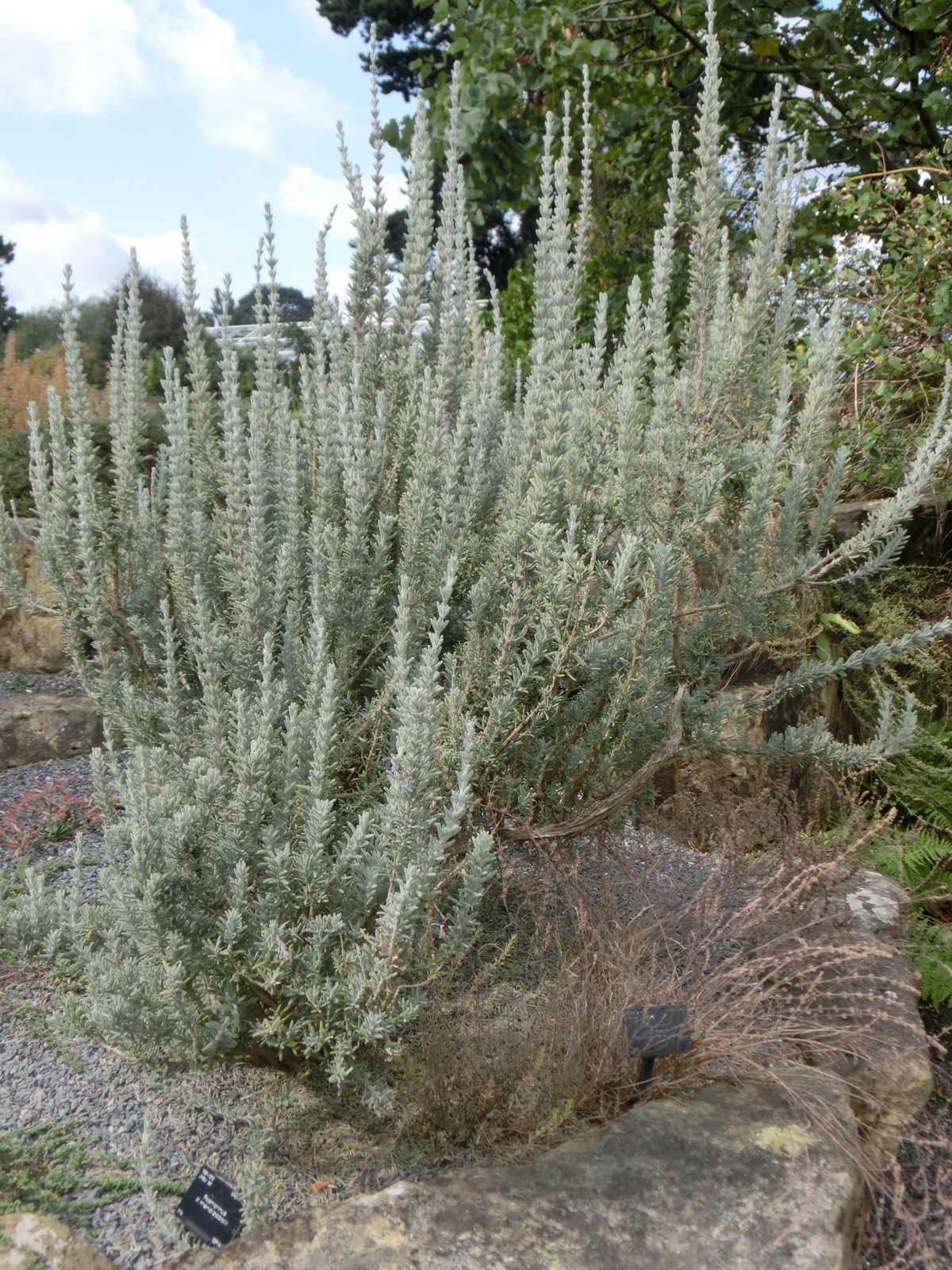
Tuscan Blue is an upright evergreen rosemary grown for its aromatic cooking leaves, blue flowers and strong vertical shape. It makes a useful herb hedge or container shrub, but needs excellent drainage and protection from prolonged hard freezes.
At a glance
- Sun
- Full sun, ideally at least 6 hours of direct sunlight daily.
- Water
- Water regularly while establishing, allowing the soil surface to dry between waterings. Established plants tolerate drought; container plants need more frequent checks.
- Soil
- Well-drained sandy, gravelly or loamy soil, from slightly acidic to alkaline. Avoid heavy, wet soil, especially in winter.
- Height
- 4-6 ft (1.2-1.8 m)
- Spread
- 2-4 ft (0.6-1.2 m)
- Flowers
- Deep blue flowers mainly in spring and early summer, with occasional flowers in autumn or winter in mild climates.
- Foliage
- Evergreen. Narrow, leathery, strongly aromatic dark green leaves with pale undersides.
- Growth
- Moderate
- Care needed
- Low
The year at a glance
- Pollinators
- Deer resistant
- Drought tolerant
- Heat tolerant
- Low allergen
- Fragrant
- Edible
| J | F | M | A | M | J | J | A | S | O | N | D | |
|---|---|---|---|---|---|---|---|---|---|---|---|---|
| Flowers | ||||||||||||
| Fruit | ||||||||||||
| Plant |
Northern hemisphere months. In Australia, shift them by six.
- Difficulty
- Moderate
- Toughness
- Fairly tough
Will it suit your garden?
Pick your zone, country, light and whether you have pets.
Full sun is 6 or more hours of direct sun a day, part shade 3 to 6 hours, shade under 3.
How it grows
Planting day
1.6 ft (0.5 m)
After 1 year
2.3 ft (0.7 m)
After 2 years
3 ft (0.9 m)
After 3 years
4 ft (1.1 m)
After 5 years
5 ft (1.5 m)
full size
About 5 years to full size.
From a typical nursery size, at an average rate for this kind of plant. A rule of thumb, not a forecast.
Good to know
- Cats and dogs
- Safe
- Growth rate
- Moderate
Care
Jobs through the year
- WaterApr–May, Sep–Oct, every 14 days
- For established plants in the ground, water only if dry; young plants and pots need more frequent checks.
- WaterJun–Aug, every 14 days
- Water established ground-grown plants during prolonged drought, letting upper soil dry between waterings.
- WaterJan–Mar, Nov–Dec, every 14 days
- Check overwintering pots and water sparingly only when the upper compost dries; never leave standing water.
- FeedApr
- Feed lightly only if growth is weak; avoid heavy feeding.
- PruneApr–May
- Once new growth shows, remove frost-damaged stems back to healthy leafy growth.
- PruneJun
- Lightly shape after the main flowering flush; never cut hard into bare old wood.
- HarvestApr–Oct, every 14 days
- Pick leafy tips as needed above leafy side shoots; harvest lightly before winter.
- ProtectJan–Apr, Oct–Dec
- In zones 6–7, overwinter in a bright, cool, frost-free place; outdoor fleece alone is unreliable.
- Plant after severe frost risk has passed, keeping the crown at its original soil level.
- Water deeply during establishment, then let the upper soil dry before watering again.
- Use a pot with drainage holes and a gritty potting mix; empty standing water from saucers.
- Feed lightly in spring only if growth is weak; avoid heavy feeding.
- Keep mulch away from the woody base and avoid moisture-retaining mulch on poorly drained ground.
- In colder regions, overwinter a potted plant in a bright, cool, frost-free place.
Pruning. Lightly trim leafy shoots after the main spring flowering to keep the shrub dense, and remove dead or frost-damaged growth once new growth shows. Do not cut hard into bare old wood, which often fails to reshoot.
Harvest
Pick leafy shoot tips once the plant is established and making strong growth; leaves are usable whenever they are aromatic and healthy. Harvest lightly throughout the growing season, cutting above a leafy side shoot, and avoid heavy picking before winter.
Through the year
- Spring
- Plant once severe frost risk has passed, choosing a sunny site with free-draining soil.
- Spring
- Check for winter damage and cut dead stems back to healthy, leafy growth.
- Late spring
- Lightly shape the plant after its main flowering flush.
- Summer
- Harvest leafy tips and check container moisture regularly during hot weather.
- Late summer
- Take semi-ripe cuttings from healthy, non-flowering shoots.
- Autumn
- Move pots under cover before hard freezes in cold regions; reduce watering as growth slows.
- Winter
- Keep roots from sitting in water and give sheltered plants as much light as possible.
In the garden
- Plant as a low clipped hedge around a sunny herb or kitchen garden.
- Use upright shrubs among lavender, sage and thyme for contrasting foliage and blue flowers.
- Grow in large terracotta pots beside a sunny doorway where leaves are easy to harvest.
- Repeat through a gravel garden to provide evergreen structure between seasonal flowers.
Garden styles it suits: Mediterranean, Tuscan villa, Herb parterre, Potager (kitchen garden), Dry gravel garden and Sensory garden.
Plant it with: English lavender, Common sage, Thyme, Oregano, Santolina and Rock rose.
Wildlife: Flowers provide nectar and pollen for bees and other pollinating insects, including during mild periods when few other shrubs are flowering.
Problems to watch for
- Root rot in wet soil: improve drainage, reduce watering and replace badly affected plants in a better-drained site.
- Frost damage: shelter from cold winds, protect pots during freezes and wait until spring growth appears before removing damaged stems.
- Rosemary beetle, particularly in the UK and parts of Europe: inspect shoots for striped metallic beetles and grey larvae, then hand-pick them.
- Leggy growth or a bare woody base: provide full sun and trim leafy growth regularly; replace old plants that no longer produce useful leafy shoots.
Safety
Rosemary leaves and stems are not known to be toxic to people, cats, dogs or horses in ordinary garden exposure. The leaves are a culinary herb, but large amounts may cause digestive upset. Concentrated rosemary essential oil is not equivalent to the fresh herb and should not be given to pets or swallowed without appropriate professional advice.
Easily confused with
English lavender (Lavandula angustifolia)
Lavender usually has greyer leaves and flowers clustered into spikes on long, largely leafless stalks; rosemary flowers sit along leafy shoots.
Coastal rosemary (Westringia fruticosa)
This Australian shrub has leaves commonly arranged in whorls of three and lacks rosemary's strong culinary scent; its flowers are usually white to pale mauve.
Bog rosemary (Andromeda polifolia)
Bog rosemary is a low shrub with pink, urn-shaped flowers and grows in acidic, wet conditions. It is poisonous and must not be used as a culinary substitute.
The name
The epithet rosmarinus comes from Latin words meaning 'dew of the sea', referring to rosemary's association with Mediterranean coastal habitats.
Propagation. Take softwood cuttings in late spring or semi-ripe cuttings in late summer, rooting them in a free-draining medium. Layering low shoots also works. Use vegetative propagation to retain the 'Tuscan Blue' cultivar; seedlings will not reliably match it.
Checked against open data
- Accepted botanical name
- Salvia rosmarinus
- Native range
- Albania, Algeria, Baleares, Corse, Cyprus, East Aegean Is., Egypt, France, Greece, Italy, Libya and Morocco.
- Measured
- Soil pH 5 to 7.5. Average height 74 cm.
Sources: GBIF (CC BY 4.0) and Trefle (CC BY 4.0). The care and design notes are LandscapeGPT's own.
See it in your own yard.
Upload a photo of your yard and see it redesigned with plants that suit your climate, each checked against your zone.