Vanilla Strawberry hydrangea
Hydrangea paniculata 'Renhy'. Family Hydrangeaceae. Shrub.
Also called Vanille Fraise hydrangea, Hydrangea paniculata 'Renhy'.
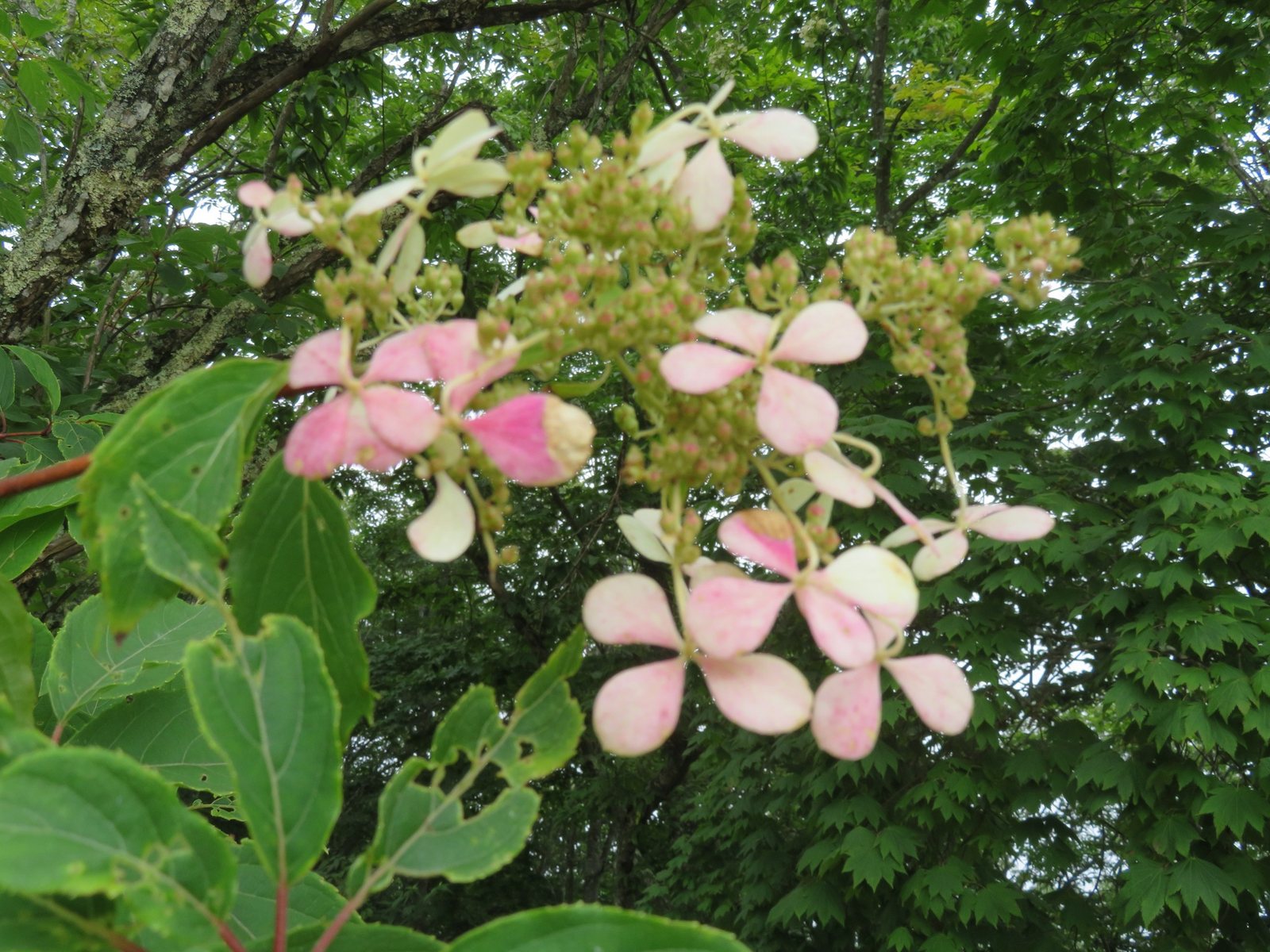
A large, deciduous shrub grown for cone-shaped flower heads that open creamy white, then turn pink and deepen towards strawberry red as they age. New flowers can appear while older heads are colouring, giving several shades on one plant; cool nights usually produce the strongest pink and red tones.
At a glance
- Sun
- Full sun to partial shade. Give it afternoon shade in hot inland gardens; in cooler climates, more sun generally improves flowering.
- Water
- Keep the root zone evenly moist but not waterlogged. Water deeply during dry spells, especially in the first two growing seasons and while flower heads are developing.
- Soil
- Moist, well-drained soil enriched with organic matter. Tolerates clay if drainage is adequate; mildly acidic to neutral soil is ideal, but flower colour is not controlled by soil pH.
- Height
- 6-8 ft (1.8-2.4 m)
- Spread
- 4-5 ft (1.2-1.5 m)
- Flowers
- Midsummer into autumn; large white panicles age through pink to strawberry red, then dry brown. Colour development varies with temperature and growing conditions.
- Foliage
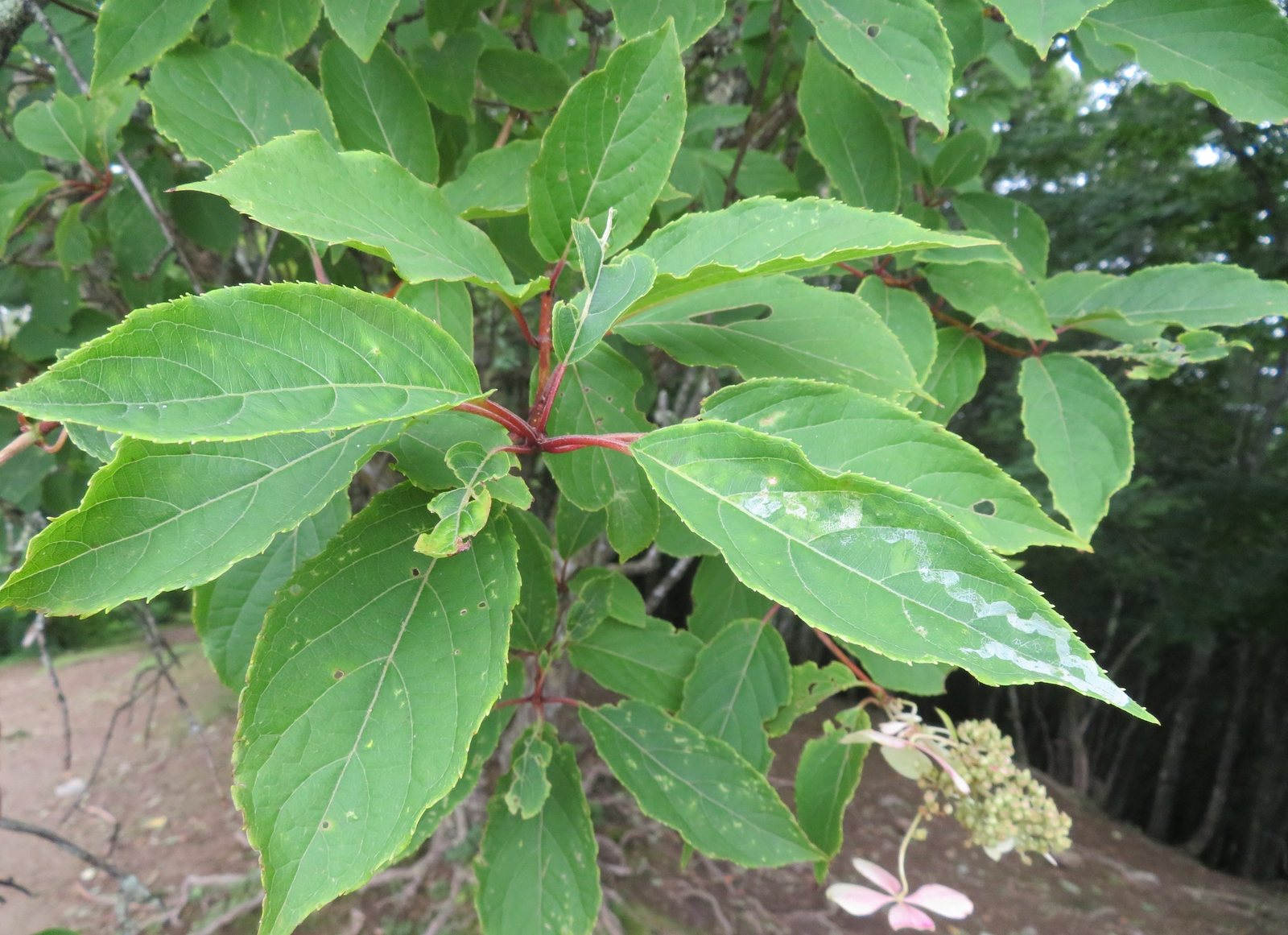
- Green, pointed, oval leaves with toothed edges; autumn colour is usually modest before the leaves fall.
- Growth
- Moderate to fast once established.
- Care needed
- Medium
The year at a glance
- Pollinators
- Cold hardy
- Low allergen
| J | F | M | A | M | J | J | A | S | O | N | D | |
|---|---|---|---|---|---|---|---|---|---|---|---|---|
| Flowers | ||||||||||||
| Fruit | ||||||||||||
| Plant |
Northern hemisphere months. In Australia, shift them by six.
- Difficulty
- Moderate
- Toughness
- Fairly tough
Will it suit your garden?
Pick your zone, country, light and whether you have pets.
Full sun is 6 or more hours of direct sun a day, part shade 3 to 6 hours, shade under 3.
How it grows
Planting day
1.6 ft (0.5 m)
After 1 year
3 ft (0.9 m)
After 2 years
4 ft (1.3 m)
After 3 years
6 ft (1.7 m)
After 5 years
7 ft (2.1 m)
full size
About 4 years to full size.
From a typical nursery size, at an average rate for this kind of plant. A rule of thumb, not a forecast.
Good to know
- Cats and dogs
- Toxic
- Growth rate
- Fast
Care
Jobs through the year
- WaterJun–Aug, every 7 days
- Deeply soak established roots when drying; young plants and developing heads need closer moisture checks.
- WaterApr–May, Sep–Oct, every 14 days
- Water established plants during dry spells, skipping applications when soil remains moist.
- FeedApr–May
- Give one light balanced shrub feed only if growth is weak.
- MulchMar–Apr
- Spread 5-8 cm of organic mulch, keeping it away from stems.
- PruneFeb–Mar
- Remove damaged and crossing stems; shorten previous growth by about one-third, retaining a sturdy framework.
- ProtectJul–Sep
- Support young stems if wet flower heads bend them.
- ProtectJan–Feb, Dec
- Gently remove heavy snow bending branches without handling frozen stems.
- Plant with the root flare at soil level and allow room for the full mature spread.
- Water slowly at the base when the soil begins to dry; do not rely on brief surface sprinkling.
- Apply a 2-3 in (5-8 cm) layer of organic mulch in spring, keeping it clear of the stems.
- Feed lightly in spring with a balanced shrub fertiliser if growth is weak; avoid heavy nitrogen feeding.
- Use discreet supports if young stems bend under wet flower heads, and avoid exposed, windy positions.
Pruning. In late winter or early spring, remove dead, damaged and crossing stems, then shorten the previous year's growth by about one-third to a strong pair of buds. It flowers on new growth; avoid cutting every stem close to the ground, which can encourage weak shoots carrying oversized flower heads.
Through the year
- Late winter
- Prune before new growth starts, retaining a sturdy framework of stems.
- Spring
- Plant when the ground is workable, water thoroughly and renew the mulch.
- Late spring
- Check soil moisture during shoot growth and give a light feed only if needed.
- Summer
- Water deeply during dry weather and support any stems bending under developing flowers.
- Autumn
- Leave sound flower heads for winter structure, or remove those that are broken or weighing stems down.
- Winter
- Gently brush off heavy snow if it is bending branches; avoid handling frozen stems.
In the garden
- Place at the back of a mixed border, with lower perennials hiding the bare lower stems.
- Plant as an informal flowering hedge, allowing enough width for arching branches.
- Use as a lawn-edge specimen where its changing flower colours can be seen from the house.
- Combine with ornamental grasses and late-flowering perennials for an autumn border.
Garden styles it suits: Cottage garden, Romantic rose garden, English country, Traditional, Farmhouse and Autumn colour.
Plant it with: Japanese anemones, Garden phlox, Hardy geraniums, Feather reed grass, Hostas and Astilbes.
Wildlife: Small fertile flowers can attract visiting insects, but the large, showy sterile florets dominate the heads, so it offers less food for pollinators than open-flowered shrubs.
Problems to watch for
- Wilting or scorched leaf edges: water the root zone deeply, renew mulch and provide afternoon shade in hot climates.
- Flopping flower stems: avoid hard annual pruning and excessive nitrogen; support heavy heads where necessary.
- Aphids on tender shoots: wash off small colonies with water and encourage ladybirds and other predators.
- Powdery mildew or leaf spots: improve airflow, water at soil level and remove badly affected fallen leaves.
Safety
Toxic to cats, dogs, horses and people if eaten. Leaves, buds and flowers contain cyanogenic compounds; ingestion usually causes digestive upset, but larger amounts can be serious. Seek medical or veterinary advice after ingestion.
Easily confused with
Strawberry Sundae hydrangea (Hydrangea paniculata 'Rensun')
Has a similar white-to-pink flower sequence but forms a smaller shrub, usually about 4-5 ft (1.2-1.5 m) tall. Young plants can be difficult to distinguish without a reliable label.
Limelight hydrangea (Hydrangea paniculata 'Limelight')
Its flower heads develop a conspicuous lime-green stage before ageing pink, rather than the creamy-white-to-strawberry sequence typical of Vanilla Strawberry.
Bigleaf hydrangea (Hydrangea macrophylla)
Usually has broader, thicker leaves and rounded mophead or flat lacecap flowers rather than upright cones; many cultivars change between pink and blue with soil conditions.
The name
Hydrangea comes from Greek words meaning water vessel, referring to the seed capsules, while Vanilla Strawberry describes the flowers' change from creamy white to pink and red.
Propagation. Softwood cuttings taken in late spring or early summer can produce plants true to the cultivar; seedlings will not reliably match it. Cultivar protection may restrict propagation, so check current rules in your country before taking cuttings.
Checked against open data
- Accepted botanical name
- Hydrangea paniculata
- In the US and Canada
- Introduced in Canada and the lower 48 states.
- Native range
- China North-Central, China South-Central, China Southeast, Japan, Kuril Is., Sakhalin and Taiwan.
- Measured
- Average height 580 cm.
Sources: GBIF (CC BY 4.0), USDA PLANTS and Trefle (CC BY 4.0). The care and design notes are LandscapeGPT's own.
See it in your own yard.
Upload a photo of your yard and see it redesigned with plants that suit your climate, each checked against your zone.