Variegated false agave
Furcraea foetida 'Mediopicta'. Family Asparagaceae. Succulent.
Also called Variegated Mauritius hemp, Variegated giant false agave.
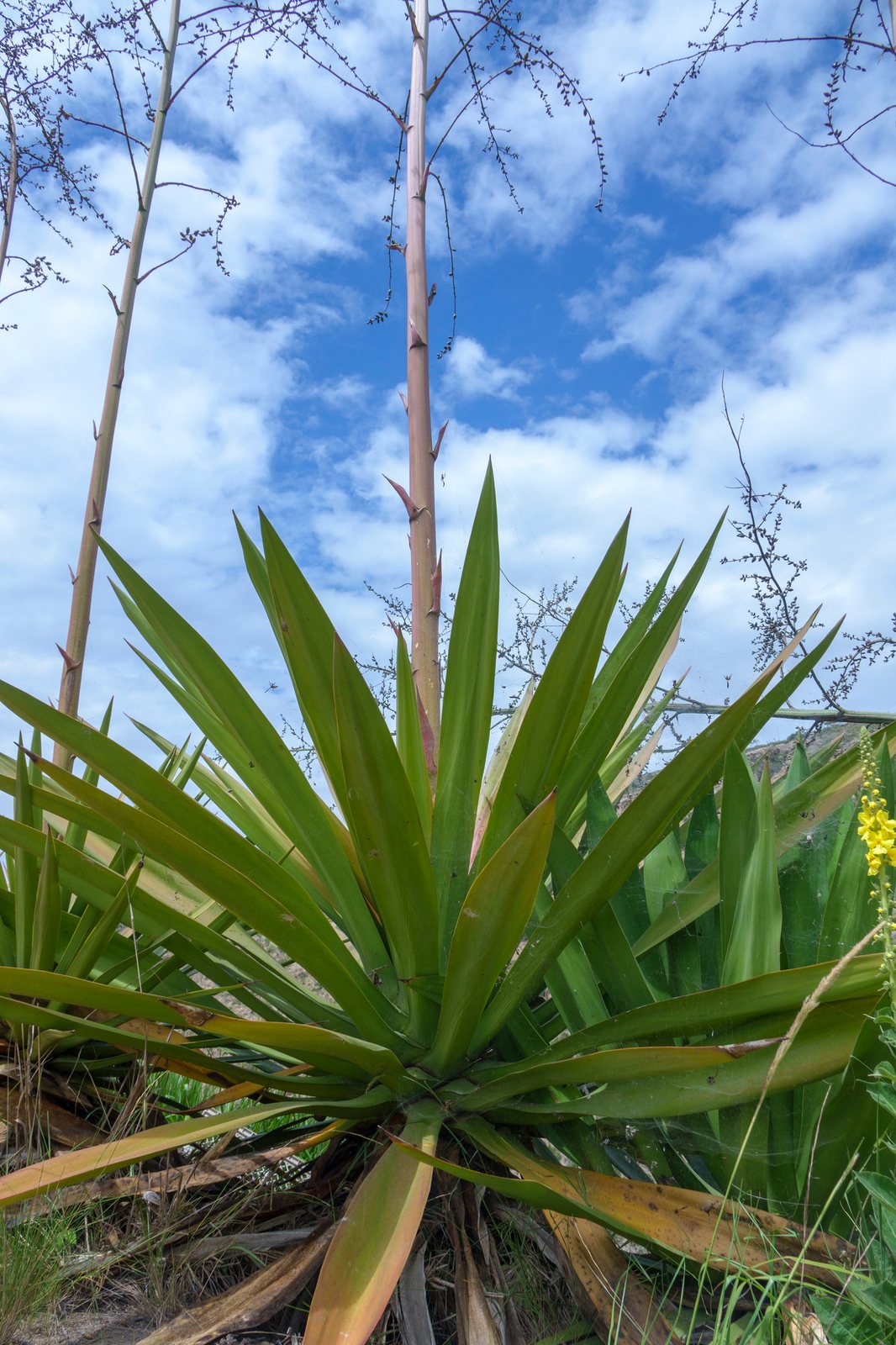
This large evergreen succulent forms a broad rosette of arching, sword-shaped leaves with creamy-yellow centres and green margins. Grow it for its bold foliage in frost-free gardens or a large container that can be sheltered for winter. Each rosette flowers only once, usually after many years, then dies.
At a glance
- Sun
- Full sun to light shade; afternoon shade helps prevent scorching in very hot climates.
- Water
- Water deeply, then let the soil dry substantially before watering again. Established plants tolerate drought; keep much drier in cool weather.
- Soil
- Sharply drained sandy, gravelly or loamy soil; avoid heavy, persistently wet ground. Use a free-draining succulent mix in containers.
- Height
- 4-6 ft (1.2-1.8 m), with a flowering stalk reaching about 20-30 ft (6-9 m)
- Spread
- 6-8 ft (1.8-2.4 m)
- Flowers
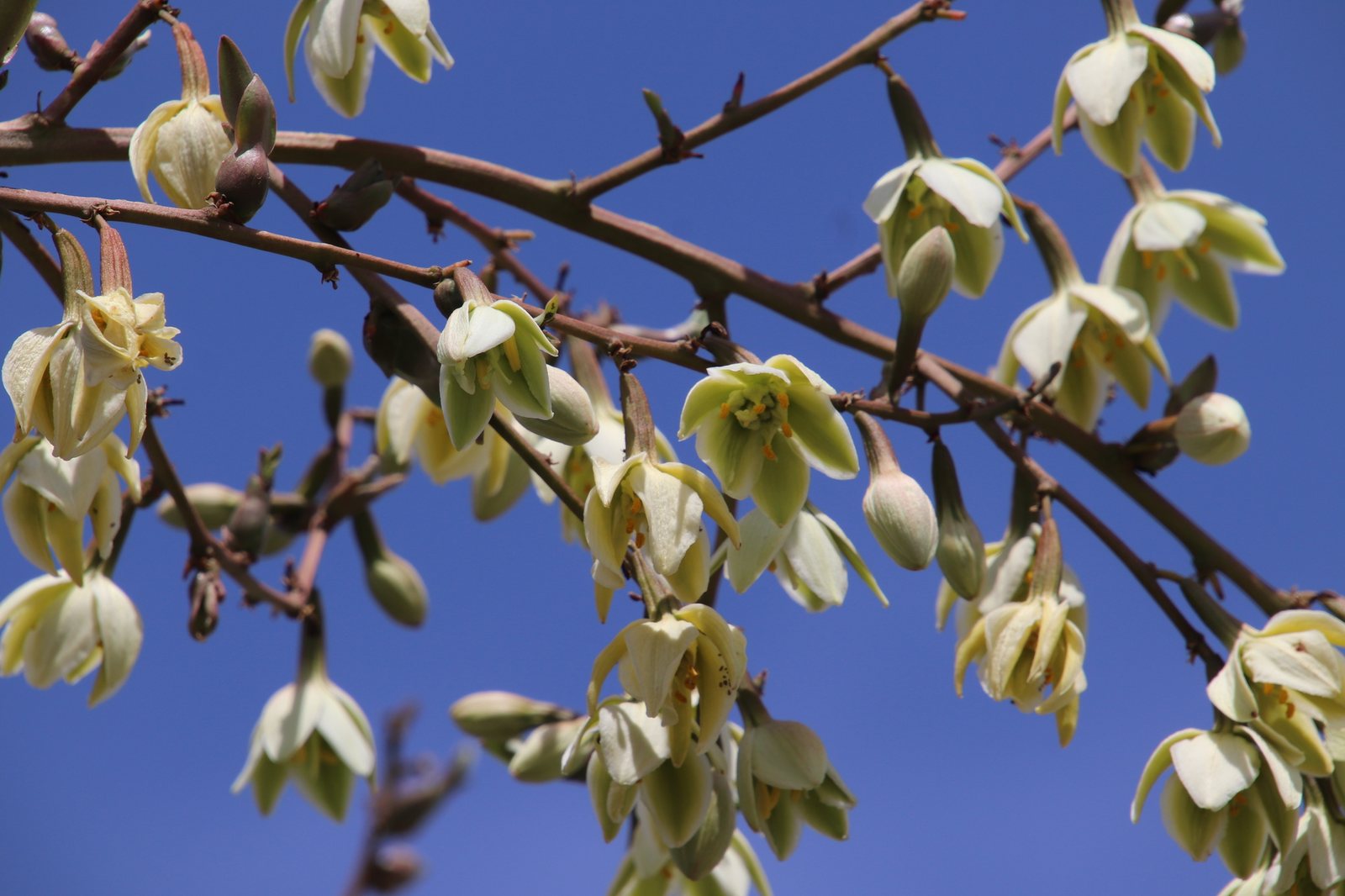
- A mature rosette produces a tall, branched stalk of creamy-white to greenish-white flowers, usually in summer; flowering is infrequent and timing varies with climate.
- Foliage
- Evergreen. Long, fleshy, arching leaves with broad creamy-yellow central stripes and green margins; margins are mostly smooth but may have a few teeth near the base.
- Growth
- Moderate in warm conditions; slow in cool climates or containers.
- Care needed
- Low
The year at a glance
- Pollinators
- Drought tolerant
- Heat tolerant
- Low allergen
| J | F | M | A | M | J | J | A | S | O | N | D | |
|---|---|---|---|---|---|---|---|---|---|---|---|---|
| Flowers | ||||||||||||
| Plant |
Northern hemisphere months. In Australia, shift them by six.
- Difficulty
- Moderate
- Toughness
- Fairly tough
Will it suit your garden?
Pick your zone, country, light and whether you have pets.
Full sun is 6 or more hours of direct sun a day, part shade 3 to 6 hours, shade under 3.
How it grows
Planting day
0.8 ft (0.25 m)
After 1 year
1.3 ft (0.41 m)
After 2 years
1.9 ft (0.57 m)
After 3 years
2.4 ft (0.73 m)
After 5 years
3 ft (1.1 m)
About 8 years to full size.
From a typical nursery size, at an average rate for this kind of plant. A rule of thumb, not a forecast.
Good to know
- Cats and dogs
- Mildly toxic: may upset a stomach
- Invasive in
- the US and Australia
- In the garden
- Spreads vigorously: plan to contain it.
- Growth rate
- Slow
Care
Jobs through the year
- WaterApr–May, Sep–Oct, every 21 days
- Water only after substantial drying; established ground plants rarely need extra water outside prolonged drought.
- WaterJun–Aug, every 14 days
- Water established plants deeply only if dry; young plants and pots need closer checks but must dry between waterings.
- WaterJan–Mar, Nov–Dec, every 30 days
- Under bright frost-free cover, water minimally only when the compost is thoroughly dry.
- FeedApr
- Feed container plants lightly with balanced fertilizer; established ground plants usually need none.
- PruneMay–Sep
- Remove dead lower leaves as needed; wear gloves and eye protection against sap.
- ProtectJun–Sep
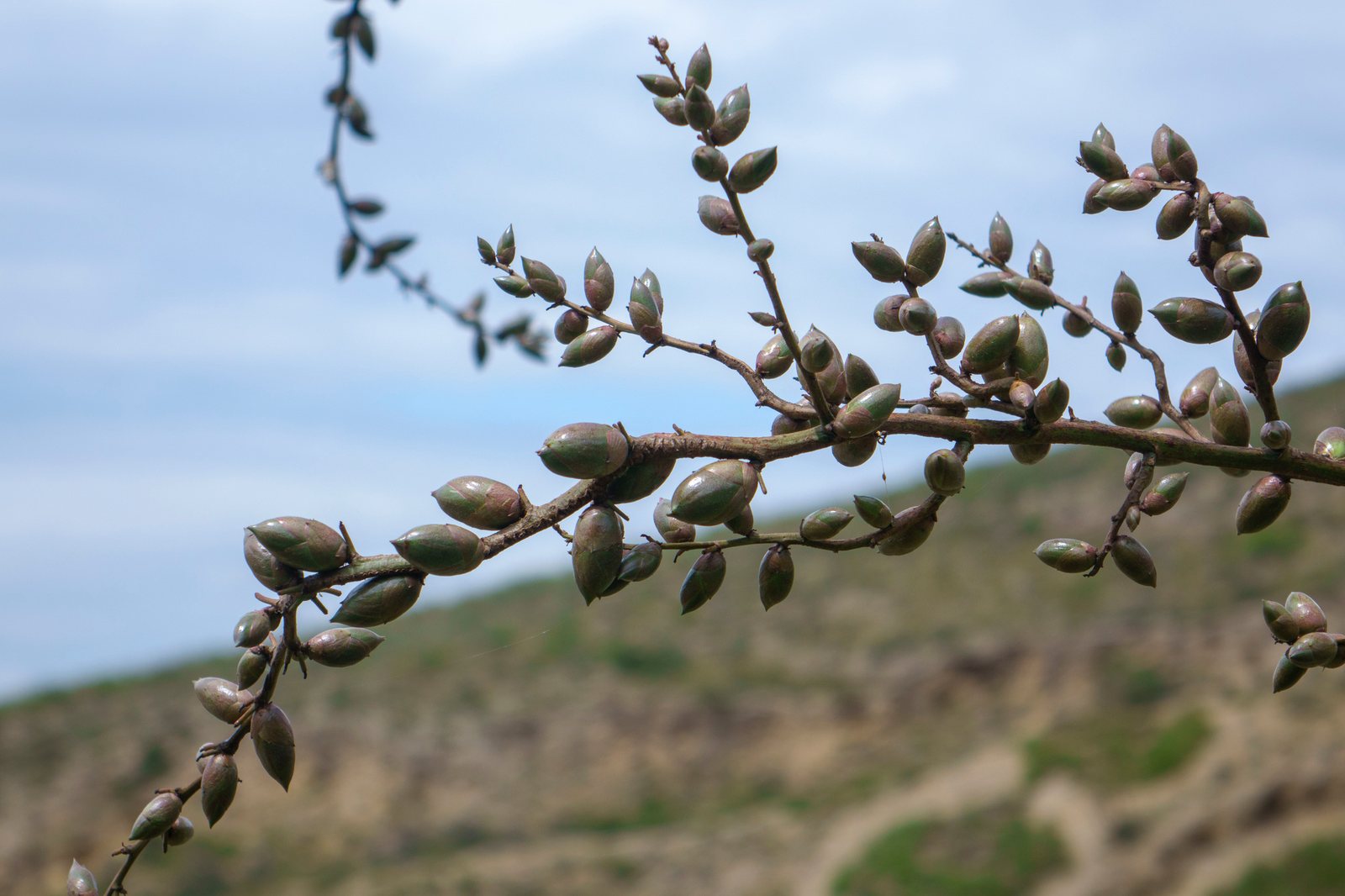
- Flowering is rare; if a stalk develops, remove plantlets before they fall and remove the dying rosette afterward.
- ProtectSep–Oct
- Move pots into bright frost-free shelter before cold weather; outdoor winter survival is unreliable in zones 6–7.
- ProtectMay–Jun
- Move outdoors after frost risk, acclimatising gradually to direct sun.
- Plant above the surrounding soil level where drainage is doubtful; never bury the crown.
- Water newly planted specimens regularly while roots establish, allowing the soil to dry between waterings.
- Feed container plants lightly with a balanced fertiliser in spring; established garden plants rarely need feeding.
- Keep gravel or other mulch clear of the crown and leaf bases.
- Move containers into a bright, frost-free place before cold weather and reduce watering over winter.
- Remove developing flower-stalk plantlets before they fall where the species can escape cultivation.
Pruning. Remove dead lower leaves as needed, cutting close to the base without damaging healthy tissue; wear gloves and eye protection against the sap. After flowering, remove the dying rosette and its stalk, using professional help if the stalk is too large to handle safely.
Through the year
- Spring
- Repot crowded container plants into a slightly larger pot with drainage holes and fresh succulent mix.
- Late spring
- Once frost risk has passed, move sheltered plants outdoors gradually to prevent sun scorch.
- Summer
- Water thoroughly during prolonged dry spells, then allow the root zone to dry before watering again.
- Summer
- Inspect leaf bases for mealybugs and scale; remove developing plantlets if a flower stalk appears.
- Autumn
- Bring container plants under bright, frost-free cover before cold nights arrive.
- Winter
- Keep sheltered plants barely moist and check that outdoor crowns are not sitting in wet soil.
In the garden
- Use a single specimen as a focal point in a broad gravel bed, leaving room for the full leaf span.
- Plant against a plain wall where the striped foliage and arching silhouette stand out.
- Grow in a large, stable container on a sunny terrace in climates requiring winter shelter.
- Combine with low succulents and fine-textured grasses for contrasting leaf shapes.
- Use in frost-free coastal or tropical courtyards, set back from paths and seating.
Garden styles it suits: Architectural minimal, Modern tropical, Desert modern, Dry gravel garden, Coastal and Desert / xeriscape.
Plant it with: Blue chalk sticks, Echeveria, Kangaroo paw, Red yucca, Blue fescue and Society garlic.
Wildlife: The flowers provide nectar for visiting insects in warm climates. It is not a major food plant for wildlife in most gardens outside its native range.
Problems to watch for
- Root or crown rot in wet soil: improve drainage, keep the crown above soil level and reduce watering, especially in winter.
- Frost damage: protect from freezing temperatures; move pots under cover before frost and remove damaged leaves once cold weather has passed.
- Mealybugs or scale at leaf bases: inspect regularly, wipe off small infestations and use a labelled treatment suitable for succulents if needed.
- Sun scorch after moving outdoors: introduce plants to stronger light gradually and provide afternoon shade in extreme heat.
Safety
The leaf sap can irritate skin and eyes. Treat leaves and sap as harmful if swallowed by people, cats, dogs or horses: ingestion may cause mouth irritation and digestive upset, although species-specific veterinary information is limited. Wear gloves when cutting and keep chewed material away from children and animals.
Where it spreads. The species spreads through plantlets produced on its flower stalk and is an environmental weed in parts of eastern Australia, including Queensland and New South Wales, and in parts of South Africa and Hawaii. This risk also applies to cultivated plants that produce viable plantlets; prevent them from dropping and do not dump garden waste in bushland.
Easily confused with
Variegated century plant (Agave americana 'Mediopicta Alba')
Has thicker, more rigid leaves with conspicuous hooked marginal teeth and a strong terminal spine; its central stripe is usually white rather than creamy yellow.
Variegated spineless yucca (Yucca gigantea 'Variegata')
Eventually forms woody trunks topped by clusters of narrower, less fleshy leaves rather than one broad, ground-level rosette.
Variegated foxtail agave (Agave attenuata 'Variegata')
Has shorter, broader, softer leaves in a tighter rosette, often on a visible stem, and a distinctive arching flower spike rather than a tall, branched stalk.
The name
Furcraea honours the French chemist Antoine François de Fourcroy, while 'Mediopicta' refers to the coloured stripe through the middle of each leaf.
Propagation. Root the small plantlets produced on a mature flower stalk in a sharply drained mix, keeping them lightly moist until established. Select plantlets showing the characteristic variegation; seed does not reliably reproduce the cultivar.
Checked against open data
- Accepted botanical name
- Furcraea foetida
- In the US and Canada
- Introduced in Hawaii and the lower 48 states.
- Native range
- Colombia, Costa Rica, French Guiana, Guyana, Marquesas, Netherlands Antilles, Panamá, Suriname, Trinidad-Tobago, Venezuela and Venezuelan Antilles.
Sources: GBIF (CC BY 4.0), USDA PLANTS and Trefle (CC BY 4.0). The care and design notes are LandscapeGPT's own.
See it in your own yard.
Upload a photo of your yard and see it redesigned with plants that suit your climate, each checked against your zone.