Variegated feather reed grass 'Overdam'
Calamagrostis × acutiflora 'Overdam'. Family Poaceae. Ornamental grass.
Also called Feather reed grass 'Overdam', Calamagrostis × acutiflora 'Overdam'.
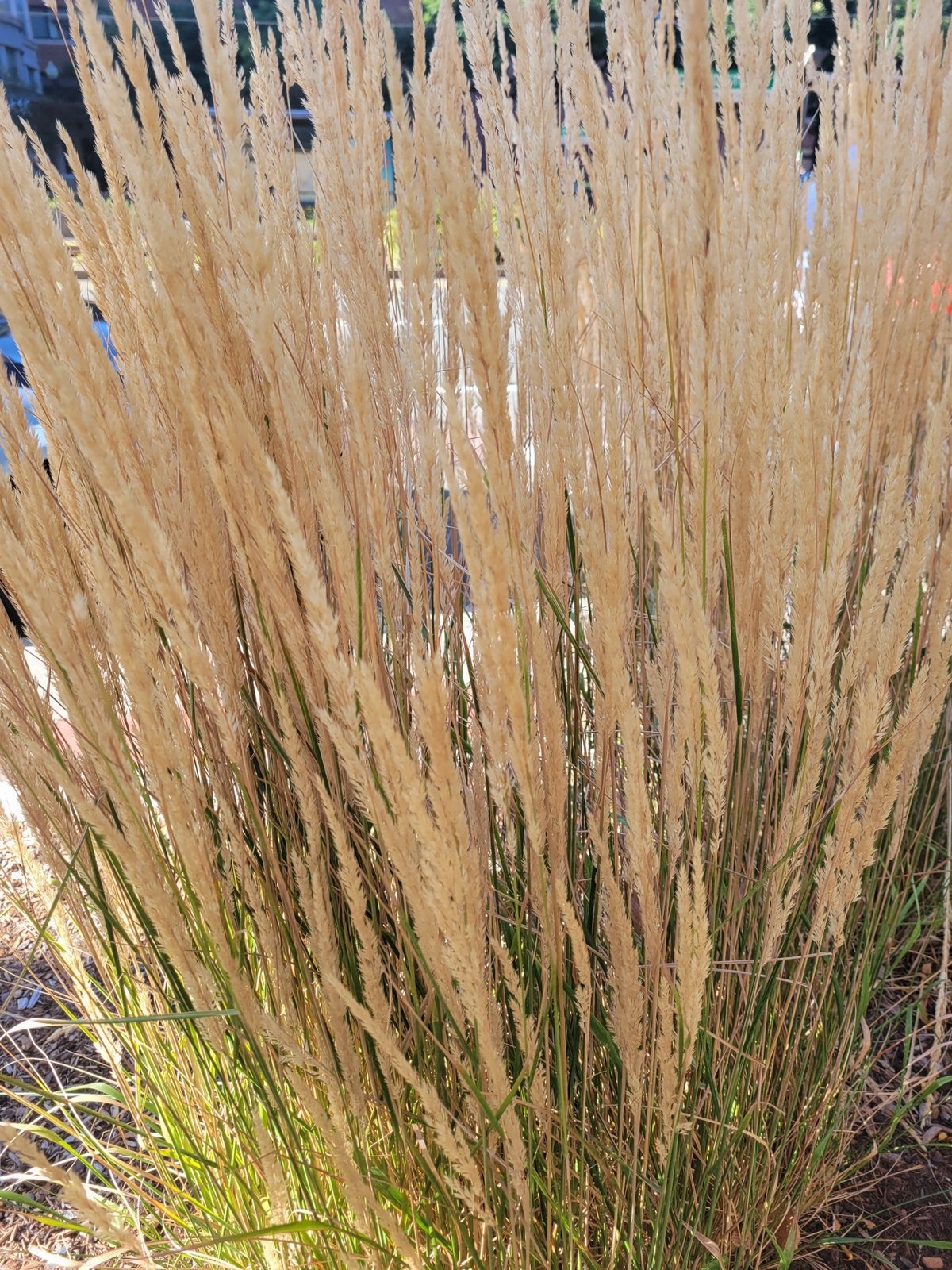
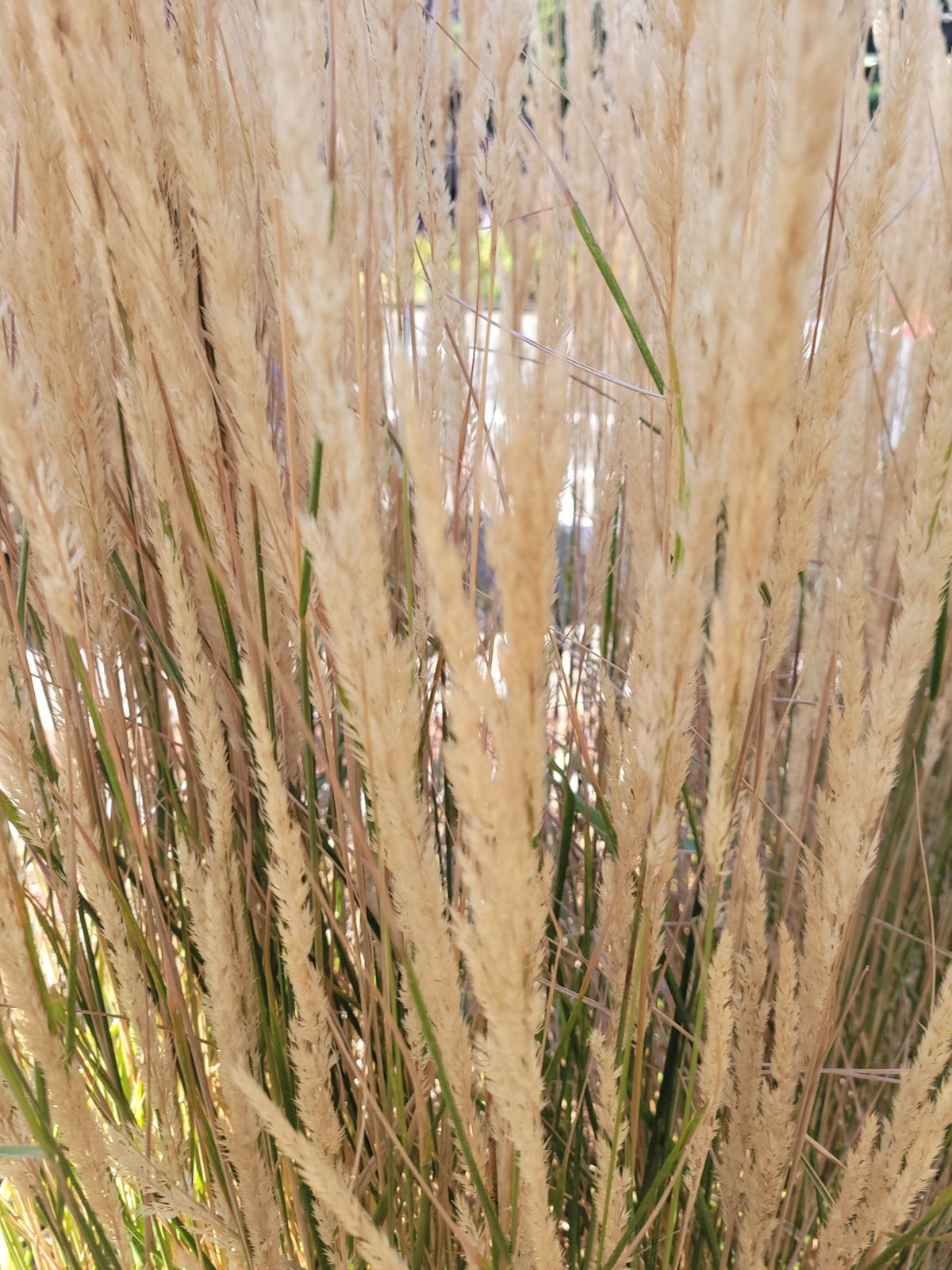
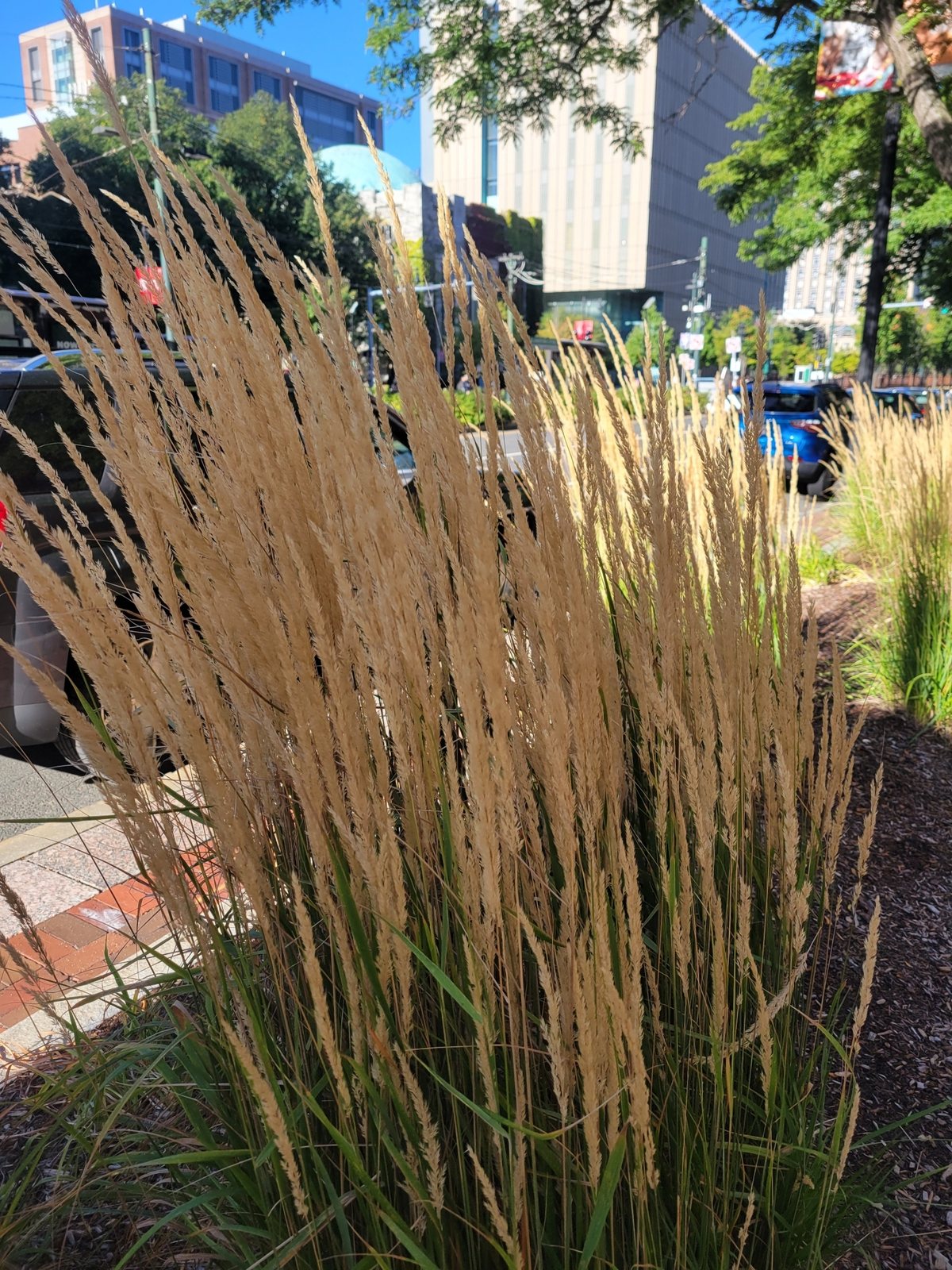
'Overdam' is a clump-forming, cool-season grass with cream-edged leaves and upright stems carrying narrow, feathery flower heads. Gardeners grow it for its bright spring foliage, vertical shape and straw-coloured stems that often remain attractive through winter.
At a glance
- Sun
- Full sun to light partial shade; flowering and upright growth are best with at least six hours of sun.
- Water
- Keep evenly moist while establishing. Established clumps tolerate short dry spells, but water during prolonged drought, especially in hot weather.
- Soil
- Moist, well-drained soil; tolerates clay if it is not persistently waterlogged. Performs best in moderately fertile soil.
- Height
- 3-5 ft (0.9-1.5 m), including flower stems
- Spread
- 1.5-2 ft (0.45-0.6 m)
- Flowers
- Late spring to midsummer, depending on climate; narrow pinkish-purple plumes fade to tan and then straw-gold.
- Foliage
- Narrow green leaves with creamy-white margins, sometimes pink-tinged in cool spring weather. The pale margins become less conspicuous as the season advances.
- Growth
- Moderate; starts growing early in spring.
- Care needed
- Low
The year at a glance
- Deer resistant
- Cold hardy
- Wildlife
| J | F | M | A | M | J | J | A | S | O | N | D | |
|---|---|---|---|---|---|---|---|---|---|---|---|---|
| Flowers | ||||||||||||
| Fruit | ||||||||||||
| Plant |
Northern hemisphere months. In Australia, shift them by six.
- Difficulty
- Easy
- Toughness
- Very tough
Will it suit your garden?
Pick your zone, country, light and whether you have pets.
Full sun is 6 or more hours of direct sun a day, part shade 3 to 6 hours, shade under 3.
How it grows
Planting day
1.1 ft (0.35 m)
After 1 year
2.3 ft (0.69 m)
After 2 years
3 ft (1 m)
After 3 years
4 ft (1.2 m)
full size
About 3 years to full size.
From a typical nursery size, at an average rate for this kind of plant. A rule of thumb, not a forecast.
Good to know
- Cats and dogs
- Safe
- Growth rate
- Moderate
Care
Jobs through the year
- WaterApr–May, Sep–Oct, every 14 days
- Water established clumps only during extended dry spells; keep new plants evenly moist through their first season.
- WaterJun–Aug, every 7 days
- During prolonged hot, dry weather, water deeply to limit brown tips and early dormancy.
- PruneFeb–Mar
- Cut old stems to 10–15 cm before new shoots lengthen; leave stems standing through winter.
- MulchMar–Apr
- Apply a thin compost dressing and renew mulch without covering the crown; avoid rich feeding.
- DivideMar–Apr
- Every three to five years, divide congested clumps and replant healthy outer sections.
- Water regularly through the first growing season, allowing excess water to drain away.
- Water established plants during prolonged dry spells to limit brown leaf tips and early dormancy.
- Apply a thin layer of compost in spring; avoid heavy nitrogen feeding, which encourages floppy growth.
- Mulch around the clump, keeping mulch clear of the crown.
- Divide congested clumps in early spring, usually every three to five years or when the centre becomes bare.
Pruning. Leave the dry stems standing over winter, then cut the whole clump back to 4-6 in (10-15 cm) above the ground in late winter or very early spring. Cut before fresh shoots grow tall enough to be damaged.
Through the year
- Late winter
- Cut back old stems before new growth begins.
- Early spring
- Plant or divide clumps while the soil is workable and growth is starting.
- Spring
- Add a thin compost dressing and renew mulch without covering the crown.
- Summer
- Water during prolonged dry weather and check for rust on the leaves.
- Autumn
- Leave sound flower stems standing for structure rather than cutting them down.
- Winter
- Remove stems flattened by storms if they are smothering nearby plants.
In the garden
- Repeat clumps through a perennial border to create upright rhythm among rounded flowers.
- Plant with purple coneflowers, salvias and sedums for contrasting flower shapes and a long season of interest.
- Use in narrow beds beside paths or terraces where a compact clump provides height without much width.
- Mass in informal drifts, allowing low sunlight to catch the pale leaves and winter stems.
Garden styles it suits: New perennial (prairie), Modern, Architectural minimal, Cottage garden, Winter interest and Low-maintenance.
Plant it with: Purple coneflower, Perennial salvia, Autumn stonecrop, Cranesbill geranium, Black-eyed Susan and Siberian iris.
Wildlife: Standing clumps provide shelter for insects and other small animals. The flowers are wind-pollinated rather than a nectar source, and this sterile hybrid does not provide a useful seed crop for birds.
Problems to watch for
- Rust can cause orange-brown pustules on leaves: improve airflow, avoid wetting foliage when watering and remove affected debris.
- Brown tips or early browning in hot, dry weather: water deeply and mulch; choose a cooler position with afternoon shade in hot climates.
- Flopping stems in shade or overly rich soil: provide more sun and reduce nitrogen feeding.
- A thinning or dead centre in an older clump: lift and divide in early spring, replanting healthy outer sections.
Safety
Not known to be toxic to cats, dogs, horses or people; no part is recognised as poisonous. Coarse leaves and dry stems can cause minor physical irritation if chewed or handled.
Easily confused with
Feather reed grass 'Karl Foerster' (Calamagrostis × acutiflora 'Karl Foerster')
Its leaves are plain green, and it generally grows taller than 'Overdam'.
Feather reed grass 'Avalanche' (Calamagrostis × acutiflora 'Avalanche')
Its leaves have a broad white central stripe with green margins; 'Overdam' has green centres and pale margins.
Feather reed grass 'Eldorado' (Calamagrostis × acutiflora 'Eldorado')
Its leaves have a golden-yellow central stripe rather than the creamy-white margins of 'Overdam'.
The name
Calamagrostis combines Greek words for reed and grass, referring to the plant's reed-like appearance.
Propagation. Divide established clumps in early spring, keeping several healthy shoots and roots in each piece. This sterile hybrid is propagated by division, not seed.
Checked against open data
- Accepted botanical name
- Calamagrostis acutiflora
Sources: GBIF (CC BY 4.0). The care and design notes are LandscapeGPT's own.
See it in your own yard.
Upload a photo of your yard and see it redesigned with plants that suit your climate, each checked against your zone.