Variegated pittosporum
Pittosporum tobira 'Variegata'. Family Pittosporaceae. Shrub.
Also called Variegated Japanese mock orange, Variegated Japanese pittosporum.
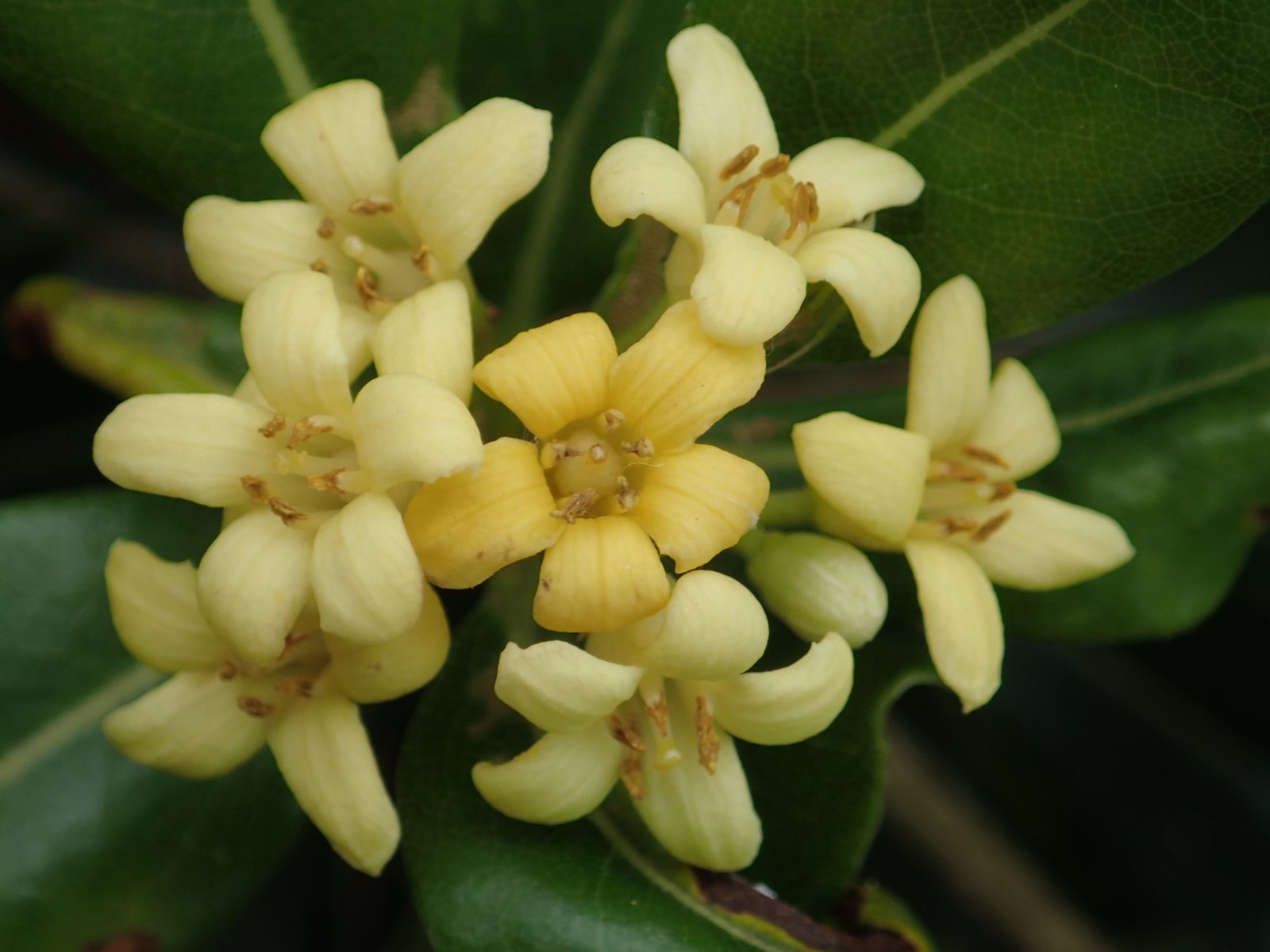
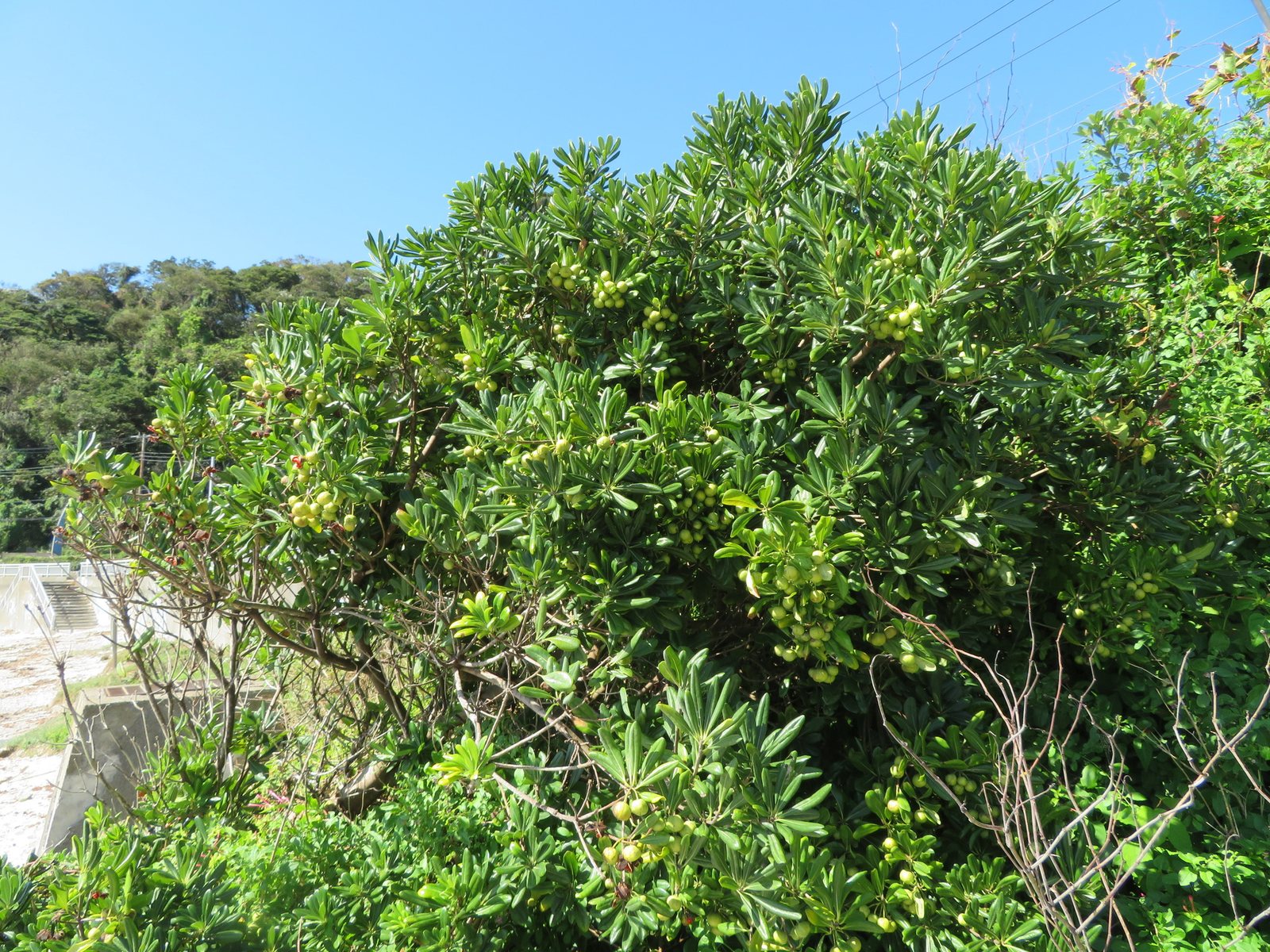
A rounded evergreen shrub with leathery green leaves edged in creamy white and small, sweetly scented spring flowers. Gardeners grow it for year-round foliage, informal hedges and clipped shapes in mild coastal or sheltered gardens; cold winds and prolonged freezes can damage it.
At a glance
- Sun
- Full sun to partial shade; light afternoon shade helps in very hot inland gardens.
- Water
- Water regularly while establishing, then deeply during prolonged dry spells. Established plants tolerate some drought but not persistently wet roots.
- Soil
- Well-drained sandy, loamy or chalky soil; tolerates a broad pH range and coastal conditions.
- Height
- 6-10 ft (1.8-3 m)
- Spread
- 6-10 ft (1.8-3 m)
- Flowers
- Spring to early summer; small, fragrant creamy-white flowers age to yellow.
- Foliage
- Evergreen. Glossy, leathery, spoon-shaped green leaves with irregular creamy-white margins, clustered towards the shoot tips.
- Growth
- Slow to moderate
- Care needed
- Low
The year at a glance
- Pollinators
- Drought tolerant
- Heat tolerant
- Wildlife
- Low allergen
- Fragrant
| J | F | M | A | M | J | J | A | S | O | N | D | |
|---|---|---|---|---|---|---|---|---|---|---|---|---|
| Flowers | ||||||||||||
| Fruit | ||||||||||||
| Plant |
Northern hemisphere months. In Australia, shift them by six.
- Difficulty
- Moderate
- Toughness
- Fairly tough
Will it suit your garden?
Pick your zone, country, light and whether you have pets.
Full sun is 6 or more hours of direct sun a day, part shade 3 to 6 hours, shade under 3.
How it grows
Planting day
1.6 ft (0.5 m)
After 1 year
2.6 ft (0.79 m)
After 2 years
4 ft (1.1 m)
After 3 years
5 ft (1.4 m)
After 5 years
6 ft (2 m)
About 7 years to full size.
From a typical nursery size, at an average rate for this kind of plant. A rule of thumb, not a forecast.
Good to know
- Cats and dogs
- Mildly toxic: may upset a stomach
- Growth rate
- Slow
Care
Jobs through the year
- WaterApr–May, Sep–Oct, every 21 days
- Water established plants deeply only if the root zone is dry; young plants need more frequent watering.
- WaterJun–Aug, every 14 days
- Water established plants during prolonged dry spells, allowing soil to dry slightly between soakings.
- MulchApr
- Apply 5–8 cm of organic mulch, keeping it clear of stems.
- FeedApr
- Feed lightly only if soil is poor or growth is weak; avoid excess nitrogen.
- PruneApr–May
- Remove frost-killed wood only once new growth reveals which stems are alive.
- PruneJun
- Lightly shape after flowering and remove wholly green shoots at their origin.
- ProtectJan–Mar, Nov–Dec
- Not reliably hardy in zones 6–7; use a container and overwinter in bright frost-free shelter.
- Plant in a sheltered position with freely draining soil, especially near the colder end of its range.
- Water deeply through the first growing season, allowing the surface soil to dry slightly between waterings.
- Apply 2-3 in (5-8 cm) of organic mulch, keeping it clear of the stems.
- Feed lightly in spring only if growth is weak or the soil is poor; avoid heavy nitrogen feeding.
- Grow container plants in a free-draining potting mix and protect their roots from freezing.
Pruning. Prune just after flowering, shortening long shoots or lightly clipping a hedge; frequent clipping reduces flowers. Remove wholly green reverted shoots at their point of origin, and wait until spring growth begins before cutting out frost-damaged wood.
Through the year
- Spring
- Plant after severe frost risk has passed; water thoroughly and mulch.
- Spring
- Check for winter damage and remove dead wood once new growth shows which stems are alive.
- Late spring
- After flowering, trim to shape and remove any wholly green reverted shoots.
- Summer
- Water young plants and containers during dry weather; inspect shoot tips and leaf undersides for pests.
- Late summer
- Take semi-ripe cuttings from healthy, variegated shoots.
- Winter
- Protect plants from severe frost and cold wind; move containers into a bright, frost-free shelter where necessary.
In the garden
- Use as an informal evergreen hedge or screen in mild coastal gardens.
- Clip into rounded mounds to give structure beside paths and entrances.
- Place behind dark-leaved shrubs so the cream-edged foliage provides contrast.
- Grow in a large container on a sheltered terrace, with room for its eventual width.
Garden styles it suits: Coastal, Mediterranean, Formal, Modern courtyard, Low-maintenance and Winter interest.
Plant it with: Lavender, Rosemary, African lily, Rock rose, New Zealand flax and Westringia.
Wildlife: The fragrant flowers attract bees and other pollinating insects. Dense evergreen growth can provide shelter for small birds.
Problems to watch for
- Root rot in waterlogged soil: improve drainage or replant in a raised position; do not keep the root zone constantly wet.
- Scale insects and associated sooty mould: inspect stems and leaf undersides, remove small infestations by hand, and use a labelled horticultural oil if needed.
- Cold damage causing browned leaves and dead shoot tips: provide shelter and frost protection, then prune damaged growth after new growth starts.
- Green reversion: remove entirely green shoots back to their origin before they outgrow the variegated branches.
Safety
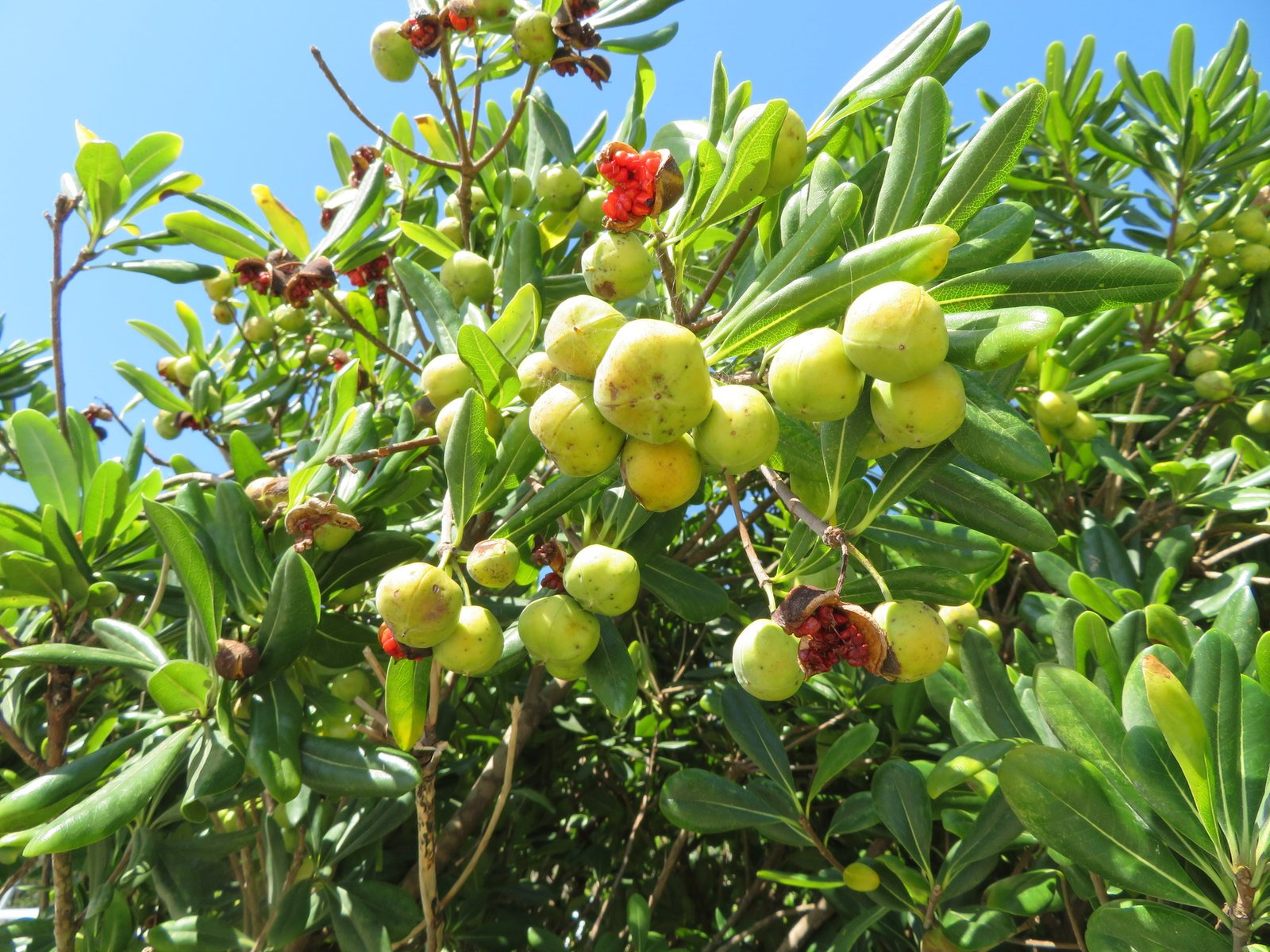
Not known to be toxic to cats, dogs or horses. Human poisoning information is limited; the fruits and sticky seeds are not edible, and swallowing plant material may cause stomach upset.
Easily confused with
Variegated kohuhu (Pittosporum tenuifolium 'Variegatum')
Has smaller, thinner, often wavy-edged leaves on slender dark stems; its flowers are small and dark purple rather than creamy white.
Variegated euonymus (Euonymus japonicus)
Its leaves occur in opposite pairs and usually have finely toothed edges; pittosporum leaves have smooth edges and cluster near shoot tips.
Variegated daphne (Daphne odora 'Aureomarginata')
Usually has a narrower yellow leaf margin and pink-budded flower clusters in late winter or early spring, rather than the later creamy-white flowers of pittosporum.
The name
Pittosporum comes from Greek words meaning pitch and seed, referring to the sticky seed coating, while 'Variegata' describes the cream-marked foliage.
Propagation. Take semi-ripe cuttings in late summer and root them in a free-draining medium with gentle humidity. Choose variegated shoots; seedlings will not reliably retain the cultivar's markings.
Checked against open data
- Accepted botanical name
- Pittosporum tobira
- In the US and Canada
- Introduced in the lower 48 states and Pacific Basin.
- Native range
- Japan, Korea, Nansei-shoto and Taiwan.
- Measured
- Soil pH 5.5 to 7. Average height 610 cm.
Sources: GBIF (CC BY 4.0), USDA PLANTS and Trefle (CC BY 4.0). The care and design notes are LandscapeGPT's own.
See it in your own yard.
Upload a photo of your yard and see it redesigned with plants that suit your climate, each checked against your zone.