Variegated sweet iris
Iris pallida 'Variegata'. Family Iridaceae. Perennial.
Also called Variegated Dalmatian iris, Zebra iris.
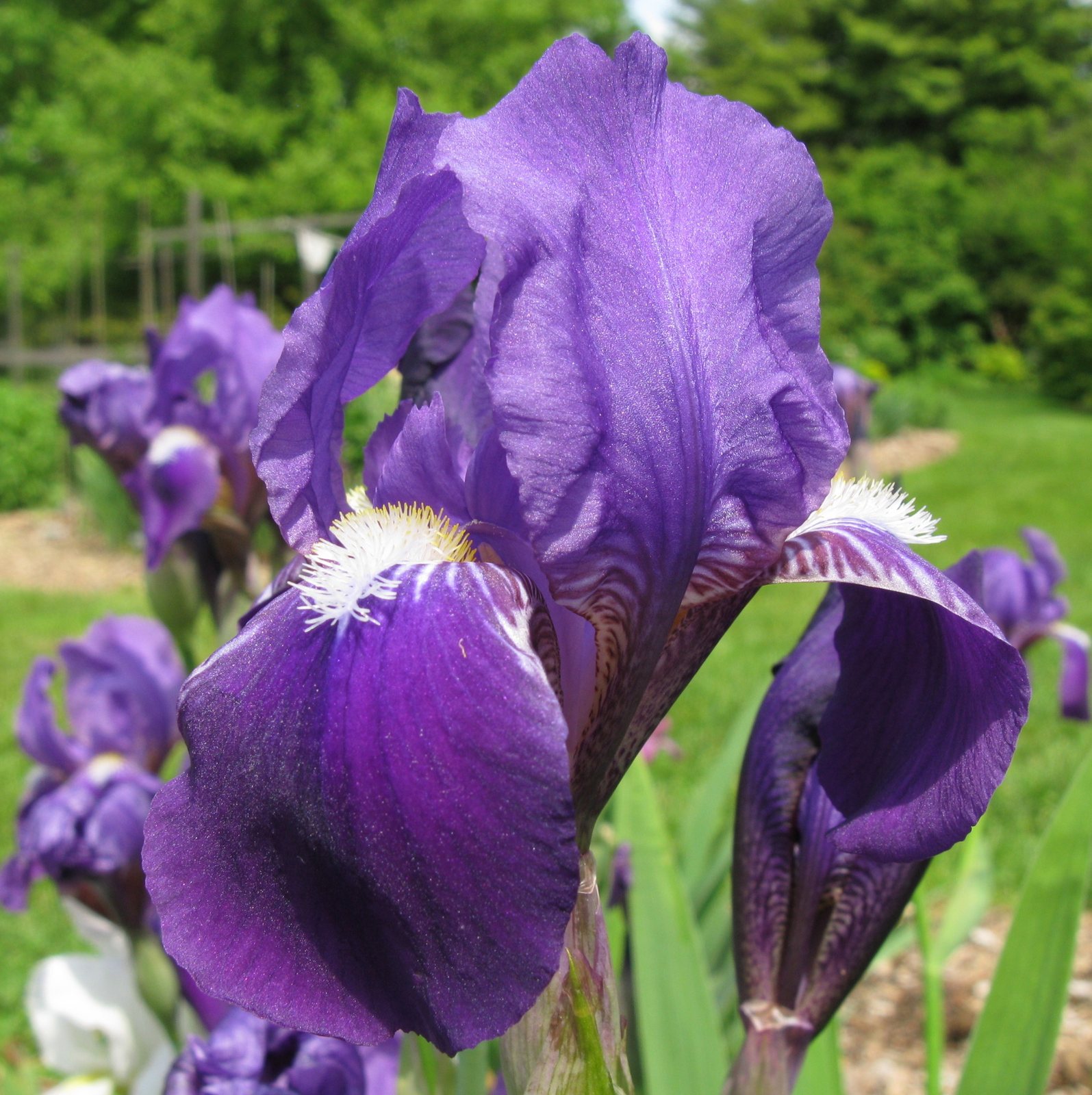
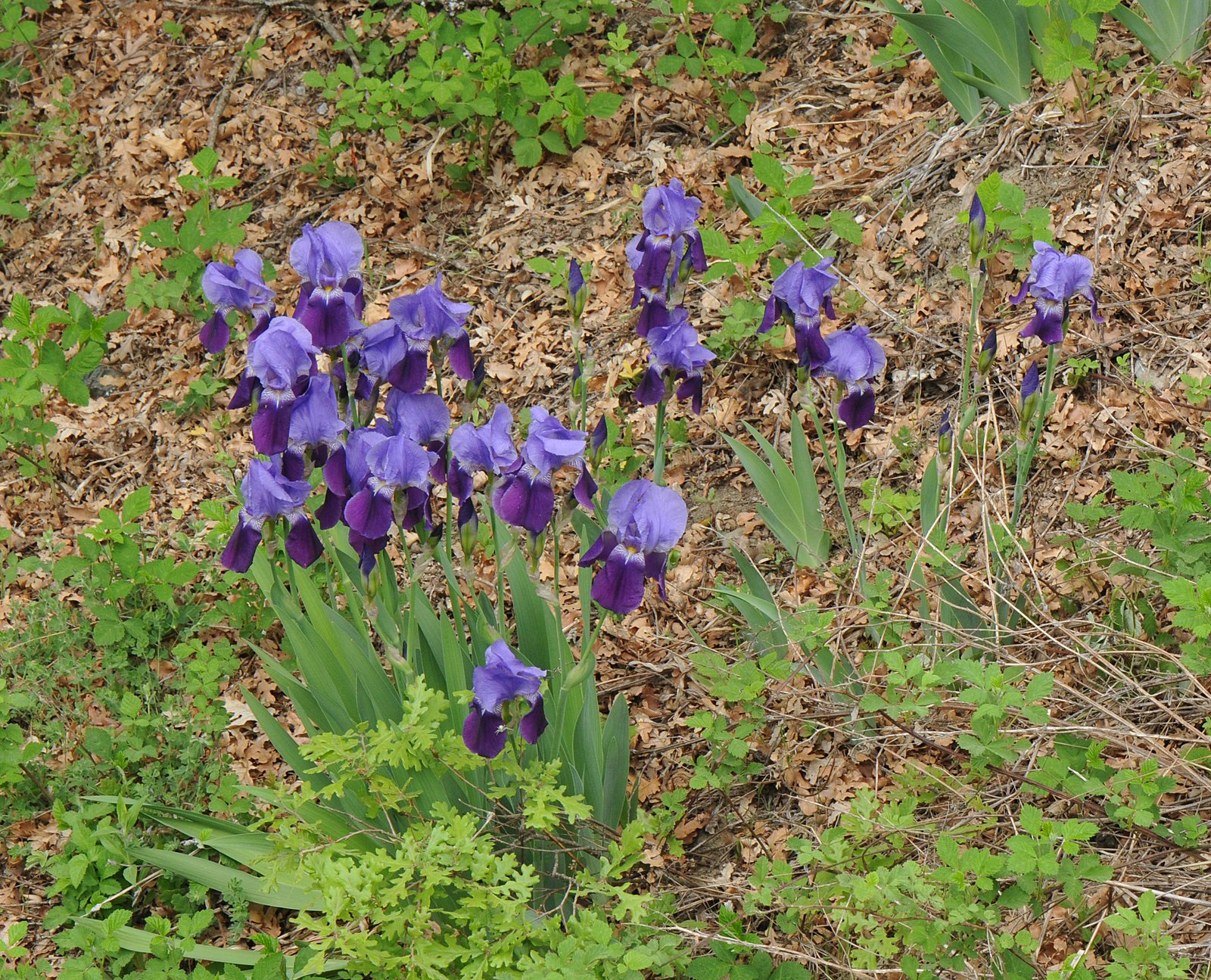
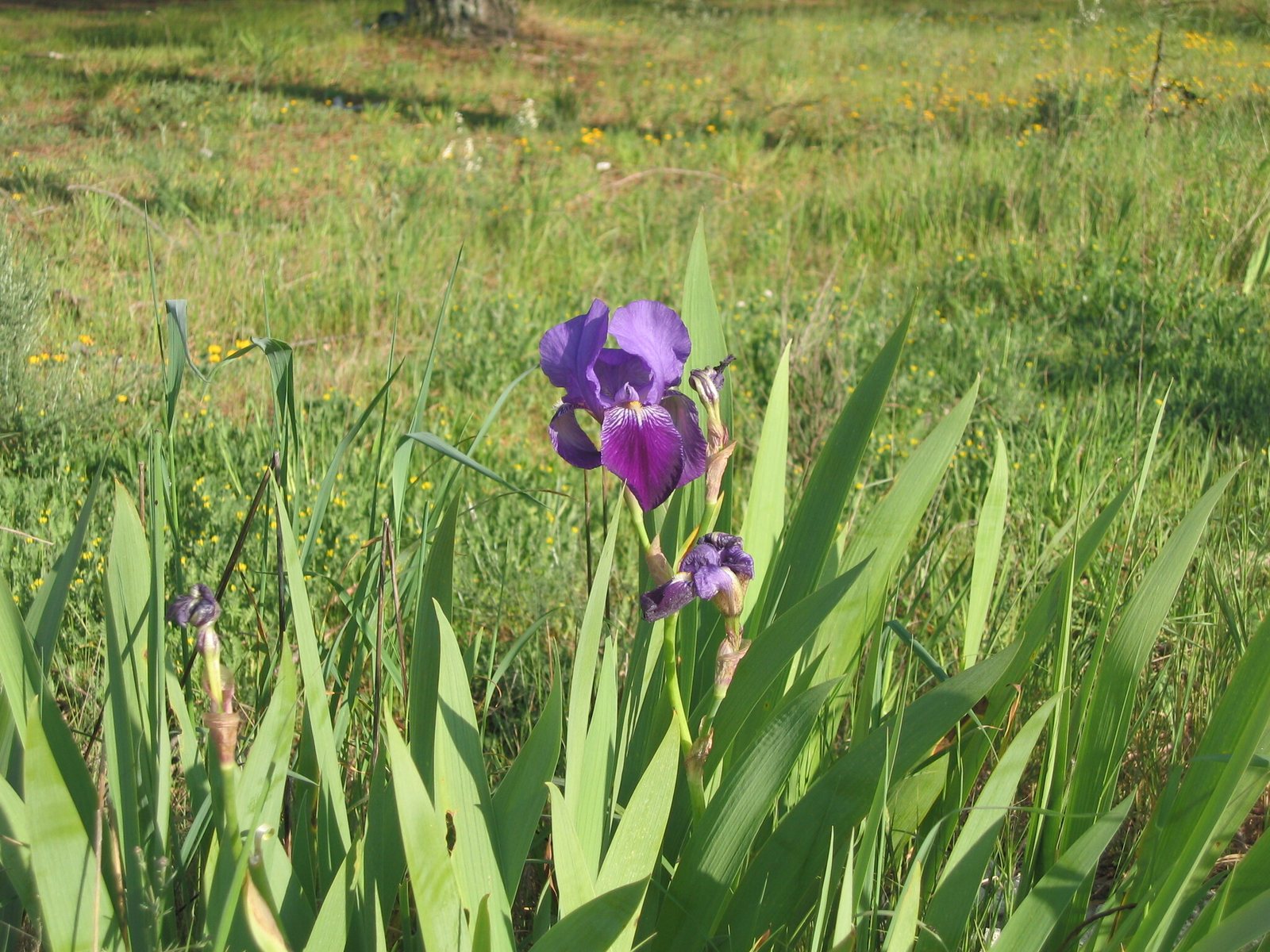
Iris pallida 'Variegata' is a clump-forming bearded iris grown for its striped, sword-shaped leaves and fragrant lavender-blue flowers. Its foliage provides interest beyond the flowering season, especially along sunny paths and at the front of mixed borders.
At a glance
- Sun
- Full sun is best; tolerates light partial shade but may flower less.
- Water
- Water regularly while establishing. Once established, water during prolonged drought; avoid persistently wet soil, especially in winter.
- Soil
- Well-drained soil, preferably neutral to slightly alkaline. Tolerates poor, stony soil but dislikes heavy, waterlogged ground.
- Height
- 2-3 ft (0.6-0.9 m), including flower stems
- Spread
- 1-2 ft (0.3-0.6 m)
- Flowers
- Late spring to early summer; fragrant, pale lavender-blue bearded flowers.
- Foliage
- Upright fans of broad, grey-green leaves striped lengthwise with cream to pale yellow; new stripes can be more strongly yellow.
- Growth
- Moderate; expands gradually through thick rhizomes.
- Care needed
- Low
The year at a glance
- Pollinators
- Deer resistant
- Drought tolerant
- Cold hardy
- Heat tolerant
- Low allergen
- Fragrant
| J | F | M | A | M | J | J | A | S | O | N | D | |
|---|---|---|---|---|---|---|---|---|---|---|---|---|
| Flowers | ||||||||||||
| Plant |
Northern hemisphere months. In Australia, shift them by six.
- Difficulty
- Easy
- Toughness
- Very tough
Will it suit your garden?
Pick your zone, country, light and whether you have pets.
Full sun is 6 or more hours of direct sun a day, part shade 3 to 6 hours, shade under 3.
How it grows
Planting day
1 ft (0.3 m)
After 1 year
1.5 ft (0.45 m)
After 2 years
2 ft (0.6 m)
After 3 years
2.5 ft (0.75 m)
full size
About 3 years to full size.
From a typical nursery size, at an average rate for this kind of plant. A rule of thumb, not a forecast.
Good to know
- Cats and dogs
- Toxic
- Growth rate
- Moderate
Care
Jobs through the year
- WaterApr–May, Sep, every 14 days
- Water established plants only during prolonged drought; water new plants more regularly.
- WaterJun–Aug, every 14 days
- Water deeply only during prolonged drought, allowing soil to dry between waterings.
- FeedMar
- Apply a light balanced feed only if growth is weak; avoid excess nitrogen.
- PruneJun–Jul
- Cut spent flower stems to their bases, leaving healthy foliage intact.
- DivideJul–Sep
- Divide every three to four years after flowering; replant with rhizome tops exposed.
- PruneMar, Oct–Nov
- Remove dead or badly spotted leaves and dispose of diseased material.
- ProtectJan–Feb, Oct–Dec
- Keep exposed rhizomes clear of mulch and wet leaf debris.
- Plant with the upper surface of the rhizome exposed to sunlight, rather than buried deeply.
- Water new plants through their first growing season, allowing the soil surface to dry between waterings.
- Apply a light dressing of balanced fertiliser in spring if growth is weak; avoid heavy nitrogen feeding.
- Keep mulch, fallen leaves and neighbouring plants away from the rhizomes.
- Divide crowded clumps every three to four years, after flowering, allowing time for roots to establish before winter.
Pruning. Cut spent flower stems back to their base after flowering, leaving healthy leaves intact. Remove dead or badly spotted leaves in autumn and winter; shorten foliage when dividing if needed to reduce wind rock.
Through the year
- Early spring
- Remove dead foliage, check rhizomes for rot and apply a light feed if needed.
- Spring
- Plant container-grown plants in a sunny, freely drained position with rhizome tops exposed.
- Late spring
- Enjoy the fragrant flowers and check emerging foliage for chewing damage.
- Early summer
- Cut off finished flower stems without removing healthy leaves.
- Late summer
- Divide crowded clumps and replant firm outer rhizomes with healthy leaf fans.
- Autumn
- Clear dead leaves and keep the rhizomes free of mulch and wet debris.
In the garden
- Repeat small groups along a sunny path so the striped leaves create a clear rhythm.
- Plant near seating or an entrance where the flowers' fragrance can be appreciated.
- Combine with lavender, catmint and ornamental onions in a freely drained border.
- Use in gravel gardens, keeping surrounding plants low enough to leave the rhizomes open to sunlight.
Garden styles it suits: Cottage garden, English country, Dry gravel garden, Mediterranean, Sensory garden and Arts and Crafts.
Plant it with: Lavender, Catmint, Ornamental onions, Hardy salvias, Creeping thyme and Yarrow.
Wildlife: Flowers can attract bees. Deer often leave the foliage alone, although no plant is reliably deer-proof.
Problems to watch for
- Soft rhizome rot: improve drainage, remove affected tissue or discard badly rotted rhizomes, and replant healthy sections shallowly.
- Iris leaf spot: remove infected and fallen leaves, improve air circulation and avoid wetting the foliage when watering.
- Iris borer in eastern North America: remove old foliage in autumn and inspect spring leaves for water-soaked streaks; remove larvae and damaged rhizomes.
- Few flowers: provide more sun, uncover buried rhizome tops, avoid excess nitrogen and divide overcrowded clumps.
Safety
Toxic if eaten by people, cats, dogs and horses; all parts contain irritants, especially the rhizomes. Ingestion can cause mouth irritation, drooling, vomiting, abdominal pain or diarrhoea; severe poisoning is uncommon, but seek medical or veterinary advice after ingestion. Sap may irritate skin, so wear gloves when dividing.
Easily confused with
Silver-variegated sweet iris (Iris pallida 'Argentea Variegata')
Usually has clearer white or silvery-white stripes rather than the cream-yellow striping of 'Variegata'. Nursery naming is inconsistent, so inspect the foliage before buying.
Variegated Japanese water iris (Iris ensata 'Variegata')
Has narrower, white-striped leaves and later, flatter flowers without a fuzzy beard; it prefers moist, acidic soil rather than dry, exposed rhizomes.
Variegated sweet flag (Acorus calamus 'Variegatus')
Has striped, grasslike leaves with a conspicuous midrib and an aromatic scent when bruised, but no showy iris flowers; it grows in wet ground.
The name
Iris is named for the Greek goddess of the rainbow, pallida means pale, and 'Variegata' refers to the striped foliage.
Propagation. Divide rhizomes after flowering, usually in late summer. Keep firm sections with healthy roots and at least one leaf fan; division preserves the cultivar's striped foliage, whereas seed does not reliably do so.
Checked against open data
- Accepted botanical name
- Iris pallida
- In the US and Canada
- Introduced in Canada and the lower 48 states.
- Native range
- Italy and Yugoslavia.
- Measured
- Average height 53 cm.
Sources: GBIF (CC BY 4.0), USDA PLANTS and Trefle (CC BY 4.0). The care and design notes are LandscapeGPT's own.
See it in your own yard.
Upload a photo of your yard and see it redesigned with plants that suit your climate, each checked against your zone.