Vera Jameson sedum
Hylotelephium 'Vera Jameson'. Family Crassulaceae. Perennial.
Also called Sedum 'Vera Jameson', Vera Jameson stonecrop.
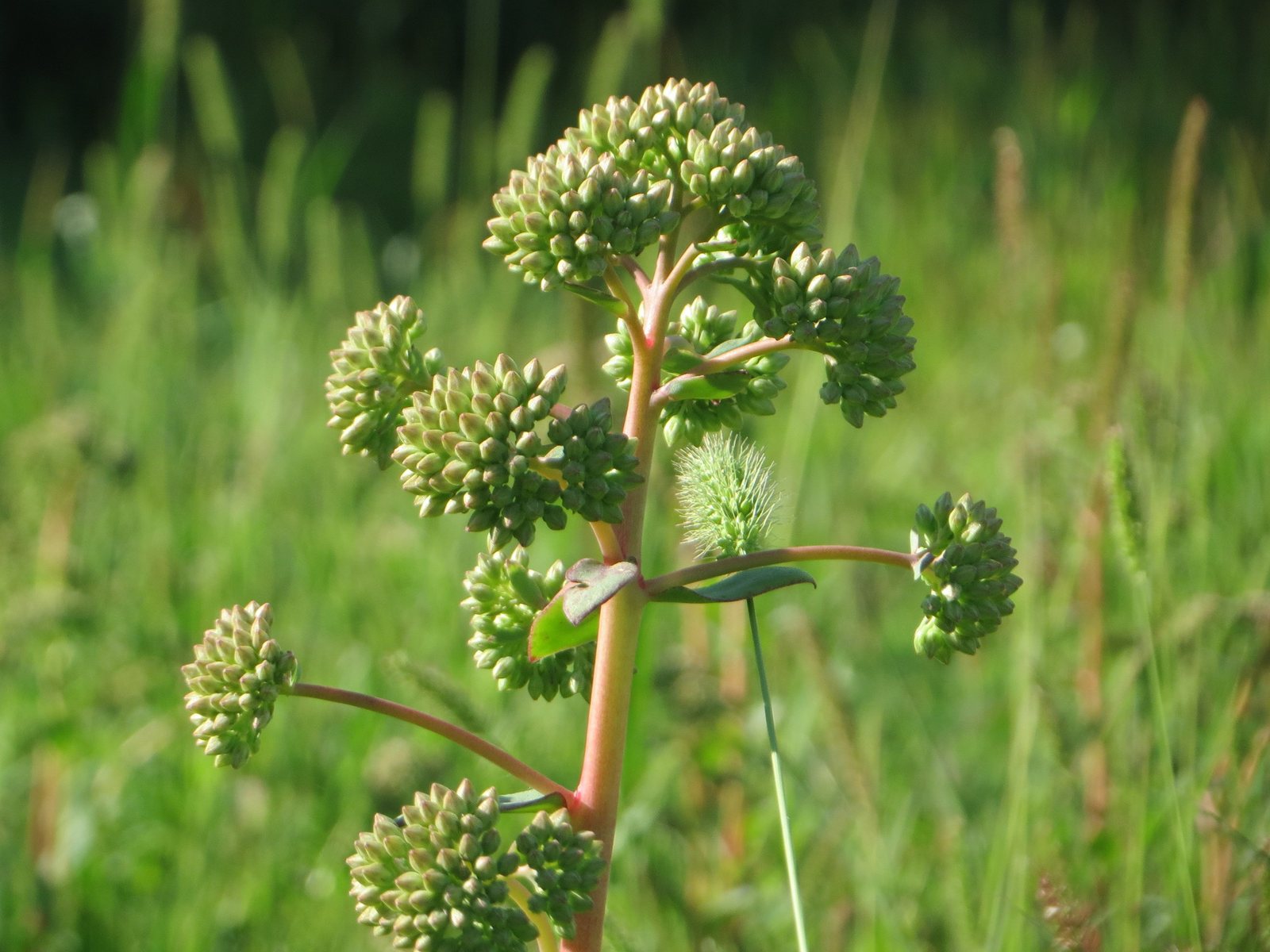
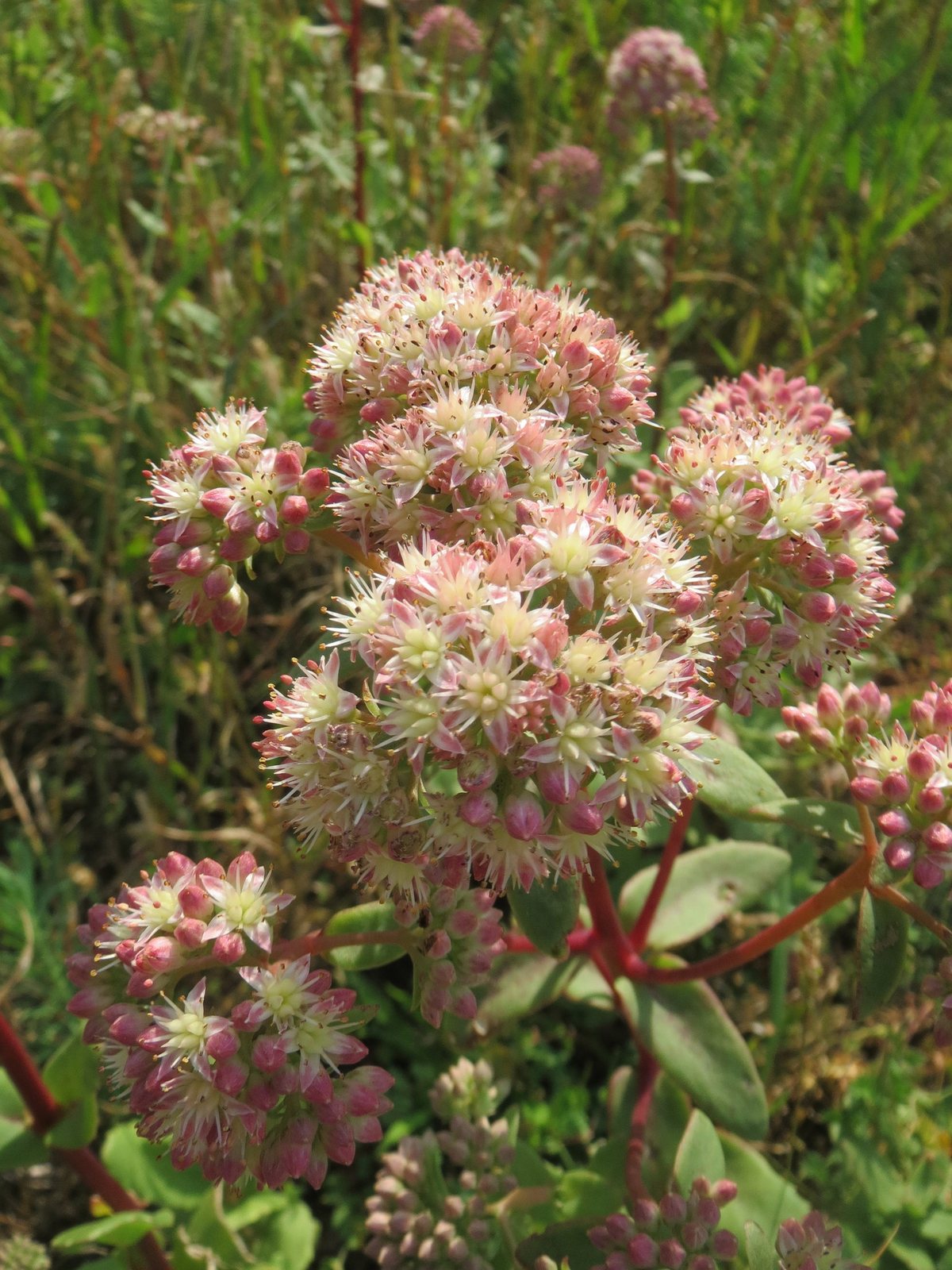
Vera Jameson sedum is a low, spreading perennial with fleshy, purple-bronze leaves and clusters of dusky pink flowers in late summer. It brings long-lasting foliage colour to sunny borders, gravel gardens and containers, and tolerates drought once established.
At a glance
- Sun
- Full sun gives the strongest foliage colour and compact growth; tolerates light shade.
- Water
- Low once established. Water new plants during dry spells, then let the soil dry between thorough waterings.
- Soil
- Well-drained sandy, gravelly or loamy soil, preferably of low to moderate fertility. Avoid soil that stays wet in winter.
- Height
- 0.75-1 ft (0.23-0.3 m)
- Spread
- 1-1.5 ft (0.3-0.45 m)
- Flowers
- Late summer to early autumn; broad clusters of small, star-shaped, dusky pink flowers.
- Foliage
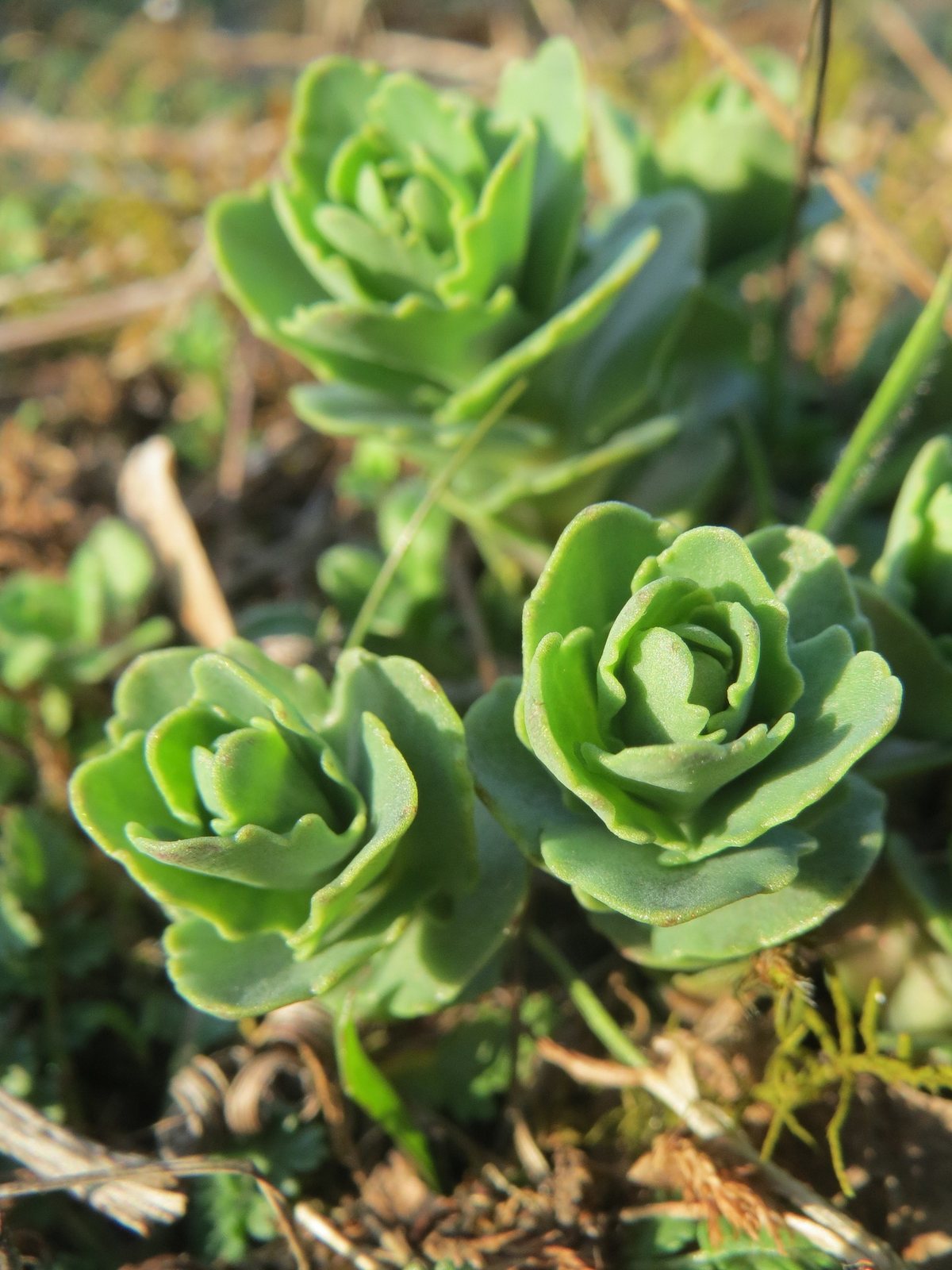
- Fleshy, rounded to oval leaves emerge grey-green with purple tones and deepen to purple-bronze in strong sun. Stems arch outward, giving the plant a loose, spreading shape.
- Growth
- Moderate; gradually forms a broad, loose clump.
- Care needed
- Low
The year at a glance
- Pollinators
- Drought tolerant
- Cold hardy
- Heat tolerant
- Low allergen
| J | F | M | A | M | J | J | A | S | O | N | D | |
|---|---|---|---|---|---|---|---|---|---|---|---|---|
| Flowers | ||||||||||||
| Fruit | ||||||||||||
| Plant |
Northern hemisphere months. In Australia, shift them by six.
- Difficulty
- Easy
- Toughness
- Very tough
Will it suit your garden?
Pick your zone, country, light and whether you have pets.
Full sun is 6 or more hours of direct sun a day, part shade 3 to 6 hours, shade under 3.
How it grows
Planting day
0.9 ft (0.27 m)
full size
About 3 years to full size.
From a typical nursery size, at an average rate for this kind of plant. A rule of thumb, not a forecast.
Good to know
- Cats and dogs
- Safe
- Growth rate
- Moderate
Care
Jobs through the year
- WaterApr–May, Sep–Oct, every 28 days
- Established plants need water only during prolonged drought when the soil is dry.
- WaterJun–Aug, every 21 days
- Water established plants only during prolonged drought; water new plants more often without keeping soil wet.
- PruneFeb–Mar
- Cut old stems close to the ground without damaging emerging shoots.
- DivideMar–Apr
- Divide if the centre becomes sparse or the clump outgrows its space.
- MulchApr
- Use a thin gravel mulch if needed; avoid moisture-holding material against the crown.
- ProtectMar–Apr
- Inspect young shoots for slugs and snails and hand-pick pests.
- ProtectJan–Feb, Oct–Dec
- Keep sound seed heads standing; remove collapsed rotting stems and prevent winter waterlogging.
- Plant in full sun with excellent drainage, keeping the crown at soil level.
- Water during establishment; afterwards, water only during prolonged drought or when container soil has dried.
- Avoid routine feeding; rich soil and excess fertiliser encourage weak, sprawling stems.
- Use a thin gravel mulch rather than moisture-holding mulch around the crown.
- Divide in spring if the centre becomes sparse or the clump outgrows its space.
Pruning. Leave dry flower stems through winter if they remain attractive. Cut old stems back close to the ground in late winter or early spring, taking care not to damage new shoots.
Through the year
- Late winter
- Check that the crown is not sitting in wet soil, and clear away any collapsed, rotting stems.
- Early spring
- Cut remaining old stems to ground level before new growth develops.
- Spring
- Plant or divide clumps, then water until roots establish.
- Early summer
- Take non-flowering stem cuttings if you want more plants.
- Summer
- Water established plants only during prolonged drought; check containers more frequently.
- Autumn
- Leave sound flower heads for winter structure and avoid feeding or heavy organic mulch.
In the garden
- Edge sunny borders with its low, arching stems and purple-bronze foliage.
- Plant among pale gravel and rocks, where the dark leaves provide contrast.
- Combine with compact ornamental grasses for contrasting leaf shapes and late-season interest.
- Grow in a well-drained container, allowing stems to soften the rim.
- Repeat small groups beside silver-leaved perennials for a drought-tolerant planting.
Garden styles it suits: Dry gravel garden, Desert / xeriscape, Low-maintenance, Cottage garden, Pollinator garden and Small-space.
Plant it with: Lamb's ears, English lavender, Catmint, Blue fescue, Dwarf bearded iris and Creeping thyme.
Wildlife: The late-season flowers provide nectar and pollen for bees and other visiting insects, including butterflies.
Problems to watch for
- Root or crown rot in wet soil: improve drainage or move the plant to a raised bed; discard badly rotted crowns.
- Loose, floppy growth in shade or rich soil: move to full sun and stop feeding.
- Slugs and snails damaging emerging shoots: inspect new growth and use barriers, hand-picking or labelled slug controls where needed.
- Vine weevil larvae damaging roots, especially in pots: inspect failing plants and use an appropriate biological control when soil temperatures suit it.
Safety
Not known to be toxic to cats, dogs, horses or people. No particular plant part is recognised as poisonous, but it is not a food plant and eating it may cause digestive upset.
Easily confused with
Autumn Joy sedum (Hylotelephium 'Herbstfreude')
Much taller and more upright, with green leaves and larger flower heads that age from pink to rusty red.
Purple Emperor sedum (Hylotelephium 'Purple Emperor')
Forms a taller, more upright clump with very dark purple leaves rather than Vera Jameson's low, outward-arching stems.
Cliff stonecrop (Hylotelephium cauticola)
Usually has smaller, blue-grey leaves with purple-tinted margins, rather than the broader purple-bronze foliage of Vera Jameson.
The name
The cultivar is named after Vera Jameson, the English gardener in whose garden it originated.
Propagation. Divide clumps in spring or root non-flowering stem cuttings in late spring or early summer in a gritty growing medium. Seed-grown plants will not reliably retain the cultivar's characteristics.
Checked against open data
- Accepted botanical name
- Hylotelephium
Sources: GBIF (CC BY 4.0). The care and design notes are LandscapeGPT's own.
See it in your own yard.
Upload a photo of your yard and see it redesigned with plants that suit your climate, each checked against your zone.