Vernal witch hazel
Hamamelis vernalis. Family Hamamelidaceae. Shrub.
Also called Ozark witch hazel, Spring witch hazel.
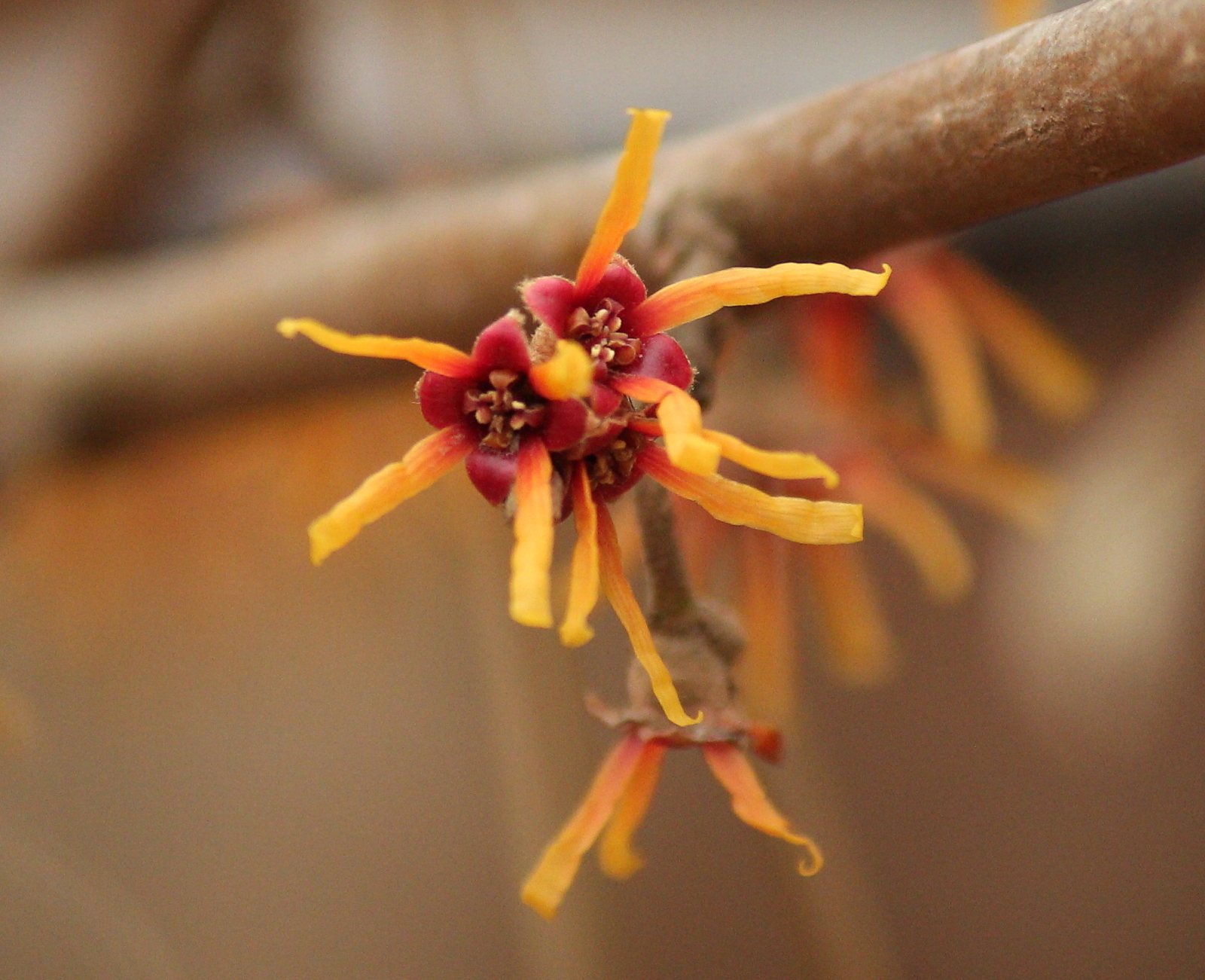
A deciduous shrub native to the south-central United States, vernal witch hazel produces small, fragrant flowers on bare branches in late winter or early spring. Gardeners grow it for its early scent, golden autumn leaves and broad, suckering habit, which suits informal borders and woodland edges.
At a glance
- Sun
- Full sun to partial shade; flowering is usually best with at least half a day of direct sun.
- Water
- Keep the root zone evenly moist while establishing. Established plants tolerate short dry spells, but benefit from deep watering during prolonged drought.
- Soil
- Moist, well-drained soil enriched with organic matter; prefers acidic to neutral conditions but tolerates clay if drainage is adequate.
- Height
- 6-10 ft (1.8-3 m)
- Spread
- 8-15 ft (2.4-4.6 m), potentially wider through suckering
- Flowers
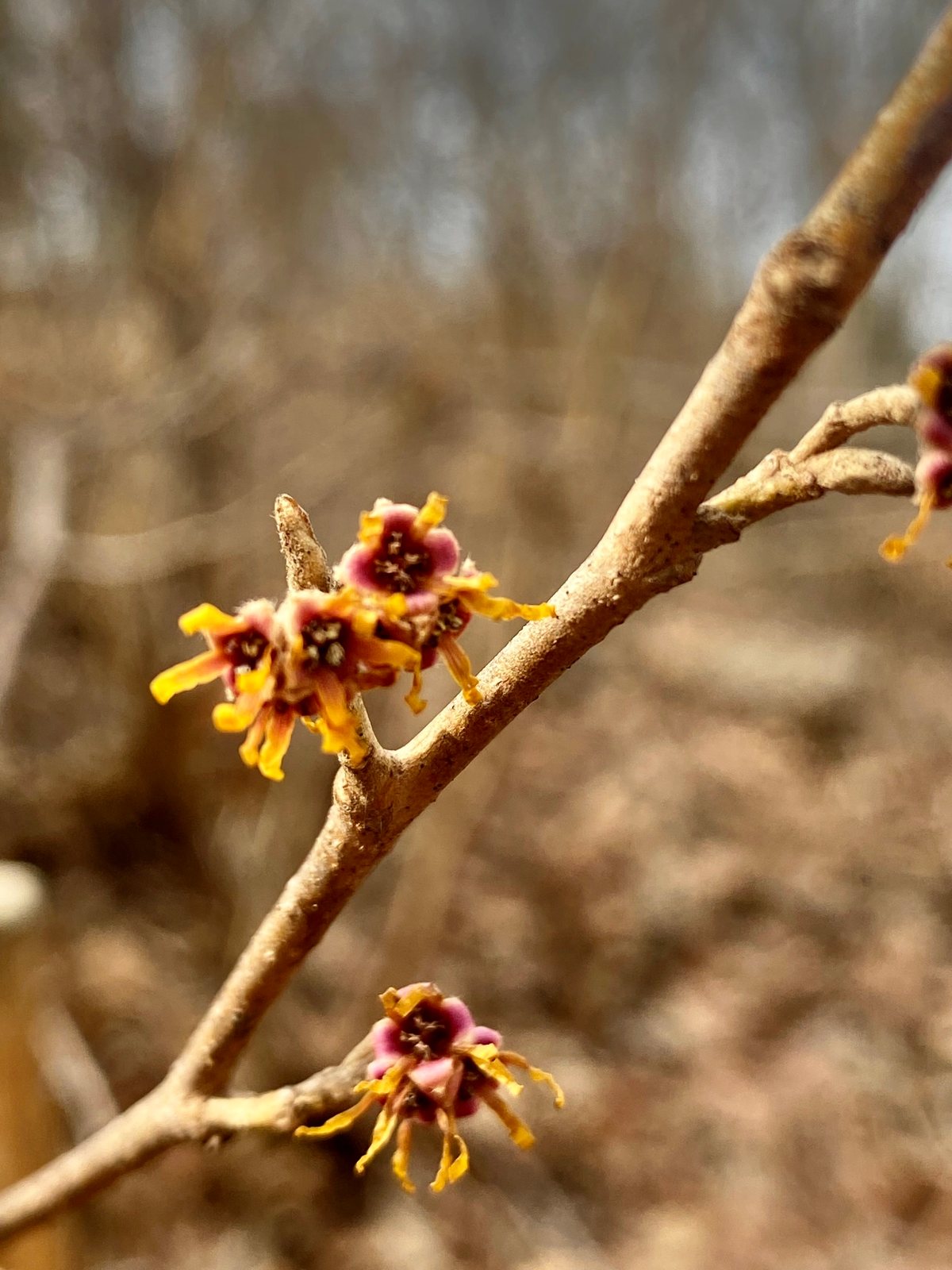
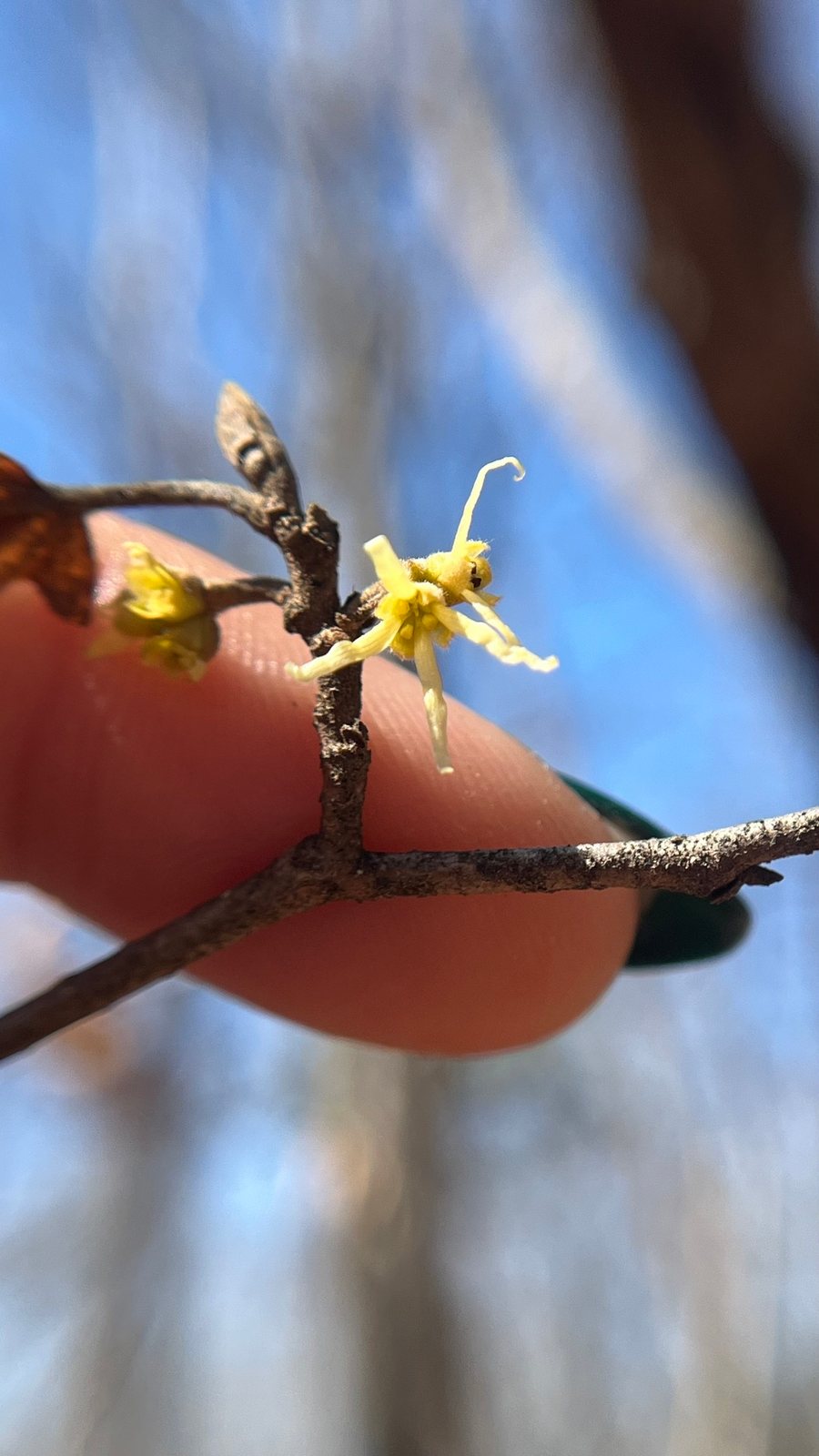
- Late winter to early spring; fragrant, narrow, crinkled petals range from yellow to orange or reddish orange, often with reddish bases. Flowers curl inward during severe cold and reopen as temperatures rise.
- Foliage
- Broad, rounded to oval green leaves with wavy or shallowly toothed edges turn golden yellow in autumn. Some plants retain dead brown leaves into winter, partly hiding the flowers.
- Growth
- Slow to moderate
- Care needed
- Low
The year at a glance
- Pollinators
- Cold hardy
- Wildlife
- Low allergen
- Fragrant
| J | F | M | A | M | J | J | A | S | O | N | D | |
|---|---|---|---|---|---|---|---|---|---|---|---|---|
| Flowers | ||||||||||||
| Fruit | ||||||||||||
| Plant |
Northern hemisphere months. In Australia, shift them by six.
- Difficulty
- Easy
- Toughness
- Very tough
Will it suit your garden?
Pick your zone, country, light and whether you have pets.
Full sun is 6 or more hours of direct sun a day, part shade 3 to 6 hours, shade under 3.
How it grows
Planting day
1.6 ft (0.5 m)
After 1 year
2.6 ft (0.79 m)
After 2 years
4 ft (1.1 m)
After 3 years
5 ft (1.4 m)
After 5 years
6 ft (2 m)
About 7 years to full size.
From a typical nursery size, at an average rate for this kind of plant. A rule of thumb, not a forecast.
Good to know
- Cats and dogs
- Safe
- Native to
- the US
- Growth rate
- Slow
Care
Jobs through the year
- WaterApr–May, Sep–Oct, every 14 days
- Water established shrubs only during prolonged dry weather; keep young shrubs evenly moist.
- WaterJun–Aug, every 10 days
- Water deeply if the root zone is drying; young shrubs need more for two growing seasons.
- MulchApr, Oct
- Maintain 5–8 cm of leaf mould or composted bark, clear of stems.
- PruneMar–Apr
- Just after flowering, remove damaged or crossing wood and unwanted suckers; preserve the natural shape.
- FeedApr
- Only if growth is weak, apply a modest amount of balanced fertilizer.
- Water deeply during dry weather for the first two growing seasons.
- Spread 2-3 in (5-8 cm) of leaf mould or composted bark over the root zone, keeping it clear of the stems.
- Water established plants during prolonged drought, especially on sandy soil.
- Avoid routine heavy feeding; use a modest spring application of balanced fertiliser only if growth is weak.
- Remove unwanted suckers at their point of origin if you need to limit the shrub's spread.
Pruning. Prune just after flowering, removing dead, damaged or crossing branches and shortening only shoots that outgrow their space. Preserve its natural branching habit rather than clipping it into a tight shape.
Through the year
- Late winter
- Enjoy the flowers and check whether retained brown leaves are obscuring them; gently remove only leaves that detach easily.
- Early spring
- After flowering, remove damaged branches and any unwanted suckers.
- Spring
- Plant container-grown shrubs while soil is workable, then water thoroughly and mulch.
- Summer
- Check soil moisture during dry spells and water deeply if the root zone is drying out.
- Autumn
- Plant in mild regions, refresh the mulch and leave enough space for the shrub's mature spread.
In the garden
- Plant beside a frequently used winter path so you can smell the flowers without crossing wet ground.
- Use at a woodland edge with spring bulbs and shade-tolerant perennials.
- Allow several shrubs to form an informal screen where suckering growth has room to spread.
- Set against dark evergreen foliage to make the small winter flowers easier to see.
Garden styles it suits: Woodland, Winter interest, Sensory garden, Wildlife garden, Traditional and Low-maintenance.
Plant it with: Snowdrops, Winter aconites, Lenten roses, Christmas ferns, Foamflowers and Red-twig dogwoods.
Wildlife: Flowers provide pollen and nectar for insects active during mild late-winter weather. Dense branching offers shelter for small birds, and wildlife may eat the seeds.
Problems to watch for
- Brown leaves can persist through winter and hide the flowers: this is natural, especially on young plants; gently remove loose leaves near the flowers if desired.
- Leaf scorch or premature leaf drop during drought: water deeply and maintain an organic mulch over the root zone.
- Poor flowering in dense shade: move young plants to a brighter position or reduce overhead shade where practical.
- Unwanted suckering: remove shoots at their origin regularly, or give the shrub room to form a thicket.
Safety
Not known to be toxic to people, cats, dogs or horses, although species-specific safety information is limited. Leaves, bark and seeds are not food; eating substantial amounts may cause digestive upset. Commercial witch-hazel preparations may contain alcohol and should not be treated as safe to swallow.
Easily confused with
American witch hazel (Hamamelis virginiana)
Usually flowers in autumn rather than late winter, with yellow flowers often appearing as the leaves turn colour or fall.
Hybrid witch hazel (Hamamelis × intermedia)
Also flowers in winter, but commonly grown cultivars usually have larger, longer-petalled flowers. Flower colour alone is not a reliable distinction; check the plant label.
Chinese witch hazel (Hamamelis mollis)
Typically has larger golden-yellow flowers and conspicuously soft, hairy leaf undersides; vernal witch hazel has smaller flowers and is more strongly suckering.
The name
The species name vernalis means 'of spring', referring to its early flowering season.
Propagation. Separate rooted suckers during dormancy to retain the parent plant's characteristics. Seed propagation is slow and requires warm followed by cold stratification; germination may take more than a year.
Checked against open data
- Accepted botanical name
- Hamamelis vernalis
- In the US and Canada
- Native in the lower 48 states.
- Native range
- Arkansas, Missouri and Oklahoma.
Sources: GBIF (CC BY 4.0), USDA PLANTS and Trefle (CC BY 4.0). The care and design notes are LandscapeGPT's own.
See it in your own yard.
Upload a photo of your yard and see it redesigned with plants that suit your climate, each checked against your zone.