Wallflower 'Bowles's Mauve'
Erysimum 'Bowles's Mauve'. Family Brassicaceae. Perennial.
Also called Perennial wallflower 'Bowles's Mauve'.
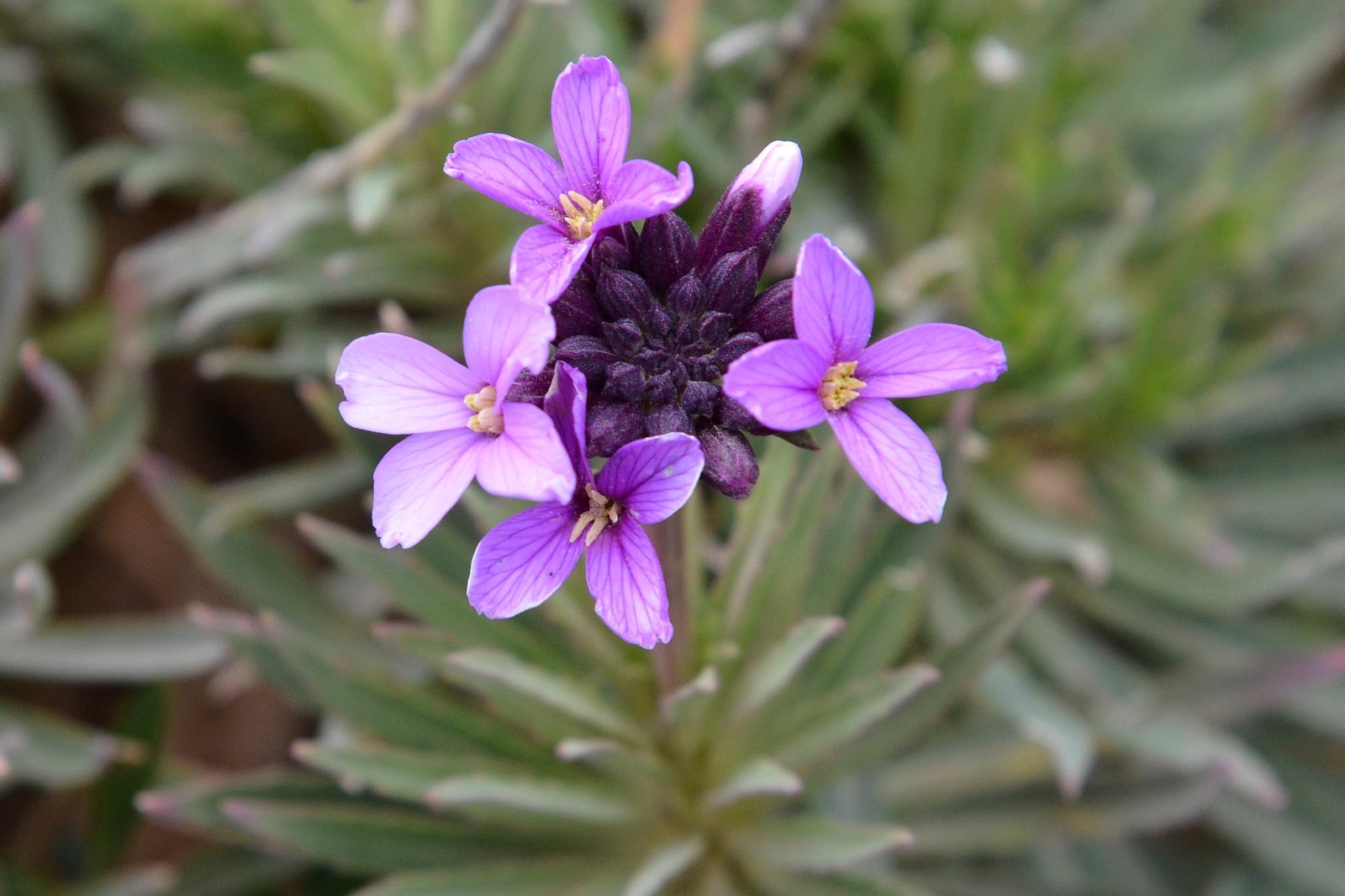
A short-lived, evergreen perennial with a woody base, narrow grey-green leaves and long stems of mauve flowers. Gardeners grow it for its unusually long flowering season and its value to pollinating insects; expect to replace plants every few years as they become woody.
At a glance
- Sun
- Full sun; tolerates light shade but flowers less freely.
- Water
- Water regularly while establishing, then during prolonged dry spells. Established plants tolerate some drought but dislike persistently wet roots.
- Soil
- Well-drained, moderately fertile soil, preferably neutral to alkaline. Sandy, chalky or gravelly soil suits it; improve drainage before planting in heavy clay.
- Height
- 2-3 ft (0.6-0.9 m)
- Spread
- 1.5-2.5 ft (0.45-0.75 m)
- Flowers
- Mauve-purple flowers from spring through autumn, sometimes continuing into winter in mild climates.
- Foliage
- Evergreen. Narrow, grey-green leaves form a dense, rounded mound beneath the flower stems.
- Growth
- Fast; often reaches near-full size within two growing seasons.
- Care needed
- Medium
The year at a glance
- Pollinators
- Drought tolerant
- Heat tolerant
- Low allergen
| J | F | M | A | M | J | J | A | S | O | N | D | |
|---|---|---|---|---|---|---|---|---|---|---|---|---|
| Flowers | ||||||||||||
| Plant |
Northern hemisphere months. In Australia, shift them by six.
- Difficulty
- Moderate
- Toughness
- Fairly tough
Will it suit your garden?
Pick your zone, country, light and whether you have pets.
Full sun is 6 or more hours of direct sun a day, part shade 3 to 6 hours, shade under 3.
How it grows
Planting day
1 ft (0.3 m)
After 1 year
1.7 ft (0.53 m)
After 2 years
2.5 ft (0.75 m)
full size
About 2 years to full size.
From a typical nursery size, at an average rate for this kind of plant. A rule of thumb, not a forecast.
Good to know
- Cats and dogs
- Safe
- Growth rate
- Fast
Care
Jobs through the year
- WaterApr–May, Sep–Oct, every 14 days
- Water established plants only during prolonged dry weather; water new plants more often.
- WaterJun–Aug, every 10 days
- Water established plants deeply during prolonged drought, letting soil dry between waterings.
- FeedApr
- Apply a light feed only if growth is weak; avoid rich nitrogen feeding.
- PruneApr
- Trim frost-damaged tips to healthy leafy growth after severe frosts have passed.
- DeadheadApr–Oct, every 7 days
- Remove spent flower stems back to leafy growth.
- PruneJun–Jul
- Lightly trim sprawling shoots after a flowering flush; never cut into bare old wood.
- ProtectJan–Mar, Oct–Dec
- Shelter from winter wet and severe frost; in zone 6, overwinter a replacement plant under frost-free cover.
- Plant in a sunny, freely drained position sheltered from severe winter winds.
- Water new plants deeply when the root zone starts to dry; avoid keeping the soil constantly damp.
- Feed lightly in spring only if growth is weak; rich feeding encourages soft, sprawling growth.
- Keep mulch away from the woody crown, especially through wet winters.
- Take cuttings while plants are healthy so replacements are ready when older plants decline.
Pruning. Remove spent flower stems regularly, cutting back to leafy growth. After the main flowering flush, lightly trim straggly shoots to maintain a compact shape, but avoid cutting into bare old wood or pruning hard before winter.
Through the year
- Spring
- Plant after severe frosts have passed, choosing a sunny position with excellent drainage.
- Spring
- Trim frost-damaged tips back to healthy leafy growth and give a light feed if needed.
- Late spring
- Remove fading flower stems to keep the plant tidy and encourage further flowering.
- Summer
- Water during prolonged drought and lightly trim sprawling shoots after a flowering flush.
- Late summer
- Take semi-ripe cuttings from healthy, non-flowering shoots.
- Autumn
- Check that drainage is clear and keep fallen leaves and wet mulch away from the crown.
- Winter
- Protect container roots from prolonged freezing and shelter plants from persistent winter wet.
In the garden
- Plant near the front or middle of a sunny border, where the mauve flowers link pink, blue and white planting.
- Combine with lavender, sage and other silver-leaved plants in a gravel garden.
- Repeat small groups along a sunny path for a long season of colour and visiting insects.
- Grow in a large, freely draining container beside a sunny patio or entrance.
Garden styles it suits: Cottage garden, English country, Dry gravel garden, Mediterranean, Pollinator garden and Coastal.
Plant it with: English lavender, Catmint, Hardy salvia, Rock rose, Yarrow and Lamb's ears.
Wildlife: The flowers provide nectar for bees, butterflies and other pollinating insects over a long season. This cultivar is generally sterile, so it offers little seed for birds.
Problems to watch for
- Root and crown rot in wet soil: improve drainage or grow in a raised bed or container; remove plants with rotting crowns.
- Woody, bare stems and declining flowering with age: replace tired plants using cuttings rather than cutting hard into old wood.
- Aphids on soft shoots: wash off small colonies with water and encourage natural predators.
- Frost damage in exposed sites: choose a sheltered position, avoid late hard pruning and protect young plants during severe cold.
Safety
No toxic effects are reported for this cultivar in people, cats, dogs or horses, but specific safety information is limited. Do not treat its leaves, flowers or seeds as edible; some other Erysimum species contain cardiac glycosides.
Easily confused with
Common wallflower (Erysimum cheiri)
Usually grown as a biennial with a concentrated spring display, often in yellow, orange or red; 'Bowles's Mauve' has grey-green foliage and a much longer mauve flowering season.
Dame's rocket (Hesperis matronalis)
Has broader, greener leaves and taller, looser stems of often fragrant purple or white flowers; it lacks the compact, evergreen woody mound.
Garden stock (Matthiola incana)
Often has strongly scented flowers in dense spikes, sometimes with double blooms; 'Bowles's Mauve' has small, single, four-petalled flowers on extending stems.
The name
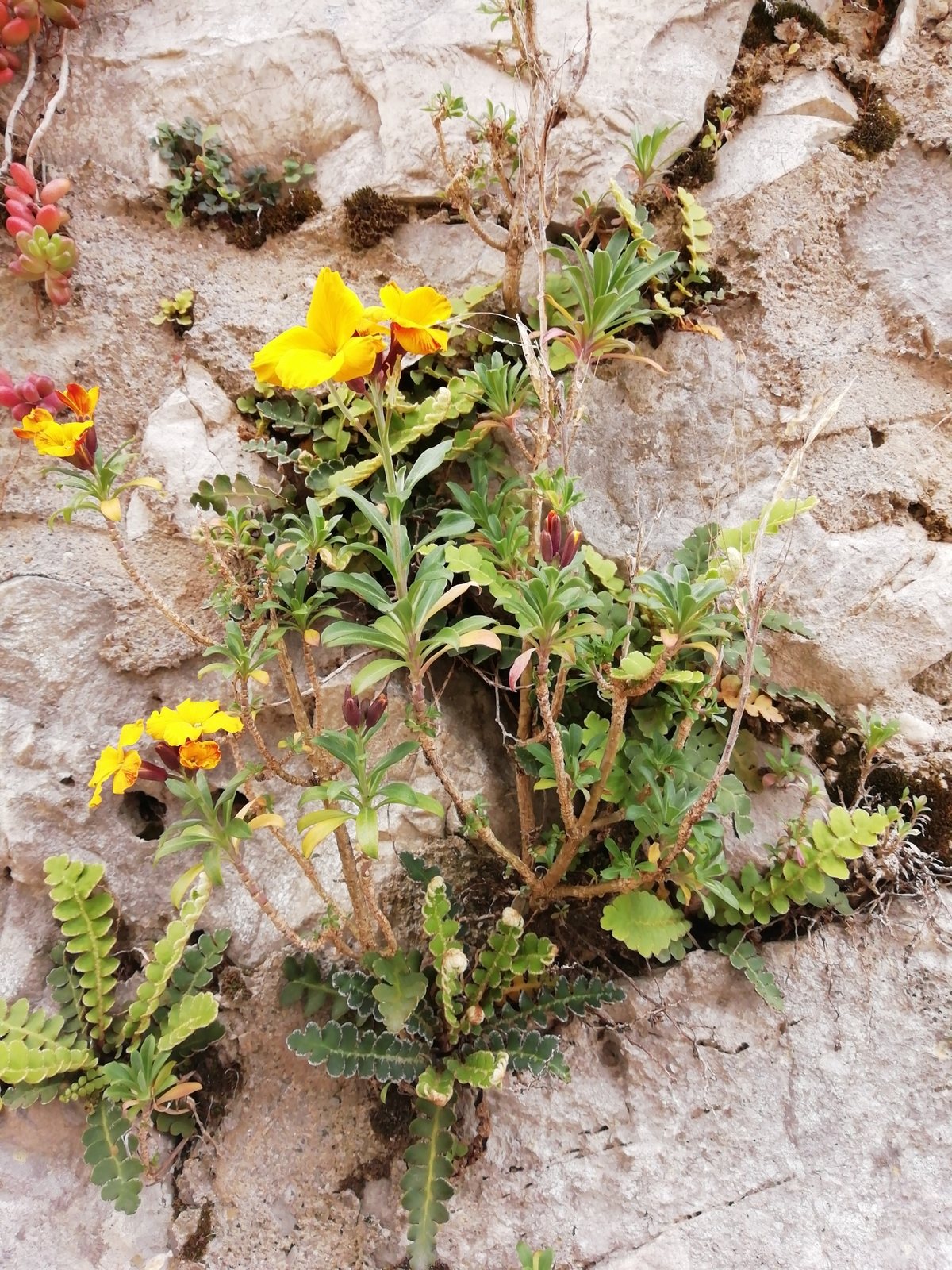
The cultivar name honours English plantsman E. A. Bowles, while 'wallflower' refers to these plants' habit of growing in the crevices of old walls.
Propagation. Take softwood cuttings in late spring or semi-ripe cuttings in summer from non-flowering shoots. This generally sterile cultivar is propagated by cuttings, not seed, to preserve its characteristics.
Checked against open data
- Accepted botanical name
- Erysimum
Sources: GBIF (CC BY 4.0). The care and design notes are LandscapeGPT's own.
See it in your own yard.
Upload a photo of your yard and see it redesigned with plants that suit your climate, each checked against your zone.