Wallflower
Erysimum cheiri. Family Brassicaceae. Perennial.
Also called Common wallflower, English wallflower, Cheiranthus cheiri.
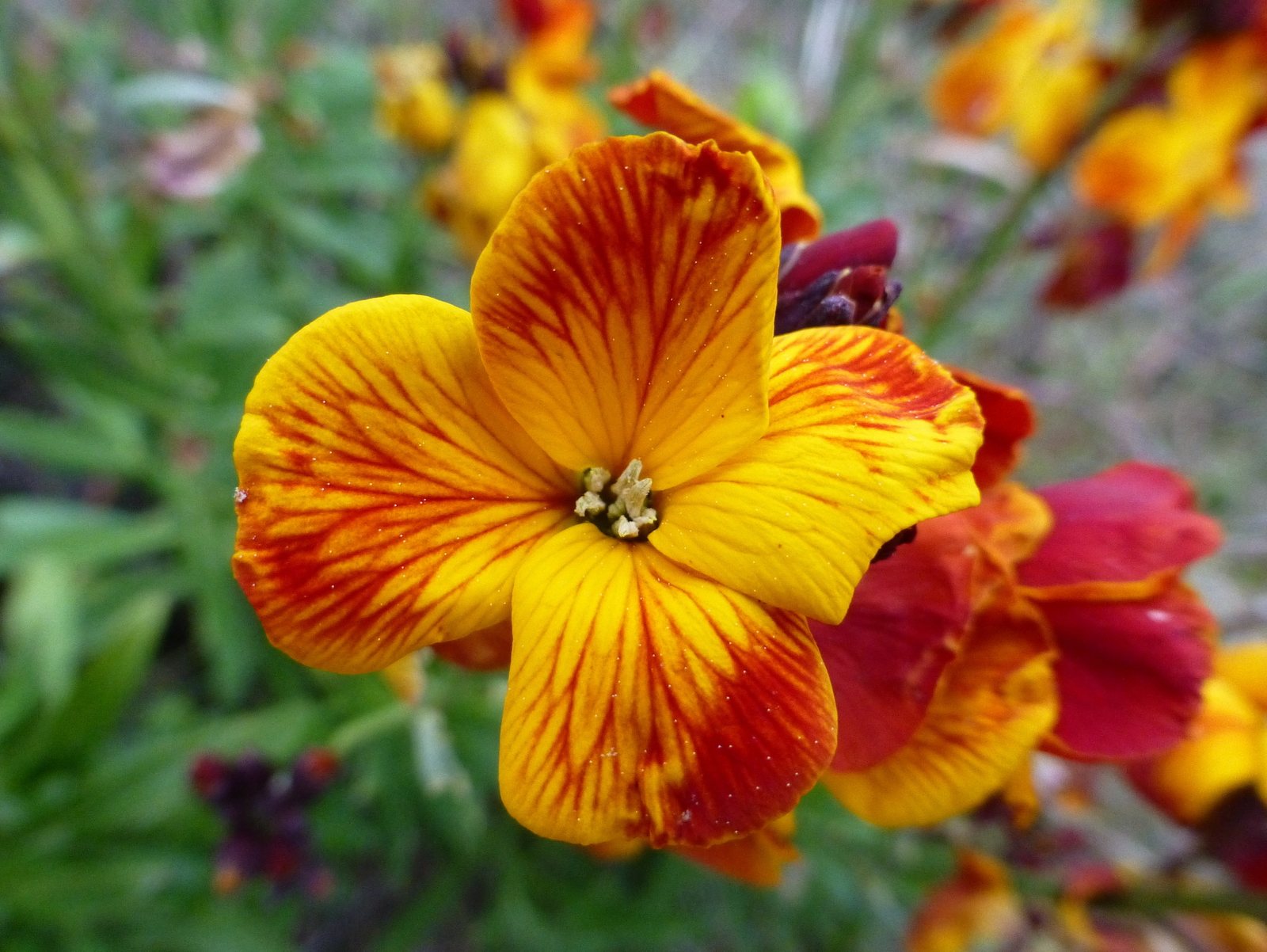
Wallflower is a short-lived, woody-based perennial grown for fragrant spring flowers in yellow, orange, rust, red and purple shades. It is usually replaced after flowering and grown as a biennial, especially for spring bedding with tulips and forget-me-nots.
At a glance
- Sun
- Full sun; tolerates light shade but flowers less freely.
- Water
- Water regularly while establishing, then during prolonged dry spells. Avoid persistently wet soil, especially in winter.
- Soil
- Well-drained, moderately fertile soil, preferably neutral to alkaline. Tolerates chalky, stony and relatively poor soils.
- Height
- 1-2.5 ft (0.3-0.75 m)
- Spread
- 1-2 ft (0.3-0.6 m)
- Flowers
- Spring to early summer; fragrant clusters of yellow, orange, rust, red, cream or purple flowers, depending on the selection.
- Foliage
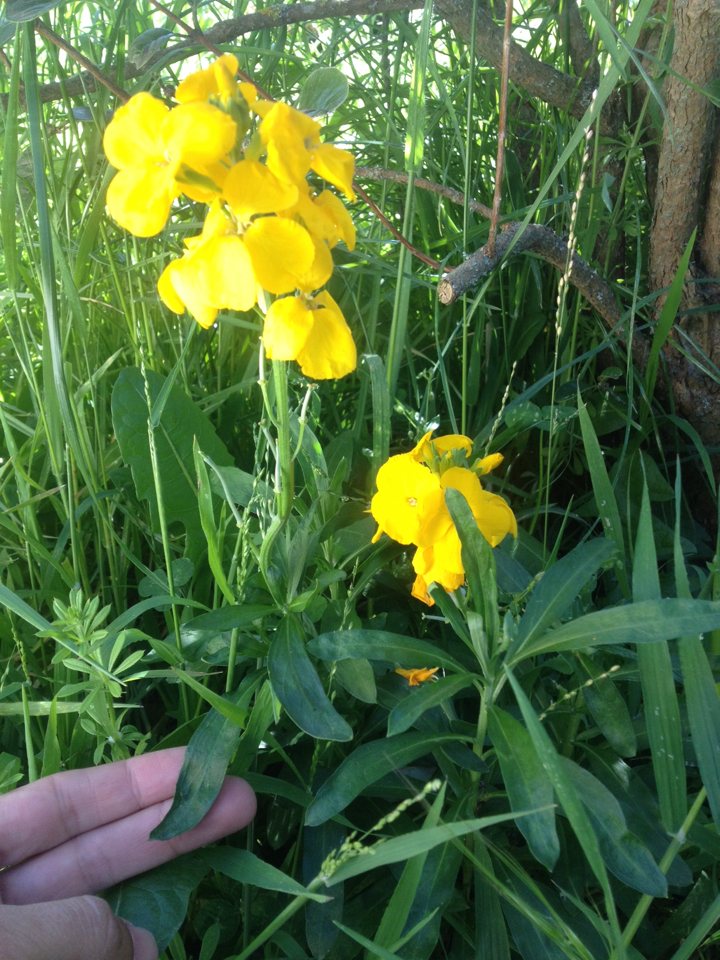
- Evergreen. Narrow, lance-shaped green to grey-green leaves on branching stems that become woody at the base.
- Growth
- Moderate to fast; summer-sown plants usually flower the following spring.
- Care needed
- Medium
The year at a glance
- Pollinators
- Drought tolerant
- Low allergen
- Fragrant
| J | F | M | A | M | J | J | A | S | O | N | D | |
|---|---|---|---|---|---|---|---|---|---|---|---|---|
| Flowers | ||||||||||||
| Plant |
Northern hemisphere months. In Australia, shift them by six.
- Difficulty
- Moderate
- Toughness
- Fairly tough
Will it suit your garden?
Pick your zone, country, light and whether you have pets.
Full sun is 6 or more hours of direct sun a day, part shade 3 to 6 hours, shade under 3.
How it grows
Planting day
1 ft (0.3 m)
After 1 year
1.3 ft (0.39 m)
After 2 years
1.6 ft (0.49 m)
After 3 years
1.7 ft (0.53 m)
full size
About 2 years to full size.
From a typical nursery size, at an average rate for this kind of plant. A rule of thumb, not a forecast.
Good to know
- Cats and dogs
- Toxic
- Growth rate
- Fast
Care
Jobs through the year
- WaterMar–May, Sep–Oct, every 14 days
- Water established plants only if soil is dry; water newly planted specimens more regularly.
- WaterJun–Aug, every 14 days
- Water established plants during prolonged dry spells; keep seedlings lightly moist.
- DeadheadApr–Jun, every 7 days
- Remove fading flower stems unless saving seed.
- PruneJun–Jul
- Lightly shorten leafy shoots after flowering; avoid cutting into bare old wood.
- ProtectJun–Aug
- Cover seedlings with fine insect mesh if flea beetles damage their leaves.
- ProtectJan–Feb, Nov–Dec
- Clear leaves from stem bases and maintain drainage; shelter from severe cold in zone 6.
- Plant in a sunny position with free drainage; use raised beds or containers where winter soil stays wet.
- Water new plants until established, then let the soil surface dry between waterings.
- Avoid rich manure and heavy nitrogen feeding, which encourage soft growth rather than flowers.
- Space plants 1-1.5 ft (0.3-0.45 m) apart to allow airflow.
- Keep mulch away from the crown and woody stem bases.
Pruning. Remove fading flower stems to prolong the display unless you want seed. If keeping plants after flowering, lightly shorten leafy shoots, but do not cut deeply into bare old wood.
Through the year
- Spring
- Check moisture during dry weather and enjoy the main flowering display.
- Late spring
- Remove faded flower stems, or leave a few pods to ripen for seed.
- Early summer
- Sow seed thinly in pots or a nursery bed for flowers the following spring.
- Summer
- Thin or pot on seedlings; pinch young growing tips once to encourage branching.
- Autumn
- Plant sturdy young plants in their final positions while soil is still workable.
- Winter
- Check that water drains freely and remove fallen leaves lodged around plant bases.
In the garden
- Plant in groups among tulips and daffodils for scented spring bedding.
- Use along sunny paths or beside entrances where the fragrance is easy to notice.
- Combine warm-coloured selections with blue forget-me-nots for strong spring contrast.
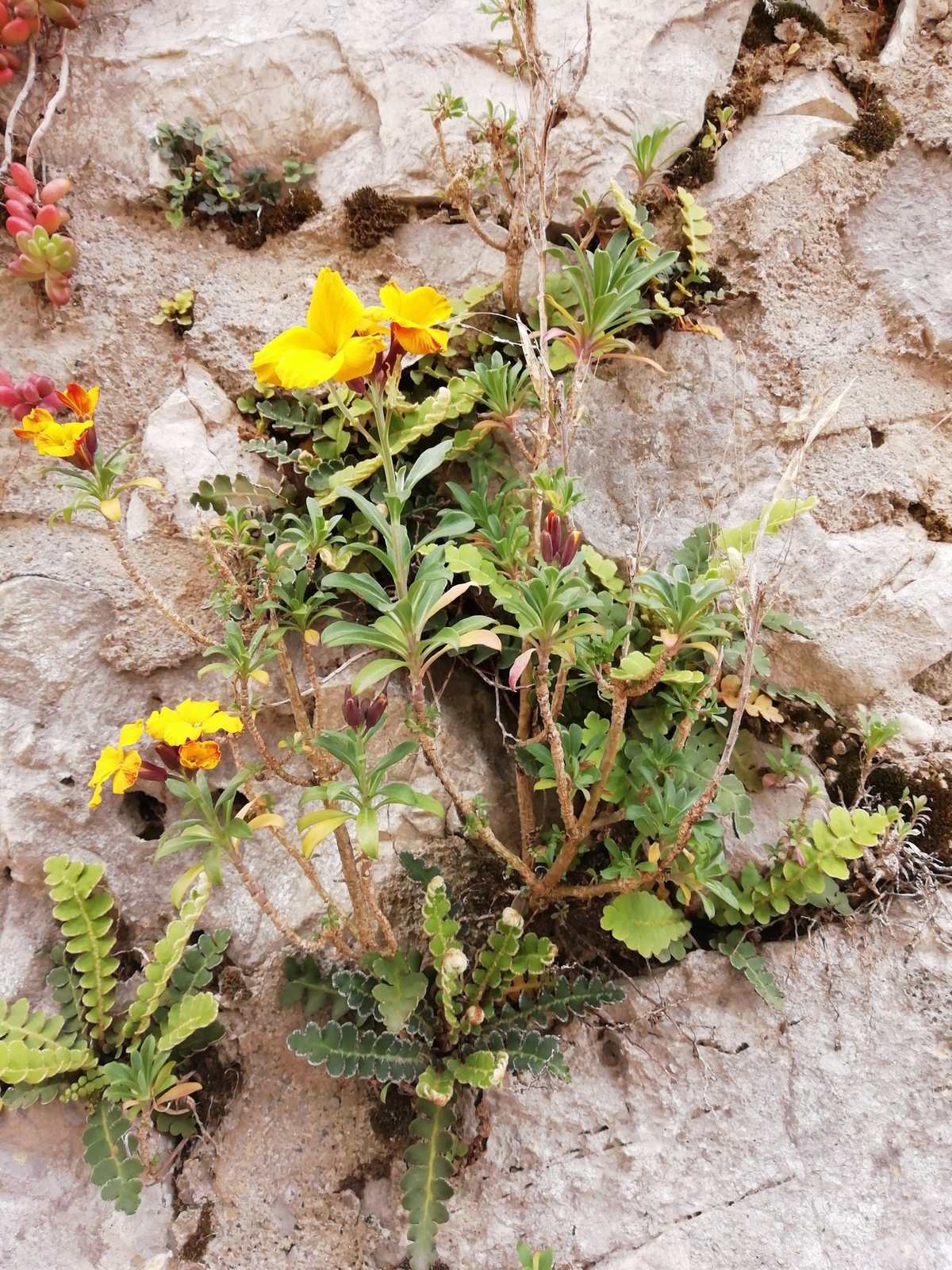
- Grow in sunny gravel beds or at the foot of old walls where drainage is good.
Garden styles it suits: Cottage garden, English country, Traditional, Dry gravel garden, Sensory garden and Pollinator garden.
Plant it with: Tulips, Daffodils, Forget-me-nots, Pansies, Grape hyacinths and Sweet alyssum.
Wildlife: The flowers provide nectar and pollen for bees and other spring insects. Single-flowered forms offer easier access than densely double forms.
Problems to watch for
- Clubroot causes swollen roots, poor growth and wilting: remove affected plants and avoid planting wallflowers or other cabbage-family plants in contaminated soil.
- Root and crown rot develop in wet soil: improve drainage, keep crowns clear and replace badly affected plants.
- Flea beetles make small holes in young leaves: protect seedlings with fine insect mesh and keep them growing steadily.
- Aphids cluster on soft shoots: wash them off with water or use insecticidal soap according to the label.
Safety
Wallflower contains cardiac glycosides and should be treated as poisonous to people, cats, dogs and horses. All parts, including seeds, should be kept out of reach; ingestion can cause digestive upset and potentially serious heart effects. Contact a poison service or veterinarian promptly if it is eaten.
Easily confused with
Stock (Matthiola incana)
Stock usually has broader, softer, densely grey-hairy leaves and thicker flower spikes, often with double flowers. Wallflower has narrower leaves and typically four-petalled flowers on branching stems.
Flax-leaved wallflower (Erysimum linifolium)
It generally has narrower, greyer leaves and lilac-purple flowers over a longer season. Garden wallflower hybrids can be difficult to distinguish reliably without a plant label.
The name
The common name refers to its habit of growing in cracks in old walls, while cheiri comes from an Arabic name for a fragrant flower.
Propagation. Sow seed in late spring or early summer for flowering the following spring; seedlings may differ from the parent. Take non-flowering softwood cuttings in late spring or early summer to preserve a particular selection.
Checked against open data
- Accepted botanical name
- Erysimum cheiri
- In the US and Canada
- Introduced in Canada and the lower 48 states.
Sources: GBIF (CC BY 4.0) and USDA PLANTS. The care and design notes are LandscapeGPT's own.
See it in your own yard.
Upload a photo of your yard and see it redesigned with plants that suit your climate, each checked against your zone.