Watercress
Nasturtium officinale. Family Brassicaceae. Perennial.
Also called Common watercress, True watercress.
Watercress is a spreading aquatic perennial grown for its crisp stems and peppery leaves. It suits a dedicated container of wet compost or a clean-water growing system, where you can control water quality and keep it from escaping into waterways.
At a glance
- Sun
- Full sun to partial shade; afternoon shade helps keep growth tender in hot weather.
- Water
- Keep the roots constantly wet with clean water. Cool, gently moving water is ideal; container-grown plants need frequent water changes.
- Soil
- Fertile, moisture-retentive soil or loam-based compost, preferably neutral to slightly alkaline; never allow it to dry out.
- Height
- 0.5-1.5 ft (0.15-0.45 m)
- Spread
- 1-3 ft (0.3-0.9 m), spreading farther where stems can root freely
- Flowers
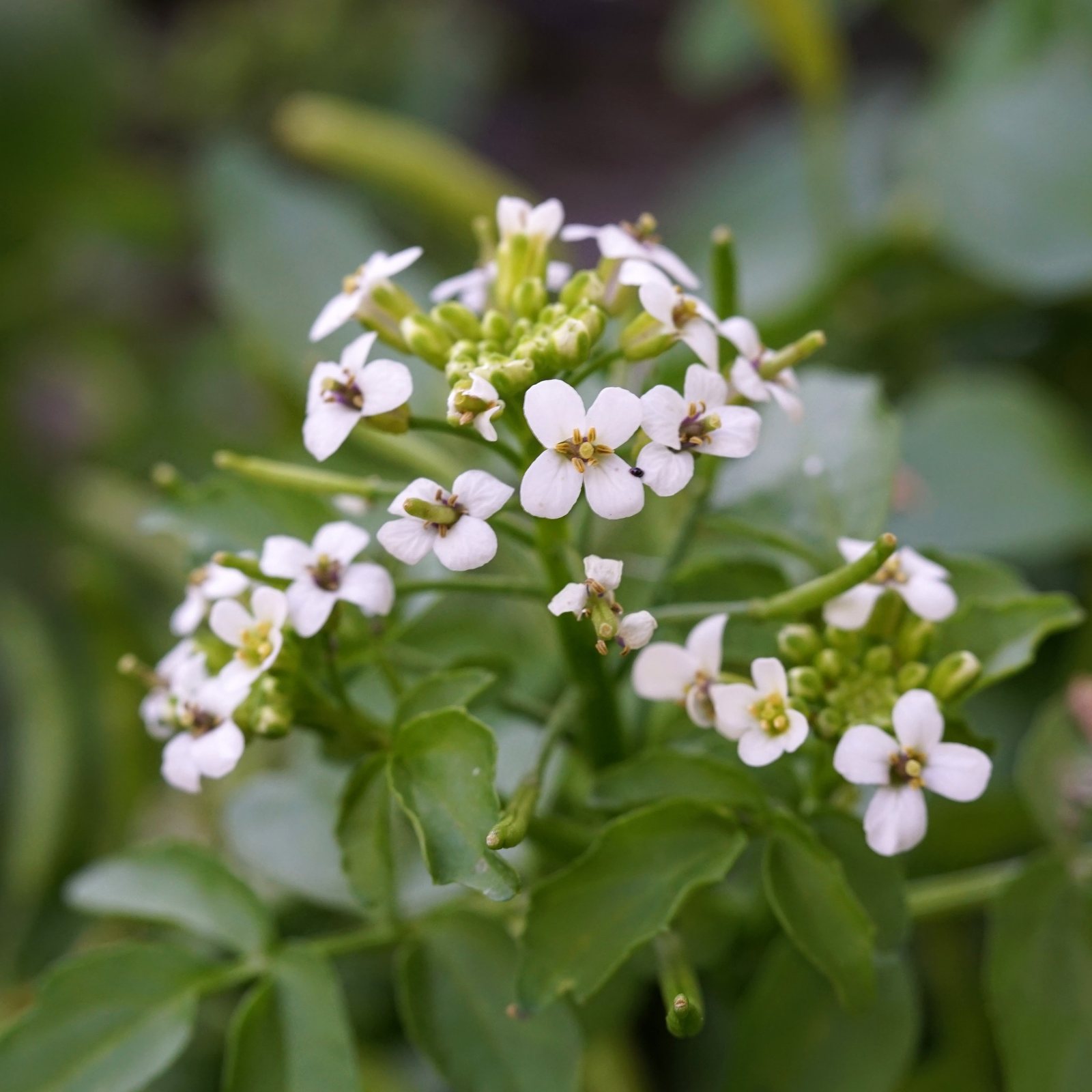
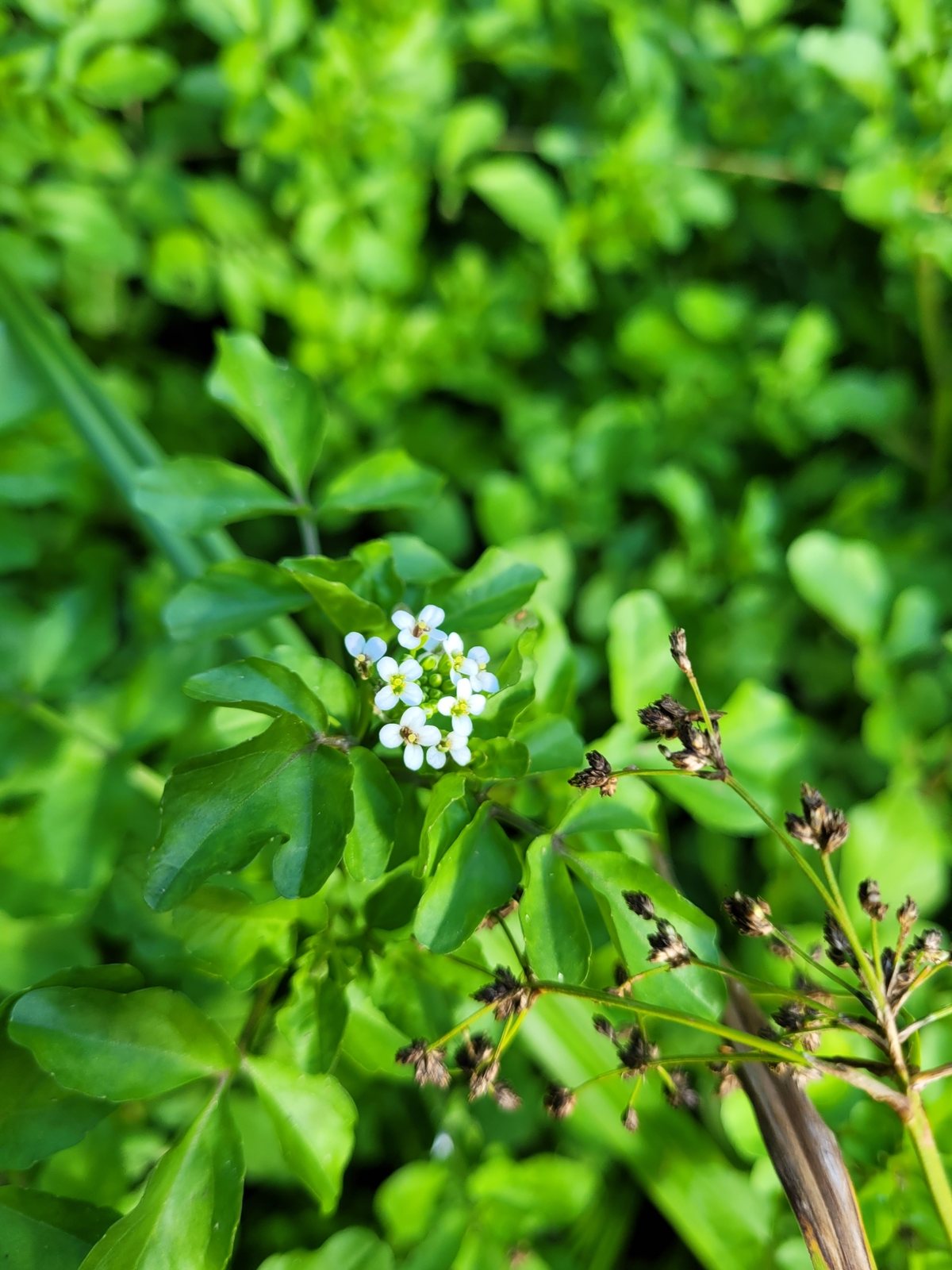
- Small white flowers in clusters from late spring through summer.
- Foliage
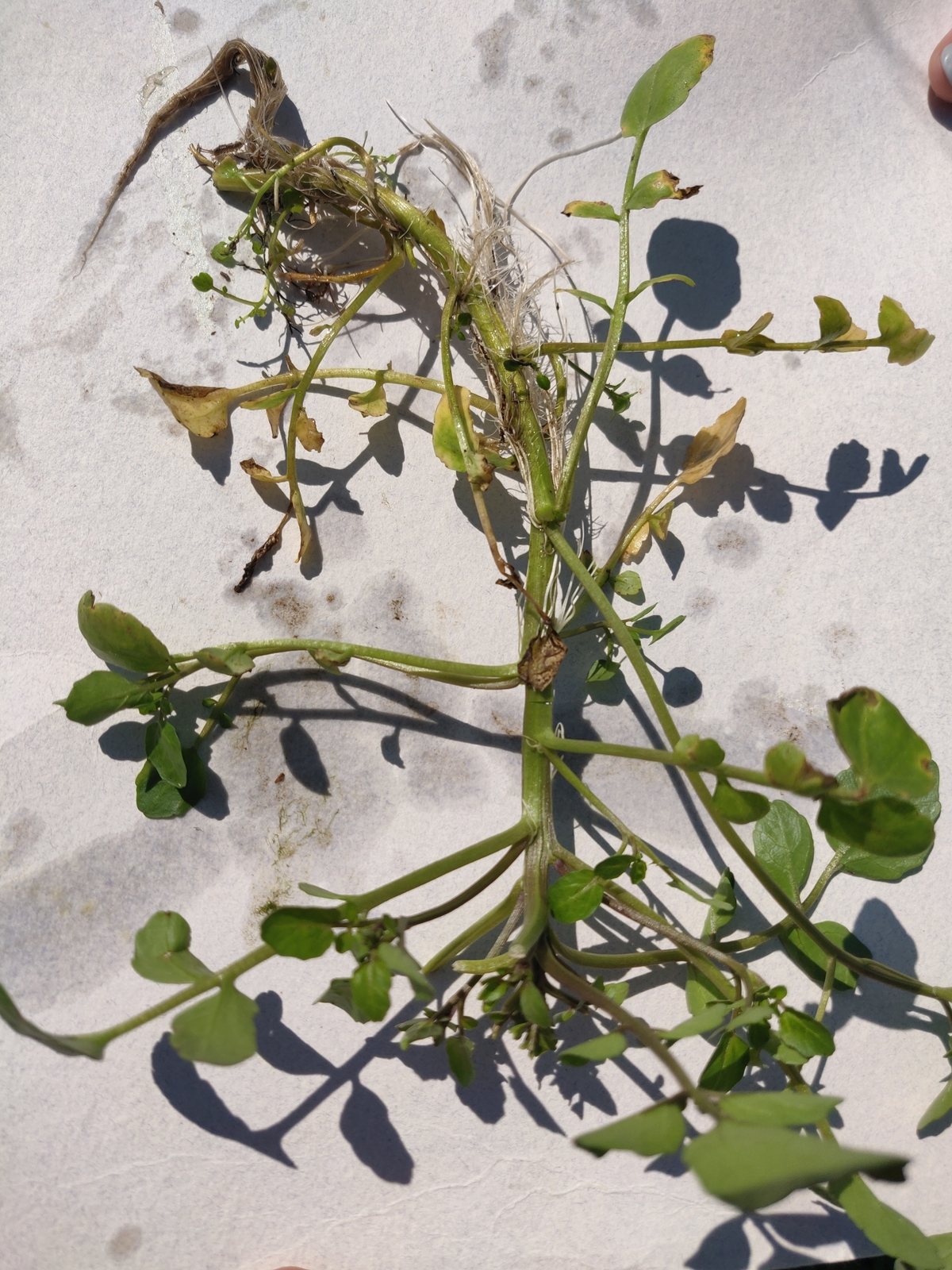
- Succulent, hollow stems carry glossy green leaves divided into rounded leaflets, with a larger terminal leaflet. Evergreen in mild conditions, but growth may die back in hard frost.
- Growth
- Fast in cool, wet conditions
- Care needed
- Medium
The year at a glance
- Pollinators
- Low allergen
- Edible
| J | F | M | A | M | J | J | A | S | O | N | D | |
|---|---|---|---|---|---|---|---|---|---|---|---|---|
| Flowers | ||||||||||||
| Fruit | ||||||||||||
| Plant |
Northern hemisphere months. In Australia, shift them by six.
- Difficulty
- Moderate
- Toughness
- Fairly tough
Will it suit your garden?
Pick your zone, country, light and whether you have pets.
Full sun is 6 or more hours of direct sun a day, part shade 3 to 6 hours, shade under 3.
How it grows
Planting day
1 ft (0.3 m)
full size
About 2 years to full size.
From a typical nursery size, at an average rate for this kind of plant. A rule of thumb, not a forecast.
Good to know
- Cats and dogs
- Toxic
- Native to
- the UK
- Invasive in
- the US and Australia
- In the garden
- Spreads vigorously: plan to contain it.
- Growth rate
- Fast
Care
Jobs through the year
- WaterMar–May, Sep–Oct, every 2 days
- Use a dedicated container: replace drinking-quality tray water and keep roots constantly wet, shoots above water.
- WaterJun–Aug
- Check the tray daily and refresh drinking-quality water frequently, especially in heat; never allow roots to dry.
- WaterJan–Feb, Nov–Dec, every 3 days
- Keep sheltered container roots wet with clean water and remove decaying material.
- FeedApr–Sep
- If growth becomes pale, use dilute balanced fertiliser labelled for edible crops, following its directions.
- HarvestApr–Nov, every 7 days
- Snip tender 10–15 cm tips from well-rooted plants; leave leafy joints and wash the crop thoroughly.
- PruneMay–Aug, every 7 days
- Remove developing flower stems to favour tender leaves and cut out damaged or decaying shoots.
- ProtectJun–Aug
- Provide afternoon shade during hot spells and inspect leaves for aphids and caterpillars.
- ProtectJan–Mar, Nov–Dec
- Shelter small containers so the root ball does not freeze solid.
- ProtectJan–Dec
- Exclude livestock runoff, pond water and animal waste; washing cannot reliably remove liver fluke.
- Grow edible plants in a dedicated container supplied with drinking-quality water, away from livestock runoff, pond water and animal waste.
- Stand a pot of loam-based compost in a water tray, keeping the water near the compost surface without submerging the leafy shoots.
- Replace tray water every two or three days, more often in hot weather, and remove fallen leaves.
- If growth becomes pale, apply a dilute balanced fertiliser labelled for edible crops, following its container-feeding directions.
- Move containers into afternoon shade during hot spells and protect small pots from freezing solid.
- Keep rooted stems, seeds and discarded cuttings out of drains and natural waterways.
Pruning. Pinch or cut shoot tips regularly during active growth, leaving several leafy joints to regrow. Remove flower stems as they appear if tender leaves are your priority, and cut out damaged or decaying growth promptly.
Harvest
Pick leafy shoot tips once plants are well rooted and have several healthy stems, usually a few weeks after rooted cuttings are planted. Snip tender shoots about 4-6 in (10-15 cm) long, preferably before flowering, and wash them thoroughly. Do not harvest wild watercress or plants exposed to livestock runoff: raw leaves can carry liver fluke and other pathogens, which washing alone does not reliably remove.
Through the year
- Early spring
- Clean containers, replace exhausted compost and start seed or rooted cuttings under protection.
- Spring
- Move established plants outdoors as conditions allow, keeping roots wet and protecting tender new growth from hard frost.
- Late spring
- Begin regular tip harvests and remove developing flower stems.
- Summer
- Provide afternoon shade in hot weather, refresh water frequently and check for aphids and caterpillars.
- Autumn
- Take rooted cuttings to renew tired plants and continue harvesting fresh growth in cool weather.
- Winter
- Keep roots wet but remove decaying shoots; shelter containers where prolonged freezing would freeze the root ball solid.
In the garden
- Grow in a dedicated water-holding container beside the kitchen for convenient harvesting.
- Use its low, glossy foliage as a contained green edge in a potager.
- Place a shallow growing tub among other herb containers to add contrasting leaf texture.
- Use in an isolated ornamental water feature for trailing growth, but do not eat plants supplied with untreated pond water.
Garden styles it suits: Potager (kitchen garden), Edible landscape, Homestead, Cottage garden, Small-space and Bog garden.
Plant it with: Chives, Parsley, Lettuce and Mint.
Wildlife: Flowers attract small bees and flies, while cabbage white butterflies may lay eggs on the leaves. Dense growth can shelter aquatic invertebrates, but escaped plants may crowd waterways.
Problems to watch for
- Aphids cluster on soft shoots: rinse them off with clean water and remove heavily infested tips.
- Cabbage white caterpillars chew leaves: inspect regularly, hand-pick caterpillars and use fine insect mesh if needed.
- Yellowing or rotting stems develop in warm, stagnant water: remove affected material, clean the container and refresh the water more frequently.
- Hot weather encourages flowering and tougher, more pungent leaves: provide afternoon shade, trim flowering stems and renew plants from healthy cuttings.
Safety
Watercress is edible for people when correctly identified and grown with safe water. It is considered toxic to cats, dogs and horses: leaves and stems contain mustard-oil compounds that can cause vomiting, diarrhoea or abdominal discomfort if eaten. Keep pets and grazing animals from eating it, and seek veterinary advice after a substantial ingestion or if symptoms occur.
Where it spreads. Introduced watercress can form dense mats in streams and springs, particularly in the western United States, New Zealand and parts of southeastern Australia. It can spread aggressively through rooting stem fragments and seed; contain it and check local restrictions before planting near water.
Easily confused with
Fool's watercress (Helosciadium nodiflorum)
It has more noticeably toothed leaflets and tiny white flowers in umbrella-shaped clusters, rather than watercress's four-petalled flowers in elongated clusters.
Spotted water hemlock (Cicuta maculata)
This deadly poisonous wetland plant grows much taller, with sharply toothed, pointed leaflets and umbrella-shaped white flower heads. Watercress has rounded leaflets and four-petalled flowers;
Great yellowcress (Rorippa amphibia)
It bears yellow rather than white flowers and usually has longer, more elongated leaves. Flowerless aquatic mustard relatives can be difficult to distinguish.
The name
Nasturtium comes from Latin words meaning 'nose-twister', referring to the pungent taste, while officinale indicates a plant traditionally used in medicine.
Propagation. Root healthy stem cuttings in clean water, then plant them into wet compost, or divide rooted clumps in spring. Seed can be surface-sown on saturated compost; keep it moist and transplant seedlings once they are large enough to handle.
Checked against open data
- Accepted botanical name
- Nasturtium officinale
- In the US and Canada
- Introduced in Alaska, Canada, the lower 48 states, Puerto Rico, St. Pierre and Miquelon and US Virgin Islands.
- Native range
- Afghanistan, Albania, Algeria, Austria, Azores, Baleares, Belgium, Bulgaria, Canary Is., Cape Verde, Central European Rus and Chad.
- Measured
- Soil pH 6.4 to 8. Average height 40 cm.
Sources: GBIF (CC BY 4.0), USDA PLANTS and Trefle (CC BY 4.0). The care and design notes are LandscapeGPT's own.
See it in your own yard.
Upload a photo of your yard and see it redesigned with plants that suit your climate, each checked against your zone.