Weeping bottlebrush
Callistemon viminalis. Family Myrtaceae. Tree.
Also called Melaleuca viminalis, Drooping bottlebrush.
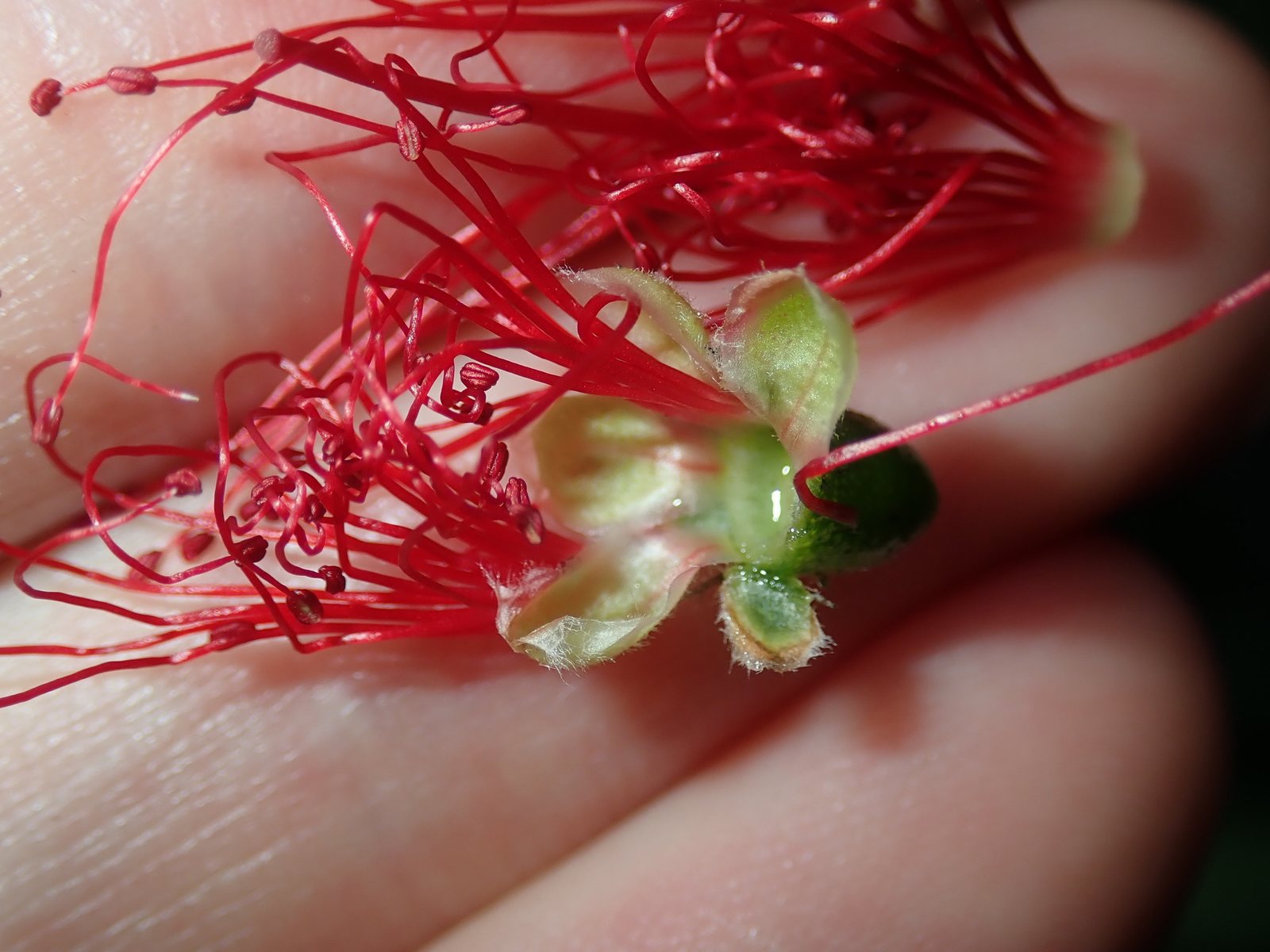
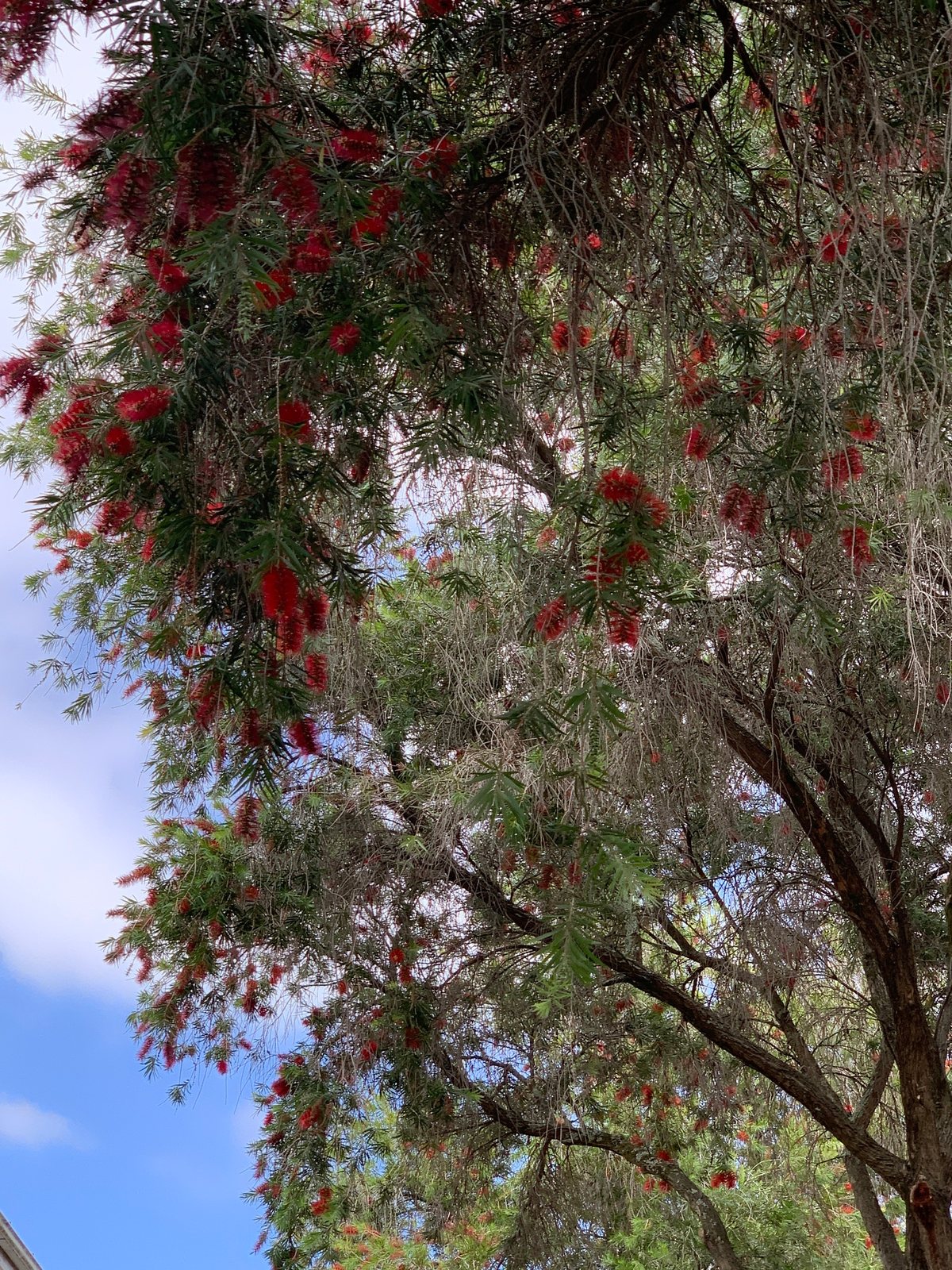
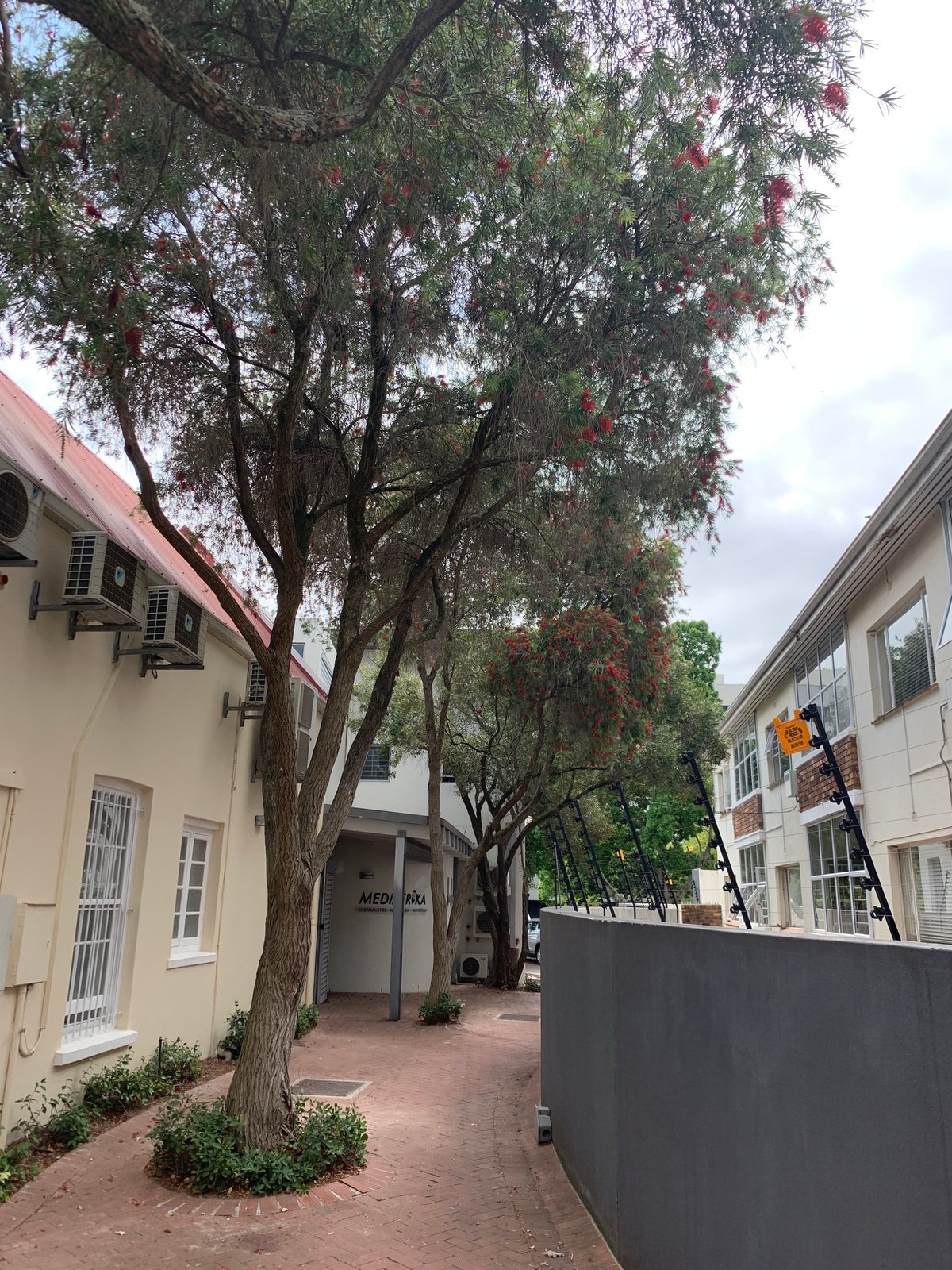
An evergreen Australian small tree with hanging branches and bright red, brush-shaped flowers that attract nectar-feeding birds. Grow it as a specimen or loose screen in warm gardens; in most of the United Kingdom and Canada, it needs a container and bright, frost-free winter shelter.
At a glance
- Sun
- Full sun; tolerates light shade but flowers less freely.
- Water
- Water regularly while establishing. Established trees tolerate some drought, but grow and flower better with deep watering during prolonged dry weather.
- Soil
- Moisture-retentive, well-drained soil, preferably slightly acidic to neutral. Tolerates brief wet periods; strongly alkaline soil can cause yellow leaves.
- Height
- 20-30 ft (6-9 m), occasionally 40 ft (12 m)
- Spread
- 15-25 ft (4.5-7.5 m)
- Flowers
- Bright red bottlebrush flowers, mainly in spring and summer, with scattered repeat flowering in warm climates.
- Foliage
- Evergreen. Narrow, leathery green leaves on long, drooping branchlets; young growth may be bronze or pinkish.
- Growth
- Moderate to fast in warm conditions with adequate water.
- Care needed
- Medium
The year at a glance
- Pollinators
- Drought tolerant
- Heat tolerant
- Wildlife
- Low allergen
| J | F | M | A | M | J | J | A | S | O | N | D | |
|---|---|---|---|---|---|---|---|---|---|---|---|---|
| Flowers | ||||||||||||
| Fruit | ||||||||||||
| Plant |
Northern hemisphere months. In Australia, shift them by six.
- Difficulty
- Hard
- Toughness
- Fairly tough
Will it suit your garden?
Pick your zone, country, light and whether you have pets.
Full sun is 6 or more hours of direct sun a day, part shade 3 to 6 hours, shade under 3.
How it grows
Planting day
7 ft (2 m)
After 1 year
8 ft (2.3 m)
After 2 years
9 ft (2.7 m)
After 3 years
10 ft (3 m)
After 5 years
12 ft (3.7 m)
About 16 years to full size.
From a typical nursery size, at an average rate for this kind of plant. A rule of thumb, not a forecast.
Good to know
- Cats and dogs
- Safe
- Growth rate
- Fast
Care
Jobs through the year
- WaterApr–May, Sep–Oct, every 10 days
- Use a large movable container in this climate; water when the compost surface begins to dry.
- WaterJun–Aug, every 7 days
- Water containers deeply as the surface dries; check more often in heat, especially young trees.
- WaterJan–Mar, Nov–Dec, every 21 days
- In cool frost-free shelter, keep compost barely moist, never saturated.
- FeedApr–May
- If growth is weak, apply a light dressing of low-phosphorus fertilizer at the label rate.
- MulchApr–May
- Refresh organic mulch over exposed root areas, keeping it clear of the trunk.
- PruneJun–Aug
- After the main flower flush, lightly shorten flowered shoots and remove dead or crossing branches.
- ProtectMay–Jun
- Return pots outdoors after frost risk passes, acclimatizing gradually to full sun.
- ProtectSep–Oct
- Move into bright, frost-free shelter before the first frost; plan space for a large tree.
- ProtectJan–Apr, Nov–Dec
- Keep frost-free with good light and ventilation; inspect sheltered stems for scale insects.
- Water deeply through the first two growing seasons, letting the surface soil begin to dry between waterings.
- Spread 2-3 in (5-8 cm) of organic mulch over the root area, keeping it clear of the trunk.
- If growth is weak, apply a light dressing of low-phosphorus fertiliser in spring; avoid heavy feeding.
- Stake young trees only if unstable, using flexible ties and removing the support once roots hold firmly.
- Use a large container with drainage holes in cold regions, and move it into bright, frost-free shelter before freezing weather.
Pruning. Lightly shorten flowered shoots just behind the spent flower heads after the main flush, preserving the naturally weeping outline. Remove dead or crossing branches and gradually raise the canopy if needed; avoid routine hard cutting or topping.
Through the year
- Spring
- Plant once frost risk has passed, or return overwintered containers outdoors gradually.
- Spring
- Refresh mulch and feed lightly if growth is weak.
- Late spring
- After the main flowering flush, lightly trim spent shoots if shaping is needed.
- Summer
- Water young trees deeply during dry spells and check containers frequently.
- Late summer
- Take semi-ripe cuttings from healthy, non-flowering shoots.
- Autumn
- Move container plants under bright, frost-free cover before the first frost.
- Winter
- Keep sheltered container plants barely moist, not waterlogged, and check for scale insects.
In the garden
- Plant as a lawn specimen where its arching canopy can develop without repeated clipping.
- Use as a loose evergreen boundary screen in warm gardens, allowing space for its mature width.
- Combine with lomandra and kangaroo paw in an Australian planting with contrasting leaf shapes.
- Place beside a broad terrace or garden path where the hanging flowers are visible, keeping branches clear of access routes.
Garden styles it suits: Australian native, Mediterranean, Coastal, Wildlife garden, Modern tropical and Luxury resort.
Plant it with: Lomandra, Kangaroo paw, Coastal rosemary, New Zealand flax, Agapanthus and Society garlic.
Wildlife: Nectar-rich flowers attract bees and nectar-feeding birds, including honeyeaters in Australia and hummingbirds where they occur in North America. The evergreen canopy also provides cover for birds.
Problems to watch for
- Scale insects can cause sticky honeydew and black sooty mould: inspect stems and leaf undersides, and treat small infestations with horticultural oil according to the label.
- Yellow leaves with green veins often indicate iron deficiency in alkaline soil: check soil pH and use an appropriate iron chelate rather than adding general fertiliser.
- Root rot can develop in persistently stagnant soil or poorly drained pots: improve drainage, keep pot drainage holes clear and avoid leaving containers standing in water.
- Frost can scorch leaves and kill young shoots: shelter young plants, overwinter containers frost-free and wait until spring growth begins before removing damaged wood.
Safety
Not known to be toxic to cats, dogs, horses or people; no part is recognised as poisonous. It is not a food plant, and eating substantial quantities of foliage may still cause digestive upset.
Where it spreads. Invasive in parts of South Africa, particularly along watercourses, where escaped plants can displace native vegetation. Check local restrictions before planting there.
Easily confused with
Crimson bottlebrush (Callistemon citrinus)
Usually has a more upright, shrubby habit and leaves that smell distinctly lemony when crushed; weeping bottlebrush has much more pendulous branchlets.
Willow bottlebrush (Callistemon salignus)
Usually bears cream or pale yellow flowers rather than red, and develops conspicuous pale, papery bark.
The name
Callistemon comes from Greek words meaning 'beautiful stamen', while viminalis means 'with long, flexible shoots'; the common name describes its drooping branches and bottlebrush-shaped flowers.
Propagation. Sow seed in a warm, bright place, pressing it onto the surface of a fine seed compost. Take semi-ripe cuttings in late summer to preserve the characteristics of a selected plant; seedlings may vary.
Checked against open data
- Accepted botanical name
- Callistemon viminalis
Sources: GBIF (CC BY 4.0). The care and design notes are LandscapeGPT's own.
See it in your own yard.
Upload a photo of your yard and see it redesigned with plants that suit your climate, each checked against your zone.