Weeping silver pear
Pyrus salicifolia 'Pendula'. Family Rosaceae. Tree.
Also called Weeping willow-leaved pear, Weeping silver-leaved pear.
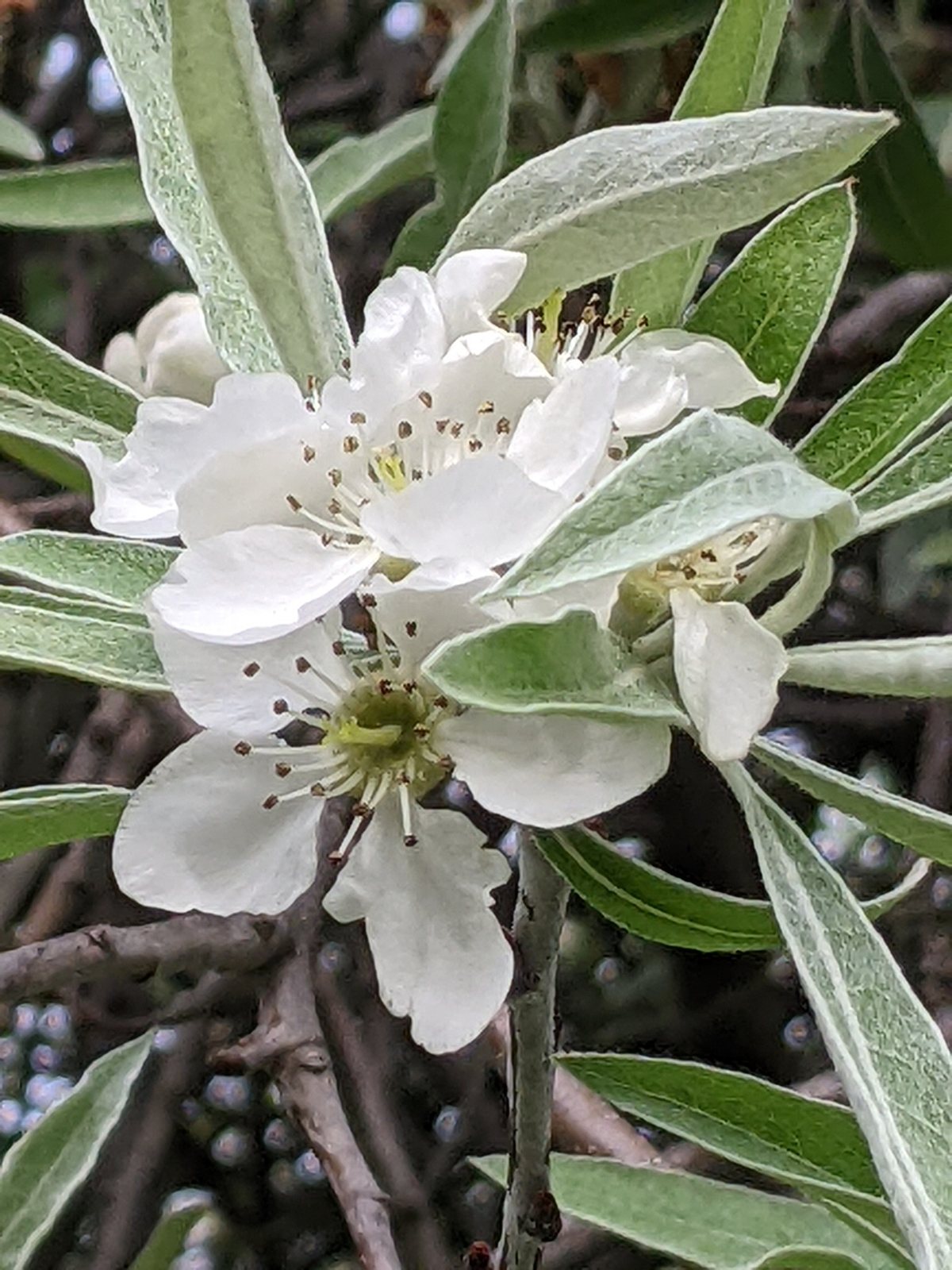
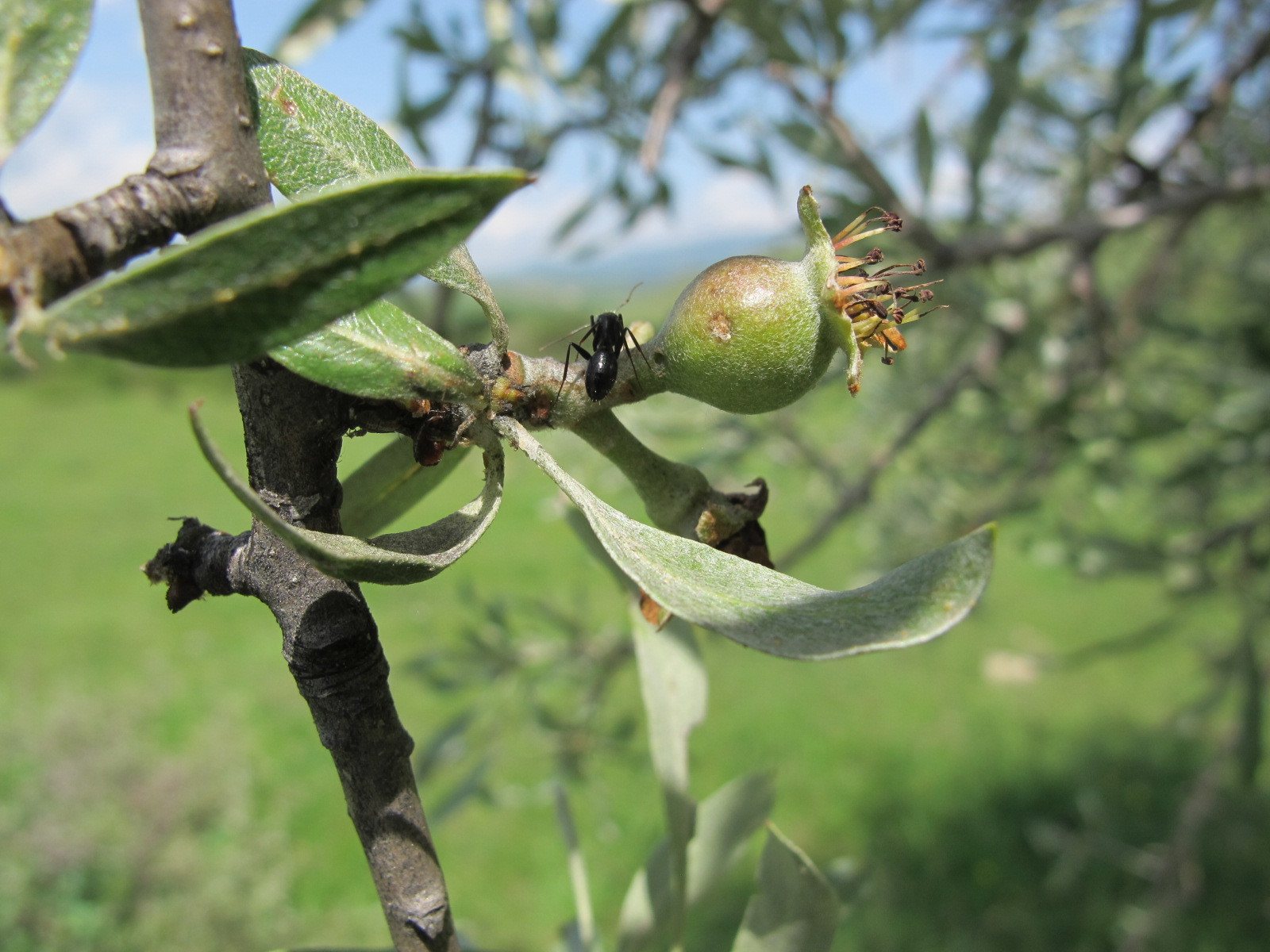
A small deciduous ornamental pear with narrow silver-grey leaves and arching branches that hang in a loose curtain. Gardeners grow it for its foliage and weeping outline, with white spring flowers as a bonus; its small, hard pears are not grown for eating.
At a glance
- Sun
- Full sun for the best silver foliage and flowering.
- Water
- Water regularly while establishing; moderately drought-tolerant once rooted. Avoid persistently wet ground.
- Soil
- Well-drained loam, clay, chalk or sandy soil; tolerates alkaline soil and relatively poor ground, but not waterlogging.
- Height
- 13-26 ft (4-8 m)
- Spread
- 13-26 ft (4-8 m)
- Flowers
- Small creamy-white flowers in clusters in mid-spring, appearing with the young leaves.
- Foliage
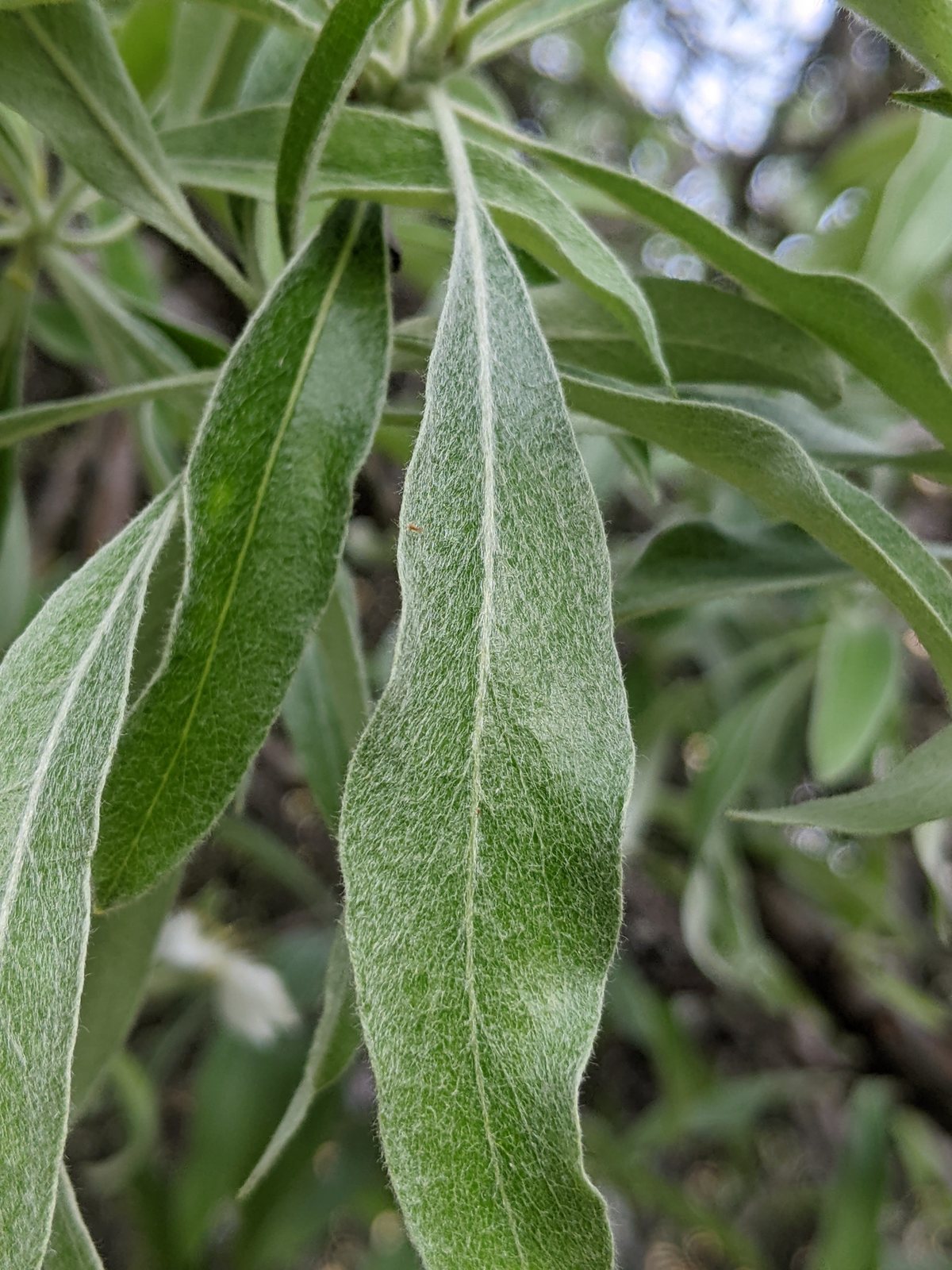
- Narrow, willow-like leaves covered in silvery hairs, especially when young; usually little autumn colour.
- Growth
- Slow to moderate; allow room for the crown to broaden over many years.
- Care needed
- Low
The year at a glance
- Pollinators
- Drought tolerant
- Cold hardy
- Wildlife
- Low allergen
| J | F | M | A | M | J | J | A | S | O | N | D | |
|---|---|---|---|---|---|---|---|---|---|---|---|---|
| Flowers | ||||||||||||
| Fruit | ||||||||||||
| Plant |
Northern hemisphere months. In Australia, shift them by six.
- Difficulty
- Easy
- Toughness
- Very tough
Will it suit your garden?
Pick your zone, country, light and whether you have pets.
Full sun is 6 or more hours of direct sun a day, part shade 3 to 6 hours, shade under 3.
How it grows
Planting day
7 ft (2 m)
After 1 year
7 ft (2.2 m)
After 2 years
8 ft (2.3 m)
After 3 years
8 ft (2.5 m)
After 5 years
9 ft (2.8 m)
About 26 years to full size.
From a typical nursery size, at an average rate for this kind of plant. A rule of thumb, not a forecast.
Good to know
- Cats and dogs
- Mildly toxic: may upset a stomach
- Growth rate
- Slow
Care
Jobs through the year
- WaterApr–May, Sep–Oct, every 21 days
- Water established trees only during extended dry weather; young trees need more frequent watering.
- WaterJun–Aug, every 14 days
- Water established trees deeply during prolonged drought; keep newly planted root zones from drying out.
- MulchMar–Apr
- Apply 5–8 cm of organic mulch, keeping the trunk and root flare uncovered.
- FeedMar–Apr
- Feed lightly only if growth is weak and soil fertility is low.
- PruneFeb–Mar
- Remove damaged or crossing wood and shorten only trailing branches obstructing paths or touching soil.
- PruneMay–Sep
- Remove rootstock suckers; cut suspected fire-blight shoots well below damage in dry weather.
- Water deeply during dry spells for the first two growing seasons, moistening the whole root area.
- Apply 2-3 in (5-8 cm) of organic mulch over the root area, keeping it clear of the trunk.
- Stake only if the root ball moves in the wind; use a flexible tie and remove the support once the tree is stable.
- Avoid routine heavy feeding; use a light spring feed only if growth is weak and soil fertility is low.
- Remove shoots arising below the graft union or from the roots before they become woody.
Pruning. In late winter, remove dead, damaged and crossing branches, then shorten only those trailing branches that obstruct paths or rest on the ground. Preserve the natural arching framework rather than shearing the crown; remove suspected fire blight promptly in dry weather.
Through the year
- Autumn
- Plant while the soil is workable, allowing space for the mature crown; use spring planting in very cold regions.
- Late winter
- Prune lightly to remove damaged or crossing wood and keep paths clear.
- Spring
- Renew mulch, keeping it away from the trunk, and check stakes and ties.
- Late spring
- Check new shoots for aphids and blackened, hooked tips that may indicate fire blight.
- Summer
- Water young trees deeply during prolonged dry weather and remove rootstock suckers.
- Late autumn
- Clear fallen diseased leaves and check that the planting area drains freely.
In the garden
- Use as a specimen in a sunny lawn or gravel garden, leaving space to see the full weeping outline.
- Pair with lavender, catmint and ornamental grasses for a silver-and-blue planting in well-drained soil.
- Place against a dark hedge or evergreen backdrop to make the pale foliage stand out.
- Use beside a terrace as a small focal tree, set back far enough that trailing branches do not block access.
Garden styles it suits: Dry gravel garden, Mediterranean, Modern Mediterranean, Modern courtyard, Cottage garden and White garden.
Plant it with: English lavender, Catmint, Russian sage, Lamb's ears, Bearded iris and Feather reed grass.
Wildlife: Spring flowers provide pollen and nectar for insects. The branching crown offers shelter and potential nesting sites for small birds; small fruits may be taken by wildlife.
Problems to watch for
- Fire blight causes blackened flowers and hooked, scorched-looking shoots. Cut affected branches well below visible damage in dry weather, disinfect tools between cuts and avoid excessive nitrogen feeding.
- Pear rust produces orange leaf spots, sometimes with raised growths beneath. Remove affected fallen leaves; seek local advice if infection repeatedly causes substantial leaf loss.
- Aphids can distort young shoots and leave sticky honeydew. Encourage natural predators and wash small colonies off with water; use insecticidal soap only if needed and avoid spraying flowers.
- Waterlogged soil can cause root decline and dieback. Improve drainage before planting or choose a better-drained site; adding gravel only to the planting hole will not solve poor drainage.
Safety
The foliage and fruit flesh are not generally known to be toxic to people, cats, dogs or horses. As with other pears, the seeds contain cyanogenic compounds and should not be deliberately eaten or fed to animals, especially crushed; a few accidentally swallowed whole seeds are unlikely to cause poisoning.
Easily confused with
Willow-leaved pear (Pyrus salicifolia)
The ordinary species has similarly narrow silver leaves but a more upright or spreading crown rather than the strongly drooping branches of 'Pendula'.
Olive (Olea europaea)
Olive is evergreen, with opposite leaves that are greener above and silver beneath; weeping silver pear has alternate leaves and loses them in autumn.
Weeping willow (Salix babylonica)
Weeping willow becomes much larger, has greener, finely toothed leaves and bears catkins rather than white pear flowers.
The name
Pyrus is the Latin name for pear, salicifolia means willow-leaved, and 'Pendula' refers to the hanging branches.
Propagation. Usually propagated by grafting or budding onto a suitable pear rootstock. Seedlings do not reliably retain the weeping habit, so buy a named, grafted plant if you want this form.
Checked against open data
- Accepted botanical name
- Pyrus salicifolia
- Native range
- Iran, North Caucasus, Transcaucasus and Turkey.
- Measured
- Average height 700 cm.
Sources: GBIF (CC BY 4.0) and Trefle (CC BY 4.0). The care and design notes are LandscapeGPT's own.
See it in your own yard.
Upload a photo of your yard and see it redesigned with plants that suit your climate, each checked against your zone.