Weeping willow
Salix babylonica. Family Salicaceae. Tree.
Also called Babylon willow.
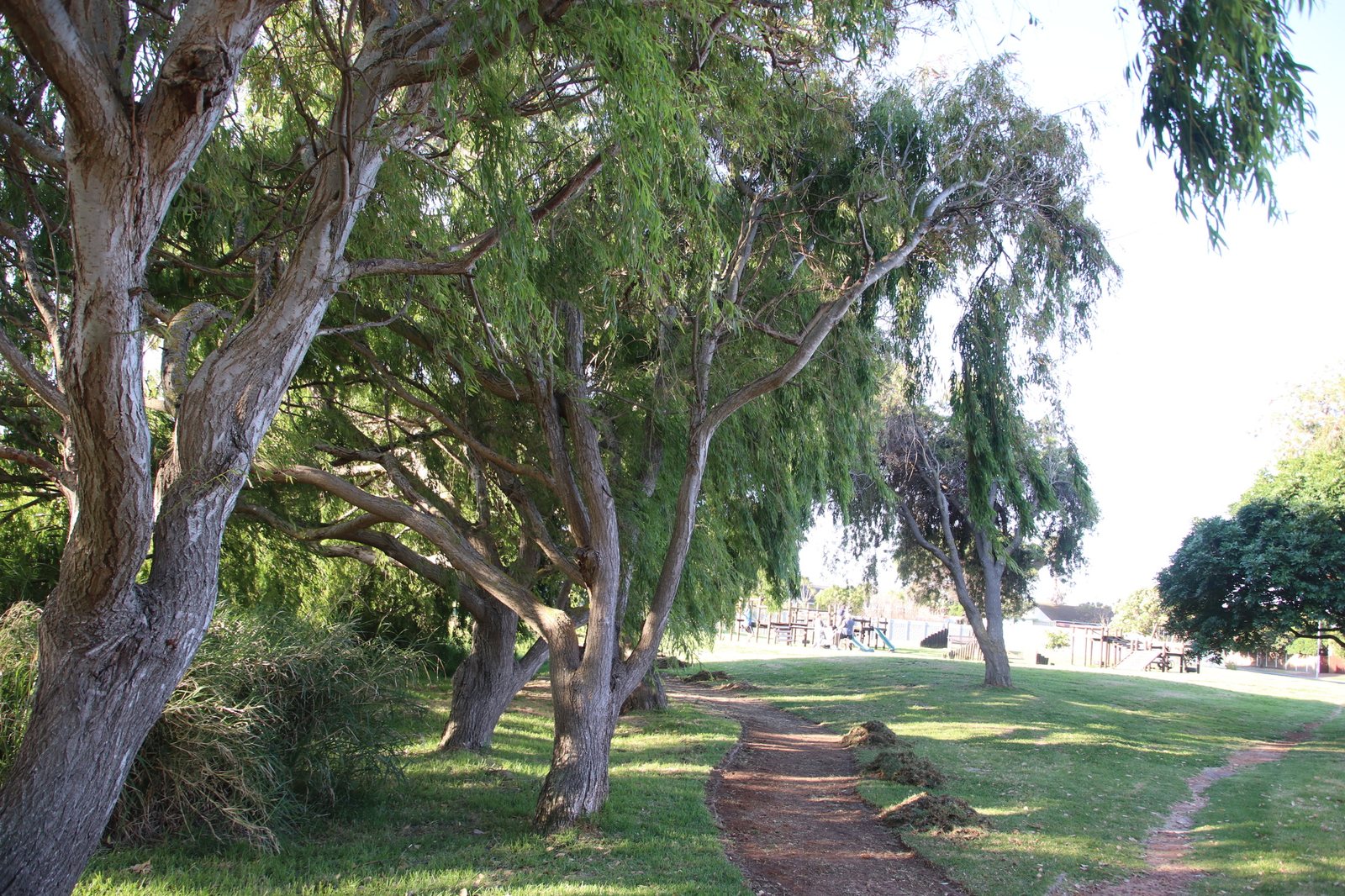
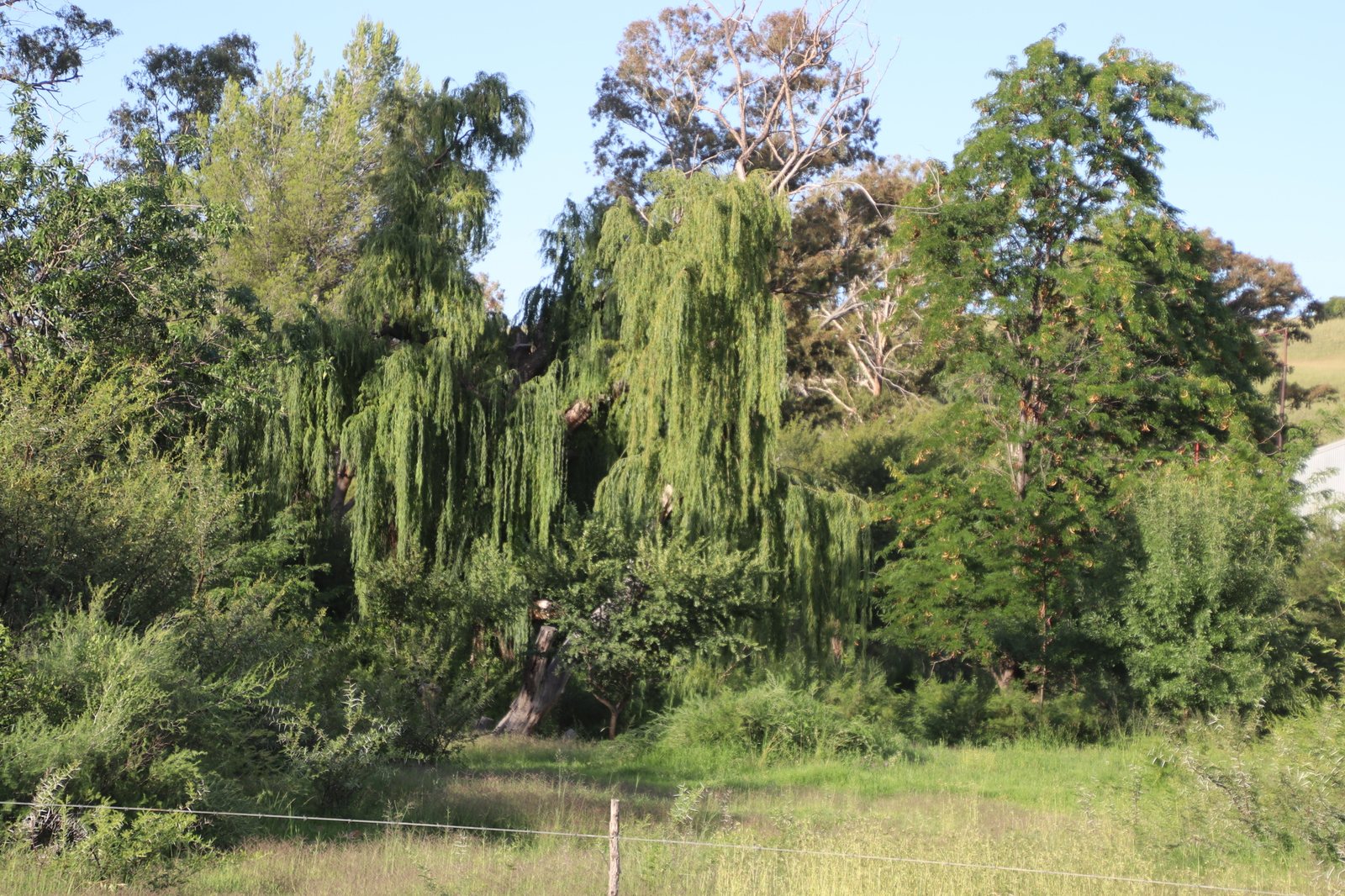
A large, fast-growing deciduous tree with long, drooping branches that can sweep the ground. Gardeners grow it for its graceful outline beside water or across an open lawn, but its spreading roots, brittle branches and frequent litter make it unsuitable for small gardens or sites near buildings and drains.

At a glance
- Sun
- Full sun; tolerates light shade but develops a less even crown.
- Water
- High; prefers consistently moist ground and tolerates periodic flooding. Water young trees deeply during dry weather.
- Soil
- Moist to wet, reasonably fertile soil, including clay; tolerates a broad pH range. Avoid dry, shallow soils.
- Height
- 30-50 ft (9-15 m)
- Spread
- 30-50 ft (9-15 m)
- Flowers
- Small yellowish-green catkins in spring, appearing with or shortly before the leaves; male and female flowers occur on separate trees.
- Foliage
- Narrow, finely toothed green leaves with paler undersides; usually yellow in autumn.
- Growth
- Fast, often adding 3 ft (0.9 m) or more annually when young in moist soil.
- Care needed
- High
The year at a glance
- Pollinators
- Wildlife
| J | F | M | A | M | J | J | A | S | O | N | D | |
|---|---|---|---|---|---|---|---|---|---|---|---|---|
| Flowers | ||||||||||||
| Plant |
Northern hemisphere months. In Australia, shift them by six.
- Difficulty
- Hard
- Toughness
- Fairly tough
Will it suit your garden?
Pick your zone, country, light and whether you have pets.
Full sun is 6 or more hours of direct sun a day, part shade 3 to 6 hours, shade under 3.
How it grows
Planting day
7 ft (2 m)
After 1 year
9 ft (2.8 m)
After 2 years
12 ft (3.5 m)
After 3 years
14 ft (4.3 m)
After 5 years
19 ft (5.8 m)
About 13 years to full size.
From a typical nursery size, at an average rate for this kind of plant. A rule of thumb, not a forecast.
Good to know
- Cats and dogs
- Toxic
- Invasive in
- Australia
- Growth rate
- Fast
Care
Jobs through the year
- WaterApr–May, Sep–Oct, every 7 days
- Deep-water established trees if soil is drying; omit in naturally moist ground and water young trees more often.
- WaterJun–Aug, every 4 days
- Keep the root zone moist during dry weather; naturally wet sites may need no irrigation.
- MulchMar–Apr
- Renew 5–8 cm of organic mulch without covering the trunk.
- PruneJan–Feb
- Train young trees and remove damaged branches; use an arborist for mature trees and avoid topping.
- ProtectJan–Feb, Nov–Dec
- Inspect after storms and arrange professional assessment of cracks or hazardous limbs.
- ProtectOct–Nov
- Remove diseased fallen leaves and clear debris from nearby drains and pond filters.
- Choose a large site well away from buildings, drains, septic systems and paving; seek local advice on setbacks, especially on shrinkable clay.
- Water deeply through the first two growing seasons, keeping the root area moist during dry spells.
- Apply a 2-3 in (5-8 cm) layer of organic mulch over the root area, leaving the trunk clear.
- Do not routinely fertilise established trees; feed only where poor growth and soil testing indicate a deficiency.
- Stake only if the rootball is unstable, and remove supports after the first growing season.
- Collect fallen twigs and inspect major branches after storms.
Pruning. Prune in late winter while dormant, developing a sound framework when the tree is young and removing dead, damaged or crossing branches. Avoid topping or large cuts; use a qualified arborist for mature trees and remove hazardous broken limbs promptly.
Through the year
- Late autumn
- Plant while dormant where soil remains workable; choose spring planting in colder areas.
- Late winter
- Prune young trees for structure and arrange an arborist inspection if mature branches show cracks or decay.
- Spring
- Refresh mulch without piling it against the trunk, and check new leaves and shoots for blight.
- Summer
- Water young trees deeply during dry periods and check for aphids and premature leaf drop.
- Autumn
- Remove diseased fallen leaves and clear leaves from nearby drains and pond filters.
- Winter
- Check for storm damage and take hardwood cuttings only where planting this willow is appropriate and permitted.
In the garden
- A solitary specimen across a broad lawn, with enough room for the full curtain of branches.
- Beside a large ornamental pond, where the hanging crown is reflected in the water; keep it clear of liners and engineered banks.
- A focal point in a spacious Chinese-inspired garden, paired with rocks and moisture-loving groundcover.
- A soft backdrop to damp-ground planting, using sedges and ferns near the canopy edge.
Garden styles it suits: Grand estate, Romantic rose garden, Chinese scholar garden, English country, Bog garden and Green on green.
Plant it with: Hostas, Astilbes, Royal fern, Japanese water iris and Tussock sedge.
Wildlife: Catkins provide early pollen or nectar, depending on the tree's sex, for visiting insects. Leaves support several moth caterpillars, and the canopy offers birds shelter and nesting sites; outside its native range, use locally native willows where appropriate.
Problems to watch for
- Willow scab and black canker can blacken young shoots and cause dieback: remove affected shoots in dry weather, clear diseased debris and consult an arborist if larger branches are involved.
- Aphids can cause sticky honeydew and sooty mould: wash accessible colonies off young trees with water and encourage natural predators rather than spraying the whole crown.
- Drought can cause scorched leaves and early leaf drop: water deeply, mulch and avoid planting on dry sites.
- Brittle limbs and weak branch unions can fail in storms: train young trees early, inspect regularly and have hazardous limbs assessed by an arborist.
Safety
Not generally regarded as seriously poisonous to people, dogs or horses, but bark, twigs and leaves contain salicylates and substantial ingestion may cause illness. Cat-specific safety information is limited, and cats are particularly sensitive to salicylates; discourage chewing and seek veterinary advice after significant ingestion. Do not use homemade willow remedies.
Where it spreads. Can establish from broken branches along waterways. It is naturalised and can be invasive in parts of southeastern Australia, including New South Wales and Victoria, and in New Zealand. It is also naturalised in parts of the United States. Check local weed rules before planting, and never dump cut branches near water.
Easily confused with
Golden weeping willow (Salix × sepulcralis 'Chrysocoma')
Usually has conspicuously golden-yellow young branches and is generally hardier. True Salix babylonica usually has greener or brownish young branches; identification can be difficult without specialist examination.
Wisconsin weeping willow (Salix × pendulina)
A cold-hardy hybrid willow often sold under the same common name. Its foliage and habit overlap with Salix babylonica, so verified nursery records are more reliable than the weeping shape alone.
Kilmarnock willow (Salix caprea 'Kilmarnock')
A much smaller, usually grafted weeping tree with broad, oval leaves and conspicuous silvery spring catkins rather than long, narrow leaves.
The name
The epithet babylonica reflects an old association with the trees of biblical Babylon, although this willow is native to China.
Propagation. Roots readily from dormant hardwood cuttings placed in moist soil in late winter. Use correctly identified stock: many trees sold as weeping willow are hybrids rather than Salix babylonica.
Checked against open data
- Accepted botanical name
- Salix babylonica
- In the US and Canada
- Introduced in the lower 48 states.
- Native range
- Inner Mongolia, Manchuria, China North-Central, Qinghai, China Southeast and Korea.
- Measured
- Average height 1200 cm.
Sources: GBIF (CC BY 4.0), USDA PLANTS and Trefle (CC BY 4.0). The care and design notes are LandscapeGPT's own.
See it in your own yard.
Upload a photo of your yard and see it redesigned with plants that suit your climate, each checked against your zone.