Welsh poppy
Papaver cambricum. Family Papaveraceae. Perennial.
Also called Meconopsis cambrica.
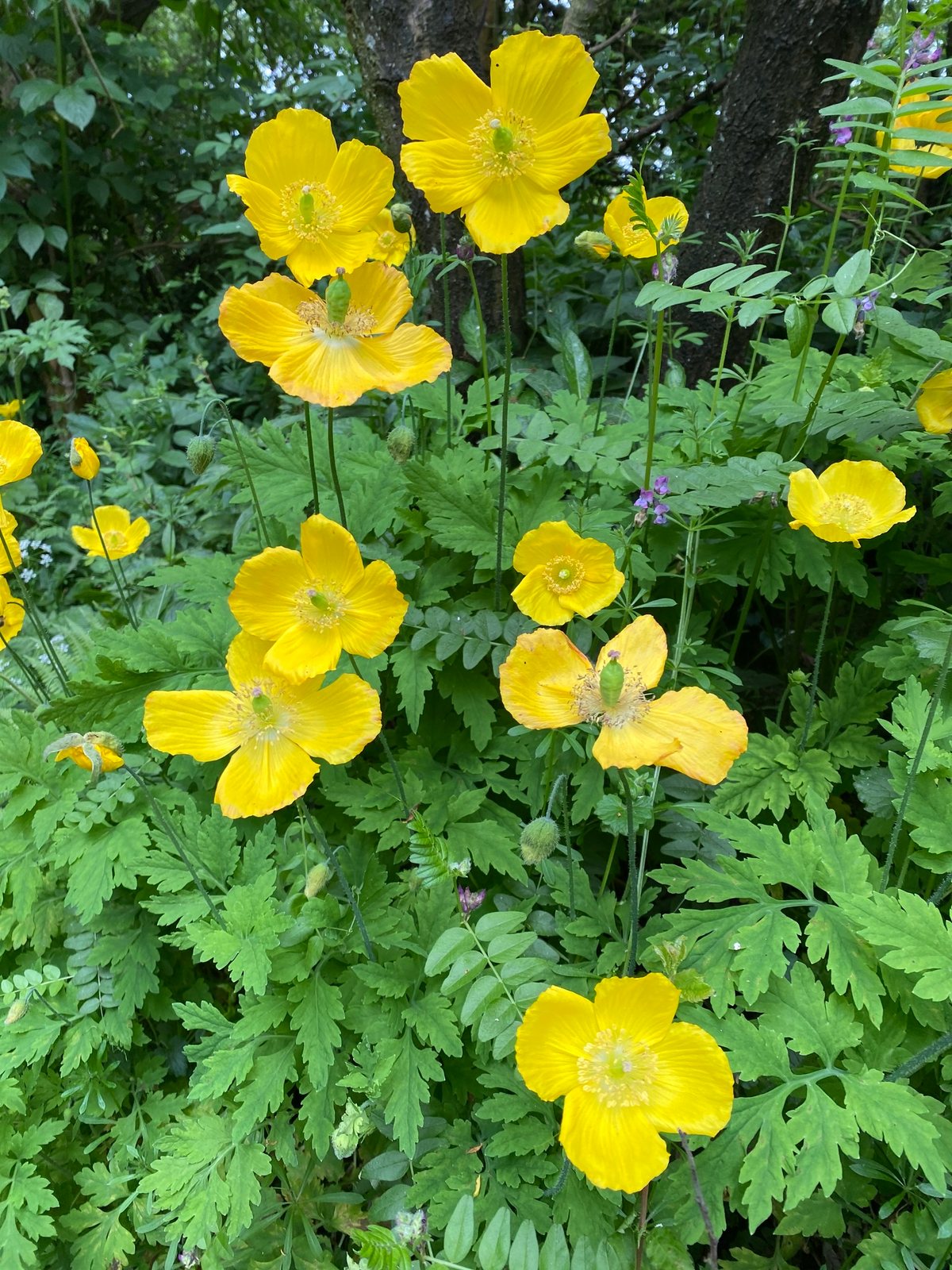
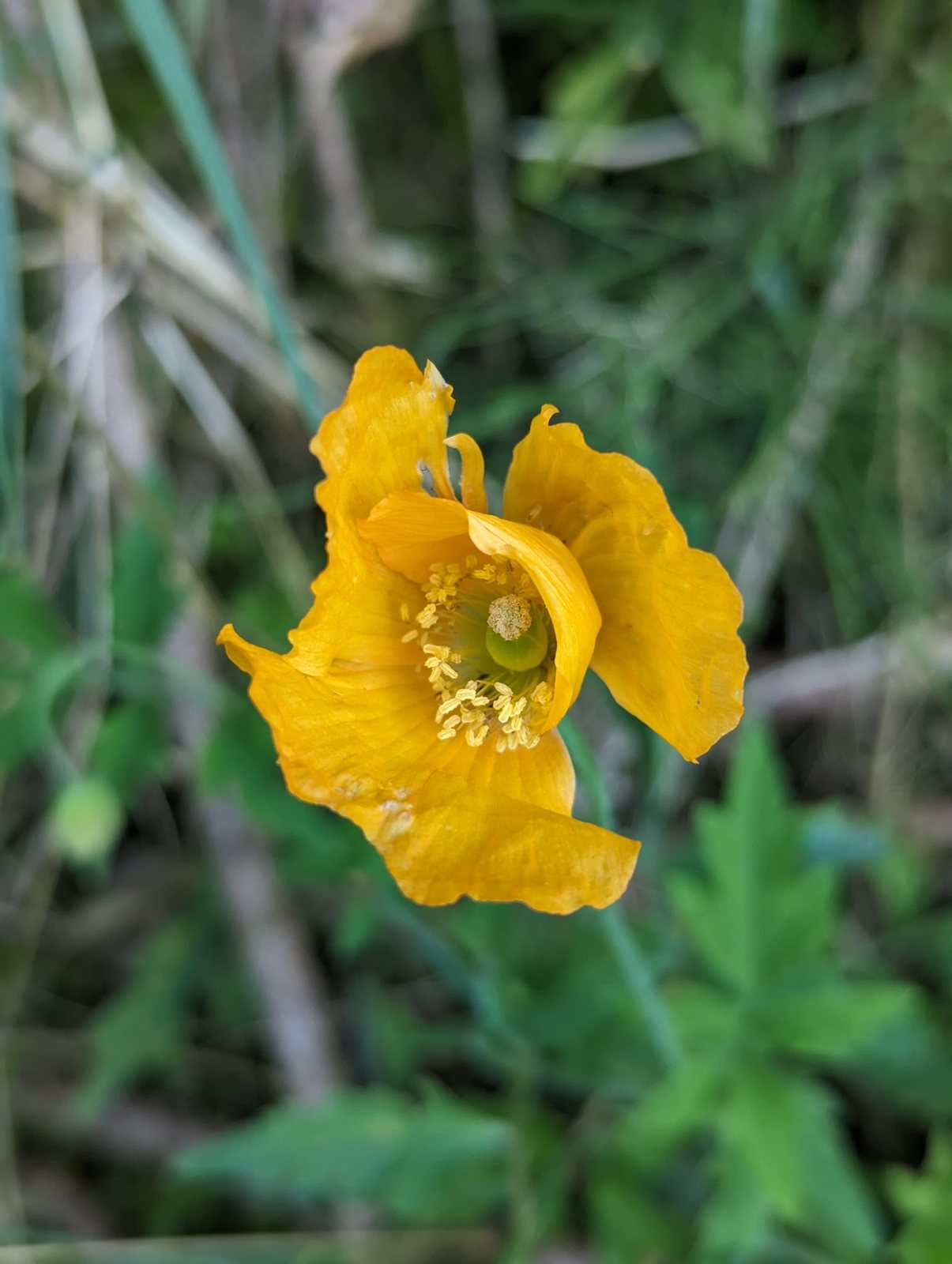
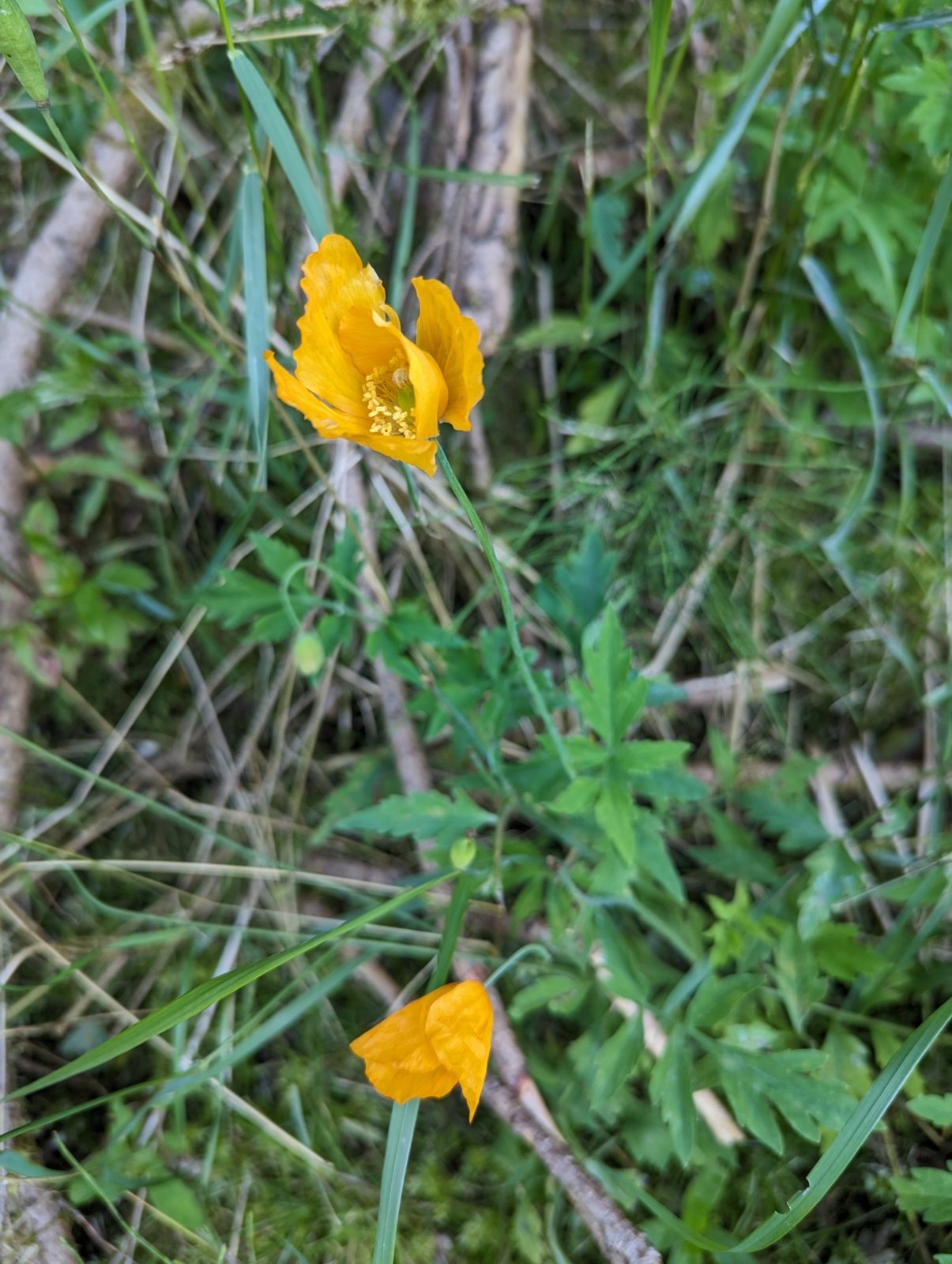
Welsh poppy is a short-lived perennial with finely divided leaves and delicate yellow or orange flowers. It brightens cool, partly shaded borders and woodland edges, often maintaining its presence by self-seeding rather than through long-lived individual plants.
At a glance
- Sun
- Partial shade; tolerates full sun where summers are cool and the soil stays moist.
- Water
- Moderate; keep the root zone moist but not waterlogged, especially while plants establish.
- Soil
- Humus-rich, well-drained soil; tolerates a range of soil pH levels, including chalky soil.
- Height
- 1-2 ft (0.3-0.6 m)
- Spread
- 1-1.5 ft (0.3-0.45 m)
- Flowers
- Late spring through summer, sometimes into early autumn; yellow or orange, usually with four papery petals.
- Foliage
- Soft green, deeply divided leaves form a loose basal clump; foliage usually dies back in winter.
- Growth
- Moderate; self-sown colonies can expand quickly in suitable conditions.
- Care needed
- Low
The year at a glance
- Pollinators
- Low allergen
| J | F | M | A | M | J | J | A | S | O | N | D | |
|---|---|---|---|---|---|---|---|---|---|---|---|---|
| Flowers | ||||||||||||
| Fruit | ||||||||||||
| Plant |
Northern hemisphere months. In Australia, shift them by six.
- Difficulty
- Easy
- Toughness
- Fairly tough
Will it suit your garden?
Pick your zone, country, light and whether you have pets.
Full sun is 6 or more hours of direct sun a day, part shade 3 to 6 hours, shade under 3.
How it grows
Planting day
1 ft (0.3 m)
After 1 year
1.1 ft (0.35 m)
After 2 years
1.3 ft (0.4 m)
After 3 years
1.5 ft (0.45 m)
full size
About 3 years to full size.
From a typical nursery size, at an average rate for this kind of plant. A rule of thumb, not a forecast.
Good to know
- Cats and dogs
- Toxic
- Native to
- the UK
- In the garden
- Spreads vigorously: plan to contain it.
- Growth rate
- Moderate
Care
Jobs through the year
- WaterApr–May, Sep–Oct, every 14 days
- Water established plants only if soil is drying during prolonged dry weather; water seedlings more often.
- WaterJun–Aug, every 7 days
- During prolonged drought, soak the root zone without saturating it; young plants need closer attention.
- MulchMar–Apr
- Apply a thin layer of compost or leaf mould, keeping the crown clear.
- DeadheadMay–Sep, every 7 days
- Remove faded flowers before capsules ripen to encourage bloom and limit self-seeding.
- PruneMar
- Cut remaining dead stems and foliage to ground level before new growth.
- ProtectMar–May
- Inspect seedlings for slugs and snails; hand-remove pests or use approved controls if needed.
- Water newly planted seedlings during dry spells until their roots are established.
- Water established plants during prolonged drought; avoid keeping the soil saturated.
- Apply a thin layer of leaf mould or compost in spring, keeping it clear of the crown.
- Avoid heavy feeding, which encourages leafy growth rather than a balanced display of flowers.
- Remove unwanted seedlings while small; established plants develop roots that dislike disturbance.
Pruning. Remove faded flowers before seed capsules ripen if you want to limit spreading and encourage further bloom. Cut dead stems and foliage to ground level in late autumn or early spring.
Through the year
- Early spring
- Remove dead foliage and add a thin layer of compost or leaf mould.
- Spring
- Plant young plants or move very small self-sown seedlings, keeping their roots intact.
- Late spring
- Start deadheading unless you want plants to set seed.
- Summer
- Water during prolonged dry weather and remove unwanted seedlings.
- Late summer
- Collect seed as capsules turn brown and begin to open; sow fresh seed promptly.
- Autumn
- Thin crowded seedlings and remove collapsing stems, leaving selected seed heads if natural spreading is welcome.
In the garden
- Allow small colonies to weave through woodland-edge planting with ferns and hostas.
- Use near the front of informal borders, where the flowers rise above low foliage.
- Let seedlings soften shaded steps, walls and paving joints where their roots have access to soil.
- Combine with spring bulbs to extend colour as the bulb foliage begins to fade.
Garden styles it suits: Cottage garden, Woodland, English country, Wildlife garden, Romantic rose garden and Secret garden.
Plant it with: Hostas, Hardy geraniums, Foxgloves, Brunnera, Lady ferns and Daffodils.
Wildlife: The flowers provide pollen for bees, including bumblebees. They offer little or no nectar.
Problems to watch for
- Slugs and snails can eat young growth: inspect seedlings after dark, remove pests and use iron-phosphate bait according to the label if needed.
- Hot, dry conditions cause wilting and early dormancy: provide afternoon shade, mulch and water during prolonged drought.
- Waterlogged soil can rot the crown and roots: improve drainage or move young plants to a better-drained site.
- Excessive self-seeding can crowd neighbouring plants: deadhead before capsules open and pull surplus seedlings early.
Safety
Do not eat any part, including the seeds. Welsh poppy is generally treated as harmful if eaten, and its sap may irritate skin. Species-specific evidence on poisoning severity in people, cats, dogs and horses is limited; keep pets and livestock from eating it and seek medical or veterinary advice after ingestion.
Where it spreads. Self-seeds freely and can become a persistent garden weed in cool, moist regions, including the UK and Ireland and the coastal Pacific Northwest of the US and Canada. Local spreading should not be confused with an official invasive-species listing.
Easily confused with
Greater celandine (Chelidonium majus)
Has much smaller yellow flowers in clusters, conspicuous yellow-orange sap and long, slender seed pods rather than the Welsh poppy's short capsules.
California poppy (Eschscholzia californica)
Has finely cut blue-green foliage, long narrow seed pods and flowers that close in dull weather; it usually grows in sunny, dry places.
Iceland poppy (Papaver nudicaule)
Usually has conspicuously hairy, leafless flower stalks rising from a basal rosette, with larger flowers in a wider range of colours.
The name
The name cambricum means 'Welsh', referring to Wales, while Papaver is the Latin name for a poppy.
Propagation. Sow fresh seed thinly on the surface of moist seed compost in late summer or autumn and leave outdoors in a sheltered position; germination can be irregular and may follow winter chilling. Alternatively, move very young self-sown seedlings with minimal root disturbance.
Checked against open data
- Accepted botanical name
- Papaver cambricum
- Native range
- France, Great Britain, Ireland and Spain.
- Measured
- Average height 30 cm.
Sources: GBIF (CC BY 4.0) and Trefle (CC BY 4.0). The care and design notes are LandscapeGPT's own.
See it in your own yard.
Upload a photo of your yard and see it redesigned with plants that suit your climate, each checked against your zone.