Wendy's Wish salvia
Salvia 'Wendy's Wish'. Family Lamiaceae. Perennial.
Also called Wendy's Wish sage.
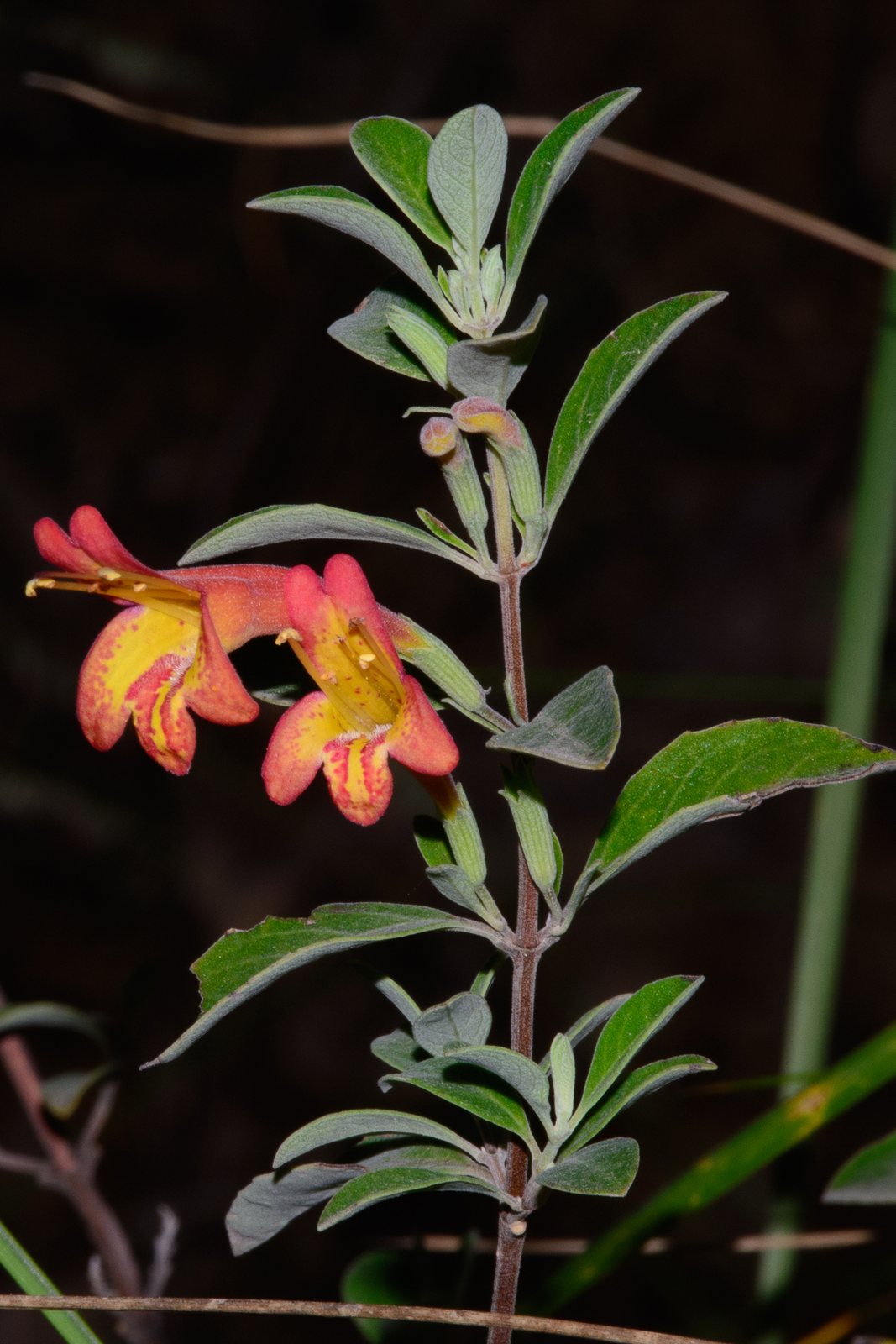
Wendy's Wish is a tender, bushy perennial with a woody base and loose spikes of tubular magenta-pink flowers. Gardeners grow it for its long flowering season and nectar-rich blooms; in cold climates it is grown as an annual or overwintered under cover.
At a glance
- Sun
- Full sun to light partial shade; some afternoon shade helps in very hot climates.
- Water
- Water regularly during establishment, then when the upper soil has dried. Established plants tolerate brief dry spells, but flower better with moderate moisture.
- Soil
- Well-drained soil of average fertility; avoid ground that stays wet in winter. Use a free-draining potting mix in containers.
- Height
- 3-4 ft (0.9-1.2 m)
- Spread
- 2-3 ft (0.6-0.9 m)
- Flowers
- Magenta-pink tubular flowers held in dusky reddish-brown calyces, from late spring or early summer until autumn frost.
- Foliage
- Evergreen. Green, aromatic, pointed oval leaves with toothed edges, carried on branching stems.
- Growth
- Fast in warm weather.
- Care needed
- Low
The year at a glance
- Pollinators
- Deer resistant
- Heat tolerant
- Low allergen
| J | F | M | A | M | J | J | A | S | O | N | D | |
|---|---|---|---|---|---|---|---|---|---|---|---|---|
| Flowers | ||||||||||||
| Plant |
Northern hemisphere months. In Australia, shift them by six.
- Difficulty
- Moderate
- Toughness
- Fairly tough
Will it suit your garden?
Pick your zone, country, light and whether you have pets.
Full sun is 6 or more hours of direct sun a day, part shade 3 to 6 hours, shade under 3.
How it grows
Planting day
1 ft (0.3 m)
After 1 year
2.2 ft (0.68 m)
After 2 years
3 ft (1.1 m)
full size
About 2 years to full size.
From a typical nursery size, at an average rate for this kind of plant. A rule of thumb, not a forecast.
Good to know
- Cats and dogs
- Safe
- Growth rate
- Fast
Care
Jobs through the year
- WaterMay, Sep–Oct, every 14 days
- Water established in-ground plants when upper soil dries; new plants and pots need more frequent checks.
- WaterJun–Aug, every 7 days
- Water established plants at the base when upper soil dries, avoiding waterlogging.
- WaterJan–Apr, Nov–Dec, every 21 days
- For frost-free overwintered plants only, check compost and water sparingly before it dries out completely.
- MulchMay
- Apply compost around the roots, keeping the crown and woody stem bases clear.
- PruneApr–May
- Once strong new growth appears, shorten stems to healthy shoots and remove dead wood.
- DeadheadJun–Oct, every 14 days
- Trim spent flower stems to encourage continued flowering.
- ProtectSep–Oct
- Before the first frost, lift and pot in-ground plants or move pots into bright frost-free shelter.
- Plant outside after frost danger has passed, leaving room for a broad, branching plant.
- Water at the base when the upper soil dries; empty standing water from container saucers.
- Apply compost in spring; feed container plants lightly during active growth.
- Mulch around the root zone without covering the crown or woody stem bases.
- In frosty climates, move container plants into a bright, frost-free place before the first frost.
Pruning. In spring, once strong new growth appears and hard frosts have passed, shorten stems to healthy shoots and remove dead wood. Trim spent flower stems during summer to keep the plant tidy and encourage further flowering.
Through the year
- Early spring
- Check overwintered plants for pests and water sparingly until growth resumes.
- Spring
- Prune back to healthy new shoots after the main frost risk has passed.
- Late spring
- Plant out or move pots outdoors after gradually acclimatising them to outdoor conditions.
- Summer
- Water during dry spells and trim off spent flower stems.
- Early autumn
- Continue watering container plants while they are actively flowering.
- Late autumn
- Move pots under frost-free cover in cold regions; keep outdoor crowns free of wet debris in mild regions.
In the garden
- Use through the middle of a sunny mixed border, where its loose flower spikes rise above lower plants.
- Grow in a large patio container for a long season of colour near seating.
- Combine with ornamental grasses for a contrast between vivid flowers and fine-textured foliage.
- Pair with blue-flowered perennials and silver foliage in a warm, sheltered border.
Garden styles it suits: Cottage garden, Pollinator garden, Modern courtyard, Mediterranean, Hot border and Small-space.
Plant it with: Catmint, Lavender, Gaura, Verbena, Lamb's ears and Feather reed grass.
Wildlife: Flowers provide nectar for bees and other pollinating insects, and attract hummingbirds where these occur.
Problems to watch for
- Winter cold or wet soil can kill the crown: provide sharp drainage and overwinter under cover where winters are too cold.
- Aphids may gather on soft shoots: wash them off with water and encourage natural predators.
- Whiteflies can infest plants overwintered under glass: inspect leaf undersides and use insecticidal soap labelled for the pest if needed.
- Leggy growth and reduced flowering usually indicate too much shade or nitrogen: move to a brighter position and reduce feeding.
Safety
Not known to be toxic to people, cats, dogs or horses. Cultivar-specific safety information is limited, and it should not be treated as a culinary sage or deliberately eaten.
Easily confused with
Pineapple sage (Salvia elegans)
Usually has scarlet rather than magenta-pink flowers, and its crushed leaves have a distinctive pineapple scent.
Scarlet sage (Salvia splendens)
Typical bedding forms have much denser, upright flower spikes with conspicuously coloured calyces, rather than Wendy's Wish's loose, branching display.
The name
The cultivar name honours Wendy Smith, the Australian gardener who discovered the original plant in her garden.
Propagation. Usually propagated by softwood or semi-ripe cuttings during the growing season; seed will not reliably reproduce the cultivar. Check local plant breeders' rights before taking cuttings, as this cultivar has been protected in some countries.
Checked against open data
- Accepted botanical name
- Salvia
Sources: GBIF (CC BY 4.0). The care and design notes are LandscapeGPT's own.
See it in your own yard.
Upload a photo of your yard and see it redesigned with plants that suit your climate, each checked against your zone.