Westringia Grey Box
Westringia 'Grey Box'. Family Lamiaceae. Shrub.
Also called Grey Box coastal rosemary, Westringia fruticosa 'WES04'.
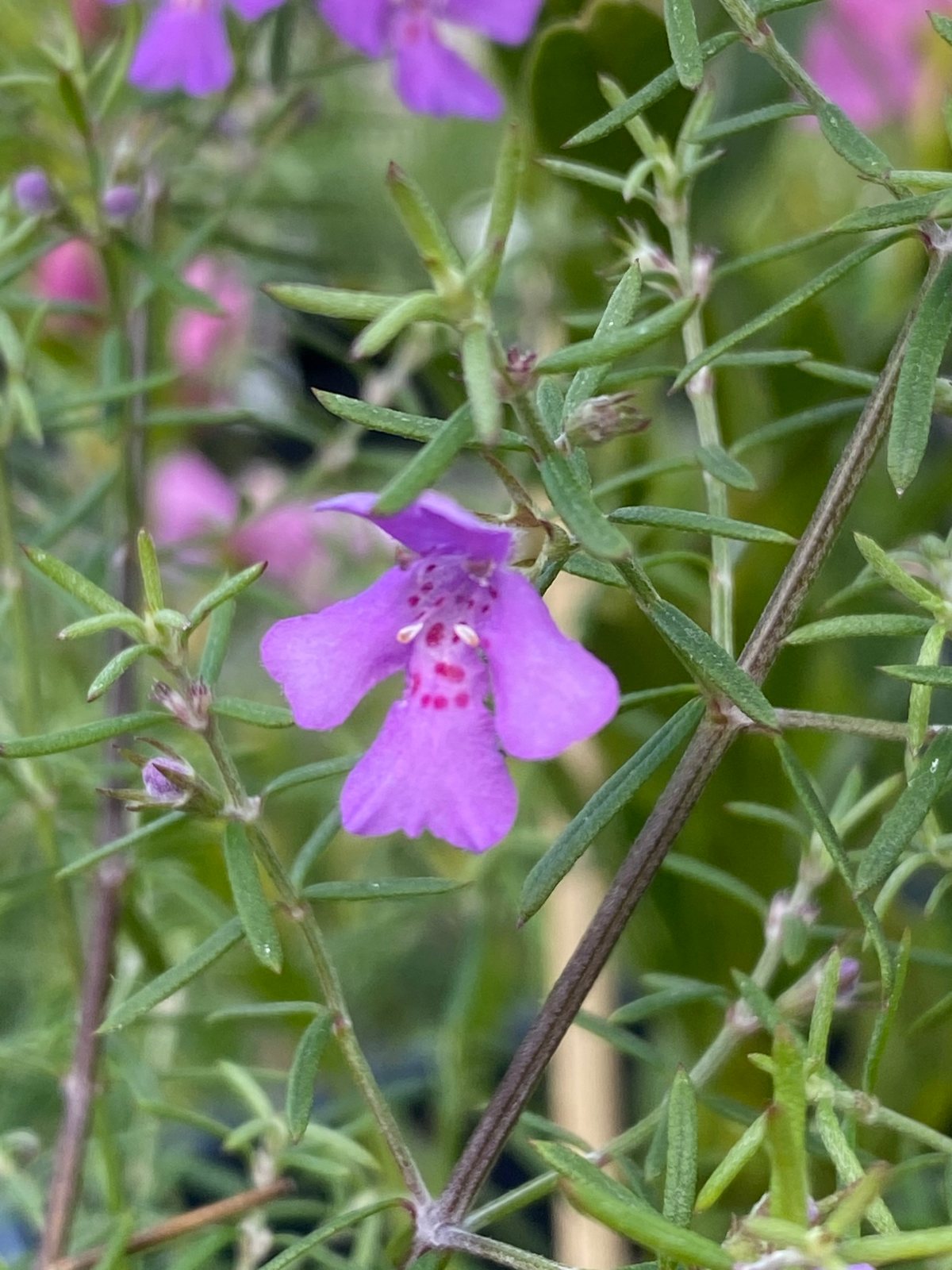
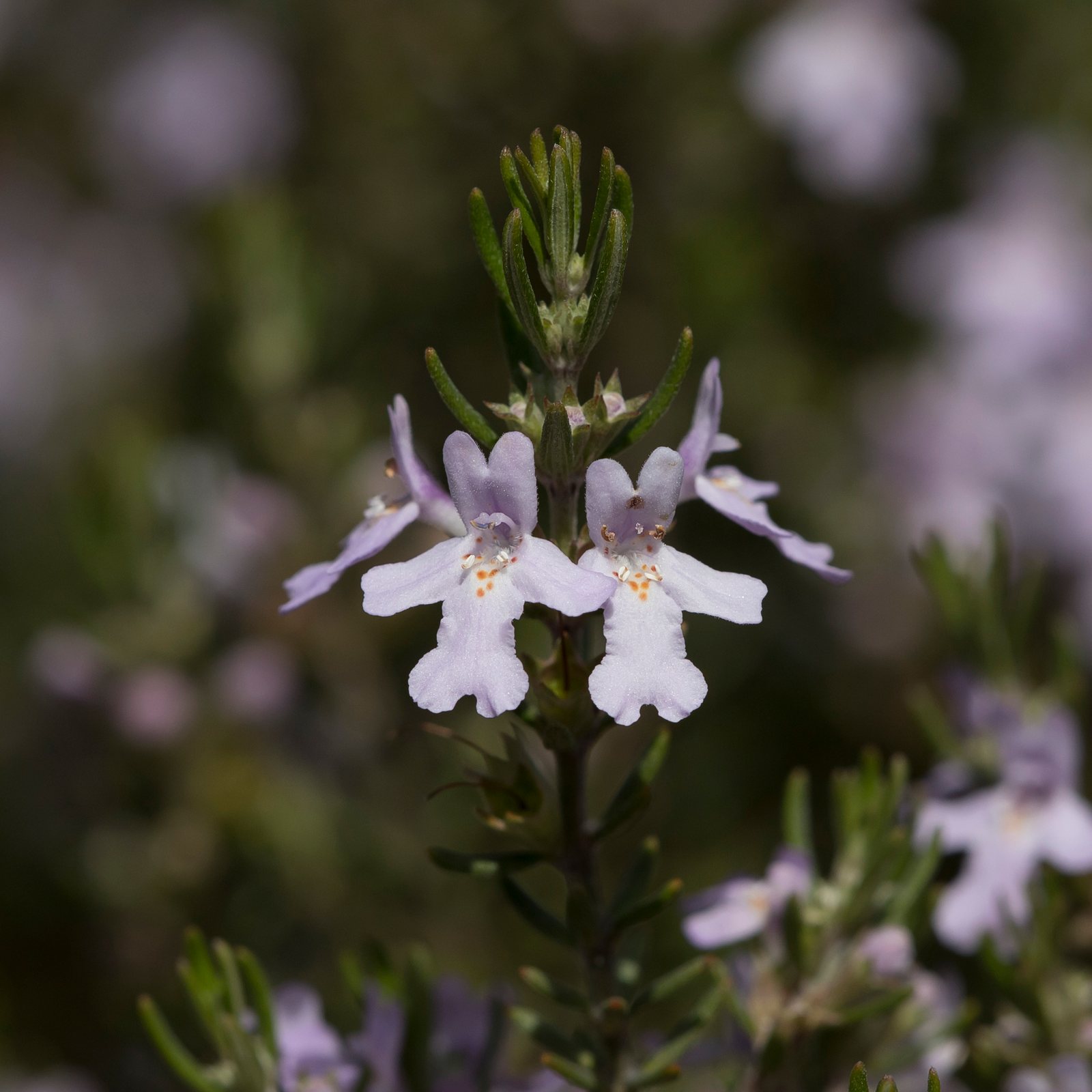
Grey Box is a compact Australian evergreen shrub grown for its dense, rounded shape and small grey-green leaves. It makes a useful low hedge or clipped mound in sunny, mild-climate gardens, especially near the coast. Despite the name coastal rosemary, it is not a culinary herb.
At a glance
- Sun
- Full sun to light partial shade; growth is densest in full sun.
- Water
- Water regularly while establishing; once established, water deeply during prolonged dry spells. Avoid persistently wet soil.
- Soil
- Well-drained sandy, loamy or improved clay soil; tolerates a range of soil pH but dislikes waterlogging.
- Height
- 1-1.5 ft (0.3-0.45 m)
- Spread
- 1-1.5 ft (0.3-0.45 m)
- Flowers
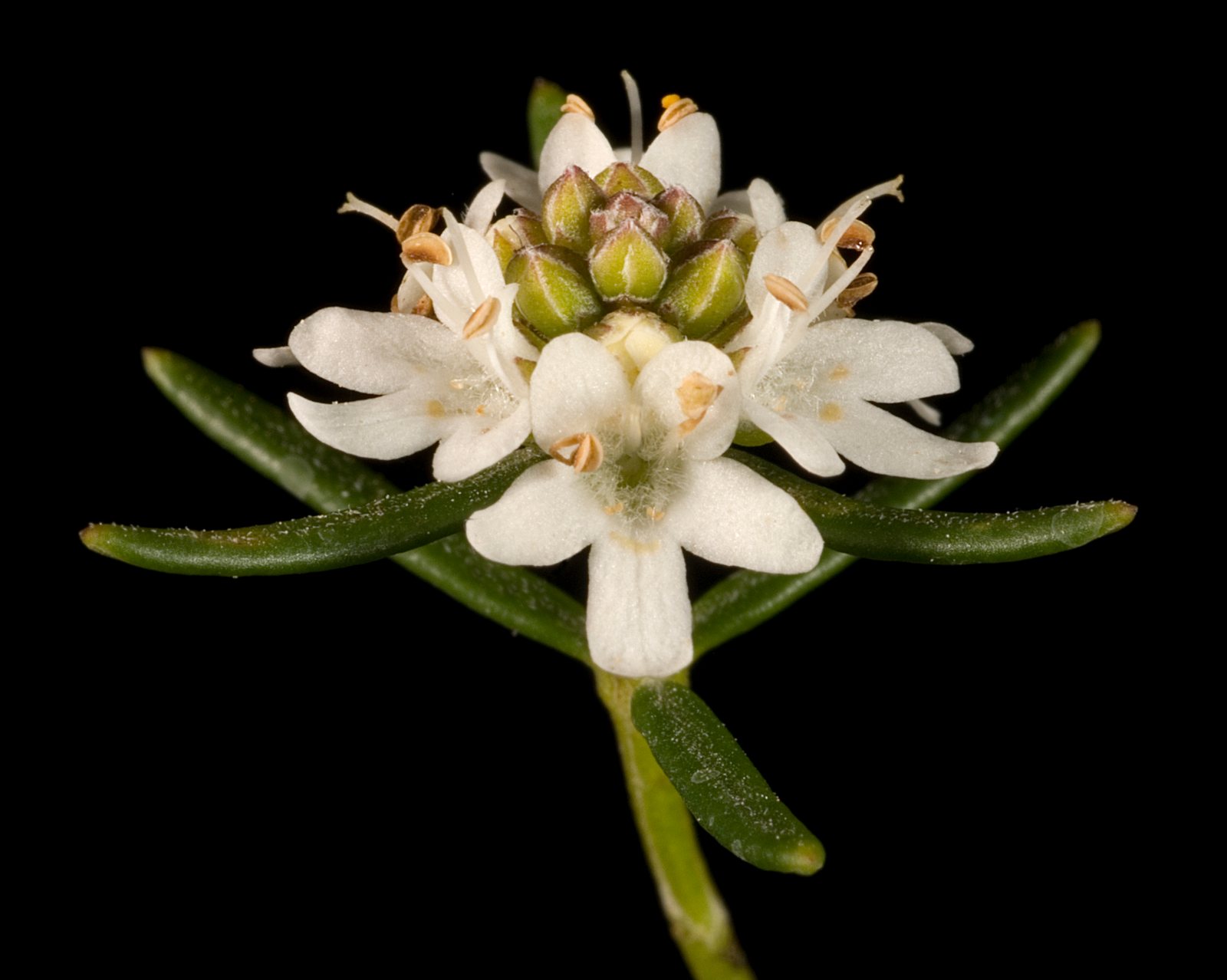
- Small white flowers, mainly in spring and summer, with occasional flowers at other times in mild climates.
- Foliage
- Evergreen. Small, narrow grey-green leaves with pale undersides, held densely around the stems.
- Growth
- Slow to moderate.
- Care needed
- Low
The year at a glance
- Pollinators
- Drought tolerant
- Heat tolerant
- Low allergen
| J | F | M | A | M | J | J | A | S | O | N | D | |
|---|---|---|---|---|---|---|---|---|---|---|---|---|
| Flowers | ||||||||||||
| Plant |
Northern hemisphere months. In Australia, shift them by six.
- Difficulty
- Moderate
- Toughness
- Fairly tough
Will it suit your garden?
Pick your zone, country, light and whether you have pets.
Full sun is 6 or more hours of direct sun a day, part shade 3 to 6 hours, shade under 3.
How it grows
Planting day
1.2 ft (0.38 m)
full size
About 7 years to full size.
From a typical nursery size, at an average rate for this kind of plant. A rule of thumb, not a forecast.
Good to know
- Cats and dogs
- Safe
- Growth rate
- Slow
Care
Jobs through the year
- WaterApr–May, Sep–Oct, every 21 days
- Water established ground plants only when the root zone is dry; young plants and pots need more frequent checks.
- WaterJun–Aug, every 14 days
- Give established ground plants a deep soaking only during prolonged drought; water new plants more often.
- FeedApr–May
- Apply a light controlled-release feed only if growth is weak.
- MulchMay
- Refresh mulch without covering the stems or crown.
- PruneJun
- Lightly trim after the main spring flowering flush, keeping cuts within leafy growth.
- PruneAug
- Trim lightly only if a formal shape is wanted; avoid bare old wood.
- ProtectJan–Apr, Oct–Dec
- Use a container in cold gardens and overwinter bright and frost-free; prevent saturated roots.
- Water deeply through the first growing season, allowing the soil surface to dry between waterings.
- Once established, give supplementary water during extended drought rather than frequent shallow watering.
- Apply a light dose of controlled-release fertiliser in spring if growth is weak; avoid heavy feeding.
- Spread mulch over the root area, keeping it clear of the stems.
- Use a pot with drainage holes and free-draining potting mix where winter-wet soil is a problem.
Pruning. Lightly trim in spring after the main flowering flush, then again in summer if a formal shape is wanted. Keep cuts within leafy growth and avoid hard renovation into bare old wood.
Through the year
- Spring
- Plant after damaging frosts have passed, and water thoroughly.
- Spring
- Check growth and apply a light feed only if needed.
- Late spring
- Trim after the main flowering flush to maintain a rounded mound or low hedge.
- Summer
- Check new plants regularly for dry roots; water established plants during prolonged drought.
- Autumn
- Clear blocked pot drainage holes and avoid heavy pruning before cold weather.
- Winter
- Protect container plants from hard frost and check that roots are not sitting in saturated soil.
In the garden
- Plant closely as a low evergreen edging along sunny paths or terraces.
- Clip into small rounded mounds among gravel, paving and ornamental grasses.
- Repeat through a coastal border with lavender and dwarf bottlebrush for contrasting foliage and flowers.
- Use in containers beside steps or entrances where a compact evergreen shape is needed.
- Use as a box substitute in mild, sunny gardens with well-drained soil.
Garden styles it suits: Australian native, Coastal, Modern Mediterranean, Contemporary minimal, Dry gravel garden and Low-maintenance.
Plant it with: Lavender, Kangaroo paw, Dwarf bottlebrush, Blue fescue, Lomandra and Rock rose.
Wildlife: The small flowers attract bees and other visiting insects. Frequent clipping reduces flowering.
Problems to watch for
- Root rot and dieback in waterlogged soil: improve drainage, reduce watering and replace badly affected plants.
- Frost damage to leaves and shoot tips: choose a sheltered position, protect during cold snaps and remove dead growth after frost risk passes.
- Open or sparse growth in shade: move to a sunnier position and trim lightly within leafy growth.
- Yellowing or poor growth from excessive irrigation: let the root zone dry somewhat between waterings and check drainage before adding fertiliser.
Safety
Not known to be toxic to people, cats, dogs or horses, but species-specific safety information is limited. No part is recognised as highly poisonous; it is nevertheless an ornamental plant, not an edible substitute for rosemary.
Easily confused with
Coastal rosemary (Westringia fruticosa)
The ordinary species becomes a much larger shrub with a looser outline; Grey Box stays naturally compact and densely rounded.
Rosemary (Salvia rosmarinus)
Rosemary has strongly aromatic leaves arranged in opposite pairs. Westringia usually has leaves in whorls of three or four and lacks the familiar culinary rosemary scent.
Common box (Buxus sempervirens)
Box has broader, rounded, usually glossy green leaves in opposite pairs; Grey Box has narrow grey-green leaves and small white, lip-shaped flowers.
The name
Westringia honours the Swedish physician Johan Peter Westring, while Grey Box refers to its grey foliage and use as a compact alternative to box hedging.
Propagation. Propagate from semi-ripe cuttings in summer to retain the cultivar's characteristics. Grey Box is sold under the cultivar name 'WES04'; check local plant breeders' rights or patent restrictions before propagating.
Checked against open data
- Accepted botanical name
- Westringia
Sources: GBIF (CC BY 4.0). The care and design notes are LandscapeGPT's own.
See it in your own yard.
Upload a photo of your yard and see it redesigned with plants that suit your climate, each checked against your zone.