Whale's tongue agave
Agave ovatifolia. Family Asparagaceae. Succulent.
Also called Whale tongue agave.
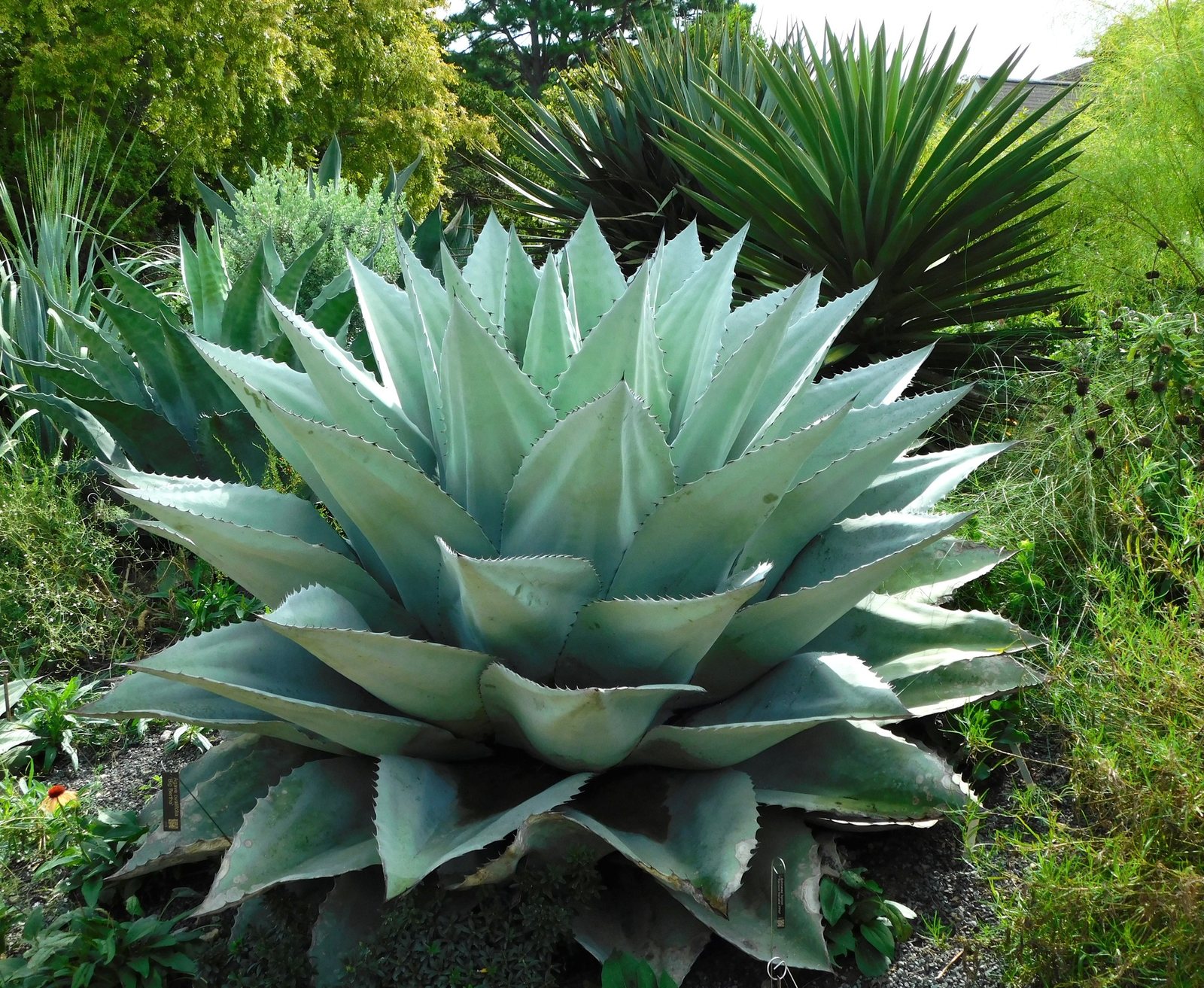
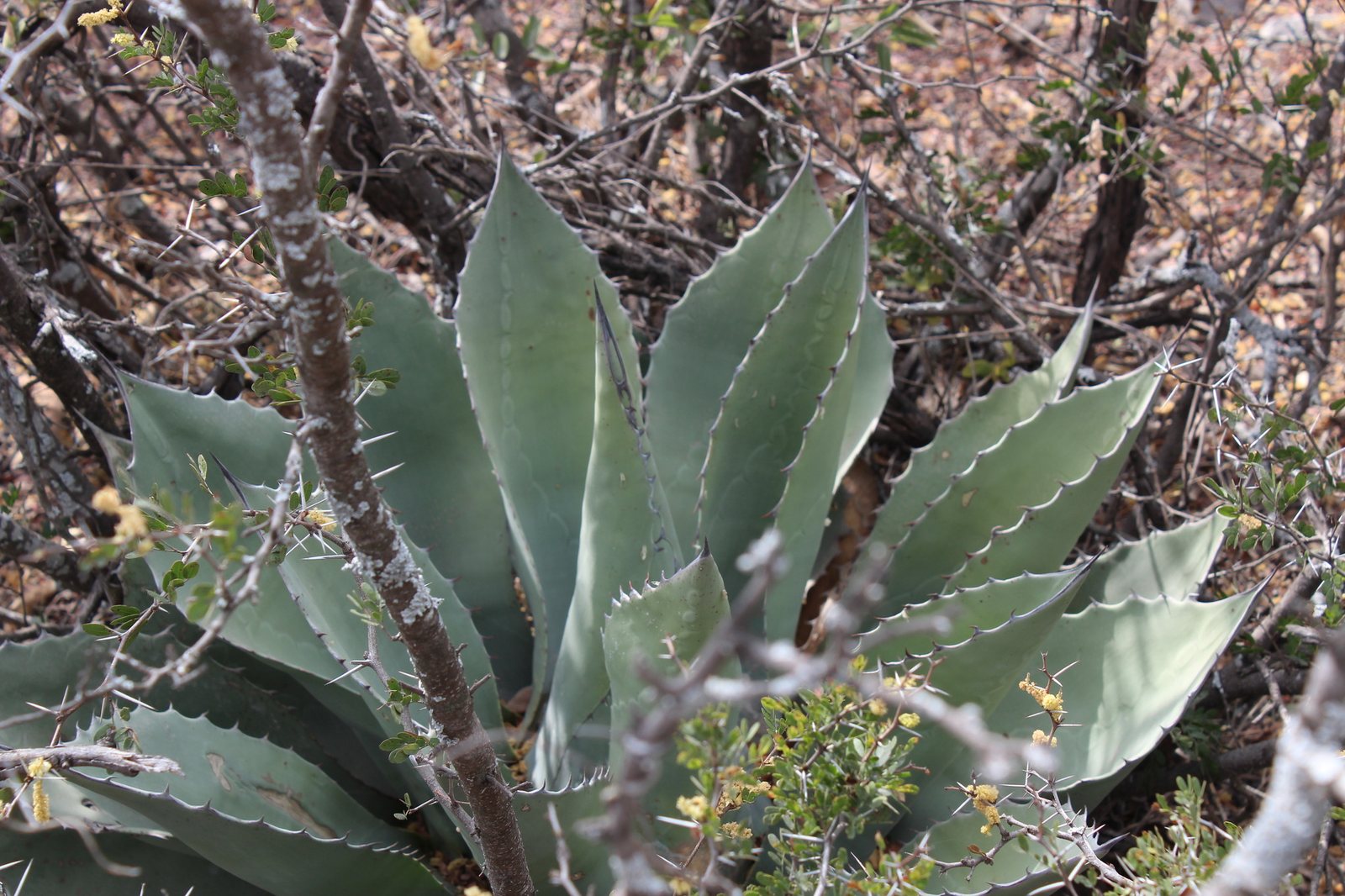
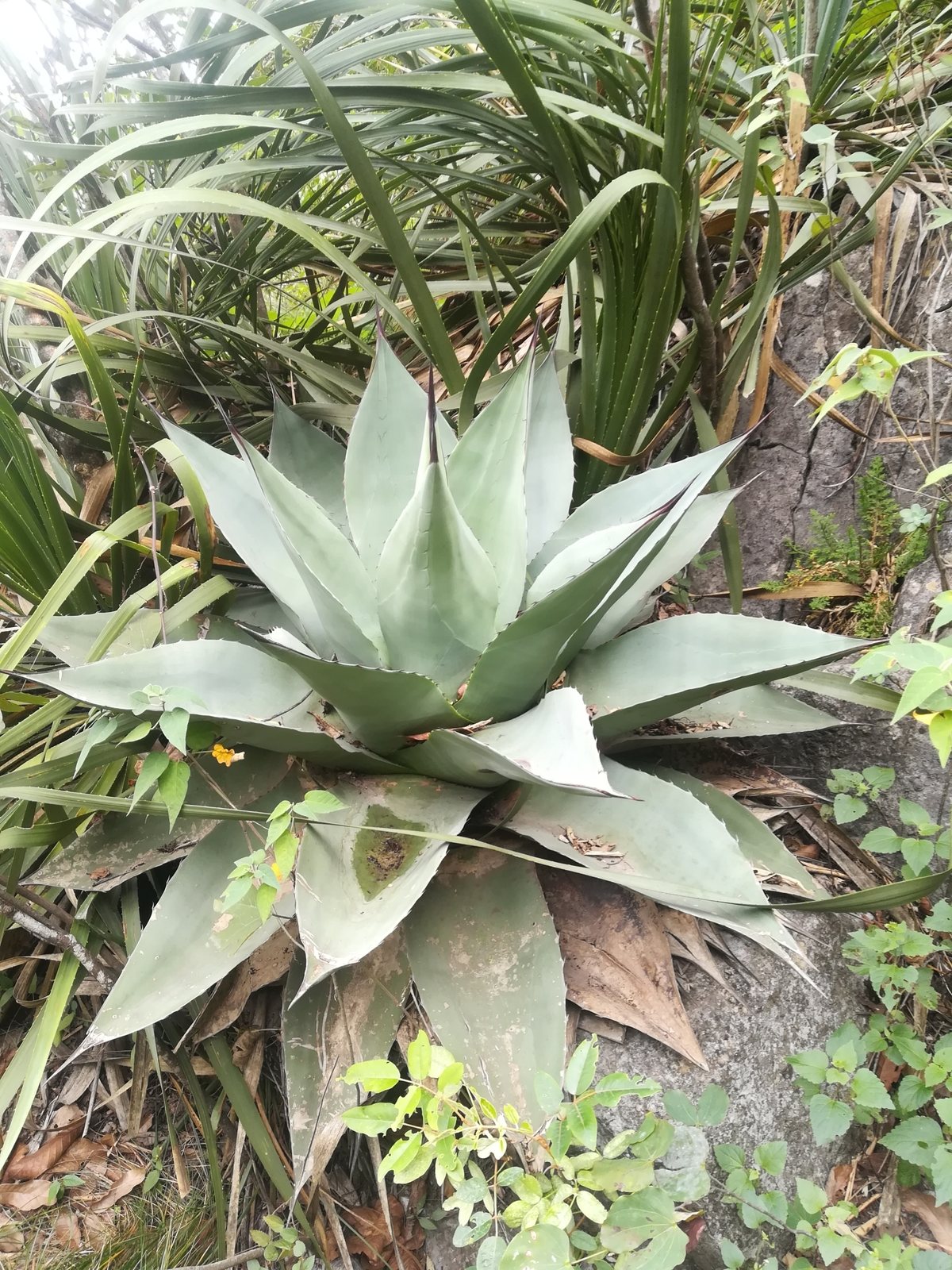
This evergreen succulent forms a broad, usually solitary rosette of thick blue-grey leaves shaped like a whale's tongue. Gardeners grow it for its bold outline and drought tolerance, but it needs excellent drainage and room away from paths because of its sharp teeth and terminal spines. Its cold tolerance is much better in dry conditions than in wet winters.
At a glance
- Sun
- Full sun; light afternoon shade is helpful in exceptionally hot desert climates.
- Water
- Low once established. Water young plants during prolonged dry spells; let the soil dry between waterings and keep winter watering minimal.
- Soil
- Sharply drained sandy, gritty or rocky soil. Use a raised bed or mound on heavy ground; avoid sites that collect winter water.
- Height
- 3-5 ft (0.9-1.5 m), excluding the flower stalk
- Spread
- 4-6 ft (1.2-1.8 m)
- Flowers
- Mature plants produce a branched stalk roughly 10-15 ft (3-4.6 m) tall with greenish-yellow flowers, usually in late spring or summer. Flowering may take decades, and the flowering rosette then dies.
- Foliage
- Evergreen. Broad, thick, cupped blue-grey to silvery-blue leaves with small marginal teeth and a dark, sharp terminal spine.
- Growth
- Slow to moderate, faster with warmth and occasional summer water.
- Care needed
- Low
The year at a glance
- Pollinators
- Deer resistant
- Drought tolerant
- Heat tolerant
- Low allergen
| J | F | M | A | M | J | J | A | S | O | N | D | |
|---|---|---|---|---|---|---|---|---|---|---|---|---|
| Flowers | ||||||||||||
| Plant |
Northern hemisphere months. In Australia, shift them by six.
- Difficulty
- Moderate
- Toughness
- Fairly tough
Will it suit your garden?
Pick your zone, country, light and whether you have pets.
Full sun is 6 or more hours of direct sun a day, part shade 3 to 6 hours, shade under 3.
How it grows
Planting day
0.8 ft (0.25 m)
After 1 year
1.3 ft (0.41 m)
After 2 years
1.9 ft (0.57 m)
After 3 years
2.4 ft (0.73 m)
After 5 years
3 ft (1 m)
About 6 years to full size.
From a typical nursery size, at an average rate for this kind of plant. A rule of thumb, not a forecast.
Good to know
- Cats and dogs
- Mildly toxic: may upset a stomach
- Growth rate
- Moderate
Care
Jobs through the year
- WaterApr–May, Sep, every 30 days
- Water established plants only if the root zone is fully dry; check young plants more often.
- WaterJun–Aug, every 21 days
- Water deeply only during dry spells; young plants need more frequent checks.
- MulchApr–May
- Use gravel mulch and keep the raised crown free of debris.
- PruneApr–May
- Remove only dead or badly damaged lower leaves; wear thick gloves and eye protection.
- ProtectJan–Apr, Oct–Dec
- In zone 6-7, shelter containers from frost; marginal outdoor plants need dry, ventilated winter cover.
- Plant with the crown above surrounding soil level in a freely draining bed.
- Water deeply during establishment, then allow the root zone to dry before watering again.
- Use gravel mulch rather than moisture-holding organic mulch against the crown.
- Feed sparingly; established plants in the ground usually need no fertilizer.
- In cold, wet climates, provide an open-sided rain shelter in winter or grow in a container moved under bright, frost-protected cover.
- Wear thick gloves and eye protection, and leave its full mature spread clear of paths and play areas.
Pruning. In spring, remove only fully dead or badly damaged lower leaves, cutting close to their bases without injuring the crown. Do not shear the rosette or shorten healthy leaves; use protective clothing when handling it.
Through the year
- Spring
- Plant after severe frost risk has passed, giving roots a warm growing season to establish.
- Spring
- Remove dead lower leaves and check the crown for softness or trapped wet debris.
- Summer
- Water new plants during dry spells; water established plants only when the soil has dried thoroughly.
- Early autumn
- Reduce supplemental watering as temperatures fall and check that drainage outlets remain clear.
- Late autumn
- Move container plants under cover where winters are too cold or persistently wet.
- Winter
- Keep the crown dry and check sheltered plants occasionally for rot and pests.
In the garden
- Use a single rosette as a focal point in a sunny gravel garden.
- Repeat widely spaced plants against a plain wall to emphasize their rounded, architectural shape.
- Combine with drought-tolerant grasses and low flowering perennials for contrasting textures.
- Grow in a large, frost-resistant container with drainage holes where winter shelter is needed.
Garden styles it suits: Architectural minimal, Desert modern, Modern Mediterranean, Dry gravel garden, Desert / xeriscape and Southwestern.
Plant it with: Red yucca, Lavender, Russian sage, Blue grama grass, Ice plant and Autumn sage.
Wildlife: Flowers can provide nectar and pollen for insects and, where present, nectar-feeding birds. The long interval before flowering means it is not a dependable annual food source.
Problems to watch for
- Root or crown rot: prevent standing water, keep mulch away from the crown and shelter from persistent winter rain; badly rotted plants usually cannot be saved.
- Agave snout weevil in regions where it occurs: watch for sudden collapse, loose central leaves or a foul smell; remove infested plants promptly and seek local advice on protecting nearby agaves.
- Cold damage: wet freezes can scar or kill leaves; provide dry winter protection and avoid planting at the edge of its hardiness range in exposed, poorly drained sites.
- Scale insects or mealybugs: inspect leaf bases, isolate affected container plants and treat accessible infestations with a product labelled for these pests on succulents.
Safety
Treat the leaves and sap as harmful to people, cats, dogs and horses. Agave sap can cause marked skin and eye irritation, and chewing may irritate the mouth and digestive tract; species-specific poisoning information is limited. Spines can cause serious puncture wounds. Do not eat it, and seek medical or veterinary advice after ingestion or eye exposure.
Easily confused with
Parry's agave (Agave parryi)
Usually forms a smaller, tighter rosette with shorter leaves and often produces offsets; whale's tongue agave has broader, more open, deeply cupped leaves.
Harvard agave (Agave havardiana)
Typically has narrower, more upright leaves with more conspicuous marginal teeth; whale's tongue agave has broader, tongue-shaped leaves.
Century plant (Agave americana)
Usually has much longer, narrower, arching leaves and readily produces spreading offsets, unlike the generally solitary whale's tongue agave.
The name
The epithet ovatifolia means ovate-leaved, while whale's tongue describes the broad, thick, tongue-shaped leaves.
Propagation. Usually grown from seed, sown in a warm, freely draining medium. It normally remains solitary, so offsets are not a dependable propagation method; any rare rooted offset can be separated in warm weather.
Checked against open data
- Accepted botanical name
- Agave ovatifolia
- Native range
- Mexico Northeast.
Sources: GBIF (CC BY 4.0) and Trefle (CC BY 4.0). The care and design notes are LandscapeGPT's own.
See it in your own yard.
Upload a photo of your yard and see it redesigned with plants that suit your climate, each checked against your zone.