Wheeler's Dwarf pittosporum
Pittosporum tobira 'Wheeler's Dwarf'. Family Pittosporaceae. Shrub.
Also called Dwarf Japanese pittosporum, Dwarf Japanese mock orange.
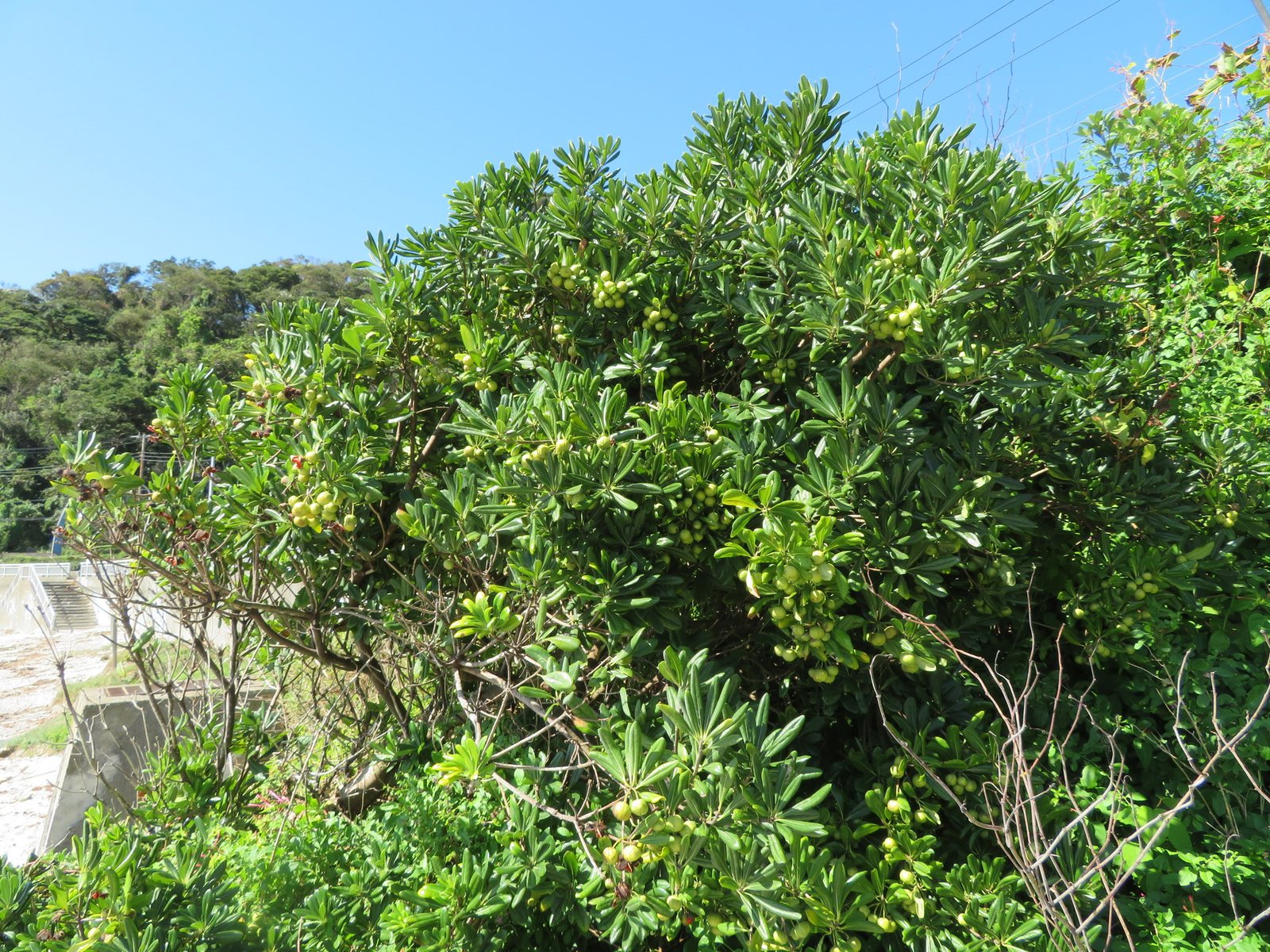
A compact evergreen shrub that forms a broad, rounded mound of glossy dark-green leaves. Gardeners grow it for low edging, foundation planting and year-round structure rather than flowers. It suits mild coastal and warm-temperate gardens but needs protection from severe frost and cold, drying winds.
At a glance
- Sun
- Full sun to partial shade; afternoon shade helps in hot inland gardens.
- Water
- Water regularly while establishing; once rooted, water deeply during prolonged dry weather. Avoid persistently wet soil.
- Soil
- Well-drained soil, including sandy or loamy ground; tolerates a range of soil pH values but struggles in waterlogged clay.
- Height
- 2-3 ft (0.6-0.9 m)
- Spread
- 3-5 ft (0.9-1.5 m)
- Flowers
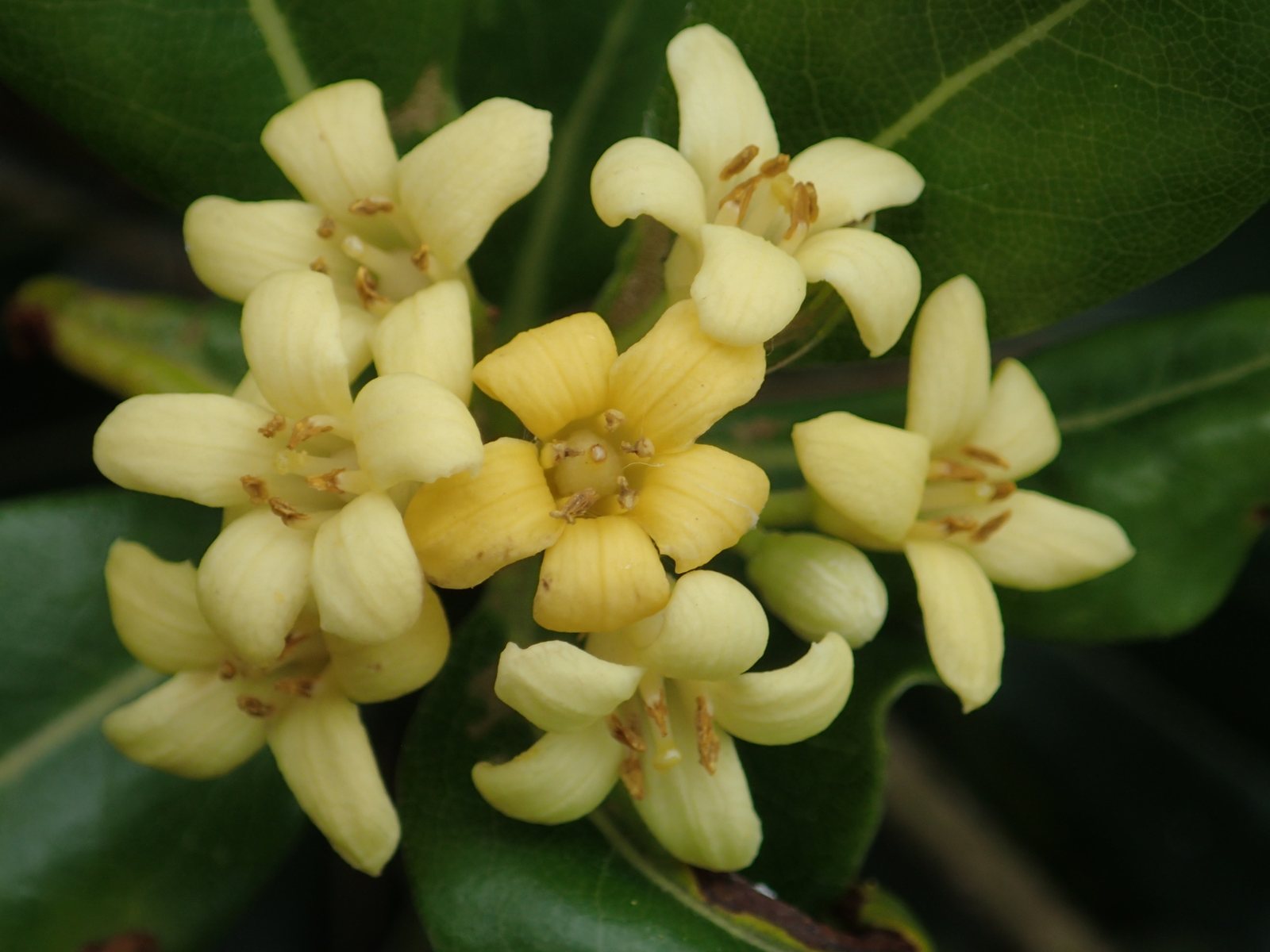
- Rarely flowers; any flowers appear in spring and are small, fragrant and creamy white, ageing yellow.
- Foliage
- Evergreen. Thick, leathery, glossy dark-green leaves cluster around the shoot tips, giving the mound a dense, layered appearance.
- Growth
- Slow
- Care needed
- Low
The year at a glance
- Drought tolerant
- Heat tolerant
- Wildlife
- Low allergen
| J | F | M | A | M | J | J | A | S | O | N | D | |
|---|---|---|---|---|---|---|---|---|---|---|---|---|
| Plant |
Northern hemisphere months. In Australia, shift them by six.
- Difficulty
- Moderate
- Toughness
- Fairly tough
Will it suit your garden?
Pick your zone, country, light and whether you have pets.
Full sun is 6 or more hours of direct sun a day, part shade 3 to 6 hours, shade under 3.
How it grows
Planting day
1.6 ft (0.5 m)
After 1 year
1.7 ft (0.53 m)
After 2 years
1.8 ft (0.56 m)
After 3 years
1.9 ft (0.59 m)
After 5 years
2.2 ft (0.66 m)
About 8 years to full size.
From a typical nursery size, at an average rate for this kind of plant. A rule of thumb, not a forecast.
Good to know
- Cats and dogs
- Mildly toxic: may upset a stomach
- Growth rate
- Slow
Care
Jobs through the year
- WaterApr–May, Sep–Oct, every 21 days
- Deep-water established plants only during prolonged dry weather; young plants need more frequent watering.
- WaterJun–Aug, every 14 days
- Soak established plants if soil is dry; avoid frequent shallow watering.
- MulchMay
- Refresh organic mulch to 5–8 cm deep, keeping it clear of stems.
- FeedApr–May
- Apply a light balanced feed only if growth is weak or soil is poor.
- PruneMay–Jun
- After frost danger passes, remove damaged growth and lightly trim stray shoots; avoid hard shearing.
- ProtectOct–Nov
- Not reliably hardy in zones 6–7; move container-grown plants into bright, frost-free shelter.
- ProtectJan–Mar, Dec
- Maintain frost-free winter shelter; fleece alone is insufficient for severe or prolonged freezing.
- Water deeply during the first growing season, allowing the surface soil to dry slightly between waterings.
- Keep the root crown at soil level and avoid sites where winter rain collects.
- Apply 2-3 in (5-8 cm) of organic mulch, keeping it clear of the stems.
- Feed lightly in spring only if growth is weak or the soil is poor.
- Shelter from cold winds; protect container roots from freezing in marginal climates.
Pruning. Prune lightly in late spring, once frost danger has passed, shortening stray shoots to preserve the natural mound. Remove dead or damaged wood, but avoid repeated hard shearing or cutting deeply into bare old stems.
Through the year
- Spring
- Plant after severe frost risk has passed and water thoroughly.
- Spring
- Refresh mulch and apply a light feed only where needed.
- Late spring
- Remove frost-damaged growth and lightly trim shoots that spoil the outline.
- Summer
- Water newly planted shrubs during dry spells and inspect foliage for scale insects or mites.
- Late summer
- Take semi-ripe cuttings from healthy, non-flowering shoots.
- Autumn
- Check drainage and avoid feeding or pruning that encourages tender late growth.
- Winter
- Protect young plants during severe cold and move pots to a sheltered position.
In the garden
- Plant as a low evergreen edging beside broad paths, allowing room for its mature width.
- Repeat rounded mounds among upright ornamental grasses for a contrast in shape and texture.
- Use beneath windows where a taller shrub would obstruct the view.
- Grow in large, well-drained containers to provide permanent structure in a sheltered courtyard.
- Combine with lavender and other sun-loving shrubs in mild coastal gardens.
Garden styles it suits: Modern, Formal, Coastal, Mediterranean, Low-maintenance and Small-space.
Plant it with: Lavender, Lilyturf, Dwarf mondo grass, Agapanthus, Society garlic and Rosemary.
Wildlife: Dense evergreen foliage offers shelter for small garden animals. Flowers can attract insects when present, but this cultivar flowers too sparsely to be a dependable pollinator plant.
Problems to watch for
- Root rot in wet soil: improve drainage, keep mulch away from the crown and avoid frequent shallow watering.
- Scale insects and associated sooty mould: inspect stems and leaf undersides; treat infestations with horticultural oil according to the label.
- Spider mites in hot, dry conditions: look for stippled leaves and fine webbing; rinse foliage and use a labelled mite treatment if needed.
- Frost or cold-wind damage: provide shelter, protect young plants during cold snaps and wait until spring to remove damaged shoots.
Safety
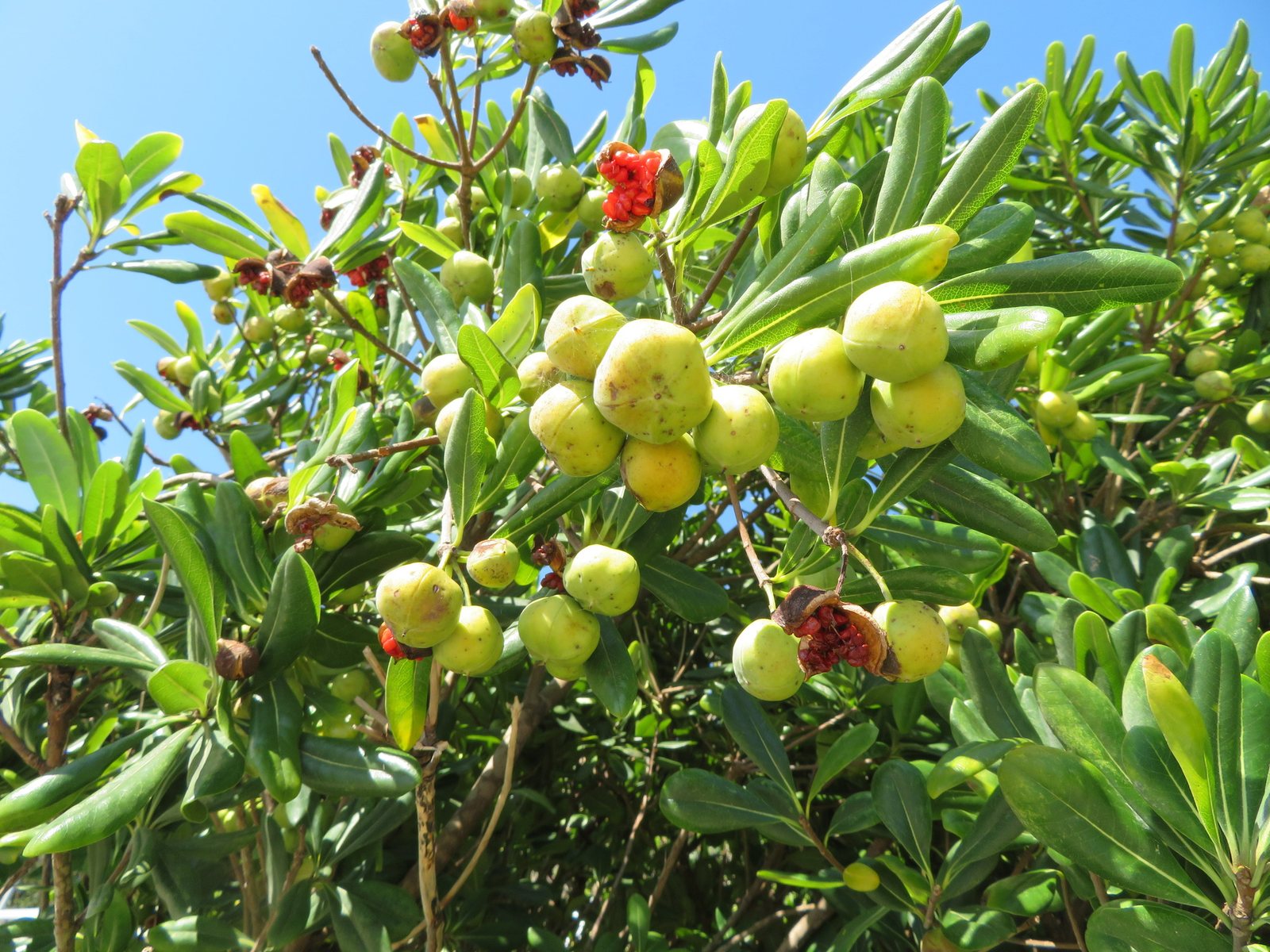
Japanese pittosporum is not known to be toxic to cats, dogs or horses. It is not an edible plant; people should not eat the leaves or seed capsules, as ingestion may cause stomach upset.
Easily confused with
Japanese pittosporum (Pittosporum tobira)
The ordinary species has similar leaves but grows into a much larger shrub or small tree and usually flowers more freely.
Green Gem pittosporum (Pittosporum tobira 'Green Gem')
Another compact green-leaved cultivar, usually with a somewhat taller, more upright outline. Young plants can be difficult to distinguish reliably without a label.
Indian hawthorn (Rhaphiolepis indica)
Its leaves usually have toothed margins, and it bears conspicuous pink or white flower clusters followed by dark berries; pittosporum leaves have smooth margins.
The name
Pittosporum comes from Greek words meaning 'pitch seed', referring to the sticky coating around the seeds, while tobira is derived from the plant's Japanese name.
Propagation. Take semi-ripe cuttings in late summer and root them in a free-draining medium under humid, sheltered conditions. Cuttings preserve the cultivar; seedlings do not reliably retain its dwarf habit.
Checked against open data
- Accepted botanical name
- Pittosporum tobira
- In the US and Canada
- Introduced in the lower 48 states and Pacific Basin.
- Native range
- Japan, Korea, Nansei-shoto and Taiwan.
- Measured
- Soil pH 5.5 to 7. Average height 610 cm.
Sources: GBIF (CC BY 4.0), USDA PLANTS and Trefle (CC BY 4.0). The care and design notes are LandscapeGPT's own.
See it in your own yard.
Upload a photo of your yard and see it redesigned with plants that suit your climate, each checked against your zone.