White barrenwort
Epimedium × youngianum 'Niveum'. Family Berberidaceae. Perennial.
Also called Snowy barrenwort, White bishop's hat, White fairy wings.
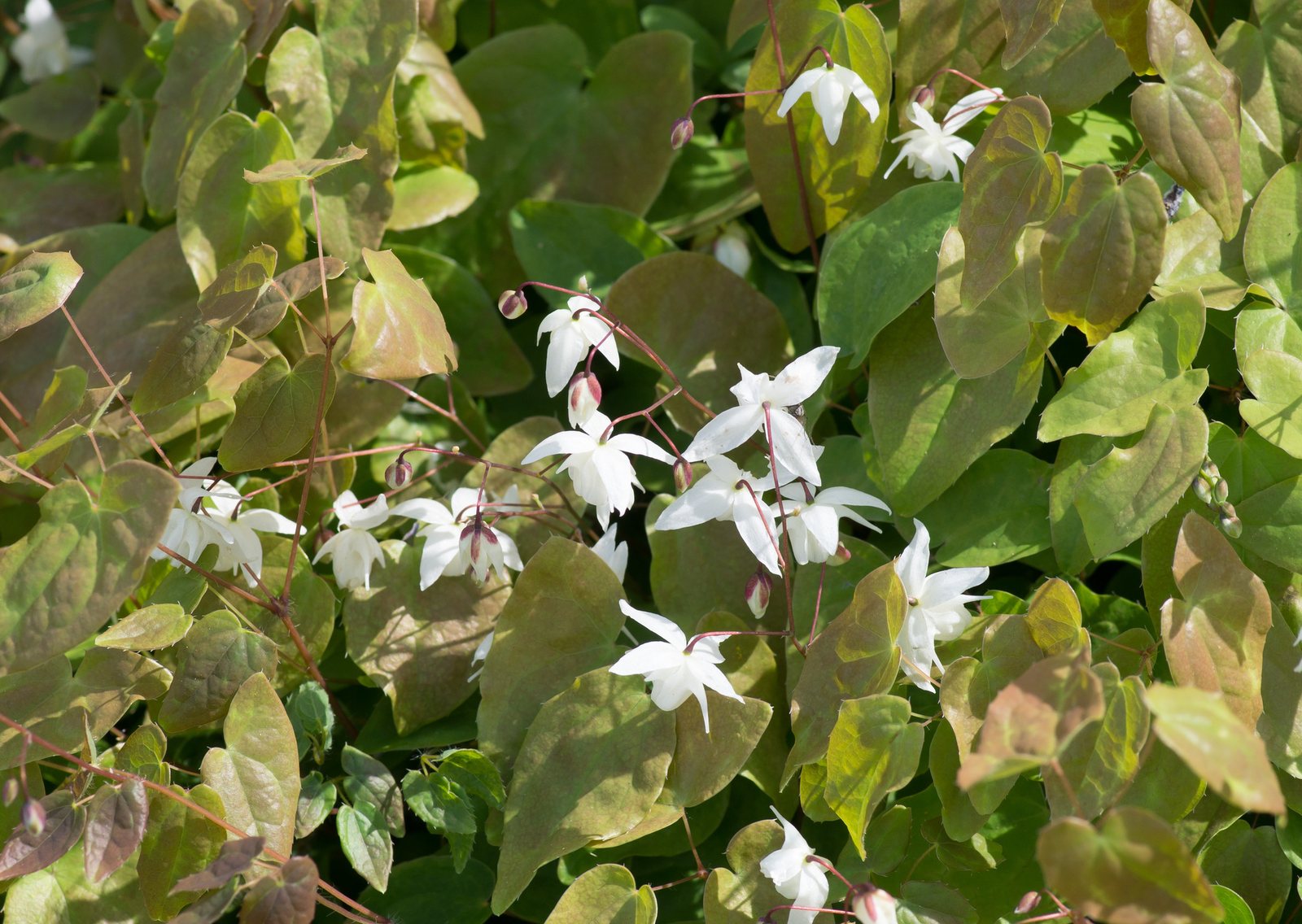
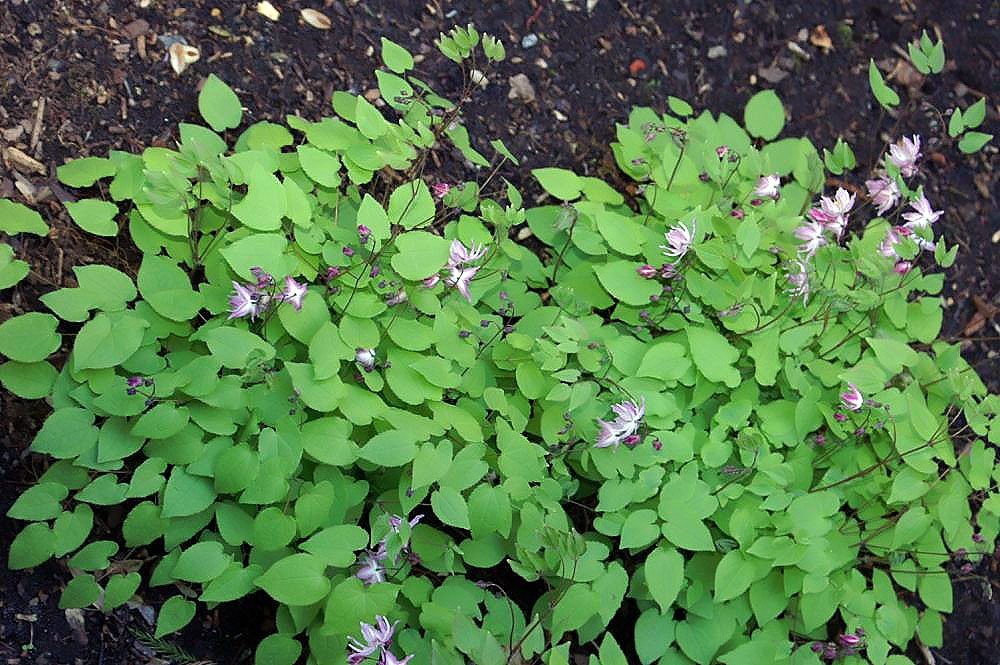
White barrenwort is a small, deciduous, clump-forming perennial with delicate white spring flowers above heart-shaped leaflets. Grow it beneath deciduous shrubs or along shaded paths, where its fresh foliage provides a neat ground layer without spreading aggressively.
At a glance
- Sun
- Partial shade or light, dappled shade; tolerates deeper shade but flowers less freely. Avoid strong afternoon sun, especially in hot climates.
- Water
- Keep evenly moist while establishing. Established plants tolerate occasional dry spells, but grow better with watering during prolonged drought.
- Soil
- Humus-rich, well-drained soil that retains some moisture; mildly acidic to neutral soil is ideal. Avoid waterlogged ground.
- Height
- 0.5-1 ft (0.15-0.3 m)
- Spread
- 1-1.5 ft (0.3-0.45 m)
- Flowers
- Mid- to late spring; small, nodding white flowers with short spurs on slender stems above the foliage.
- Foliage
- Deciduous, with fine-stemmed leaves divided into pointed, heart-shaped leaflets. New growth is often bronze-tinted, becoming green in summer and sometimes reddish in autumn.
- Growth
- Slow to moderate; gradually forms a compact clump through short rhizomes.
- Care needed
- Low
The year at a glance
- Pollinators
- Deer resistant
- Cold hardy
- Disease resistant
- Low allergen
| J | F | M | A | M | J | J | A | S | O | N | D | |
|---|---|---|---|---|---|---|---|---|---|---|---|---|
| Flowers | ||||||||||||
| Plant |
Northern hemisphere months. In Australia, shift them by six.
- Difficulty
- Easy
- Toughness
- Very tough
Will it suit your garden?
Pick your zone, country, light and whether you have pets.
Full sun is 6 or more hours of direct sun a day, part shade 3 to 6 hours, shade under 3.
How it grows
Planting day
0.7 ft (0.22 m)
full size
About 4 years to full size.
From a typical nursery size, at an average rate for this kind of plant. A rule of thumb, not a forecast.
Good to know
- Cats and dogs
- Safe
- Growth rate
- Slow
Care
Jobs through the year
- WaterApr–May, Sep–Oct, every 14 days
- Water established clumps only if soil is dry; keep new plants evenly moist.
- WaterJun–Aug, every 7 days
- During prolonged drought, water deeply, especially beneath thirsty trees.
- PruneFeb–Mar
- Remove old foliage before flower stems emerge; avoid cutting new shoots.
- MulchMar–Apr
- Apply a thin layer of leaf mould or compost, keeping the crown clear.
- DivideMay
- After flowering, divide only crowded clumps or those needed for propagation.
- ProtectMar–Apr
- Check emerging shoots for slugs and use iron-phosphate bait if necessary.
- Plant with the crown at soil level and water thoroughly.
- Water during dry spells in the first growing season; continue during prolonged drought thereafter.
- Apply a thin layer of leaf mould or compost each spring, keeping it off the crown.
- Avoid heavy feeding; an annual compost top-dressing is usually sufficient.
- Divide established clumps only when you want more plants or growth becomes crowded.
Pruning. Cut off dead leaves in late winter or very early spring, before flower stems emerge. Once new shoots appear, remove old foliage individually to avoid cutting the flowers.
Through the year
- Late winter
- Remove old foliage before the new flower stems begin to rise.
- Early spring
- Top-dress with leaf mould or compost and check emerging shoots for slug damage.
- Late spring
- After flowering, divide established clumps if more plants are needed; replant and water promptly.
- Summer
- Water during prolonged dry weather, especially beneath thirsty trees.
- Autumn
- Plant new specimens while the soil is workable and retain a light mulch of fallen leaves.
In the garden
- Edge a shaded path with small groups so the spring flowers can be seen close up.
- Plant beneath deciduous shrubs with hellebores and small ferns for layered woodland planting.
- Use between hostas and other later-emerging perennials for early-season flowers and foliage.
- Repeat in a shaded white garden with white-flowered lungwort and spring bulbs.
Garden styles it suits: Woodland, Japanese, Cottage garden, White garden, Secret garden and Low-maintenance.
Plant it with: Hosta, Hellebore, Japanese painted fern, Solomon's seal, Lungwort and Siberian bugloss.
Wildlife: Flowers may be visited by small bees. Deer and rabbits usually leave the foliage alone, although no plant is completely browsing-proof.
Problems to watch for
- Slugs and snails may chew emerging shoots: inspect in damp weather, remove pests and use iron-phosphate bait if needed, following the label.
- Leaf edges may brown in hot sun or dry soil: provide afternoon shade, mulch and water deeply during drought.
- Waterlogged soil can cause crown or root rot: improve drainage or move the plant to a better-drained site.
- Poor flowering can result from very deep shade or severe root competition: move to lighter shade and improve moisture availability.
Safety
Not known to be toxic to people, cats, dogs or horses, but safety information for this particular hybrid is limited. No part is grown as food; discourage pets and children from eating it.
Easily confused with
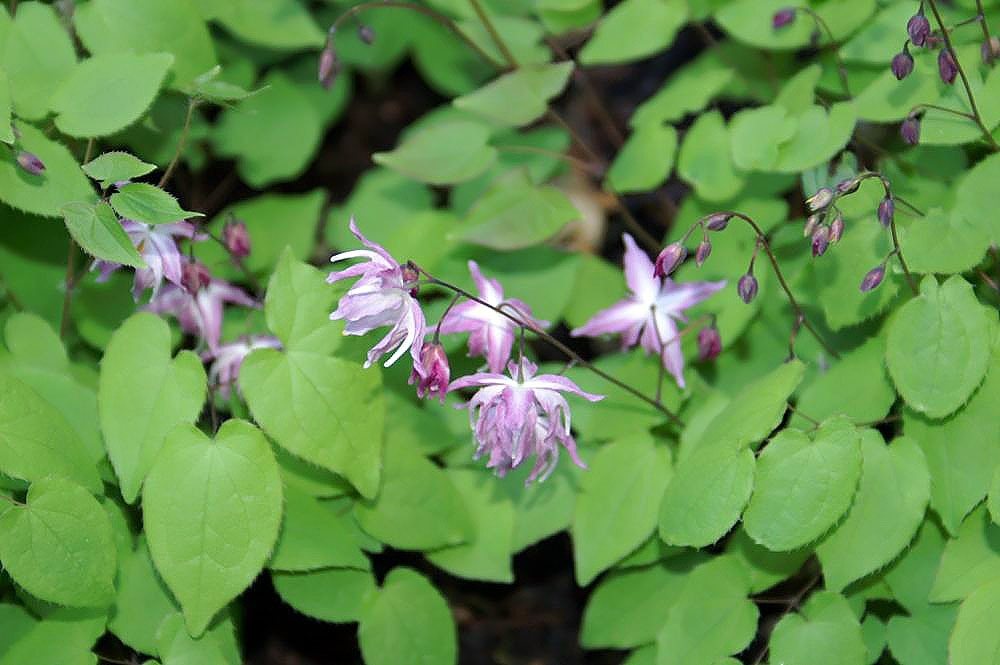
Pink barrenwort (Epimedium × youngianum 'Roseum')
Similar compact growth and deciduous foliage, but its flowers are pink to lilac rather than white.
Large-flowered barrenwort (Epimedium grandiflorum)
Usually has larger flowers with longer, more conspicuous spurs; flower colour varies among cultivars, including white.
Sulphur barrenwort (Epimedium × versicolor 'Sulphureum')
Has pale yellow flowers, more persistent foliage and a more spreading habit.
The name
The cultivar name 'Niveum' means snow-white, referring to its flowers.
Propagation. Divide clumps in early spring or just after flowering, keeping several buds and healthy roots on each piece. Division preserves 'Niveum'; seedlings will not reliably match the cultivar.
Checked against open data
- Accepted botanical name
- Epimedium youngianum
Sources: GBIF (CC BY 4.0). The care and design notes are LandscapeGPT's own.
See it in your own yard.
Upload a photo of your yard and see it redesigned with plants that suit your climate, each checked against your zone.